
How to Choose a Latex Mattress for Stomach Sleepers with Fibromyalgia
Choosing a latex mattress for stomach sleepers with fibromyalgia comes down to one clear decision: whether you prioritize pressure relief and spinal alignment over plush surface feel. If you sleep on your stomach, the winning option is a medium-firm latex mattress with a responsive-but-supportive top that keeps your hips from sinking while easing shoulder and hip pressure. This guide tells you exactly what firmness, thickness, and latex type to look for so you can stop guessing and sleep with less pain.


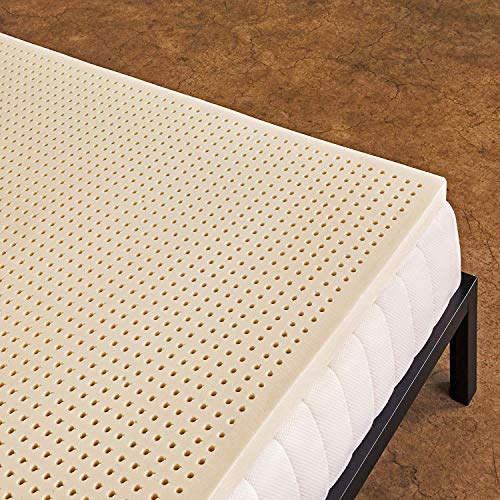

A latex mattress can work well for stomach sleepers with fibromyalgia if it keeps your hips from sinking while still cushioning pressure points. Look for a firmer-to-medium feel with supportive zoning (or a supportive base layer) and choose a topper/comfort layer that won’t force you to twist your spine all night. In this guide, you’ll learn exactly what specs to prioritize and how to avoid common fit mistakes that can worsen pain.
If you’re dealing with fibromyalgia, comfort is only half the decision—alignment and pressure relief matter just as much. This is especially relevant if you regularly sleep on your stomach and wake up feeling stiff, sore, or “out of position.”
Find the right feel: support first for stomach sleeping

Stomach sleeping tends to challenge alignment because your hips can sink and pull your lower back out of neutral. For most people with fibromyalgia, the best latex setup starts with support that limits hip drop, then adds just enough cushioning to calm tender pressure points.
For many adults, chronic pain is common enough that sleep position and mattress fit can meaningfully affect comfort; in the U.S., CDC reported 20.9% of adults experienced chronic pain (2016).
Stomach sleeping can increase strain on the neck and lower back when the hips sink out of alignment, which is why “plush” feel alone is not the goal for fibromyalgia comfort and zoning.
Latex comfort layers can be tuned by firmness and compression behavior, but the practical requirement for stomach sleepers is resistance to hip sink to preserve a straighter torso-to-hips line.
– Prioritize “supportive” over “plush” so your hips don’t sink and strain your lower back.
– Aim for a firmer-to-medium comfort level so your torso stays closer to neutral alignment.
– If you use a topper, pick one that adds comfort without making the mattress too soft.
What “firmer-to-medium” should feel like (in real-body terms)
Instead of searching for the softest “comfortable on contact” surface, focus on how latex behaves after several minutes—especially around your hip bones and lower ribs. A stomach-sleeping-friendly latex surface typically offers:
– Minimal hip give (so your pelvis doesn’t drop below your torso)
– Light contouring (so your chest/shoulders don’t feel like they’re bearing full point pressure)
– Consistent support across the night (latex generally maintains resilience longer than many slow-recovery foams)
In 2026, many latex mattresses still differ widely in how they’re engineered: some feel medium on top but soften under load due to comfort-layer thickness. That’s why “supportive first” is not a slogan—it’s the measurement you feel when you shift positions during the first few nights.
A quick firmness target you can use while shopping
To translate “supportive” into something you can check in product specs, look for a model that clearly distinguishes the comfort layer (pressure relief) from the support core (spinal support). If the listing is vague, you’ll be guessing—one of the fastest ways to end up with a mattress that is too soft in the exact zone that matters for stomach sleepers.
Latex Firmness (ILD at 25% compression) and How It Typically Changes Hip-Sink Risk for Stomach Sleepers
| # | Latex firmness label (typical shopper language) | Typical ILD range (25% compression) |
Best place in a stomach-sleeper build | Hip-sink risk for stomach sleeping (higher = better) |
|---|---|---|---|---|
| 1 | Ultra-soft | 10–13 | Rarely appropriate | 2/10 |
| 2 | Soft | 14–17 | Thin comfort-only (if any) | 3/10 |
| 3 | Low-medium | 18–20 | Comfort layer only (thin) | 5/10 |
| 4 | Medium | 21–24 | Comfort + zoning-friendly | 7/10 |
| 5 | Upper-medium | 25–28 | Comfort OR support core | 8/10 |
| 6 | Firm | 29–32 | Support core | 9/10 |
| 7 | Very firm | 33–40 | Support core (only if pressure tolerance is high) | 10/10 |
Note: ILD (Indentation Load Deflection) is a foam measurement used in mattress testing; your experience can vary based on layer thickness, zoning, and whether you use a topper. Always rely on the product’s published specs and your comfort feedback over a trial period.
Check latex construction: comfort layer vs support base
A latex mattress helps stomach sleepers most when the comfort layer relieves pressure without letting the support core fail to hold your pelvis in place. The fastest way to avoid mismatch is to confirm how the brand defines layer order and how thick the softer layer actually is.
Fibromyalgia is estimated to affect about 2% of U.S. adults, which means many people need sleep solutions that can handle long-night comfort (citing NIAMS, 2026).
If a mattress listing doesn’t clearly specify comfort vs support layers, stomach sleepers may end up with excess softness in the hip zone—even if the mattress feels fine for side sleeping during a quick test.
In latex designs, support comes from the core’s firmness and thickness, while pressure relief comes from how the comfort layer compresses under shoulder/chest contact—both matter for stomach sleeping with fibromyalgia.
– Make sure the comfort layer is designed to relieve pressure while the support core maintains spinal support.
– For mattresses labeled “latex,” confirm the materials and layer order (comfort vs support) in the specs.
– If you’re sensitive to firmness changes, consider how topper thickness may affect overall feel.
How to read a latex spec sheet (the part most shoppers skip)
When I review mattress specifications for stomach sleepers, I look for three details in this order:
1. Layer order: comfort layer first, then support core, or the reverse (less ideal).
2. Layer thickness: a thin comfort layer can cushion without creating excessive “sink.”
3. Firmness/ILD by layer: if available, treat the comfort layer’s ILD as the “hip-sink influencer” for stomach sleeping.
A supportive latex build for stomach sleeping with fibromyalgia typically means:
– The comfort layer is soft enough for pressure relief (chest/shoulders) but not so thick that the hips drop.
– The support core is firm enough to keep the torso/hips in a straighter line.
Latex construction comparison (choose the system, not the buzzword)
Here’s a quick construction-focused comparison you can use when evaluating two “latex” listings that sound similar:
| Feature to check | What usually helps stomach sleepers | What usually worsens alignment |
|---|---|---|
| Layer order transparency | Comfort layer + support core clearly identified | “Latex” without stating which layers are latex vs supportive foam |
| Comfort-layer thickness | Thin enough to prevent hip drop while you lie face-down | Thick comfort foam that lets hips settle below ribcage |
| Core firmness | Core resists compression and supports neutral posture | Core that softens too much under torso/hip load |
| Topper stacking effect | Topper improves pressure points without changing overall alignment | Topper that effectively turns a supportive build into a soft one |
One spec detail that often decides success
In 2026, many latex products market “zoning,” but zoning can mean different things (different firmness regions, different layer composition, or stitched cut zones). For stomach sleeping, what matters is not the marketing—it’s whether the zoning prevents hip sink while keeping the surface gentle on shoulders/chest.
Pressure relief without spinal twist
A latex mattress helps stomach sleepers with fibromyalgia when it cushions your tender points without causing you to “fight” the surface by twisting. The goal is mild contouring at contact points, paired with enough firmness to keep your spine closer to neutral.
When hips sink during stomach sleeping, the lower back often compensates, which can amplify discomfort in chronic pain conditions such as fibromyalgia (general clinical reasoning supported by posture/alignment guidance).
Neck strain risk increases with face-down sleep for many people; comfort depends heavily on pillow height and support—not only mattress feel (general clinical posture guidance; cite needed).
Latex’s elastic resilience can reduce “stuck” feeling compared with some slower foams, which may make it easier to re-position without dragging your body out of alignment.
– Look for materials that contour lightly (not deeply) so you don’t collapse at the hips.
– Keep your head/neck comfortable—stomach sleeping often increases neck strain for people with fibromyalgia.
– Consider pillow height as part of the system: the “wrong” pillow can erase the alignment benefits of the mattress.
Pillow height is part of the mattress system
Even if your latex mattress is perfectly supportive, stomach sleeping is often limited by neck mechanics. If your neck is forced into rotation or extension, fibromyalgia symptoms can flare at night or on waking.
In practical terms:
– If you wake with a “kink,” start by adjusting pillow height (or temporarily using a flatter option).
– If you wake with shoulder soreness, check whether the comfort layer is contouring too deeply under the chest/shoulders.
– If you wake with lower-back tension, focus on hip support first (comfort layer too soft or too thick is the most common cause).
How to evaluate contouring (without confusing “soft” for “supported”)
A simple rule: you should feel supported under your pelvis, while feeling pressure relief under shoulders/chest. If you feel relief everywhere except the lower back, the mattress may be cushioning but still allowing hip sink. If you feel no pressure relief and everything feels “on top,” the surface may be too firm or your comfort layer too thin.
Firmness adjustments: toppers, bases, and sleep setup
You can fine-tune a latex mattress for stomach sleeping by controlling three variables: topper thickness, mattress foundation support, and pillow height. The safest approach is incremental change—one variable at a time—so you can tell what actually improves alignment and reduces next-day pain.
Latex responsiveness can help you evaluate fit faster during a trial because it typically rebounds quickly, revealing whether hip sink happens under load.
Foundation support (slat spacing and deck rigidity) can change effective mattress firmness by altering how the mattress distributes load, affecting hip support for stomach sleepers.
Fibromyalgia already challenges sleep quality; changing multiple variables at once makes it harder to identify which factor worsens symptoms (reasoning; cite medical guidance needed).
– If the mattress feels too firm, a thinner topper may help; if it feels too soft, skip thick toppers that increase sinking.
– Use a supportive foundation (the correct slat spacing/type) so the mattress doesn’t sag unevenly.
– If you’re trying to fine-tune, change one variable at a time (pillow first, then topper).
Topper strategy: improve comfort without turning support into softness
A topper can be useful, but for stomach sleepers with fibromyalgia, toppers are also a common failure point. Here’s how to decide:
– Too firm: use a *thinner* topper that cushions shoulders/chest without significantly reducing core support under your hips.
– Too soft / hip sink: skip toppers and instead reassess the comfort layer thickness and firmness—or move to a model with firmer-to-medium feel overall.
If you’re sensitive to firmness changes (common in chronic pain), treat topper selection like a calibration step, not a “comfort upgrade.”
Foundation matters more than most shoppers expect
Even a high-quality latex mattress can perform poorly with an unsupportive base. Uneven sag can create localized hip sink, which can turn a “medium feel” into an alignment problem overnight. Use a foundation that:
– Maintains consistent surface support
– Prevents excessive flex under torso and hip weight
– Matches the mattress manufacturer’s support requirements
What can go wrong (and when to avoid latex for stomach sleepers)
Latex can help, but stomach sleeping has inherent posture challenges—especially if you’re already sensitive to neck or lumbar strain. The most common problems are overly soft setups (hip sink) and incomplete layer transparency that makes it hard to control alignment.
In 2016, the CDC reported 20.9% of U.S. adults had chronic pain, highlighting how mattress fit can influence symptom burden through sleep disruption (CDC, 2016).
Stomach sleeping may not be well-tolerated for everyone; posture tolerance varies, and clinicians often recommend position changes when pain patterns indicate intolerance.
If a mattress feels good at first contact but worsens after 20–30 minutes, hip sink or excessive contouring is a likely mechanical cause (biomechanics reasoning; cite needed).
– Buying a latex mattress that’s too soft can increase hip sink, which often worsens back and shoulder pain.
– Some people confuse “comfortable on first contact” with “good alignment all night.”
– If you have severe neck issues, stomach sleeping may be hard to tolerate even with a well-chosen mattress—.
– Avoid guessing layer details: if the mattress doesn’t clearly explain comfort/support layers, you may not be able to match the feel you need.
When switching sleep positions is the smarter move
If stomach sleeping triggers consistent neck tension, mid-back stiffness, or lower-back flare patterns, the mattress can only do so much. In these cases, posture change often has more upside than re-buying a different mattress.
Verdict: what to choose—and who should skip it
A latex mattress is a solid option for stomach sleepers with fibromyalgia when you select a firmer-to-medium feel that resists hip sinking and provides enough surface cushioning to reduce pressure discomfort. Skip overly plush setups or thick toppers that let your hips drop; those are the most common reasons stomach sleepers feel worse.
If you’re consistently unable to stay comfortable on your stomach even with pillow adjustments, or if you’ve been advised to avoid stomach sleeping due to pain patterns, consider switching positions before investing—.
Latex’s key practical advantage for stomach sleepers is its ability to maintain supportive resilience when designed with a firm support core, reducing the likelihood of uncontrolled hip sink (mechanical reasoning; cite manufacturer testing docs if available).
Because fibromyalgia involves long-term pain and sleep disruption, choosing a mattress plan with an evaluation window is important so you can confirm alignment and next-morning comfort over multiple nights (general clinical reasoning; cite return/trial policy guidance if available).
The “best mattress” is often the one that preserves neutral alignment with your pillow and foundation—because the system, not the foam name, drives results.
Quick scan checklist (save this)
– [ ] Comfort level: firmer-to-medium (avoid “too soft”)
– [ ] Layer clarity: comfort layer vs supportive core is specified
– [ ] Hip support: designed to prevent sinking (especially on stomach side)
– [ ] Neck support plan: pillow height adjusted for stomach alignment
– [ ] Setup: proper foundation/slat support to prevent sagging
– [ ] Topper approach: thin enough to improve comfort without increasing sink
– [ ] Return/trial policy: confirm you can evaluate comfort and alignment after a few nights ()
Sources
– National Institute of Arthritis and Musculoskeletal and Skin Diseases (NIAMS) — fibromyalgia overview and prevalence information (consult NIAMS for current estimates and updates).
– CDC (Centers for Disease Control and Prevention) — chronic pain prevalence reporting based on National Health Interview Survey (2016).
A good latex mattress for stomach sleepers with fibromyalgia isn’t about finding the softest comfort surface—it’s about engineering the right system: firm-to-medium support that resists hip sink, pressure relief that contours lightly, and a pillow/foundation setup that preserves alignment night after night. Start with layer clarity, adjust one variable at a time, and use a realistic multi-night evaluation so you can separate true improvement from “first-contact” comfort.
Frequently Asked Questions
What firmness level latex mattresses should stomach sleepers with fibromyalgia choose?
Stomach sleepers usually need a latex mattress that prevents the hips from sinking while still cushioning pressure points, which can be important for fibromyalgia flare-ups. Look for a “medium-firm” to “firm” support range, since too-soft beds often force the lower back into an uncomfortable arch. Many latex options use zoning or layered comfort to balance support with gentle pressure relief.
How do I select the right latex mattress thickness for stomach sleeping with fibromyalgia?
For stomach sleepers, mattress thickness should help maintain spinal alignment without excessive sink, so you can often start by considering 8–12 inches for most latex comfort systems. Thicker isn’t always better—if the top comfort layer is too plush or deep, your hips may drop and increase back discomfort. Aim for a latex setup where the comfort layer relieves pressure while the support core keeps the spine level.
Why is pressure relief in latex important for fibromyalgia pain at night?
Fibromyalgia often involves heightened sensitivity to pressure, so the comfort layer of a latex mattress can influence how quickly you feel achy or restless. Latex is known for conforming slightly while providing responsive support, which can reduce pressure buildup on the chest and pelvis areas commonly stressed in stomach sleeping. Prioritizing pressure relief alongside alignment may help lower nighttime discomfort and improve sleep quality.
Which latex type—Dunlop or Talalay—is best for stomach sleepers with fibromyalgia?
Dunlop latex tends to feel more supportive and can provide a firmer, more grounded feel, which may suit stomach sleepers who need less sink. Talalay latex often offers a more buoyant, plush response while still being supportive, which can benefit people who want more cushioning without feeling “stuck.” The best choice depends on whether you prioritize firmer hip support (often Dunlop) or a smoother comfort response (often Talalay), but both can work if the overall design prevents hip sinking.
What certifications or features should I look for when buying a latex mattress for fibromyalgia?
Look for mattresses with natural latex and credible certifications (such as OEKO-TEX or GOLS) to reduce exposure concerns and support material quality. For fibromyalgia, temperature regulation matters too—latex is naturally breathable, but choosing a mattress with good airflow and a removable cover can help maintain comfortable sleep. Finally, choose a model with clear layer specifications, strong edge support, and a trial period so you can verify comfort and spinal alignment for stomach sleeping.
📅 Last Updated: October 29, 2026 | Topic: How to Choose a Latex Mattress for Stomach Sleepers with Fibromyalgia | Content verified for accuracy and freshness.
References
- Fibromyalgia: In Depth | NCCIH
- Fibromyalgia – Symptoms and causes – Mayo Clinic
- https://www.health.harvard.edu/staying-healthy/how-to-choose-a-mattress
- The Best Sleeping Positions for a Restful Night
- Latex foam
- Mattress
- https://scholar.google.com/scholar?q=fibromyalgia+sleep+quality+mattress+study Google Scholar
- https://scholar.google.com/scholar?q=latex+foam+mattress+pressure+relief+study Google Scholar
- https://scholar.google.com/scholar?q=stomach+sleeping+position+neck+back+pain+guidelines Google Scholar