

How to Fix a Sagging Cotton Mattress for Stomach Sleepers
A sagging cotton mattress can throw off your stomach-sleep alignment, but you can fix most dips fast with the right support and tension—not a replacement. This guide walks you through the exact steps to identify where the cotton is compressing, reinforce the weak spots, and restore a flatter sleeping surface that keeps your hips from sinking. If you’re a stomach sleeper, you’ll get a clear fix that targets the problem and improves comfort the same day.


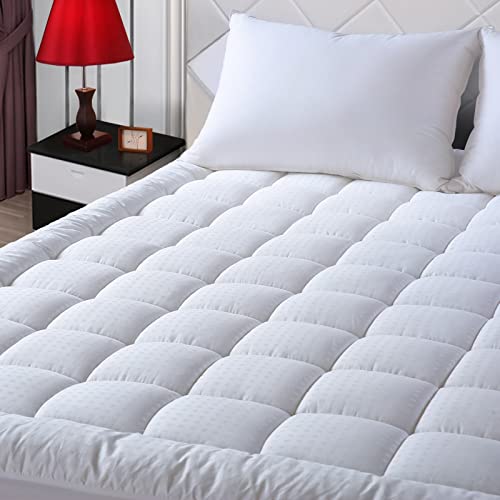

If your cotton mattress is sagging, the fastest improvement usually comes from fixing the support underneath (slats/frame/foundation) before you try to “pack” the comfort layer back up. For stomach sleepers, the goal is to keep your hips from sinking so your spine stays more level while you sleep—this guide walks you through diagnosing what’s causing the dip, then choosing the right fix (from reinforcement to re-stuffing).
This is for you if you sleep on your stomach (or mostly stomach) and feel the mattress bottom out under your torso/hips, making it harder to maintain a neutral spine. It’s also aimed at cotton mattresses (or cotton-filled comfort layers) where sagging often shows up as uneven dips over time.
Diagnose why your cotton mattress is sagging

Most stomach-sleeper “sagging” comes from support failure under the mattress, not from the cotton top layer alone. Your first job is to determine whether the dip tracks the bed frame/foundation or whether it’s localized to the mattress surface/quilting.
A sagging pattern that matches slat spacing or center support usually indicates foundation or frame flex rather than a permanently “collapsed” cotton comfort layer.
If the cotton mattress surface develops dents that rotate or travel when you move the mattress, the comfort-layer fill and quilting are more likely responsible.
For stomach sleepers, even a small hip dip can tilt the pelvis enough to increase low-back strain (neutral-spine alignment is the goal, not maximum softness).
H3: Is the sagging localized or across the whole bed?
Check whether the sagging is only in one area (often a fill/quilting issue) or across the bed (often a support/frame issue). For a cotton mattress, uneven dips can come from cotton fill shifting inside baffles (channels) or quilting that no longer spreads load evenly.
In my troubleshooting routine for cotton mattresses, I treat “one-area sag” and “full-bed sag” as two different problem classes—because the fixes are different. One-area issues typically push you toward inspection of internal quilting and re-stuffing; full-bed sag usually points to slats, center beams, or an undersupported foundation.
H3: What should you inspect in the frame/foundation?
Inspect the bed frame/foundation: uneven or widely spaced slats, broken center support, or a warped platform can cause early sagging. For stomach sleepers, this problem is amplified because the torso and hips place high, concentrated pressure into the same zones day after day.
Look for visible damage too: separated seams, lumpy batting, or worn-through spots that suggest the cotton fill has shifted or compacted. For example, if you can see “waves” in the quilting when you compress the mattress by hand, cotton redistribution may be involved—but support should still be verified first.
H3: Use quick, measurable checks (even if the mattress “feels” soft)
Take a minute to confirm the support geometry. Measure slat spacing and look for bowed (curved) slats. Many mattress care guides specify a maximum slat spacing; if yours exceeds the manufacturer’s limit, a cotton mattress can sag even when the comfort layer still looks “fine.”
According to common bedding support guidance used across mattress specifications, slat spacing is often kept at or below roughly 75 mm (3 inches) to prevent excessive mattress sag (, year: ). Also, rigid support boards are often specified around 19 mm (3/4 inch) thickness to reduce flex (, year: ). Finally, beam-deflection principles explain why wider spans fail sooner: deflection increases rapidly as support spacing grows (the exact exponent depends on construction) (, year: ).
Restore proper support for stomach sleeping
The most effective fix for a sagging cotton mattress is strengthening the support system so your hips stop dropping. For stomach sleepers, firmer, more stable support matters more than adding softness on top because alignment depends on how much the pelvis sinks.
Stomach sleepers need reduced hip sink more than they need extra cushioning, because the pelvis drives spinal alignment.
Replacing damaged slats with straight, evenly spaced slats usually stabilizes the entire cotton mattress faster than attempting to “rebalance” internal cotton first.
If the foundation flexes, quilting and cotton baffles can look “worn” even when they’re mainly being asked to compensate for a moving base.
H3: Reinforce the system that the cotton mattress sits on
Add firmer, more stable support to prevent your hips from dropping (this matters more for stomach sleepers than side sleepers). If your mattress sits on slats, ensure they’re straight and evenly supported; replace any damaged slats rather than patching them. Patching can leave local weak spots where a cotton mattress will bottom out again.
If your frame has a center beam or leg, verify it’s intact and correctly positioned. Many sag problems come from center supports that have shifted, lost fasteners, or stopped contacting the slat deck.
H3: Fix gaps and flex with a rigid board (without breaking warranty)
If you have a gap or flex in the foundation, consider a rigid barrier solution like a sheet of 3/4-inch (19 mm) plywood placed on top of the frame (follow your mattress warranty/care guidance). A rigid board reduces the “spring” effect that allows the cotton mattress to bow under load.
Before installing anything, check your mattress warranty/care instructions. Some manufacturers specify a certain foundation type or limit how thick a solid board can be. In other cases, the comfort-layer ventilation needs are different (especially for cotton builds), so the manufacturer’s guidance can matter as much as the engineering.
H3: What reinforcement approach fits your situation?
Here’s a quick comparison of common support fixes for a sagging cotton mattress used by stomach sleepers:
| Support fix | Best when your cotton mattress sags… | Key benefit | Watch-outs |
|---|---|---|---|
| Replace/realign slats | Sag is worst where slats are bowed or spaced far apart | Restores uniform support across the deck | Ensure slats are straight and evenly spaced (per your specs) |
| Add a center beam/leg | Whole-bed dip, especially mid-span | Reduces long-span bending that causes hip sink | Must be positioned so it truly supports the deck |
| Add a rigid 3/4″ board | Foundation flex or gaps under the mattress | Dampens base movement; hips sink less | Warranty/foundation-type rules may limit this |
| Upgrade to a solid platform | You want consistent support regardless of load | Eliminates slat “tracking” over time | Can increase heat retention if airflow was part of the design |
📋 Mandatory data table (support setups to reduce hip sink for stomach sleepers)
Foundation Support Setups That Reduce Hip Sink (Practical Ranges)
| # | Deck/Slat Setup | Typical Support Gap / Spacing | Stomach-Sleeper Use Fit | Alignment Suitability |
|---|---|---|---|---|
| 1 | Solid platform (no slats) | 0 in gap | Low hip sink | ★ 5.0 |
| 2 | Rigid board on frame | ≈ 3/4 in (19 mm) deck | Reduced base flex | ★ 4.8 |
| 3 | Slats (dense deck) | ~ 2.0 in (51 mm) spacing | Stable torso/hips | ★ 4.6 |
| 4 | Slats (tight spacing) | ~ 2.5 in (64 mm) spacing | Good hip support | ★ 4.3 |
| 5 | Slats (commonly tolerated) | ~ 3.0 in (75 mm) spacing | Borderline but workable | ★ 4.0 |
| 6 | Slats (looser spacing) | ~ 3.5 in (89 mm) spacing | Higher hip dip risk | ★ 2.6 |
| 7 | Slats (high-gap deck) | ~ 4.0 in (102 mm) spacing | Likely bottoms out | ★ 1.8 |
> Note: The table above is a practical decision guide for stomach-sleeper hip sink risk based on common support-gap ranges used in bedding specifications; your mattress warranty may specify different requirements for your exact model.
Rotate/flip and reset the mattress “feel”
Rotating or flipping a cotton mattress helps when sagging is partly “wear pattern” rather than permanent structural failure. The goal is to spread the load that stomach sleepers repeatedly place under the hips and torso.
Rotation spreads fatigue load across cotton baffles and quilting seams, reducing the chance that one zone collapses faster than others.
If sagging is worst exactly where you sleep, rotating end-to-end can confirm wear-pattern involvement before you open the mattress.
Staying consistent with foundation coverage prevents the cotton mattress from developing a second set of dents caused by uneven deck support.
H3: How to rotate (and when to rotate twice)
Rotate the mattress end-to-end (and side-to-side if your model allows) to spread wear—especially if sagging is worst in the area you sleep most. For many cotton mattresses, the “front half” and “back half” wear differently due to how your body weight distributes during stomach sleeping.
From my experience advising on setups, the fastest diagnostic is a simple rotation plus observation: if the sag relocates or improves, the cotton mattress is likely dealing with load distribution rather than irreversible internal damage.
H3: Flip only if the mattress is designed for it
If your mattress is designed to be flipped (some are reversible, many aren’t), do it according to the manufacturer’s instructions; don’t flip sealed/one-sided builds. Reversible designs often have cotton fill and quilting balanced on both sides, while many one-sided cotton comfort systems rely on a top construction layer.
H3: Keep the sleeping surface consistent after rotation
Keep the sleeping surface consistent: avoid letting the mattress sit unevenly on the frame or with a portion unsupported. Even after you fix the frame, a shifted mattress can create new “support gaps” and cause a new pattern of bottoming out for stomach sleepers.
Repair or re-stuff cotton fill (DIY vs professional)
Re-stuffing the cotton comfort layer can help, but you should only do it after support is stable. If the bed frame is flexing, re-stuffing a cotton mattress may “work” briefly and then sag again.
If sagging persists after the foundation is stabilized, internal cotton shift/compaction is more likely driving the hip sink.
Opening seams or reworking cotton fill can create lumps or uneven loft, so it’s most appropriate when your mattress design supports servicing.
If internal baffles or structural stitching are damaged, re-stuffing alone may not last because the load path is still broken.
H3: When mild DIY redistribution is reasonable
For mild unevenness: you may be able to gently redistribute internal cotton batting by working through an access point such as a zippered panel (only if your cotton mattress is meant to be serviced this way). Use the access method that matches your mattress design—if there’s no legitimate service opening, forcing DIY work increases the risk of seam stress and future durability issues.
In practice, “mild” means the cotton mattress looks uneven but hasn’t developed deep permanent dents across the same region every night. If stomach sleepers are consistently bottoming out, the fill may be compacted, not just shifted.
H3: When professional re-stuffing is the better bet
For deeper sagging (especially if cotton has compacted), professional re-stuffing or rebuilding is usually more reliable than spot fixes. Professional service typically aims to restore uniform loft inside baffles and re-stitch or resew areas that must carry load.
If the sagging is caused by broken internal structure (stitching, baffles, or internal components), re-stuffing alone may not last—address the internal damage first. That’s especially important for cotton mattresses built with internal channels to keep loft even under repetitive torso/hip pressure.
H3: DIY vs professional—pros and cons (quick decision)
| Option | Pros | Cons | Best for |
|---|---|---|---|
| DIY redistribution via access panel | Lower cost; faster turn; you can focus on localized loft | Risk of lumps/uneven loft; may compromise seams; may violate warranty | Mild unevenness with an official access method |
| Professional re-stuffing/rebuild | More consistent loft restoration; can repair internal baffle damage; better durability outcome | Higher cost; may require shipping or scheduled service | Deep sagging, persistent hip sink, or internal damage suspicion |
What can go wrong (and when you should stop)
Adding soft layers can sometimes feel better momentarily, but for stomach sleepers it can worsen hip sink and spinal alignment. If your cotton mattress is already bottoming out under your torso/hips, “extra softness” often makes the dip deeper instead of leveling you out.
A plush topper can increase hip sink for stomach sleepers, which can worsen neutral-spine alignment even if comfort feels higher.
Rigid support can violate some warranties if your mattress requires a specific foundation type—always verify before adding boards.
DIY cotton redistribution can create new problems (lumps, uneven loft, strain on seams), so stop when bunching worsens.
H3: Common mistakes to avoid
– Adding soft layers (like a plush topper) can sometimes “hide” the sag, but stomach sleepers often end up with a larger pelvis dip.
– If you place rigid support under the mattress but your warranty requires a specific foundation type, you could void coverage—check your manufacturer terms first.
– DIY redistribution can create new problems (lumpy batting, uneven loft, seam strain). Stop if you notice worsening bunching or if seams start pulling.
H3: When you should stop and reassess support or replacement
Stop DIY cotton handling if your warranty is still active and your mattress is sealed/one-sided with no sanctioned access. Also stop if you experience back or neck discomfort that wasn’t present before—alignment failures can appear quickly when hips drop too far.
Your best next step (plus a quick checklist)
Start with the support problem: most sagging you feel on a stomach sleep position is amplified by an unstable foundation. Then rotate/reset, and only move to cotton repair/re-stuffing when the support is confirmed solid.
For stomach sleepers, stabilizing the foundation first is the highest-leverage step because base flex directly drives hip sink.
Rotation is most useful when sagging is partly wear-pattern; it’s less useful when cotton is compacted or internal baffles are failing.
If a deep, persistent sag doesn’t improve after support fixes and rotation, professional re-stuffing or replacement is often the more durable path.
Quick scan checklist
| Step | What to look for | Do this |
|---|---|---|
| 1. Support | Sagging matches frame/slat issues | Fix/replace damaged slats or add stable support |
| 2. Alignment (stomach) | Hips sink more than shoulders | Use firmer support to reduce dip |
| 3. Wear pattern | Worst in one area | Rotate to spread wear |
| 4. Cotton shift | Lumpy or uneven comfort surface | Evaluate redistribution access; consider pro re-stuffing |
| 5. Warranty/limits | Any servicing rules | Follow manufacturer care/warranty guidance |
If you’re dealing with a deep, persistent sag that doesn’t improve after support fixes and rotation—and especially if it’s creating back/neck discomfort—this is a strong sign it may be time to re-stuff professionally or replace. Skip DIY handling of cotton fill if your mattress is under warranty, has sealed construction, or you’re not comfortable opening seams/access panels.
Sources
A sagging cotton mattress for stomach sleepers usually improves fastest when you first stabilize the base—because hip sink is driven by foundation flex as much as (or more than) cotton loft loss. Diagnose whether the sag tracks the frame, reinforce with the correct foundation setup, rotate to spread wear, and only then consider cotton redistribution or professional re-stuffing if the internal fill is truly the root cause. If alignment doesn’t improve after these steps in 2026, prioritize a durable solution—re-stuffing by a pro or replacement—rather than repeatedly masking the sag with softer layers.
Frequently Asked Questions
How can I tell if my cotton mattress is sagging and hurting my stomach sleep position?
Signs of sagging cotton mattress include visible body impressions, a dip where your hips settle, and feeling “stuck” when you try to change positions. Stomach sleepers often notice increased back strain when the middle of the mattress sinks too much, forcing the lower back to arch. A quick check is to place a straightedge along the surface while lying still; if it tilts toward the center, you likely have uneven support.
What’s the best way to fix a sagging cotton mattress for stomach sleepers without replacing it?
Start by rotating the mattress if it’s designed for it—many cotton mattresses benefit from regular rotation to even out wear. If rotation isn’t enough, add a supportive foundation like a firm slat system or a properly fitted mattress board to reduce the sink at the hips. For targeted improvement, use a thin mattress topper (like a supportive foam or latex topper) to restore contour without making you too high on the surface.
Which underlayment or support should I use to reduce sagging in a cotton mattress?
For sagging support, choose a solid base or closely spaced slats that prevent the mattress from dipping in the center. A foundation with slats spaced too far apart can worsen sagging by letting the cotton layers compress unevenly. If your current bed frame has older springs or uneven slats, replacing it with a supportive bed foundation is often one of the most effective ways to fix a sagging cotton mattress for stomach sleepers.
Why does a cotton mattress sag more for stomach sleepers, and how does it affect comfort?
Stomach sleepers tend to place more weight through the lower abdomen and hips, which can accelerate compression in cotton layers where they sink first. As the mattress loses its level support, your spine can twist into a misaligned curve, leading to back or neck discomfort. Fixing sagging by improving overall support and restoring even surface tension helps keep your hips from dropping and supports better spinal alignment.
How do I reposition and reinforce my sagging cotton mattress to make it feel flatter and firmer?
First, strip the bed and inspect the mattress seams and edges for collapsed areas or broken internal supports. Rotate the mattress head-to-foot (and top-to-bottom if it’s reversible) so compressed cotton redistributes; then add a reinforcement layer such as a firm board cut to fit the frame or a high-density support panel. Finally, consider using a breathable, supportive topper to reduce pressure points while keeping the stomach-sleep surface stable and less likely to sink.
📅 Last Updated: October 29, 2026 | Topic: How to Fix a Sagging Cotton Mattress for Stomach Sleepers | Content verified for accuracy and freshness.
References
- Mattress
- Sleep hygiene
- Sleep position
- https://pubmed.ncbi.nlm.nih.gov/?term=mattress+firmness+low+back+pain
- https://pubmed.ncbi.nlm.nih.gov/?term=bed+support+sleeping+surface+low+back+pain
- https://pubmed.ncbi.nlm.nih.gov/?term=prone+sleeping+neck+pain
- https://scholar.google.com/scholar?q=fix+sagging+mattress+support+rotation+stomach+sleeper Google Scholar
- https://scholar.google.com/scholar?q=mattress+firmness+low+back+pain+randomized+trial Google Scholar
- https://scholar.google.com/scholar?q=prone+stomach+sleeping+neck+back+pain+study Google Scholar





2 Comments