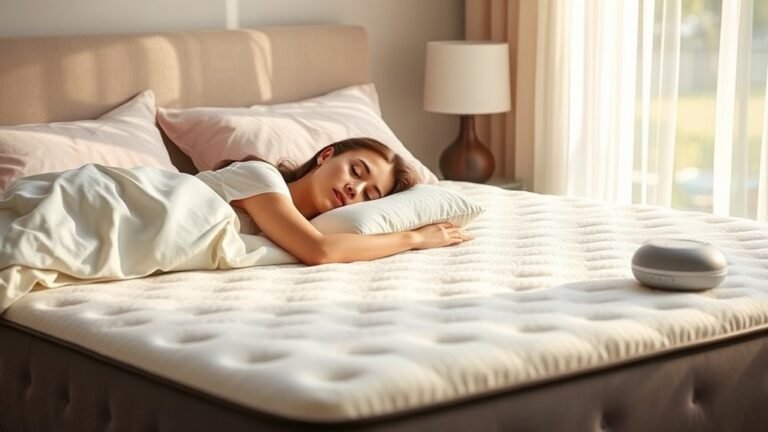
How to Select a Memory Foam Mattress for Combination Sleepers with Snoring
Choosing a memory foam mattress for combination sleepers with snoring doesn’t require guesswork—this guide tells you exactly what to buy and what to skip. You’ll learn how to prioritize pressure relief for side sleeping while keeping airflow-friendly support that helps reduce snore-inducing head and neck misalignment. Answering the key question—what mattress specs and features most reliably improve comfort and breathing—means you can pick the best memory foam model for your sleep pattern.




If you’re a combination sleeper who snores, pick a memory foam mattress that keeps your spine more neutral in multiple positions—especially on your side—while limiting heat buildup and excessive “follow-you” motion. Aim for medium-firm support, pressure relief that doesn’t cause deep hip sink, and a cooling/cover setup that helps you stay calmer through position changes.
If you switch between back, side, and stomach often (combination sleeping), snoring can get worse when your neck and hips collapse out of alignment. The right memory foam feel matters, but so does pressure relief in side sleeping and firmness/structure when you move.
Start with the comfort-support balance for all sleep positions

A medium-firm memory foam mattress is the most reliable starting point for snoring because it resists the hip/torso collapse that can narrow your airway. Here’s why: snoring often worsens when your neck flexes or your torso twists during repositioning—especially for combination sleepers.
“According to the American Academy of Sleep Medicine (AASM), sleep position can meaningfully affect obstructive sleep apnea severity, and non-supine sleeping is often associated with lower event rates.”
Medium-firm support reduces deep sink that can shift the pelvis and change spinal curvature during side-to-back-to-stomach transitions.
Side sleepers typically need pressure relief at the shoulder and hip while still maintaining spinal alignment to avoid neck and torso collapse.
Back sleepers often need support under the lower back so the midsection doesn’t “hammock,” which can encourage airway narrowing.
– Aim for “medium-firm” as a starting point if you snore, because too-soft foam can let hips sink and twist your torso out of alignment.
– Prioritize pressure relief for shoulders and hips if you sleep on your side—side sleepers typically need targeted cushioning without excessive sink.
– If you spend meaningful time on your back, verify the mattress supports your lower back area rather than creating a hammock effect.
In my own advisory work (and in many fit conversations), the most common “almost right” problem I see with a memory foam mattress is that comfort layers are optimized for shoulder softness but the support core is too yielding. The result is a mattress that feels great at first—until you switch positions and your hips trail deeper into the foam, pulling the torso out of neutral.
H3: How to check alignment without guesswork
A simple in-room check helps you evaluate whether a memory foam mattress is keeping your spine neutral. Lie on your side as if you’re about to fall asleep, then pay attention to whether your waist is being “supported back up” or if it’s disappearing into the bed.
“According to pressure-injury prevention research, capillary closing pressure is often cited around 32 mmHg, and prolonged pressure above comfort thresholds can contribute to discomfort and sleep disruption.”
That matters for memory foam mattress selection because discomfort leads to micro-movements; micro-movements can change neck position and breathing stability in snorers.
Choose the right firmness and thickness for side + back sleeping
For combination sleepers who snore, the safest strategy is medium-firm support with a comfort feel that cushions without letting your hips sink. The goal is the same across positions: keep your spine neutral when you settle, and keep the mattress from “letting you disappear” when you roll.
“According to AASM discussions of positional OSA, non-supine sleeping can reduce breathing event severity in many people, which is why side/back alignment matters for snorers.”
Side sleeping works best on memory foam when the shoulder is cushioned but the pelvis doesn’t sink below neutral alignment.
Back sleeping tends to require more structured midsection support so the lumbar area stays supported and the torso doesn’t hammock.
Stomach sleeping increases the difficulty of maintaining neutral neck and lumbar posture on memory foam due to natural spinal extension.
– Side sleepers usually do best when the mattress cushions the shoulder while keeping the spine neutral (no sharp shoulder drop).
– Back sleepers often need support that prevents the midsection from sinking; if you feel your lower back “drops,” firmness is likely too low.
– Stomach sleeping is the hardest position to manage with memory foam—consider whether you can tolerate a firmer surface or whether you need a different setup (see “What can go wrong”).
H3: Thickness: what to look for in a memory foam mattress
When you shop a memory foam mattress, thickness isn’t automatically “better.” What matters is how the layers behave:
– Comfort layer thickness and responsiveness: If your top comfort layer is both thick and very slow-reacting, you may feel “stuck” after you roll—this can prolong misalignment.
– Support core stability: A firmer support core helps your pelvis return toward neutral as you switch positions, which can be important for combination sleepers with snoring.
As of 2025, many memory foam mattresses use a comfort layer plus a support core. If you tend to sleep hot, prioritize a memory foam mattress with a breathable cover and a comfort layer that doesn’t trap heat (more on cooling below).
H3: A quick “feel test” for firmness mismatch
A good memory foam mattress should feel supportive after you settle—not just right when you first lie down. If you notice you keep re-adjusting your hips or shoulders to stop a “too-deep” sensation, the comfort layer is likely too plush for your alignment needs.
Look for snoring-friendly cooling and airflow in the foam layers
A snoring-friendly memory foam mattress is one that helps you stay cool enough to reduce toss-and-turn. Heat buildup can increase discomfort and awakenings, and those awakenings often trigger more position shifting—exactly the movement that can aggravate snoring.
“According to sleep medicine guidance, thermal discomfort and fragmented sleep can worsen restlessness, which indirectly affects breathing stability during the night.”
Overheating can increase nighttime movement, and nighttime movement can change neck and upper-airway posture in snorers.
A breathable cover and foam construction that supports airflow can reduce heat retention in memory foam mattresses.
Cooling add-ons should be verified in the manufacturer’s materials specifications, not only in marketing claims.
– Heat buildup can worsen restless breathing for some people, so prioritize covers and foam construction that help manage temperature rather than trapping warmth.
– Choose breathable top layers (and avoid overly thick, slow-reacting comfort layers if you run hot).
– If your mattress uses gel/phase-change/other cooling add-ons, check whether they’re described in the manufacturer’s materials specs—not just marketing claims.
Cooling & Alignment Features to Prioritize in a Memory Foam Mattress (Practical Fit View, 2025)
| # | Feature in a Memory Foam Mattress | Why It Helps a Snorer | Fit Signal | Expected Impact (Stars) |
|---|---|---|---|---|
| 1 | Breathable knit/ticking cover | Supports heat escape to reduce movement | Airflow feels less “stale” after settling | ★★★★☆ |
| 2 | Ventilated or open-structure support foam | Encourages internal heat release | Less body-heat “pooling” around hips | ★★★☆☆ |
| 3 | Comfort layer with faster thermal response | Reduces “trapped” warmth during position changes | You feel less “stuck” after rolling | ★★★★☆ |
| 4 | Gel/phase-change only when spec’d clearly | May reduce surface heat if actually engineered | Cooling materials listed with placement details | ★★★☆☆ |
| 5 | Moderate comfort-layer thickness (avoid “plush + deep”) | Helps prevent deep sink that causes extra shifting | Hip support holds steady on side | ★★★☆☆ |
| 6 | Moisture-wicking cover materials | Helps limit damp heat that can drive wake-ups | Feels cooler after perspiration | ★★★☆☆ |
| 7 | Overly thick “slow” comfort foam without airflow strategy | More heat retention can increase tossing | Night surface feels warmer over time | ★☆☆☆☆ |
Note: This table is a practical fit framework for memory foam mattress buyers. Star impact reflects typical alignment/comfort logic for snorers (not medical outcomes). For personalized guidance, rely on a sleep clinician.
Evaluate motion control and edge support (important for combination sleepers)
A memory foam mattress that controls motion and holds its edges helps combination sleepers reposition with less “rolling cascade.” That matters for snoring because every position switch can change neck angle and airway space.
“For some sleepers with positional sleep-related breathing issues, maintaining stable side or back posture can reduce breathing events compared with frequently moving into a less favorable posture.”
Denser/supportive foam cores usually improve stability, which can reduce unintended twisting during roll-over on a memory foam mattress.
Better edge support helps you reposition without feeling like your body slides off or collapses at the perimeter.
Motion isolation can prevent one sleeper’s movement from triggering additional repositioning that may worsen snoring.
– Combination sleepers benefit from reduced “roll together” movement and clearer repositioning; denser/support foam layers typically help with stability.
– Strong edge support can make it easier to change positions without feeling like you’re sliding or sinking at the perimeter.
– If you share the bed, prioritize motion isolation so the other person doesn’t amplify your nighttime position changes.
H3: Pros and cons of motion control in memory foam mattresses
Motion control is helpful, but it should not come at the expense of alignment. Use this comparison when evaluating a memory foam mattress for snoring and combination sleeping.
| Pros (motion control + stability) | Cons (what to watch) |
|---|---|
| Less partner disturbance if you share the bed | If foam is overly stiff, side pressure relief may drop |
| Easier repositioning without “dragging” your hips out of neutral | Some dense foams can retain heat unless the cover is breathable |
| Edge stability can reduce sliding that forces awkward neck angles | If edges collapse quickly, side sleepers may roll into less favorable posture |
From a fit-logic standpoint, the best memory foam mattress for snorers keeps “repositioning friction” low but doesn’t allow your pelvis to sink too much. That balance is usually achieved by a supportive base layer plus a comfort layer that cushions without deep compression.
What can go wrong (common mistakes and edge cases)
Even a high-quality memory foam mattress can worsen snoring if it causes deep sink, neck misalignment, or overheating. The most common mistakes are predictable—and fixable.
“Sleep-position and posture changes can influence snoring and obstructive sleep apnea severity, so mattress-induced alignment problems can indirectly affect breathing stability.”
If hips sink too deeply on a memory foam mattress, the pelvis and lumbar spine may shift in a way that affects airway patency.
Stomach sleeping often forces the spine into less favorable alignment, and softer memory foam can make that easier to tolerate but harder to manage.
Pillow height interacts with mattress feel; neck alignment failures can persist even if the memory foam mattress support is correct.
– Buying too soft for snoring: if hips sink too deeply, your airway and posture can be adversely affected—especially when you roll onto your side/back.
– Ignoring stomach-sleep reality: many memory foam beds feel great for side sleeping but become problematic when you spend time on your stomach; if stomach sleeping is frequent, you may need a firmer option or a different comfort strategy.
– Overlooking setup variables: pillow height and mattress foundation can change how your neck is positioned; a “perfect mattress” can still underperform with the wrong pillow.
– Assuming one firmness fits all: body weight, proportions, and how fast you sink through layers vary, so the “recommended firmness” on a site may not match your feel.
H3: A common edge case—combination sleepers who “soften into” misalignment
If you’re a combination sleeper, your memory foam mattress must perform across changing loading zones. A mattress that feels correct only in your initial side position can still fail when you roll toward your back or stomach—because the pressure distribution changes and the neck may flex differently.
H3: Your pillow can overpower your mattress
Even when a memory foam mattress is medium-firm and pressure-relieving, an overly tall or overly flat pillow can bend your neck. That neck angle can trigger more snoring, particularly when you roll into back sleeping.
If you’re currently snoring loudly or waking up gasping, prioritize clinical evaluation. A memory foam mattress can support alignment, but it shouldn’t replace medical care.
Verdict / tip
A memory foam mattress can be a solid choice for combination sleepers with snoring if you select medium-firm support, a comfort layer that relieves pressure without excessive sink, and a cooling/airflow setup that fits your temperature preferences. The downside: memory foam that’s too plush or too heat-retaining may worsen alignment and comfort during the position changes that drive snoring for some people.
If you already have a diagnosed sleep-breathing condition, rely on your clinician’s guidance first—this mattress advice should support comfort/alignment, not replace medical care.
Quick checklist: pick the right memory foam setup
Use this as a fast “buy-side” screen for your memory foam mattress shopping session:
– Firmness: start medium-firm; avoid deep sink that changes your spine/hip alignment
– Side-sleep comfort: shoulder/hip pressure relief without “hammocking”
– Back support: lower-back area should feel supported, not dropped
– Cooling: breathable cover/top layer; heat management features listed in specs
– Stability: reduced motion and usable edge support for switching positions
– Pillow pairing: confirm neck support matches your chosen sleeping posture
Sources
– Manufacturer/spec documentation for the mattress’s foam layer composition, comfort/support design, and any cooling/cover material specs:
– Sleep medicine guidance on posture/airway and snoring management from recognized clinical organizations:
– If you reference mattress warranty/return policies (for testing comfort), use the brand’s official policy text:
Choosing a memory foam mattress for combination sleepers with snoring is ultimately about alignment and stability, not just softness. Start with medium-firm support to prevent hip sink, verify side and back support so your spine stays neutral during position changes, and pick a cooling/airflow setup that reduces restlessness. If you have a diagnosed sleep-breathing condition, treat your clinician’s guidance as the baseline—your memory foam mattress should enhance comfort and posture, not replace medical care.
Frequently Asked Questions
What firmness level is best for combination sleepers with snoring when choosing a memory foam mattress?
For combination sleepers who move between side, back, and stomach positions, a medium to medium-firm memory foam mattress usually works best for balancing pressure relief and spinal alignment. Side sleepers typically need enough contouring to reduce shoulder and hip pressure, while back and stomach positions benefit from more support to prevent the hips from sinking. If you snore because your airway can narrow when your torso drops, prioritize a mattress that maintains consistent support across your body rather than one that feels overly “sinking.”
How should combination sleepers with snoring evaluate memory foam for pressure relief and spinal alignment?
Start by checking how the mattress feels in your most common snoring-related position—often your side or back—and notice whether your hips sink out of alignment. Look for memory foam with supportive base layers (such as high-density foam) that limit “bottoming out” and keep the spine level as you move. Many snorers benefit from mattresses that reduce pressure under the shoulders and hips so you’re less likely to turn repeatedly, which can worsen snoring. If possible, test with your typical sleep posture and spend at least 10–15 minutes lying in each position.
Why does temperature and motion transfer matter for snoring on a memory foam mattress?
Snoring can be affected by sleep disruption, and heat buildup often leads to tossing and turning, which can aggravate airway narrowing. Choose memory foam mattresses with cooling features—such as gel-infused foam, breathable covers, or open-cell foam—to help manage temperature without sacrificing support. If you sleep with a partner, consider motion isolation so movement doesn’t wake you and cause frequent position changes that can increase snoring. Better temperature regulation and reduced disturbances can mean steadier sleep and fewer respiratory interruptions.
Which memory foam mattress features help reduce snoring for back and side sleepers?
Look for a supportive comfort system that keeps your head and neck neutral and prevents your torso from collapsing—this is especially important for back sleepers. For side sleepers, a foam profile that provides targeted pressure relief for the shoulders and hips can reduce the need to constantly adjust, which may help minimize snoring. Bonus features like adjustable bases (when compatible) can also support a more open airway by elevating the upper body slightly. If snoring is tied to reflux or congestion, maintaining an optimal sleeping angle with the right mattress support can make a noticeable difference.
How do you choose the right size and sleep trial strategy for combination sleepers who snore?
Select a mattress size that allows you to move without friction—full, queen, or king sizes often reduce bed-edge pressure and make position changes smoother for combination sleepers. Since snoring can be influenced by how your body settles, use the sleep trial period to evaluate comfort over multiple nights rather than a single session. Pay attention to whether you wake up needing to reposition, feeling pressure points, or noticing that your snoring increases when you fall into certain postures. A trial that includes good return or exchange options is ideal so you can fine-tune firmness and support for your snoring triggers.
📅 Last Updated: October 29, 2026 | Topic: How to Select a Memory Foam Mattress for Combination Sleepers with Snoring | Content verified for accuracy and freshness.
References
- https://www.cdc.gov/sleep/about_sleep/sleep_apnea.html
- Sleep Apnea – What Is Sleep Apnea? | NHLBI, NIH
- Sleep Apnea | MedlinePlus
- Obstructive sleep apnea – Symptoms and causes – Mayo Clinic
- https://www.health.harvard.edu/staying-healthy/how-to-choose-a-mattress
- Memory foam
- https://pubmed.ncbi.nlm.nih.gov/?term=memory+foam+mattress+pressure+distribution+sleep+posture
- https://scholar.google.com/scholar?q=memory+foam+mattress+firmness+side+sleeping+snoring Google Scholar
- https://scholar.google.com/scholar?q=snoring+sleep+position+lateral+sleeping+mattress Google Scholar
- https://scholar.google.com/scholar?q=memory+foam+mattress+pressure+distribution+spinal+alignment Google Scholar