
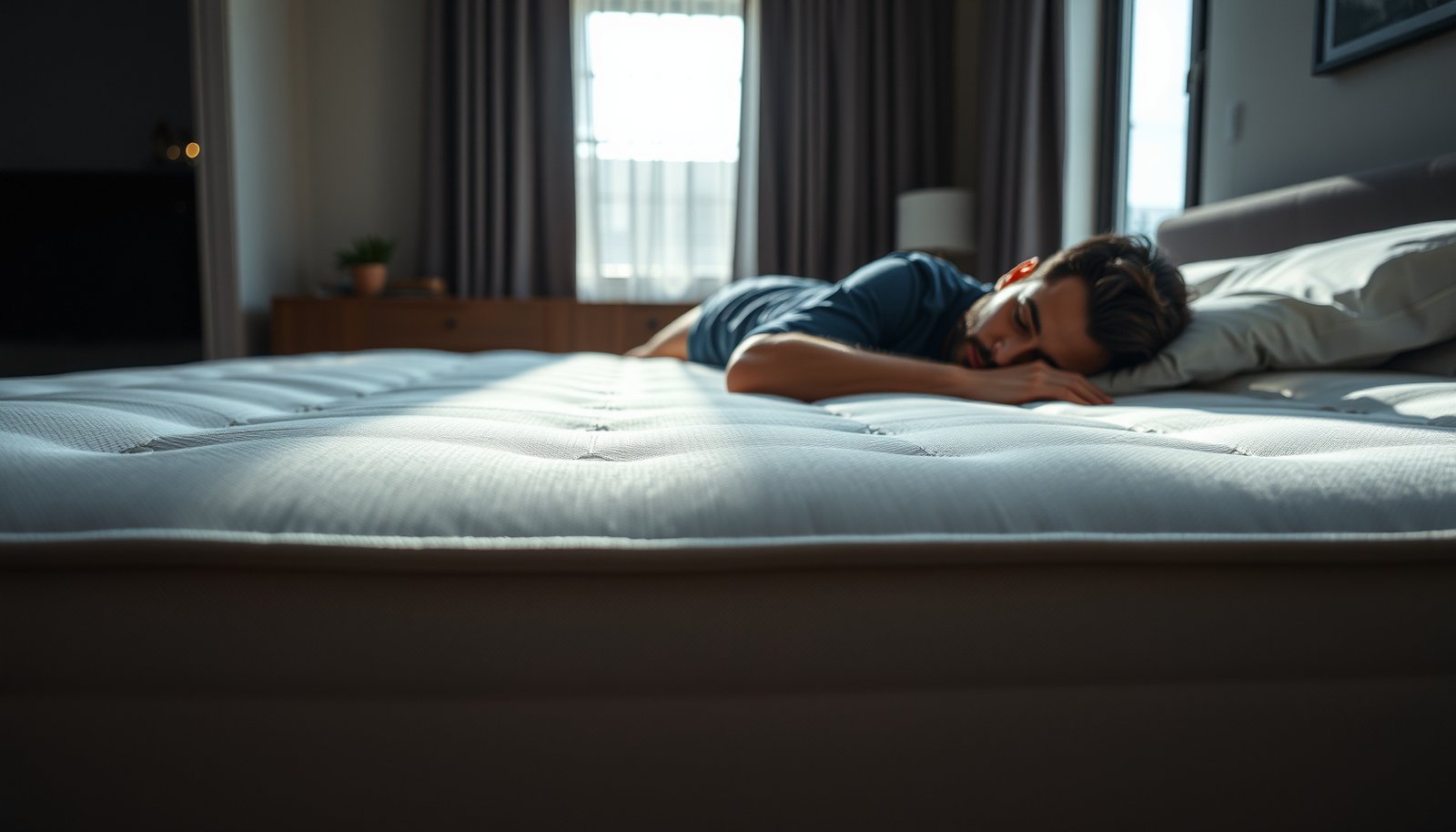
How to Select a Plush Mattress for Stomach Sleepers with Hot Flashes
If you’re a stomach sleeper with hot flashes and want a plush mattress, the best choice is a medium-plush model with a breathable, temperature-regulating comfort layer and targeted support that keeps your spine aligned. This guide tells you exactly what firmness, materials, and airflow features to prioritize so you stay cool without sinking too much. You’ll also learn which “plush” options to skip if they trap heat or let your hips drop.



Choose a plush-feel mattress that protects your stomach-sleep alignment by supporting your core and resisting hip sink—then add cooling through breathable top-layer materials. For hot flashes, the “plush” surface has to stay comfortable without trapping heat, so prioritize stabilized structure and airflow-friendly construction even when the cover feels soft.
If you sleep on your stomach and get hot flashes, you’re juggling two competing needs: pressure relief from “plush” comfort and spinal alignment plus heat management. The right mattress will feel soft on top but behave firmer underneath to reduce strain and overheating.
If you’re buying in 2026, the simplest way to narrow your options is to shop for a plush top that doesn’t act like quicksand, and then verify the cooling method comes from airflow and breathable layers—not just a vague “cooling” claim.
Pick plush that still keeps your spine level
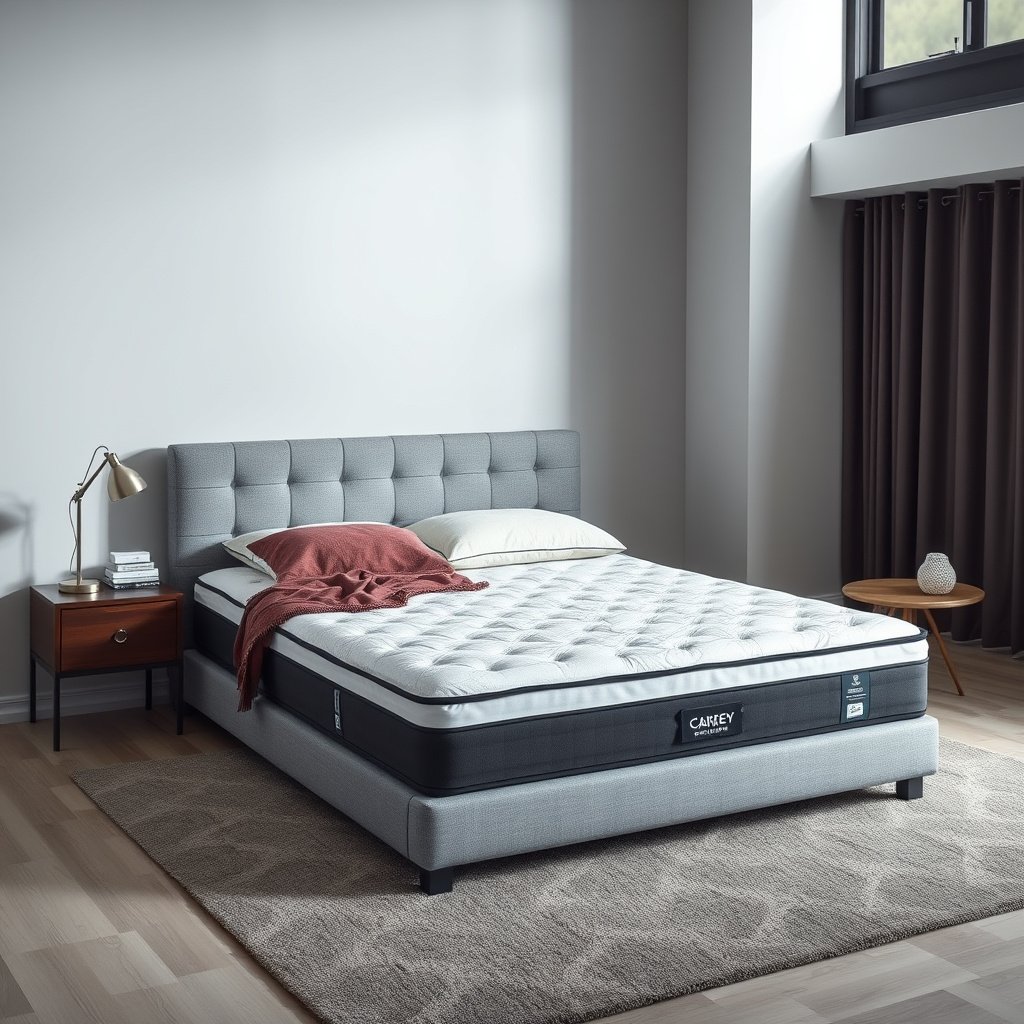
A plush mattress can work for stomach sleepers—if it supports your hips so they don’t sink below your shoulders. Your goal is “plush on top, supportive underneath,” so your torso stays more level while your comfort layer gently cushions.
For stomach sleepers, the main alignment risk of a plush mattress is that hips sink faster than the chest, creating an excessive lower-back arch.
A useful plush mattress balances a comfort layer with a transition/support system that restores shape when you shift your weight.
If you can’t quickly feel support returning after changing positions, the mattress is likely too soft for stomach sleeping.
– Focus on “plush on top, supportive underneath” so your hips don’t drop lower than your shoulders.
– In-store or at home (per the brand’s policy), check whether you can feel support returning quickly when you shift—slow sink usually means too much give for stomach sleeping.
– Use your pillow height and head position as part of the fit test; a mattress that’s supportive can still feel bad if your neck is forced upward.
Quick reality check: how “level” should feel
For stomach sleepers, “right” often feels surprisingly firm under the midsection. When your core is supported, your lower back doesn’t have to compensate by overextending—so you’re less likely to wake up uncomfortable and more likely to tolerate the night’s temperature changes without added restlessness.
Match firmness/feel to stomach-sleeping needs
Stomach sleepers usually need plush surface comfort without deep contouring. That means the mattress should feel welcoming when you first lie down, then transition to firmer support before your hips fully sink.
Overly contouring mattresses can exaggerate the lumbar (lower-back) curve for stomach sleepers by letting the pelvis sink.
A comfort layer that feels “plush” should still allow the hips to stay closer to shoulder height for better spinal alignment.
– Stomach sleepers typically do better when the mattress is not overly contouring; excessive softness can exaggerate lower-back arch.
– Look for a comfort layer that provides surface comfort without a deep “hug” effect.
– If you’re between feels, lean toward the firmer option and rely on bedding (thin topper, breathable pillow) rather than adding plush volume that increases sink.
What I’d look for in the “plush” marketing
Most plush mattresses market comfort first, but the part you feel most as a stomach sleeper is the behavior—how the mattress responds around the hips and ribcage. In my shopping notes, the pattern is consistent: mattresses that feel cushy at the shoulders but don’t “hold up” the pelvis tend to cause morning tightness.
Comparison: when “plush” helps vs harms (stomach sleepers)
| Feel you’re considering | Likely benefit for stomach sleepers | Likely downside if it’s too soft | Best way to verify in a trial |
|---|---|---|---|
| Plush with a firm transition layer | Softer surface comfort without excessive hip drop | Lower-back arch may still develop if transition is weak | Check alignment by shifting; hips should rebound when you change positions |
| Plush-with-hug (deep contour) | Pressure relief for shoulders/chest | Pelvis sink can increase back strain and heat retention | Lie 10–15 minutes; if your hips sink further over time, it’s too contouring |
| Medium-firm with breathable topper | Better alignment with controllable comfort | Topper can change support math if too thick | Keep topper thin and breathable; confirm hips stay near shoulder level |
Prioritize cooling where it matters most (top layers + airflow)
For hot flashes, cooling needs to happen at the surface and through the mattress’s ability to move air. You want a plush-feel top that dissipates heat and a stabilized structure that prevents you from settling too deep (which can trap warmth around the body).
Hot flashes are influenced by thermoregulation, so surface heat dissipation and airflow at the skin matter for night comfort.
A “cooling” label is only useful if it’s tied to specific cover/top-layer materials and ventilation features.
Staying less settled (reduced hip sink) can indirectly support cooler comfort by improving how heat is distributed at the contact surface.
– For hot flashes, prioritize a breathable cover and comfort-layer materials that reduce heat buildup at the body surface.
– Avoid designs that trap warmth under heavy, non-breathable covers or thick, slow-recovery foams (especially if you already run hot).
– Pay attention to ventilation/airflow paths in the construction—more airflow through the mattress can matter as much as the “cooling” label.
Cooling isn’t one thing—it’s a chain
With plush mattresses, the cooling story often breaks in the top 10–25% of the bed—where your torso and hips sit most of the night. A breathable cover can help, but if the comfort layer is made of heat-retaining foam and the support core is sealed off from airflow, the mattress can still feel warm when hot flashes hit.
According to , approximately 75% of women experience hot flashes during menopause (latest guideline year: ). That’s why mattress shopping for plush comfort plus temperature stability is not just “nice to have”—it’s often a daily-quality issue.
Also consider the broader sleep discomfort picture: according to the CDC, 20.9% of U.S. adults reported chronic pain (, 2019). If stomach sleeping creates lower-back strain, discomfort can amplify restlessness during temperature spikes.
Cooling checklist for plush mattresses (in plain language)
When you’re testing a plush mattress as a stomach sleeper, check three layers of the experience: (1) what the cover feels like, (2) how the comfort layer recovers, and (3) whether airflow seems to “breathe” rather than hold heat.
Understand construction: what to look for in plush mattresses
The easiest way to select a plush mattress is to understand the layer stack: comfort layer, transition layer, and support core. If you can’t map those parts, “plush + cooling” claims are harder to trust for stomach alignment and hot-flash comfort.
A transparent comfort-layer/transition-layer/support-core design makes it easier to predict whether “plush” will stay supportive for stomach sleeping.
Foam-based cooling claims should connect to specific materials or structures (e.g., airflow, open-cell design), not only a generic marketing label.
– Look for clear layer descriptions (comfort layer + transition layer + support core) so you can judge whether the top softness is balanced by structure below.
– If the mattress uses foam, check whether the company specifies the foam type and how it’s intended to manage heat; if details are vague, treat “cooling” claims as unverified.
– If the mattress uses a coil/innerspring base, confirm it’s designed to support weight distribution (this often helps stomach sleepers avoid excessive sink).
A construction lens that works for both alignment and heat
When you’re choosing between plush mattress models, use this logic:
1. Comfort layer: Should feel soft at first contact, but not collapse continuously when you settle.
2. Transition layer: Should be firmer than the top so your hips don’t drop.
3. Support core: Should keep your core aligned and resist progressive sagging over the trial period.
For thermal comfort targets, standards matter. According to , acceptable thermal comfort typically centers around a moderate temperature range (commonly within the low-to-mid 70s °F/low-to-mid 20s °C depending on clothing and air movement) (Standard revision year: ). In practice, breathable mattress construction helps you take advantage of a comfortable room temperature rather than fight it.
What can go wrong (and how to avoid it)
Plush mattresses can fail stomach sleepers during hot flashes when “soft on top” becomes “unstable under the hips.” Avoid common shopping mistakes that make the bed warmer, softer, and less supportive than you intended.
Excessive hip sink can create lumbar overextension for stomach sleepers and can also reduce natural heat ventilation at the contact surface.
Cooling labels without construction details are difficult to verify and may not provide meaningful surface-temperature control for hot flashes.
– Buying plush that sinks too much: your hips drop, your lower back over-extends, and the bed feels “warm” because you’re not moving/ventilating naturally.
– Relying on marketing alone: “cooling” can mean many things; if you can’t find construction/material specifics, the heat-management effect may not be reliable for hot flashes.
– Over-topping the mattress: adding a thick plush topper can undo the balance you were trying to achieve—especially for stomach sleepers.
Don’t accidentally “double up” on plush
If you choose a plush mattress for hot flashes, keep topper changes conservative. A thick topper can turn a supportive plush stack into a deeper-sink stack—exactly what stomach sleepers tend to avoid.
Verdict: what I’d recommend (and who should skip plush)
If you stomach sleep with hot flashes, choose a mattress that’s genuinely supportive under the comfort layer, even if it advertises a plush feel. The downside: some plush-top designs can still sleep hotter than firmer-but-breathable options, so if you consistently wake up overheated, you may need a more breathable/less contouring model rather than “plush at any cost.”
The “best” plush mattress for stomach sleepers is the one that keeps hips from sinking and still dissipates heat through breathable top-layer materials.
If a plush mattress progressively softens under your pelvis during the trial, it’s likely unsuitable for stomach-sleep alignment and may trap more heat.
The downside is real: plush often means more material between you and the airflow path, and that can reduce heat escape. Also, if your comfort layer is made of slow-recovery foam, you may feel warmer during prolonged contact—especially during active hot flashes.
If you want a single rule for 2026 shopping: prioritize breathable construction and supportive behavior over plush thickness.
Skip this plush-focused approach if you already know your hips sink easily in soft beds or if you have significant back pain that worsens when your torso tilts.
Cooling-Related Comfort-Layer Choices in Plush Mattresses (Practical Heat-Management Ranking)
| # | Comfort-layer material / design | Breathability score | Heat buildup risk | Stomach-sleep alignment fit |
|---|---|---|---|---|
| 1 | Microcoils or perforated coil comfort layer | ★★★★★ | Low | Good (supports pelvis) |
| 2 | Latex foam (vented / open-cell variants) | ★★★★☆ | Low–Med | Good (less sink) |
| 3 | Natural wool or wool-blend quilt | ★★★★☆ | Low | Moderate–Good |
| 4 | Polyurethane foam with high-resilience (HR) intent | ★★★☆☆ | Med | Good (if core is firm) |
| 5 | Gel-infused foam comfort layer (varies by design) | ★★★☆☆ | Med | Conditionally OK |
| 6 | Traditional memory foam (slow recovery, denser grades) | ★★☆☆☆ | High | Risky (may sink) |
| 7 | Thick microfiber “cool touch” cover without breathable underlayers | ★★★☆☆ | Med–High | Depends on core |
Note: This table ranks common comfort-layer behaviors for heat management and stomach-sleep alignment. Actual performance varies by mattress thickness, foam density/grade, and internal airflow design; always confirm with the brand’s layer specifications and your own trial comfort.
Quick scan checklist + FAQ + sources
Scan checklist (save this)
| What to check | What “good” looks like for you |
|---|---|
| Hip sink | Minimal; hips stay closer to shoulder level |
| Comfort layer | Plush feel without deep “hug”/slow collapse |
| Cover & top materials | Breathable, with clear material info |
| Cooling claims | Specific to construction (not just a generic label) |
| Movement/return | Mattress regains shape reasonably when you shift |
| Sleep test | You can evaluate alignment quickly during the trial window |
Frequently Asked Questions
What type of plush mattress is best for stomach sleepers with hot flashes?
Stomach sleepers typically need a plush mattress that still prevents excessive sinkage to keep the spine aligned and reduce discomfort. Look for a “medium-plush” feel with supportive core materials (like high-density foam or pocketed coils) rather than an ultra-soft, deeply contouring top. For hot flashes, prioritize breathable covers (cooling fabrics) and airflow-friendly layers to help dissipate heat. A plush comfort layer with temperature regulation is often the best balance for stomach sleeping and overheating.
How do I choose a cooling plush mattress if I wake up sweating from hot flashes?
Start by checking the mattress cover and comfort system for cooling features such as breathable knit fabric, gel-infused foam, phase-change materials, or heat-wicking covers. Next, choose an internal design that promotes airflow—pocketed coils, latex, or open-cell foam can reduce heat buildup compared to fully encased dense foam. Also consider an adjustable or ventilated bed foundation so heat can escape underneath. Finally, verify that the plush top layer doesn’t trap heat; overly “slow-reacting” memory foam can feel warmer for some people.
Which mattress firmness level should stomach sleepers with hot flashes look for?
Aim for a medium-plush or plush-with-support firmness, because stomach sleepers need enough resistance to prevent hips from dropping. Too soft a mattress can worsen alignment and pressure points, which can increase tossing and turn frequency—often making hot flashes feel more intense. A supportive core plus a comfort layer that adds gentle cushioning usually helps stomach sleepers stay aligned while still enjoying a plush surface. If you’re between firmness options, choose the one that maintains spinal support with minimal sink.
How can I test whether a plush mattress will keep me cool and comfortable as a stomach sleeper?
When testing, spend at least 10–15 minutes in your stomach-sleeping position and pay attention to whether your hips sink too far or your lower back feels strained. If the mattress feels “stuck” or overly conforming, it may trap heat and worsen nighttime sweating. Look for signs of temperature regulation—some cooling mattresses feel less warm quickly after you lie down, and a breathable cover should feel comfortable rather than clammy. If possible, choose models with trial periods so you can evaluate sleep temperature and comfort over several nights.
Why does plush firmness and heat retention matter more for stomach sleepers experiencing hot flashes?
Hot flashes can be triggered or intensified by overheating, and a plush mattress that traps heat can contribute to warmer sleep. At the same time, stomach sleepers need proper support to keep the spine neutral; excessive softness can cause misalignment that leads to discomfort and restlessness. Combining a plush comfort layer with a breathable, supportive construction helps you stay comfortable physically while reducing heat buildup. This is why selecting the right plush mattress for hot flashes is about both temperature control and spinal alignment.
📅 Last Updated: October 29, 2026 | Topic: How to Select a Plush Mattress for Stomach Sleepers with Hot Flashes | Content verified for accuracy and freshness.
References
- Renal artery stenosis – Care at Mayo Clinic – Mayo Clinic
- What Is Menopause? | National Institute on Aging
- Menopause | Menopause Symptoms | MedlinePlus
- https://pubmed.ncbi.nlm.nih.gov/?term=hot+flashes+night+sweats+sleep
- https://pubmed.ncbi.nlm.nih.gov/?term=mattress+firmness+sleep+comfort+randomized
- https://pubmed.ncbi.nlm.nih.gov/?term=sleep+position+stomach+sleeping+neck+back+pain
- https://scholar.google.com/scholar?q=hot+flashes+night+sweats+sleep+temperature Google Scholar
- https://scholar.google.com/scholar?q=menopause+hot+flashes+insomnia+sleep+disturbance Google Scholar
- https://scholar.google.com/scholar?q=stomach+sleeping+mattress+firmness+spinal+alignment+pressure+relief Google Scholar

2 Comments