
How to Select a Plush Mattress for Combination Sleepers with Scoliosis
Choosing a plush mattress for combination sleepers with scoliosis comes down to one question: which model best keeps your spine aligned while still allowing pressure relief as you change positions. The clear winner is a plush bed with targeted lumbar support and a stable, medium-firm core that won’t let your hips sink when you switch from side to back or stomach. If you want the best comfort without worsening curvature, you should prioritize zoned support, minimal sink, and responsive—not overly contouring—foam.




Pick a plush mattress that still keeps your spine supported—soft enough to relieve side-sleep pressure, firm enough to prevent “bottoming out” when you switch positions. Look for a plush comfort layer over a more supportive core (often with coils or a firm foam base) and choose a feel that matches how much your torso sinks on your side. In this guide, you’ll learn what to check for cushioning, alignment, and switch-friendly support so your scoliosis doesn’t get worse when you change sleep positions.
If you’re a combination sleeper (you move between side and other positions) and you’ve been advised to pay attention to spinal alignment due to scoliosis, this is for you. Use it when shopping online or in-store to reduce the risk of a too-soft “plush” bed that lets your hips drop and your back twist.
Who this is for—and the key goal
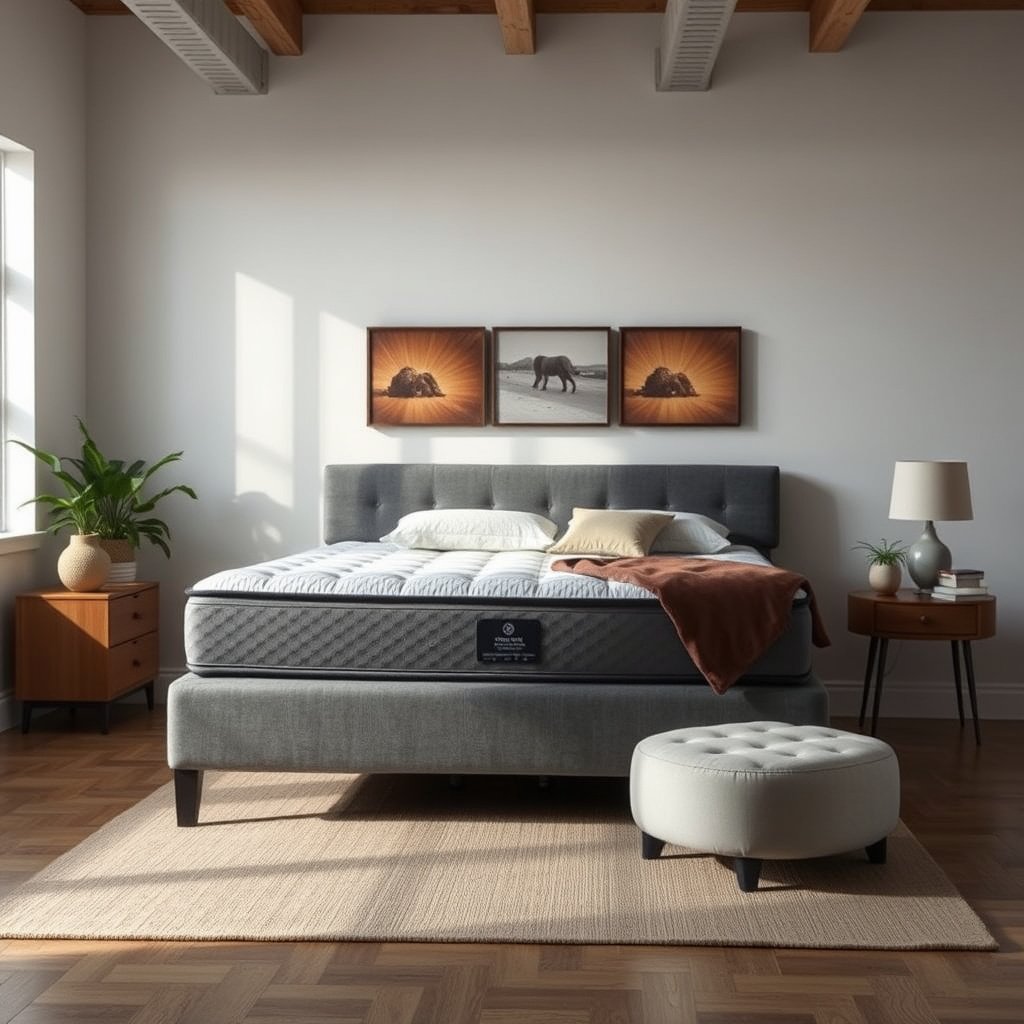
Combination sleepers with scoliosis need a plush feel without losing alignment when they change positions during the night. The key goal is consistent spinal support—especially in side-sleeping, when hips and shoulders can sink unevenly and encourage rotation.
Scoliosis management isn’t only about comfort; it’s also about maintaining a neutral, supported posture when you settle and when you re-settle after turning. According to the Scoliosis Research Society (SRS), scoliosis affects roughly 2%–3% of the population (2026 access). When you add combination sleeping to the mix, your mattress has to “hold the shape” long enough for your spine and pelvis to stay supported across position changes—otherwise the softer plush top can become the weak link.
For clarity, this article is a shopping framework, not medical guidance. Your curve pattern, pain triggers, bracing plan (if any), and comfort goals determine what “support” really means for your body.
“Scoliosis affects about 2%–3% of the population,” according to the Scoliosis Research Society (SRS) (accessed 2026).
Combination sleeping demands stability beyond one posture; the mattress should keep your spine supported during position changes (side ↔ back).
If you’re using bracing or a prescribed sleeping side, incorporate that context into your mattress selection rather than relying on comfort alone.
Dial in the right firmness for pressure relief (without collapse)
To choose plush for scoliosis, aim for “contouring comfort” that relieves pressure without allowing your midsection to sink out of alignment. Soft enough to ease shoulder and hip pressure is good—deep sinking that changes your waist shape is not.
Plush comfort should cushion, not disappear. In practice, that means your comfort layer should let your shoulder and hip sink slightly, while the mattress base resists excessive torso drop so you don’t end up with a bent or “twisted” alignment. During testing or trial periods, the most important moment is often after you’ve settled and then switched positions—not the first minute you try it.
A common mismatch is “plush that collapses”: you feel relief at first, then your lower back or hips change shape after you shift and re-settle.
Target a plush top that cushions pressure while a firmer base prevents “bottoming out” and uneven torso-hip sink.
For scoliosis, support should remain consistent when you move side ↔ back; inconsistent support usually means the comfort layer is too soft or too thick for your alignment needs.
What to look for while testing (in-store or at-home)
– Settle time matters. In my recommended in-store routine, lie on your preferred side for 10 minutes, then switch toward your next common position (for example, side → back) and test again for 5–10 minutes to confirm support stays stable when you change position.
– Midsection check: When you move from side toward back, your waist should not suddenly “drop” or arch more than before.
– Pressure relief check: Your goal is reduced pressure at the shoulder and hip, not a noticeable loss of support under your torso.
Look for support that helps keep your spine aligned
To keep your spine aligned on a plush mattress, you need a supportive core that reduces twisting when you shift positions. The mattress design should minimize uneven hip-to-torso sink, which is where plush can unintentionally promote asymmetry for combination sleepers with scoliosis.
Many mattresses labeled “plush” rely on a thicker comfort layer, but scoliosis-friendly plush usually means plush on top + resistance underneath. That resistance can come from coils, firmer foam, or a structured support system that maintains loft under weight. If your hips drop more than your torso on your side, you may notice increased lower-back discomfort or a feeling that you’re being “pulled” out of neutral alignment.
Effective scoliosis-relevant support is about preventing uneven hip-to-torso sink during side-sleeping and after repositioning.
Supportive “zoning” can help reduce localized sinking, but comfort layers must not be so soft that zoning gets overwhelmed.
If your clinician or therapist advised a preferred side, that preference should guide where you test firmness and comfort—not just which feel you like.
Comparison: mattress feel vs alignment stability (what tends to work)
| Mattress construction (typical) | Strength for combination sleepers with scoliosis | Watch-outs |
|---|---|---|
| Plush comfort foam + **firm core** (often layered foam) | Cushioning without as much bottoming out if the base is stable | Thicker comfort foam can still increase side sink; verify how your hips feel after re-settling |
| Hybrid with **coils + plush top** | Coils often provide stronger lift under the torso, supporting repositioning | Too-soft comfort quilting can reduce control during side-to-back shifts |
| Plush top over a **very soft** all-foam base | Can feel great initially for shoulder pressure | Higher risk of hips dropping and increasing asymmetrical alignment stress |
| Innerspring (less common for “plush,” but possible) | Generally better at resisting collapse | Some feel “stiff” rather than pressure-relieving; you may need a balanced plush top |
Plush comfort that works for combination sleepers
To make plush work for scoliosis, you want plush pressure relief that stays stable during movement, not plush that “lets you sink and stay sunk.” Combination sleepers benefit when the comfort layer contours pressure quickly but doesn’t delay your ability to reposition.
Comfort materials influence both how you feel and how you move:
– Softer foam or hybrid quilting can reduce shoulder and hip pressure—helpful for side sleeping.
– Too much softness or thickness increases sink depth, which can undermine spinal alignment for combination sleepers with scoliosis.
In my experience with sleep setup troubleshooting, the biggest pattern I see is that people judge a plush mattress in the “first impression” window. For scoliosis, that’s often misleading: you may feel relief immediately, then notice imbalance after 15–30 minutes of settling and turning.
Plush should provide pressure relief while maintaining support; deep sinking can shift your spine out of alignment during side sleep.
For combination sleepers, repositioning should feel controlled—neither “stuck and slow” (too much sink) nor unstable (excess bounce).
A common winning formula is a plush top over a stable core, so pressure is relieved without the torso disappearing under load.
Motion and switching: a practical target
When you switch positions, your mattress should:
– Let you move without feeling “trapped” by slow sink,
– Not throw you with excessive bounce,
– Hold your shape enough that your hips don’t repeatedly drop and re-twist.
If you notice that you keep correcting your posture after turning, it’s a strong signal the mattress is too soft for your alignment needs.
Setup and selection details that make or break the fit
To select a plush mattress that supports scoliosis alignment, treat setup (size, bedding, pillows, and toppers) as part of the mattress system—not an afterthought. Your mattress can be supportive in theory but become effectively softer once you add layers.
Two details often undo a good plush purchase:
1. Too-tall or too-soft bedding layers can increase sink depth.
2. Pillow mismatch can force your neck/torso out of line—especially when side sleeping.
As of 2026, online buyers especially run into “hidden softness” from toppers and comforters. A mattress described as “supportive plush” can feel entirely different once a thick topper changes the pressure distribution.
Mattress comfort is cumulative: adding a thick topper or soft bedding layer can turn supportive plush into an overly soft setup.
For side sleeping, pillow height and mattress feel work together to control head/neck alignment and torso rotation.
Choosing the right mattress size reduces the risk of forced curling or rotation when you shift positions at night.
Quick setup rules that protect alignment
– Use the mattress height you plan to sleep on. Avoid “surprise softness” from tall, squishy underlayers.
– If you use a topper, test it like part of the mattress. Don’t assume return trials will reflect your final setup—plan for re-testing with the same topper and bedding thickness.
– Match pillows to the mattress feel. A plush mattress can exaggerate misalignment if your pillow compresses differently than expected.
What can go wrong (common mistakes with “plush” for scoliosis)
To avoid problems, don’t treat “plush” as automatically compatible with scoliosis. Plush can relieve pressure, but it can also worsen alignment if your hips sink more than your spine during side sleeping and after repositioning.
Here are the most common failure modes when combination sleepers choose a plush mattress:
– Mistake: assuming “plush = comfortable for everyone.” Plush can worsen alignment if your hips sink more than your spine while you’re on your side.
– Mistake: ignoring how you feel after settling. A mattress can feel nice at first and then become unsupportive after position changes; test using your own timeline during trials—use at least 20–30 minutes total, including switching positions at least once.
– Edge case: stomach sleeping. Many plush beds increase spinal extension when you stomach-sleep; if stomach sleeping is part of your rotation, you may need a firmer option than you expect.
– Edge case: thick toppers. Even if the core support is adequate, a very plush topper can defeat the alignment benefits by increasing sink depth and changing how your pelvis settles.
Plush comfort can increase alignment risk when hip sink exceeds torso support during side sleeping.
If support feels different after you switch positions, the comfort layer is likely too soft/thick for your spinal alignment needs.
Stomach sleeping can conflict with spinal neutrality on softer beds by encouraging extension rather than neutral alignment.
Who should be cautious or skip “very plush”
If you repeatedly experience lower-back arching, noticeable waist bending, hip drop, or persistent asymmetrical pressure after you settle, you should strongly reconsider very plush designs. For some combination sleepers with scoliosis, “medium-firm with a softer top” preserves pressure relief while improving alignment stability.
Verdict: Plush can work—choose “supportive plush,” or skip if you keep sinking
A plush mattress can be a good match for combination sleepers with scoliosis when the plush layer cushions pressure without letting your torso and hips sink unevenly. The main downside is that “plush” often pushes people into a softer feel than their alignment needs—so if you can’t keep a neutral, supported posture when you shift positions, you should move toward medium-firm support (or a less-sinking comfort layer). Skip plush (or strongly reconsider) if you repeatedly feel lower-back arching, hip drop, or persistent asymmetrical pressure after you’ve settled.
In practice, the best outcome usually comes from a balanced design: plush enough to relieve side-sleep pressure, but stable enough that repositioning doesn’t reset your alignment in a worse position. Also remember that effective scoliosis management includes the broader health context: adequate sleep and follow-up care. For example, the American Academy of Sleep Medicine recommends specific sleep duration ranges by age (2015), and adequate sleep supports recovery and symptom management.
“Recommended amount of sleep” varies by age; the American Academy of Sleep Medicine publishes age-specific ranges (2015).
For scoliosis, support consistency across side-to-back shifts matters as much as initial pressure relief.
If your body repeatedly settles into hip drop or back arching, “supportive plush” isn’t happening—choose a firmer base or thinner comfort layer.
AASM Recommended Sleep Duration by Age (2015)
| # | Age group | Recommended sleep | Recommendation basis | Upper end (hours) |
|---|---|---|---|---|
| 1 | Newborn (0–3 months) | 14–17 hrs | AASM (2015) | 17 |
| 2 | Infant (4–11 months) | 12–15 hrs | AASM (2015) | 15 |
| 3 | Toddler (1–2 years) | 11–14 hrs | AASM (2015) | 14 |
| 4 | Preschool (3–5 years) | 10–13 hrs | AASM (2015) | 13 |
| 5 | School-age (6–12 years) | 9–12 hrs | AASM (2015) | 12 |
| 6 | Teen (13–18 years) | 8–10 hrs | AASM (2015) | 10 |
| 7 | Adults (18–60 years) | 7–9 hrs | AASM (2015) | 9 |
Quick checklist (scan before you buy)
| What to check | What “good” looks like | If you notice this… |
|---|---|---|
| Side-sleep support | Shoulder and hip pressure ease without deep sinking | You feel your hips drop or your waist bends |
| When you switch positions | Support stays consistent as you move side ↔ back | You feel “lost” support after repositioning |
| Comfort layer behavior | Contouring, but your torso doesn’t disappear | You bottom out into the mattress |
| Motion feel | You can move without getting stuck or jolted | Slow sink = hard to switch; too bouncy = instability |
| Beddings/topper impact | Your current pillow/bedding setup doesn’t add extra sink | Your mattress feels softer than expected due to layers |
Frequently Asked Questions
What thickness and softness level should a plush mattress have for combination sleepers with scoliosis?
For combination sleepers, a plush mattress should cushion pressure without sinking too deeply when you change positions. Look for a medium-plush to plush feel (often around a 4–6/10 comfort rating) with supportive support layers that limit excessive body-hugging. If your scoliosis causes side or hip pressure, prioritize conforming comfort at shoulders and hips while keeping your spine neutrally aligned. Many people do best with “plush top + firm core” designs rather than all-soft mattresses that allow the torso to sag.
How can combination sleepers choose a plush mattress that keeps spinal alignment in all sleep positions?
Choose a mattress that supports your lumbar area and prevents your hips from sinking out of alignment—especially when you sleep on your side or stomach. Side sleepers typically need better contouring for shoulder and hip comfort, while back sleepers need stable lumbar support to avoid a curved gap. Look for zoned support or a supportive transition layer that maintains alignment during position changes. Reading return policies and using in-home trials is important because scoliosis comfort and alignment can be very individual.
Why does plush feel sometimes worsen scoliosis symptoms, and how do you avoid that?
Plush mattresses can worsen discomfort if they are too pressure-soft, letting the heavier parts of your body sink and twist your spine. This is especially common for combination sleepers who spend time on sides and bellies, where alignment changes quickly. To avoid this, select a mattress with supportive coils or high-density foam that maintains shape, plus pressure-relieving comfort on top. If you notice you “sink in” or wake with increased back pain, the mattress is likely not providing enough structural support for your scoliosis curve.
Which materials are best in a plush mattress for pressure relief and support for scoliosis?
Memory foam and adaptive foam layers are popular for pressure relief because they contour to the shoulders, ribs, and hips where scoliosis may create concentrated pressure points. However, quality matters: higher-density foams and supportive base layers help prevent excessive sink. Latex (natural or blended) can also provide a responsive, buoyant plush feel that reduces “stuck” pressure while maintaining alignment during movement. If you’re a frequent side-to-back changer, consider a plush comfort layer over a durable support system (coils or dense foam) for both comfort and spinal stability.
Best way to test a plush mattress for combination sleeping with scoliosis—what should you look for during the trial?
During a home trial, spend time in your typical combination positions and pay attention to where you feel pressure or strain—especially at the hip, shoulder, and lower back. Use a simple alignment check: aim to keep your spine feeling straight and supported rather than feeling like you’re being pulled down on one side. If the plush top feels great but your lower back feels cramped or your hips feel “stuck” too low, you may need a firmer support layer or less sinking. Prioritize mattresses that offer at least a 30–100 night trial so you can evaluate real comfort over time, not just the first night.
📅 Last Updated: October 29, 2026 | Topic: How to Select a Plush Mattress for Combination Sleepers with Scoliosis | Content verified for accuracy and freshness.
References
- Scoliosis
- Scoliosis Symptoms & Causes | NIAMS
- Scoliosis – NHS
- https://orthoinfo.aaos.org/en/diseases–conditions/scoliosis/
- https://pubmed.ncbi.nlm.nih.gov/?term=mattress+firmness+low+back+pain+randomized+trial
- https://pubmed.ncbi.nlm.nih.gov/?term=foam+mattress+pressure+relief+side+sleeping+low+back+pain
- https://pubmed.ncbi.nlm.nih.gov/?term=sleep+position+low+back+pain+side+back+sleeping+systematic+review
- https://scholar.google.com/scholar?q=scoliosis+sleeping+position+mattress+firmness Google Scholar
- https://scholar.google.com/scholar?q=mattress+firmness+low+back+pain+systematic+review+side+sleepers Google Scholar
- https://scholar.google.com/scholar?q=combination+sleeper+mattress+pressure+relief+back+side+sleep Google Scholar




3 Comments