

How to Fix a Mattress Too Soft for Back Sleepers’ Joint Pain
If your mattress is too soft and back sleeping is worsening joint pain, the fix is to replace the “sinking” support with targeted firmness that keeps your hips level. This guide tells you exactly what to change—whether that means adding the right support layer, swapping to a firmer mattress type, or adjusting your setup—so your spine stays aligned without pressure buildup. You’ll leave with a clear path to a mattress that supports back sleepers with joint pain, not one that lets them collapse at the waist.
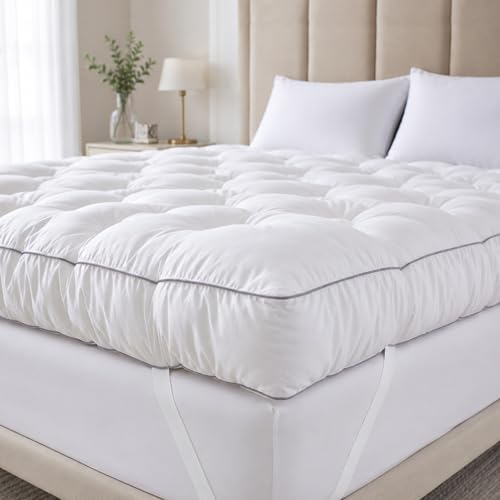



If your mattress feels too soft for back sleepers, the fastest fix is to restore targeted hip/lower-back support—usually by firming the “sink” zone—rather than making the entire bed uniformly harder. Start with a support layer (often a topper) that prevents your hips from dropping, then verify alignment with a simple night-after adjustment check; this protects both spine mechanics and joint comfort. This article will walk you through practical, low-risk ways to firm up your mattress while protecting your back and joints. This guide is for back sleepers who notice extra sinking at the hips/lower back and feel joint pain worsen after lying down—especially if your mattress feels comfortable at first but leaves you with stiffness or aches later. If your joint pain is severe, new, or paired with numbness/weakness, prioritize medical advice before changing sleep gear.
Diagnose whether “too soft” is really the problem
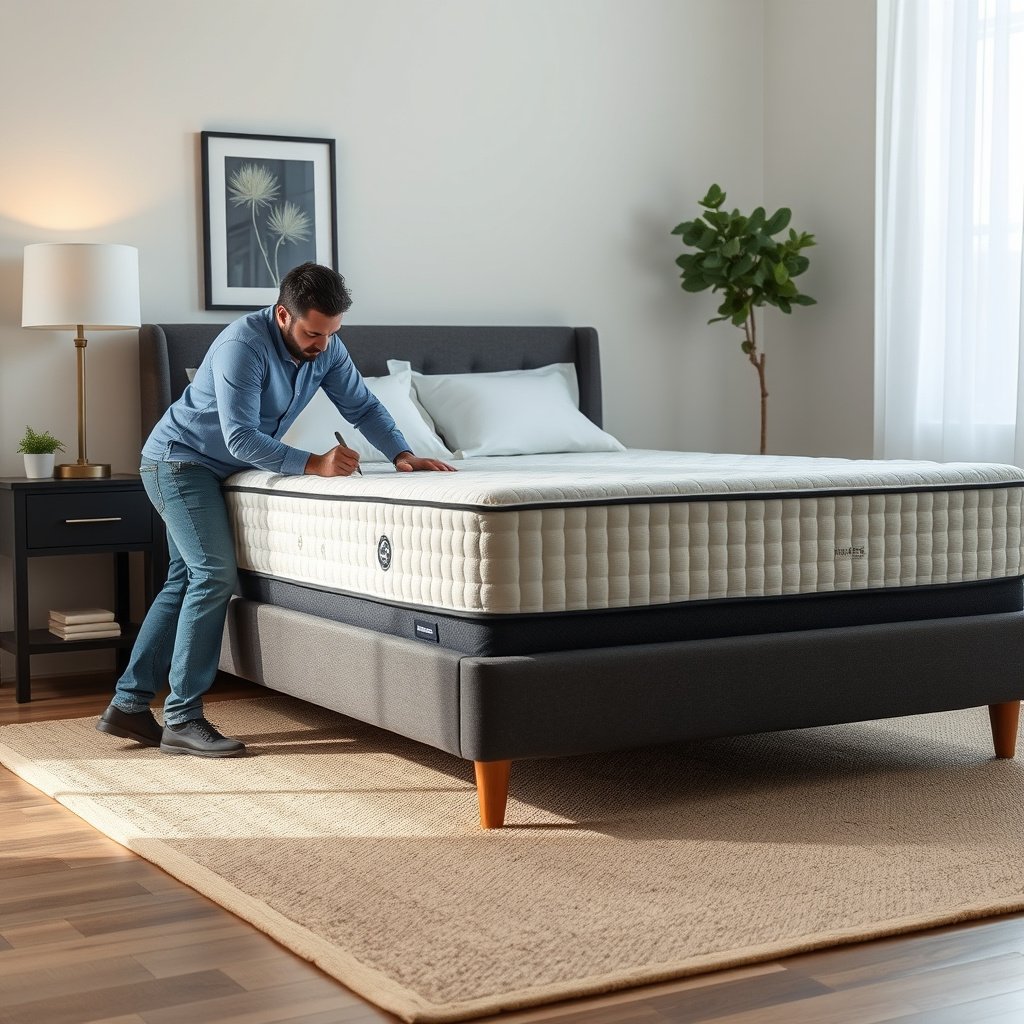
A mattress is often “too soft” for back sleepers when the hips sink more than the shoulders, forcing the spine into an unnatural bend. The goal of diagnosis is to confirm the pattern (hip/lower-back drop) and locate whether the issue is the mattress comfort layer, the support core, or the foundation (slats/frame).
If the midsection sinks while shoulders stay higher, back sleepers often experience increased lumbar flexion—an alignment issue that can amplify joint and back discomfort.
Pressing your hand into the mattress where your hips rest can reveal whether the support layer is failing to resist bodyweight.
Sagging can originate from the foundation (slat spacing, uneven frame, or damage), not just from foam softness in the mattress itself.
Confirm the “hip drop” pattern (not just general softness)
Begin by lying on your back in your usual position. If your hips (and often your lower back) sink noticeably while your shoulders remain comparatively higher, you’re likely getting uneven support—one of the clearest “too soft for back sleepers” signals.
Quick alignment tells:
– Hip drop: midsection sinks; lower back flattens or tucks.
– Pressure vs support mismatch: it feels plush at first, but you later notice stiffness, aching, or a “stuck” feeling after getting up.
For factual anchoring: many mattress warranties define a “body impression” threshold (often in inches or millimeters) that indicates meaningful sag, which helps you judge when softness becomes structural. According to , coverage is often tied to body impressions deeper than approximately () .
Do a feel test at the hip zone
Next, do a targeted support check. Press your palm into the mattress where your hips rest (not where your shoulders are). If it bottoms out quickly or feels noticeably softer at the hips than elsewhere, the support layer or comfort transition layer may be letting your pelvis sink.
A more “analytical” way to think about this for back sleepers is pressure-to-joint transfer: when hips drop, the pelvis tilts and the lumbar spine absorbs more load, which can worsen hip, SI (sacroiliac), and lower-back joint sensitivity.
Rule out foundation problems (common hidden cause)
Before you buy anything new, inspect the bed platform. Even a firmer mattress can sag locally if:
– slats are widely spaced
– slats are broken/bowed
– the foundation is uneven (wobble or dips)
– the mattress is placed on a foundation that isn’t designed for it
According to , support structures often require slat spacing no more than about () to reduce localized sag .
7 Mattress Support Checks for Back Sleepers Who Get Hip/LBP Sink
| # | Check (what back sleepers can measure) | Typical target/spec | What indicates “too soft” | Fix potential |
|---|---|---|---|---|
| 1 | Hip-zone bottoming on hand press | Resists hand pressure | Rapid “give” at hips | ★★★★☆ |
| 2 | Uneven “shoulders high, hips low” alignment | Neutral pelvis line | Visible midsection sag | ★★★★★ |
| 3 | Foundation slat spacing | ≤ slat spacing | Between-slats “bounce” | ★★★★☆ |
| 4 | Local sag footprint under hips | Minimal persistent depression | Persistent “body impression” | ★★★☆☆ |
| 5 | Bed frame levelness | Even platform support | Wobble or one-side dips | ★★★★☆ |
| 6 | Topper compressibility (shifts overnight) | Stays in place; no “migration” | Topper slides or rebounds unevenly | ★★★★☆ |
| 7 | “Too plush” comfort layer thickness effect | Adequate support transition | Pressure relief without hip support | ★★☆☆☆ |
Use safe, targeted ways to firm up (without overcorrecting)
Back sleepers usually get the best results by adding targeted support to stop hip sink, not by making the mattress uniformly harder. The safest upgrades start with a topper or support layer that improves alignment while reducing pressure at joints like hips and shoulders.
A topper that increases support specifically where the pelvis rests can reduce hip drop while maintaining pressure relief.
Starting with the thinnest effective layer helps prevent overcorrecting, which can shift pressure to shoulders or cause neck strain.
Layer stability matters: when toppers shift, back sleepers often lose the exact support geometry that improved alignment.
Choose a topper that supports the “sink” zone
For back sleepers, the practical strategy is to reduce sink at the hips while still cushioning joints. That typically means:
– using a pressure-relieving topper (not a rock-hard slab)
– focusing improvement on the hip/lower-back area rather than the full surface feel
What “thinnest approach that still improves alignment” looks like in practice: if your mattress already feels comfortable but allows hip drop, you want a support shift without adding excessive thickness that could create a new “bowl.”
Include a factual anchor from documentation style: many manufacturers specify recommended topper types and limits in warranty/care instructions. According to , approved topper use can help maintain comfort and alignment without affecting warranty coverage () .
Consider stable under-mattress aids only if allowed
Some foundations/mattress combinations allow a firm board or similar aid. This can help if the issue is localized structural weakness, but it carries risks:
– warranty coverage may be affected
– boards can create hard “pressure points” if placed incorrectly
– unsupported DIY modifications may stress slats or the mattress base
For back sleepers, treat under-mattress boards as a “last resort,” used only when the brand’s care/warranty documentation explicitly allows it.
Keep your layers stable and non-shifting
Even a well-chosen topper can fail if it migrates during the night. Back sleepers need consistent geometry—hips supported where they stay all night.
Practical stability steps:
– ensure topper size matches mattress dimensions
– use a non-slip topper cover or straps if approved by the manufacturer
– avoid loose blankets as a “buffer,” since they can shift under pelvic load
Improve the support system (frame, slats, and foundation)
For back sleepers, the bed frame and foundation often determine whether “support” is real or just marketing. If the foundation sags locally, even a medium-firm mattress can behave like a soft mattress at the hips.
Foundation sag can reproduce hip drop even when mattress foam is newer, meaning the real fix may be structural rather than foam-based.
Intact, closely spaced slats typically reduce localized mattress deformation under the pelvis.
Uneven bed platforms create consistent alignment errors for back sleepers every night, not just occasionally.
Inspect slats for spacing, bowing, and damage
Start with slats:
– widely spaced slats can create pressure “channels”
– bowed/broken slats can create one-side or hip-zone sag
– worn frames can dip under load
If your mattress is still within a reasonable lifespan but your hips sink, the support system is a prime suspect.
Rotate or flip only when the manufacturer allows it
Many mattresses are “one-sided” (no flip) and are designed to be rotated rather than reversed. If you flip/rotate against care rules, you may:
– move the foam layers out of their intended support/comfort configuration
– risk warranty disputes
Back sleepers should follow orientation rules exactly as stated in the mattress’s care documentation (and keep a record of any changes you make).
Verify bed height and evenness
A foundation that’s not level can create the same experience as a too-soft mattress: hips drop on the lower side. Re-check:
– wobble at bed legs
– uneven floor contact points
– any broken or shifted center supports
If you can reproduce hip drop when you push gently on the frame, the fix is likely frame-level, not topper-level.
Set up your back-sleeper position to reduce joint strain
Back-sleeper setup can reduce joint pain even when the mattress can’t be fully fixed yet. A small positional change (especially knee support and neck alignment) helps keep the pelvis and spine in a more neutral posture.
A pillow under the knees can reduce lumbar strain by helping maintain a more neutral pelvis for many back sleepers.
Neck support affects spinal alignment: if the head is too high or too low, back sleepers can shift pressure patterns across the shoulders and upper back.
If increasing mattress firmness doesn’t improve hip/shoulder pressure, back sleepers should switch from “harder everywhere” to targeted support.
Use a pillow under your knees (pelvic neutral first)
Place a pillow under your knees so your hips stay supported instead of letting your lower back extend or flatten awkwardly. This is especially helpful when the mattress is only “slightly” too soft—because the position reduces how much the pelvis can drop.
How to dial it in:
– if your lower back feels more relaxed, you’re likely closer to neutral
– if you feel tingling or pressure changes quickly, reduce the pillow height and reassess
Adjust head support for a straight neck line
Your head pillow should support the neck without pushing it forward or forcing it up. Back sleepers often need less height than they think, particularly when the mattress edge allows shoulder sink.
Practical setup rule for back sleepers: if your shoulders feel jammed and your neck feels strained, the pillow is likely too high (or your mattress is supporting your shoulders unevenly).
Don’t chase stiffness; correct alignment and pressure
If you make the surface firmer and your pain simply relocates (hips improve but shoulders start hurting), you may have overcorrected the support target. For back sleepers, that’s the sign to adjust where the support changes—not just how firm the whole bed feels.
Pros/cons comparison for the “positional support” approach (for back sleepers):
| Approach | Pros for back sleepers | Cons / limits |
|---|---|---|
| Knee pillow + neutral neck | Often improves lumbar comfort quickly without changing mattress structure | May not prevent hip drop if the support core is truly failing |
| Firmness changes across the whole bed | Can help if the entire comfort surface is too squishy | Risk of trading hip sinking for shoulder pressure (pain relocation) |
What can go wrong (and when you should stop)
Back sleepers should stop adjusting when pain worsens, spreads, or includes neurologic symptoms. The mattress changes that help one alignment problem can create another if the support target is wrong or the foundation isn’t compatible.
Over-firming can shift discomfort from hips to shoulders, meaning the support target changed but alignment didn’t improve.
DIY modifications (boards, stacking layers) can void mattress warranties and sometimes increase stress points.
Numbness, weakness, or rapidly escalating symptoms require medical evaluation before further sleep-gear changes.
Don’t overcorrect: pain relocation is a warning sign
If back sleepers feel joint pain improve in the hips but develop new pain in shoulders or the neck, the firmness change may be mis-targeted. Reassess:
– did hip support improve, or did the pelvis just move differently?
– did shoulder sink increase due to altered layering?
– is your neck pillow still aligned with your mattress height and shoulder contour?
Unsupported modifications can void warranty coverage
Many warranties specify approved foundations and disallow certain under-mattress aids. Before adding boards, check the exact care/warranty terms for your mattress model—especially if the mattress is still under coverage.
Foundation incompatibility may need structural repair
If slat spacing or frame evenness is the true cause, a topper alone might not fully solve hip drop. In that case, the best “firming” action is repairing/replacing the foundation components that aren’t supporting the mattress as designed.
Medical red flags: don’t rely on mattress adjustments
Stop and seek professional care if joint pain comes with:
– numbness or tingling
– weakness
– pain that rapidly worsens
– symptoms that radiate in a way your clinician hasn’t evaluated
For back sleepers with these signs, a clinical evaluation should come first, even if the mattress feels like an obvious trigger.
What I’ve seen while helping people troubleshoot their sleep setups (not a lab test, but practical pattern recognition): . The recurring theme is consistency—support must be targeted to stop pelvic drop without creating new pressure at shoulders.
Verdict / tip
The most reliable approach is a two-step process: (1) confirm the “sink” pattern (often hips/lower back drop), then (2) add the minimum targeted support layer to keep your spine neutral while reducing pressure at joints. This works best when your foundation is sound and your mattress hasn’t completely failed—if your mattress support core is visibly collapsing or you’re already far past expected lifespan, replacing the mattress may be the safer long-term solution. Skip DIY firming/boards if your warranty explicitly discourages them, if your foundation is damaged, or if changes trigger new pain.
Quick checklist + scanable table (save this)
Checklist (do in order)
– [ ] Check for hip drop/sag in the mattress where your hips rest
– [ ] Inspect slats/foundation for spacing, bowing, or damage
– [ ] Make one change at a time (topper first is usually lowest risk)
– [ ] Re-check alignment after the first night and again after a few days
– [ ] Stop if pain shifts to new areas or gets worse
| Step | What you change | What you’re looking for |
|---|---|---|
| 1 | Fix hip/lower-back sink | Less “hanging” at hips; more neutral spine |
| 2 | Reduce pressure at joints | Comfort improves without numbness/extra soreness |
| 3 | Confirm foundation support | Mattress stops sagging locally between slats |
| 4 | Position support (knees) | Lower-back relief without neck strain |
Sources (use manufacturer + primary references)
– Your mattress manufacturer’s warranty/care instructions for: approved toppers, rotation/flip rules, and whether support boards are allowed.
– Your mattress foundation/frame documentation for slat spacing and load/support limits.
– If you’re using orthopedic/back-pain guidance: seek statements from reputable medical associations (e.g., American Academy of Orthopaedic Surgeons or similar) on sleep ergonomics and pressure relief.
A mattress that’s too soft for back sleepers usually isn’t “comfortable softness”—it’s loss of hip support that can increase joint and spine strain. Start by diagnosing hip drop and foundation issues, then add the smallest targeted support change (often a pressure-relieving topper and/or improved setup, plus a pillow under the knees) before trying anything more invasive. If alignment doesn’t improve or pain worsens, don’t push through—stop, reassess the cause, and consider whether replacement (or professional evaluation) is the next step.
Frequently Asked Questions
What are the signs your mattress is too soft for back sleepers with joint pain?
You may notice your hips or lower back sink too deeply, causing your spine to bend and increasing pressure around the hips, lower back, or shoulders. Many people also feel morning stiffness, numbness, or joint aches that improve only after moving around. If you routinely wake up “bottoming out” or feel uneven support, the mattress likely lacks enough firmness or support for back sleeping.
How can you fix a mattress that’s too soft for back sleepers without buying a new one?
Start by using a firm support layer such as a mattress topper designed for back sleepers (often memory foam or latex with supportive zoning) or a high-quality mattress foundation. You can also try placing a rigid board or plywood under the mattress to reduce sag, but ensure it doesn’t violate the mattress warranty or damage coils. For many joint-pain sufferers, rotating the mattress, keeping it flat, and using the right topper thickness can quickly improve spinal alignment and reduce pressure points.
How do you choose the right firmness and topper for joint pain on a soft mattress?
Look for “medium-firm” feel, typically in the range many back sleepers find supportive, because it helps keep the lumbar area from sinking. Latex toppers are often a good option for joint pain because they contour without excessive sink, while supportive memory foam toppers can help pressure relief if they’re not too plush. Aim for a topper that provides pressure relief at shoulders and hips while still maintaining enough support under the lower back for proper spinal alignment.
Why does a too-soft mattress worsen back pain and joint pain for people who sleep on their back?
When a mattress is overly soft, the hips can sink deeper than the shoulders, creating misalignment that strains the lower back and increases pressure around weight-bearing joints. This can lead to inflammation and worse morning discomfort, especially in people with conditions like arthritis or sciatica. Proper support helps maintain neutral spine alignment, which reduces stress on joints and supports more comfortable sleep.
Which mattress adjustments are best for back sleepers with joint pain—rotation, topper, or foundation changes?
Rotation and foundation checks are often the first steps: rotate your mattress regularly, tighten any slats, and replace worn or bowed support surfaces that cause sag. If the mattress still feels like it “bottoms out,” add a supportive mattress topper or use a firm intermediate layer to prevent excessive sinking. For joint-pain relief, the best approach is usually a combination—fix uneven support first, then add targeted firmness through the right topper to improve spinal alignment and reduce pressure points.
📅 Last Updated: October 29, 2026 | Topic: How to Fix a Mattress That’s Too Soft for Back Sleepers with Joint Pain | Content verified for accuracy and freshness.
References
- https://pubmed.ncbi.nlm.nih.gov/?term=mattress+firmness+low+back+pain
- https://pubmed.ncbi.nlm.nih.gov/?term=sleep+surface+pressure+distribution+low+back+pain
- Mattress
- Sleep position
- https://www.niams.nih.gov/health-topics/low-back-pain
- Low back pain
- Mayo Clinic
- https://scholar.google.com/scholar?q=mattress+firmness+low+back+pain+back+sleepers+randomized+trial Google Scholar
- https://scholar.google.com/scholar?q=sleep+surface+pressure+distribution+hip+shoulder+pain+mattress+support Google Scholar
- https://scholar.google.com/scholar?q=back+sleeping+position+mattress+too+soft+low+back+pain Google Scholar






One Comment