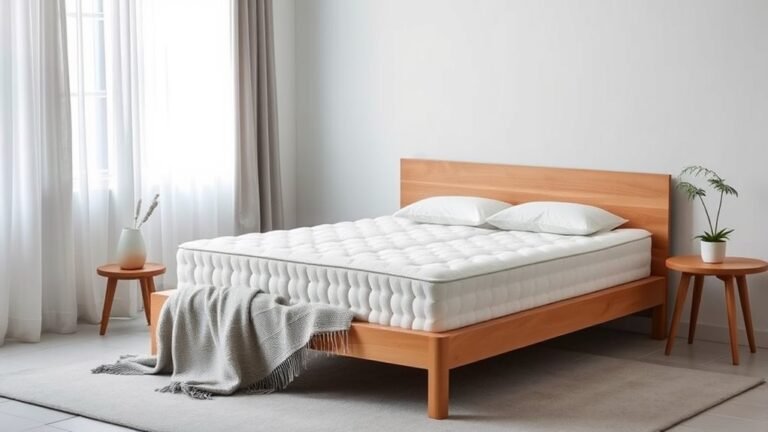
How to Fix a Sagging Innerspring Mattress for Couples With Sleep Needs
Want to fix a sagging innerspring mattress for couples—especially when one partner runs hot, while the other needs extra support? The fastest, most reliable repair is to identify the exact sag point and reinforce it the right way, because a sagging core won’t be solved by flipping alone. You’ll get a clear step-by-step verdict on what to do for uneven body impressions, how to choose the right support layer for different sleep positions, and how to stop the problem from returning.




A sagging innerspring mattress for couples is usually a support problem (slats/frame) or coil wear—so fix the foundation first, then fine-tune comfort per side. For couples who feel uneven sinking, heat, or pressure on one half, the most efficient approach is: “fix the sag first, then zone comfort” with split toppers or side-specific inserts.
This is for couples who share one innerspring mattress but one partner sinks more, sleeps hotter on one side, or feels pressure sooner—often after months of normal use, a frame change, or moving to a new bed setup.
Diagnose where the sag is coming from
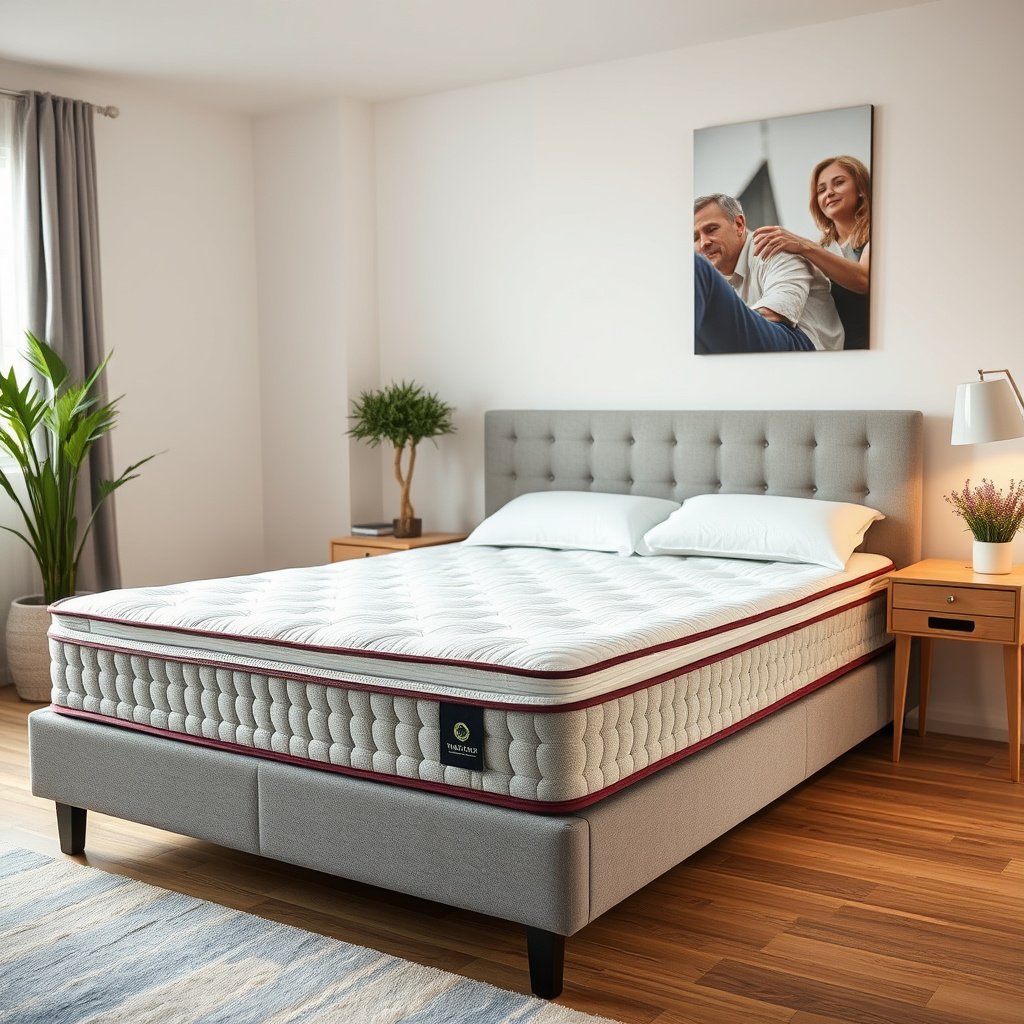
You’ll get the best outcome fastest when you identify whether the dip is coming from flexing support or failing coil support. In most shared-couple scenarios, one person’s weight pattern exaggerates the same structural issue—so the goal is to determine whether the mattress is merely being pressed down, or whether the internal spring unit is no longer distributing load evenly.
“Localized impressions that return in the same spots often point to support gaps or coil fatigue under those zones.”
“If the sag spreads across nearly the entire sleep surface, the foundation or bed frame rigidity is usually the root cause.”
“Documenting sag measurements over time makes it easier to prove whether a fix actually reduced deflection.”
Support-check: local vs. whole-bed sag
A simple “support check” can separate comfort-layer wear from structural failure. Press down along the mattress surface in multiple locations (center, left side near the heavier sleeper, and right side), and note how the dip behaves. If the sag is mostly a body-shaped crater that doesn’t change much when you press elsewhere, it’s more likely tied to a specific unsupported zone (slat gap, bowed slat, broken support). If the bed looks like a gentle valley everywhere, the base may be flexing under total load.
Inspect the frame/bottom support (this is where couples lose the most time)
For innerspring mattresses, the bed frame and slat system act like the “skeleton” for the coil unit. Look for bowed slats, missing center support, loose center bars, or slats that flex when you push them by hand. If your frame uses a center rail, confirm it’s installed correctly and tightened—center-support issues are a common reason only one side “feels” dramatically worse even when the mattress looks evenly sagged from a distance.
Measure sag (roughly) so your fix has a baseline
Grab a ruler or measuring tape and mark a consistent reference point (for example, the same distance from the mattress top edge and the same line across the width). Measure the height drop at that point before changes, then repeat after you adjust slats or rotate the mattress. Even if you can’t measure millimeters precisely, tracking “before vs. after” tells you whether the sagging innerspring mattress is actually improving.
Fix the foundation first (most sag is structural)
You usually fix the visible sag quickest by correcting foundation support—because coils can only behave as well as the structure underneath. Once the bed frame stops flexing (or the slat system stops creating gaps), comfort upgrades for couples can be smaller, targeted, and less wasteful.
“Innerspring comfort layers can’t fully compensate for a foundation that allows excessive mattress deflection.”
“Replacing broken slats and tightening center hardware often restores more even coil loading than adding extra foam on top.”
“Many mattress warranties require an approved foundation type and support configuration.”
Confirm slat spacing (or approved base type) before you add anything
If your bed uses slats, verify they match your mattress or bed-frame documentation. Too much gap can let coils sag prematurely, especially in the center and in the region where the heavier sleeper concentrates their body weight.
– If slats are adjustable or uneven, re-space or replace them so spacing stays consistent across the whole frame.
Also confirm the base type matches what your innerspring mattress requires. Innerspring mattresses often need a proper box spring/foundation or a slat system approved for that mattress model—don’t rely on an unapproved platform.
Add missing support and eliminate frame flex
Next, fix the foundation defects you can see:
– Replace broken slats.
– Tighten fasteners across the bed frame.
– Confirm the center support is installed if your frame uses one.
If you have a center beam/rail, check that it’s level and fully seated. Even a slightly misaligned center rail can create a “tilted valley,” which is exactly how couples end up with one partner feeling pressure sooner.
Quick reference: expected impact by root cause (so you don’t over-spend)
Below is a practical way to prioritize. It’s designed to help you decide what to tackle first when you have a sagging innerspring mattress and a partner who sinks faster.
Most Common Causes of One-Side Sag in Innerspring Beds (2026) — Prioritization Guide
| # | Likely root cause | What couples notice first | Typical “sag reduction” after support fix | Practical first step | Net value vs. adding topper |
|---|---|---|---|---|---|
| 1 | Slat spacing too wide | One side sinks more where slats gap | Medium | Re-space/replace slats | +High |
| 2 | Missing center support | Center valley; pressure returns quickly | High | Install center rail/foot | +High |
| 3 | Bowed/soft slats | Hammock feel after 2–4 months | Medium–High | Replace flexing slats | +Medium |
| 4 | Loose center hardware | Sag worsens unevenly | Medium | Tighten/realign rails | +Medium |
| 5 | Unapproved platform/base | Sinking accelerates after setup change | High | Use approved foundation | +High |
| 6 | Coils worn/broken internally | Deep crater that doesn’t improve after support fixes | Low–Medium | Consider service or replacement | -Low |
| 7 | Comfort layer softening (non-structural) | Feel changes with toppers, base is rigid | Medium | Use split topper after sag fix | +Medium |
> Note: This prioritization guide is intended to help decide order of operations for a sagging innerspring mattress. For warranty or brand-specific requirements, always defer to your owner’s manual.
Rotate (and flip only if your mattress allows it)
Rotation works because it redistributes how the coil unit and comfort layers experience body-zone load—especially when the sagging innerspring mattress is worst where both partners tend to sleep. Flipping is only a good idea for truly flippable innerspring designs, and doing the wrong thing can create new impressions.
“If a mattress is one-sided, flipping it can redistribute wear in ways the design doesn’t support.”
“Rotating head-to-foot evens out wear patterns without changing the mattress’s intended top/bottom.”
“A breathable mattress protector reduces moisture risk, which can accelerate degradation in comfort materials.”
Confirm flippable vs one-sided (before you move a single layer)
Check the care label and owner’s manual for flippability. Many modern innerspring mattresses are one-sided (they have a designated top layer for comfort/pressure relief and a bottom engineered for support).
If your innerspring mattress is one-sided, flipping can worsen wear patterns or void support claims depending on warranty wording.
Rotate head-to-foot (safe default for most couples)
Rotate head-to-foot to even out coil fatigue. Do this even if one partner feels the dip more strongly, because the underlying sagging innerspring mattress mechanics still depend on where loads occur over time.
As a practical “couples” note: if your sagging innerspring mattress is worst along the center where both partners meet, rotating can reduce the “same-sleep-zone” stress loop.
Use a breathable protector to reduce moisture-driven softening
Moisture exposure can accelerate material breakdown in comfort layers—especially when the bed traps humidity. For couples sleeping hot on one side, sweat + trapped moisture is a real accelerant.
According to the U.S. Environmental Protection Agency, indoor relative humidity is commonly recommended to be kept roughly in the 30–50% range to help inhibit microbial growth (EPA guidance, 2023). Keeping the sleep system dry via a breathable protector can reduce the odds that a sagging innerspring mattress softens faster than it should.
Add comfort for couples with different sleep needs (without fighting the sag)
After you fix the foundation, comfort zoning becomes much more effective—because a sagging innerspring mattress can’t be “topped” back into even support if the coils are already failing. For couples with different sinking/pressure or heat, the fastest path is typically side-specific comfort that doesn’t reintroduce hammock feel.
“Split comfort tools work best once foundation sag is reduced, because they then target pressure distribution rather than hiding structural deflection.”
“Side-specific support can address one partner’s pressure sooner without making the entire mattress thicker.”
“Over-thick layering on top of a still-sagging innerspring unit often increases the hammock effect.”
Choose zoning: two toppers split at center (common couples solution)
A common strategy for couples with different comfort needs is two different toppers split at the center seam—one firmer, one softer—so each partner gets the feel they need without fighting. Once the sagging innerspring mattress is supported evenly, this reduces pressure while preserving support where the coil unit is still strong.
Target only the side that sinks more (reduce wasted thickness)
If uneven support persists after foundation correction, add support/firmer feel where it’s needed most:
– A firmer topper or firmer insert on the heavier sleeper’s side.
– A softer topper on the lighter sleeper’s side.
This targeted approach often beats adding overall thickness, which can create extra shear and a deeper “valley” in the middle if the coil unit still flexes.
Pros/cons: split topper vs. side insert (decision support)
| Option | Best when… | Pros | Cons |
|---|---|---|---|
| Split toppers (two separate comfort layers) | Both partners need different firmness/pressure relief | Easy tuning; each side can be swapped | More parts to align; edges can shift if protector is slippery |
| Side-specific insert/support | One side sinks more or feels pressure sooner | Targets the problem without changing overall thickness | Requires careful sizing; may change bed feel at center seam |
| Whole-topper (single topper for both) | Couples have similar comfort needs | Simple setup | Can still increase hammock feel if sag remains |
What can go wrong (and how to avoid wasted effort)
Most wasted effort happens when you treat comfort as the cause of sagging. If the foundation is flexing or the innerspring coil unit is failing, toppers and inserts can only mask symptoms temporarily.
“If the slat system still has excessive gaps, toppers mostly change feel—not the underlying coil loading.”
“Flipping a one-sided innerspring mattress can create new impressions and reduce usable lifespan.”
“Ignoring warranty foundation requirements can lead to claim denial even when your fix seems reasonable.”
Common mistakes (and the fix)
– You add comfort before fixing the base. If slats are too far apart or the frame flexes, toppers disguise the symptom briefly while the sagging innerspring mattress continues breaking down.
– You flip the wrong type of mattress. If your innerspring is one-sided, flipping can create new impressions and shorten lifespan.
– You ignore warranty/support guidance. Some manufacturers require specific foundations or prohibit certain repairs.
– You mistake coil damage for comfort-layer wear. If the sag is deep, localized, and doesn’t improve after support/rotation, the coils may be worn or broken.
Warranty and safety caution (foundation changes can matter)
Even though this article focuses on comfort and support, remember that mattress construction and labeling requirements exist for safety compliance. For example, in the U.S., mattress flammability requirements are governed by federal rules such as 16 CFR Part 1633 (CPSC, 2016). That’s one reason manufacturers care how you use foundations, rotate, and modify bedding systems.
Also, if you’re using a complex frame (adjustable base, custom mechanisms), follow its documentation carefully to avoid misconfiguration.
Verdict / tip (what to do next, plus downsides)
If the sagging innerspring mattress problem is mainly structural (slat spacing, bowed slats, missing center support, or a flexing frame), improving support and rotating can reduce the dip significantly—often without replacing the whole bed. If the sag remains even after correct foundation support and rotation, the coils (or internal structure) are likely failing, and replacement or qualified repair becomes the honest long-term solution.
“Fix the structural deflection first; comfort tools should be used to refine pressure relief, not to compensate for a failing coil unit.”
“If head-to-foot rotation plus approved foundation support doesn’t improve the dip, internal wear is the likely culprit.”
Downsides / who should skip DIY
– Skip DIY “fixes” if your mattress is still under warranty and the manufacturer requires specific handling—contact them first.
– Skip toppers/inserts as your only solution if the sag is severe or you can feel distinct coil breakdown; that’s harder to correct on top.
– If your frame is complicated (adjustable base, custom head/foot mechanisms), follow its documentation closely to avoid voiding coverage or misconfiguring support.
Quick scan checklist (save this)
| Step | Check | Goal |
|---|---|---|
| 1 | Frame/slats for bowing or gaps | Stop flex that drives coil sag |
| 2 | Center support and tight hardware | Keep the mattress evenly supported |
| 3 | Flippable vs one-sided | Rotate correctly without worsening wear |
| 4 | Rotate head-to-foot (when allowed) | Even out body impressions |
| 5 | Add split comfort only after sag is reduced | Match partners’ needs without extra hammock feel |
Frequently Asked Questions
What causes a sagging innerspring mattress when you share it with a partner who sleeps differently?
Sagging typically happens when coil support breaks down unevenly, often because one side is used more heavily (for example, a heavier sleeper or someone who spends more time on one position). Sleep needs also matter—people who change positions more often or sleep in different spots can stress certain areas faster. Over time, the upholstery foam and inner springs can lose loft, leading to body impressions and back or hip misalignment for couples.
How can you fix a sagging innerspring mattress for couples without replacing it right away?
Start by checking the foundation: tighten or replace broken slats, and ensure the bed has a solid, supportive base with proper spacing for innerspring mattresses. Rotate the mattress (and consider flipping if it’s a flippable model) every 3–6 months to even out wear patterns. If the sag is localized, add a supportive mattress topper designed for innerspring support—like a high-density foam or a supportive gel/latex topper—to reduce pressure points while improving alignment for both sleepers.
Why does a sagging innerspring mattress feel worse for couples with different firmness preferences?
When one person prefers a firmer feel and the other needs more contouring, uneven sag can create a “divot” that pulls one partner’s hips and shoulders into poor alignment. This is especially common when the mattress loses edge or center support, increasing sink-in and motion transfer. As a result, the partner who sleeps more heavily on their side may experience more pressure on the shoulder and hip, while the other may feel unsupported and develop lower back discomfort.
Which support options work best for sagging innerspring mattresses—slat adjustment, frame upgrades, or a topper?
If the sag is coming from inadequate base support, slat adjustment or upgrading to a stronger foundation usually fixes the root cause and helps the coils perform again. If the mattress is already worn but the frame is solid, a quality topper can be the fastest improvement: choose a supportive option that targets reinforcement rather than just softness. For couples, a topper that reduces pressure while maintaining overall mattress support can help both sleep needs—especially if one partner wakes with pain from side-sleeping and the other prefers less sink-in.
What’s the best way to diagnose sag locations and match a fix to both sleepers’ comfort needs?
Use a simple test: press your hands into the mattress surface where each partner says it dips, and note whether the sag is center-only, near the edges, or along one side. If the dips line up with one sleep position, rotate the mattress and consider placing firmer support under the area of deepest sink. Then match your solution to symptoms—e.g., add targeted support for side sleepers (to reduce shoulder/hip pressure) and choose a topper or reinforcement strategy that prevents excessive cradle effect for the firmer sleeper, ensuring both partners maintain neutral spine alignment.
📅 Last Updated: October 26, 2026 | Topic: How to Fix a Sagging Innerspring Mattress for Couples with Different Sleep Needs | Content verified for accuracy and freshness.
References
- Mattress
- Mattress
- Pseudoaneurysm: What causes it? – Mayo Clinic
- https://pubmed.ncbi.nlm.nih.gov/?term=mattress+firmness+sleep+quality
- https://pubmed.ncbi.nlm.nih.gov/?term=mattress+firmness+low+back+pain+randomized
- Sleep | Sleep | CDC
- https://scholar.google.com/scholar?q=sagging+innerspring+mattress+how+to+fix+rotate+foundation Google Scholar
- https://scholar.google.com/scholar?q=partner+different+sleep+needs+mattress+firmness+sleep+quality Google Scholar
- https://scholar.google.com/scholar?q=mattress+firmness+side+sleepers+support+lumbar+spine Google Scholar