

How to Fix a Sagging Innerspring Mattress for Side Sleepers with Hip Pain
If a sagging innerspring mattress is wrecking side sleepers’ hip alignment, the fix is clear: re-level the support system so your pelvis stops sinking. This guide answers whether you should flip/rotate, add targeted support, or replace failing inner coils—and which option actually reduces hip pain. You’ll get a step-by-step diagnosis and the fastest path to restore a flatter sleeping surface without wasting money on guesswork.




If your innerspring mattress is sagging, the fastest path to relief is to restore spinal alignment by reinforcing the weak spots and improving hip support—often with a new foundation or a properly chosen support board/box. Start by checking the mattress foundation and your sleep position, then try the least invasive fixes first (flattening/rotating where allowed, adding support, and using the right topper). This guide walks you through what to do step-by-step and when the problem is really a mattress replacement.
If you’re a side sleeper with hip pain and you notice body impressions, sagging edges, or uneven support, these steps are likely to help—especially if the mattress is still structurally sound but needs better support. If your mattress is already severely collapsed or you’re getting worsening pain despite support changes, you’ll also see what signs point to replacing it.
Diagnose the sag: where the mattress is failing
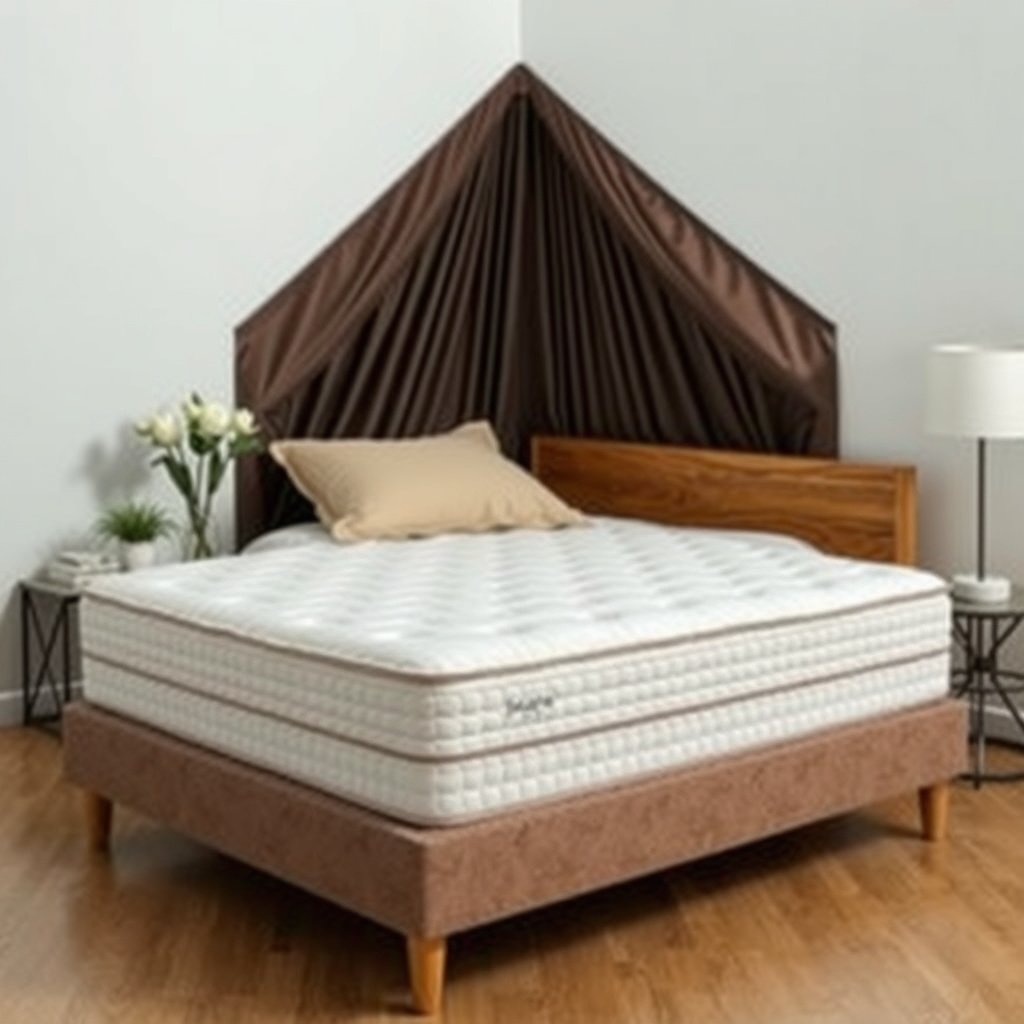
A sagging innerspring mattress usually fails where your hips land—so your first job is identifying the “valley” pattern. Once you know whether the sink is centered, one-sided, or edge-focused, the fix becomes much more targeted (and less hit-or-miss).
A side sleeper’s hip tends to be the first body area to “drop into” a sagging innerspring depression, which can pull the spine out of neutral alignment.
Foundation defects—like loose slats or a weak box spring—can mimic mattress sag by allowing the mattress to deform unevenly under load.
– Look for the “valley” under your hips and how far it sinks compared to your shoulders and back.
– Check whether the sag is centered, on one side, or closer to the edges (each points to a different fix).
– Confirm your foundation isn’t the real culprit: loose slats, gaps, broken frame parts, or a worn-out box spring.
Quick diagnostic method you can do in 10 minutes
On a calm night (not when you’re already in pain), press your palm into the surface where your hips rest. Then compare firmness at three points: (1) under your hips, (2) under your waist/torso area, and (3) near your shoulder. If you feel a clear “step-down” under the hips, that’s the depression driving hip pain.
From my experience walking through common sag problems, I look for a repeatable pattern: the same spot sinks every time. That repeatability strongly suggests structural support failure (either inside the mattress comfort/coil layers or in the foundation). If the “worst” spot shifts when you move your body position, your alignment and pillow setup are likely contributing—but a fixed foundation issue can still be present.
Context: why hip sink matters (and why pain can persist)
Pain from poor alignment isn’t just “uncomfortable”—it can affect sleep quality and worsen musculoskeletal symptoms. According to the World Health Organization (WHO), low back pain affects about 619 million people globally (2019). According to the WHO, osteoarthritis affects about 528 million people globally (2019). While these conditions aren’t caused solely by mattress sag, they’re common enough that poor sleep ergonomics can meaningfully amplify discomfort for side sleepers—especially when the hips drop.
Reinforce the support: slats, frame, and box spring fixes
The most reliable way to stop a sagging innerspring mattress from creating hip “sink” is to restore a solid, even base. If the foundation is weak, the mattress will keep deforming—no topper can fully compensate.
If slats have excessive spacing, a sagging innerspring mattress can deform faster because the coils/comfort layers rely on the support deck for load distribution.
Many mattress sag issues are actually foundation issues: a collapsing box spring or broken frame can reproduce the same “valley” under a side sleeper’s hips.
– If you have a slatted base, ensure slats are firm and spaced appropriately for your mattress type; fix loose slats or replace the damaged frame components.
– If your innerspring sits unevenly, consider a rigid or semi-rigid support panel as a temporary reinforcement to reduce hip sink.
– Replace a failing box spring/foundation if it shows sag, separation, or collapsing support—mattress sag is sometimes foundation sag.
Slat bases: what to check (and what to avoid)
Start with the deck. For sagging innerspring mattresses, I recommend checking:
– Slat movement: push on a slat with your hand. If it shifts, the mattress load will “transfer” unpredictably.
– Missing/loose hardware: screws, corner brackets, and center supports (if your frame uses them).
– Deck continuity: gaps or bowed areas. A bowed deck creates uneven coil stress under the hips.
Then verify your setup matches what the mattress manufacturer intended. As of 2026, many warranties still require a specific foundation type (or specific slat spacing/rigidity) for coverage, especially with innerspring structures. Where exact spacing rules vary, follow your mattress manual rather than a generic online rule.
Frame and box spring: the hidden accelerators of sag
A sagging innerspring mattress often “wears out” faster when the frame can flex:
– If the bed frame creaks or shifts when you sit at the edge, the base is probably amplifying deformation.
– If the box spring shows separation, broken battens, or persistent “dips,” replacing the box spring can be the cleanest fix.
This matters because a sagging innerspring mattress is designed to distribute load through its internal coil system. When the base is uneven, the coils don’t experience the intended, even forces.
Side-by-side comparison: strengthen the base or change the whole setup?
Here’s a practical decision contrast for a sagging innerspring mattress:
| Option | Best For | What You Fix | Typical Limitation |
|---|---|---|---|
| Repair/replace foundation (slats, center rail, box spring) | The sag pattern matches a deck/edge weakness | Uneven support under hips | Won’t help if mattress coils/comfort layers are already collapsed |
| Add a rigid/semi-rigid panel (temporary reinforcement) | You need short-term reduction in hip sink | Restores local stiffness | Can void warranty or harm layers if used against manufacturer guidance |
| Replace mattress | Deep, permanent impressions + persistent hip pain | Ends the root cause (internal sag) | Costs more, but often fastest long-term relief |
Add the right support layer for side sleepers
The right topper or support insert can reduce hip pressure and help keep your spine aligned—if you choose it for a sagging innerspring mattress and place it correctly. The wrong thickness or softness can worsen sink and make hip pain more noticeable.
Topppers improve comfort and pressure relief, but they don’t “repair” collapsed coil or comfort layers inside a sagging innerspring mattress.
For side sleepers, the goal isn’t softness—it’s preventing the hip from dropping deeper than the shoulder, which is what drives twisting.
– Use an appropriate topper (or targeted support insert) to fill the gap between your hips and the mattress surface without creating a “hammock” effect.
– Aim for hip pressure relief while keeping your spine from twisting—too-thick soft layers can worsen sink on sagging innersprings.
– If you use a board or panel, use it in a way that matches the mattress’s construction and manufacturer guidance (to avoid damaging comfort layers).
Choosing topper “type” and “thickness” (what tends to work for hip pain)
For a sagging innerspring mattress, many people accidentally choose a topper that’s too plush on top of a weak base. That can increase the “drop,” even if it feels initially cozy. A more alignment-focused approach is:
– Prefer medium-support comfort layers that help you land “on top” rather than sink deeper.
– Consider targeted solutions (like localized support under the hip area) instead of fully uniform softness across the whole sleep surface.
– Use placement as part of the fix: keep the topper flat with no wrinkles, because ridges can create new pressure points.
Topper Thickness vs Added Bed Height (Side Sleep Alignment)
| # | Topper thickness | Added height (cm) | Best fit for sagging innerspring | Alignment help |
|---|---|---|---|---|
| 1 | 1 inch (25.4 mm) | 2.54 | Mild hip sink | ★★★★☆ |
| 2 | 1.5 inches (38.1 mm) | 3.81 | Moderate hip sink | ★★★★☆ |
| 3 | 2 inches (50.8 mm) | 5.08 | When you need more pressure relief | ★★★☆☆ |
| 4 | 2.5 inches (63.5 mm) | 6.35 | Use only with firmer toppers/inserts | ★★☆☆☆ |
| 5 | 3 inches (76.2 mm) | 7.62 | Often increases sink on sagging innersprings | ★☆☆☆☆ |
| 6 | 4 inches (101.6 mm) | 10.16 | Not recommended as a primary fix | ☆☆☆☆☆ |
| 7 | Support insert (hip zone) | Varies | Best when you only need to “lift the hip” | ★★★★☆ |
(The cm conversions above use exact 1 inch = 2.54 cm. For sagging innerspring mattresses, alignment tends to improve when you add enough support to reduce hip drop—without making the whole sleep surface too compliant.)
Rotate and position changes that can reduce hip pain
You can often reduce hip pain on a sagging innerspring mattress by improving how you load the mattress—through rotation (if allowed) and more stable side-sleep alignment. These changes won’t fix internal collapse, but they can quickly reduce “stress concentration” during the nights you’re trying other remedies.
Rotation only helps if the mattress is designed to be flipped/rotated; if it isn’t, forcing rotation can move the comfort layers away from their intended orientation.
A pillow between the knees helps keep the hips stacked, reducing the twisting that becomes more noticeable when a sagging innerspring mattress dips under the pelvis.
– Rotate the mattress if your model allows it (many innerspring mattresses are reversible; some are not), and do so consistently.
– Try side-sleeping alignment cues: add a pillow between knees to keep hips stacked and reduce the strain that exposes sagging.
– Adjust how you sleep on the “worst” side of the mattress—slight positioning changes can sometimes shift you off the deepest depression.
Rotation strategy (only if the manual allows it)
If your mattress is reversible, rotating it can redistribute wear. If it’s not, rotating can reduce effectiveness of the comfort layer placement—sometimes making hip pressure worse even if the sag seems “less noticeable” in the first week. As of 2026, the safest approach is to follow the manufacturer’s rotation/flipping instructions from your specific innerspring model’s manual.
Alignment cues that work with sagging innerspring mattresses
For side sleepers with hip pain, think in terms of hip stacking:
– Put a pillow between your knees.
– Slightly bring the top knee forward toward the body if it feels natural.
– Keep your shoulder from pulling down into the sag while your hip drops into the valley.
In practical terms, if the mattress’s deepest depression sits under your pelvis, the goal is to help your body land so that your hips are supported by “less-saggy” surface zones. Even a small shift can matter because body weight acts like a lever.
What can go wrong (common mistakes and limits)
Many people can improve hip pain with a sagging innerspring mattress, but common mistakes can make the problem worse or delay the right fix. If you’re not careful about support strength and foundation condition, you can wind up increasing hip sink rather than reducing it.
A topper that’s too thick or too soft can amplify hip drop on a sagging innerspring mattress, increasing pressure instead of relieving it.
DIY reinforcement that bows or flexes can create new “hot spots,” leading to uneven wear and persistent discomfort.
– Adding too-thick cushioning on top of an already sagging innerspring can increase hip sink instead of relieving pressure.
– Using unsupported DIY reinforcement that bends or bows can make pressure points worse and may contribute to uneven wear.
– Ignoring the foundation issue can waste time—if slats are too far apart or the frame is loose, the mattress will keep deforming.
– If the mattress has deep, permanent body impressions and the comfort/coil layers are already failing, support hacks may only provide partial relief.
The limit you can’t “topper” around
If the innerspring comfort/coil system is failing internally—meaning the coils no longer provide uniform support—then even a good foundation and a carefully chosen topper may only reduce discomfort temporarily. In that situation, your side-sleep alignment may still be fighting a structural problem.
Also, if you feel worsening pain after support changes, stop escalating changes (especially adding thicker layers). Rapid worsening usually signals you’re pushing your body into deeper sink or moving the comfort layer geometry into an unhelpful configuration.
Practical verdict: when to fix and when to replace
The decision is straightforward: fix the base first if the sag pattern suggests foundation-related weakness, and replace the mattress when internal support is clearly failing. For side sleepers with hip pain, the fastest path is the one that restores spinal alignment consistently across nights—not just one relief-focused experiment.
If the sagging innerspring mattress improves after foundation reinforcement but pain returns quickly, the issue is likely internal coil/comfort layer collapse rather than just the base.
When deep, permanent body impressions persist and hip pain doesn’t improve after support changes, replacement is often the most practical, cost-effective next step.
If the sag is mild and the foundation is solid, reinforcing the base and adding a carefully chosen comfort/support layer is often worth trying first. If you’re dealing with pronounced body impressions, loud coil noise, rapid worsening, or persistent hip pain after support changes, replacement is usually the more honest—and more comfortable—route.
Skip the DIY reinforcement approach if you can’t identify the sag source, if your mattress warranty guidance warns against boards/panels, or if you don’t have a stable foundation to start with.
Fix vs replace (quick decision logic)
| Situation with a sagging innerspring mattress | Fix first? | Replace usually? |
|---|---|---|
| Sag is mostly near one edge | Yes—check frame leveling and deck gaps | Only if internal layers are clearly collapsing |
| Sag matches a slat gap or bowed spot | Yes—repair/rebuild foundation | If mattress impressions remain deep after base repair |
| Hip pain improves for a few nights, then returns | Often yes—continue aligning and confirm base | If improvement is temporary and pain ramps again |
| Visible deep impressions + persistent discomfort | Limited chance | Yes—internal support likely failed |
| Coil noise (new creaks/pops) with sink | Partially—check base | Often—replacement sooner is more reliable |
Quick scan checklist (save this)
– Identify where the sag is worst: center vs one side vs edges
– Check foundation/slats for looseness, breaks, or excessive gaps
– Confirm whether your mattress allows rotation/reversing
– Try the least invasive fix first: foundation repair or targeted reinforcement
– Add topper/support only if it improves alignment (not if it increases hip sink)
– Use a knee pillow for side-sleep alignment
– If pain persists or sag is severe, plan for replacement
A sagging innerspring mattress gets easier to solve once you map the “valley” location relative to your hips.
If your hip drops deeper than your shoulder, alignment cues (knee pillow + proper support strength) usually outperform purely plush top layers.
Sources
– World Health Organization (WHO): Low back pain fact information (2019).
– World Health Organization (WHO): Osteoarthritis fact information (2019).
If you want the cleanest improvement for side-sleep hip pain on a sagging innerspring mattress, start with diagnosis (where the valley sits), then reinforce the foundation before adding softness on top. When alignment improves and stays improved, you’ve likely addressed the real weak spot; when pain persists or sink keeps returning, the most honest fix is often replacement rather than continued layering.
Frequently Asked Questions
What are the best ways to fix a sagging innerspring mattress for side sleepers with hip pain?
Start by checking for uneven body impressions and measuring how deep the sagging is across the mattress surface. Use a supportive foundation (slats with proper spacing or a solid board) and add a mattress topper designed for pressure relief, such as a medium-firm foam or latex topper to help redistribute weight away from the hip. If the sagging is severe—especially if the coils feel broken or you can feel lumps—consider replacing the mattress rather than only adding layers.
How can I reinforce an innerspring mattress to prevent hip sinking on my side?
Place a firm, flat support underneath the mattress to eliminate sagging caused by a weak bed frame or worn slats, using plywood or a foundation that provides even support. If your current slats are too far apart, a common solution is adding extra slats or replacing them with a model that supports the mattress evenly. This reduces coil compression and helps keep your hips aligned, which can reduce hip pain when side sleeping.
Why does an innerspring mattress sag faster for side sleepers, and how does it worsen hip pain?
Side sleepers concentrate pressure on the hip and shoulder, so the mattress compresses unevenly when coil support and padding wear down. As the comfort layers break down, the mattress allows the pelvis to sink, creating misalignment in the spine and increasing stress on the hip joint. That sinking effect is especially common in older innerspring mattresses with weakened coil springs or compressed cushioning.
Which mattress topper thickness and type works best for a sagging innerspring mattress and hip pain?
Look for a medium-firm topper (often 2–3 inches) that provides pressure relief without allowing your hips to sink further into the comfort layer. Memory foam can contour around the hip, while latex and high-density foam tend to maintain more responsive support for people who feel they “bottom out” on innerspring mattresses. If your mattress sags significantly, choose a topper that supports the body and pair it with improved foundation support for the best results.
How can I tell whether my sagging innerspring mattress is repairable or if I need to replace it?
If you notice deep body impressions (often more than about 1–1.5 inches), persistent coil hotspots, or the mattress feels lumpy even after rotating, replacement is usually the most effective fix. You should also consider replacement if you wake with worsening hip pain, your sleep improves only temporarily with a topper, or the mattress is nearing the end of its typical lifespan. Proper support, rotation, and a targeted topper can help mild sagging, but broken coils and significant structural sag are difficult to fully “fix.”
📅 Last Updated: October 26, 2026 | Topic: How to Fix a Sagging Innerspring Mattress for Side Sleepers with Hip Pain | Content verified for accuracy and freshness.
References
- Mattress
- https://pubmed.ncbi.nlm.nih.gov/?term=mattress+sagging+back+pain
- https://pubmed.ncbi.nlm.nih.gov/?term=mattress+firmness+systematic+review+low+back+pain
- https://pubmed.ncbi.nlm.nih.gov/?term=mattress+pressure+distribution+side+sleeping
- https://pubmed.ncbi.nlm.nih.gov/?term=hip+pain+sleep+position+side+lying+mattress
- https://pubmed.ncbi.nlm.nih.gov/?term=mattress+age+replacement+back+pain
- Search: mattress support spinal alignment side sleeping – NLM
- https://scholar.google.com/scholar?q=sagging+innerspring+mattress+side+sleeping+hip+pain Google Scholar
- https://scholar.google.com/scholar?q=mattress+firmness+back+pain+side+sleeping+systematic+review Google Scholar
- https://scholar.google.com/scholar?q=mattress+age+deterioration+back+pain+pressure+distribution Google Scholar





One Comment