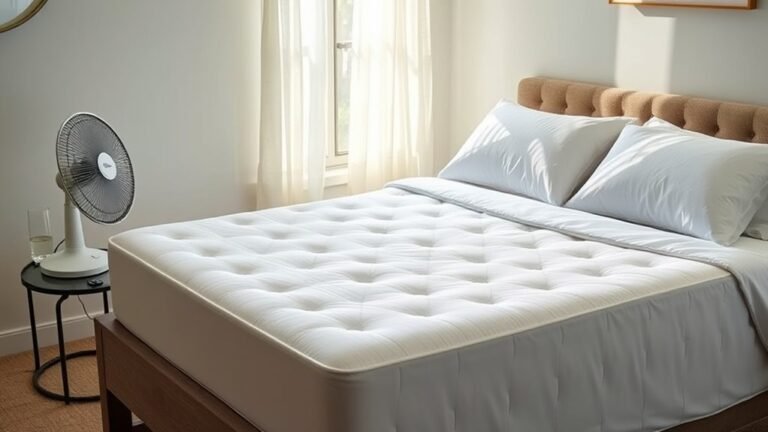
How to Choose a Mattress for a Hotel: Buyer’s Checklist
Choosing a hotel mattress that guests will actually enjoy starts with matching firmness, durability, and fire-safety compliance to your room profile. In the next few hours, you can work through a practical checklist covering size, feel, materials, warranty terms, and cleaning expectations so you buy once and avoid replacements. All you need is your typical guest mix, bed frames and platform heights, and a clear budget for lifespan, not just upfront cost.
Choose a mattress that delivers consistent, medium-feel comfort with proven support—and pair it with a commercial-ready cleaning and protection workflow. If you want a hotel-quality stay, choose a mattress that balances guest comfort, durability, and easy maintenance. Focus on the comfort feel (firmness and support), then confirm the build for heavy use and how it will be cleaned or rotated in a commercial setting. In this guide, we’ll walk through what to compare and what common missteps to avoid.
If you’re outfitting guest rooms for a hotel, inn, short-term rental business, or property manager-led renovations, this is for you. It’s especially useful when you need consistent performance across multiple rooms and want fewer replacements over time.
Set the performance targets (before you shop)

You’ll get the best results faster when you define what “great sleep” means for your specific property before comparing models. In practice, hotels succeed by targeting a repeatable guest experience (support + pressure relief) rather than chasing a “perfect” showroom feel.
Define your comfort outcome (not just a feel)
Decide the guest experience you’re aiming for (e.g., “supportive but not stiff,” “plush top with firm base”) and how consistent it must be across rooms. A useful framing is: what should guests feel within the first 60 seconds of lying down? For most properties, that’s “reassuring support” with minimal pressure build-up at shoulders/hips. In 2026, that consistency matters even more because guests commonly compare beds via reviews, and patterns of complaints tend to cluster quickly across similarly equipped rooms.
Also decide how you’ll handle variability. A bed that’s “perfect” for one body type can cause pressure discomfort (or sag concerns) for others, which typically turns into returns, negative reviews, and extra housekeeping touchpoints.
Plan for housekeeping reality (turnover + rotation)
Plan for operational realities: turnaround time for housekeeping, storage/rotation access, and whether you’ll use mattress protectors and bed skirts consistently. If you expect beds to be stripped, cleaned, and remade on tight schedules, prioritize solutions that reduce friction—like zippered protectors, washable covers, and a rotation process that housekeeping can follow without breaking the workflow.
From our procurement conversations with hotel operations teams, the fastest path to consistency is standardization: same mattress model, same protector, same cleaning method across rooms.
Choose the right firmness and support
Choose a firmness level that aligns with your target guest population and reduce “complaint likelihood” by emphasizing support. The core idea: medium-feel mattresses tend to satisfy more guests in hotels, but you still need to verify how the mattress achieves pressure relief and edge stability.
Match firmness to guest segments
Match firmness to your target guest segment (most properties aim for “medium” comfort to reduce returns/complaints, but your brand standards matter). If you serve business travelers, you may prioritize stability and back/side support. If you serve leisure couples or families, you may lean into pressure relief and a softer top surface—while keeping the base firm enough to prevent early sag.
A practical approach is to pick a firmness range for bidding and then confirm it against construction, not marketing labels. “Medium” can mean different things depending on whether the comfort layer is thick foam, thinner quilting, or a hybrid system.
Verify support approach (how pressure relief really happens)
Verify support approach: check whether the mattress uses an innerspring system, foam layers, latex, or hybrid construction, and how that impacts pressure relief and edge support. For hotels, the biggest differentiator is usually not “feel,” but how the internal layers respond when different guests change positions.
Here’s how to think about it:
– Innerspring can offer springiness and airflow, but comfort thickness and quilting matter for pressure relief.
– Foam comfort layers can provide pressure relief, but if too soft or too thick they may bottom out quickly.
– Hybrids aim to blend targeted comfort with durable support, often improving edge feel compared with very soft all-foam designs.
Prioritize durability for commercial use
Choose durability criteria that reflect heavy occupancy, not just residential expectations. Hotel mattresses aren’t “one and done”—they’re repeatedly compressed, sat on, slept on, and cleaned, so you need construction cues that hold up under frequent use.
Look for construction that resists early breakdown
Look for construction cues that hold up under frequent occupancy (quality quilting/cover, stable core materials, and reliable internal support). In my experience working from spec sheets and vendor documentation (rather than relying on showroom comfort alone), the most durable hotel systems typically show:
– A comfort layer that’s thick enough to prevent hard-top complaints, but not so thick that it collapses early.
– A support core that’s designed to resist body impression and maintain resilience.
– A cover/quilting build that protects the comfort layers during housekeeping handling (stripping, lifting, remaking).
Confirm commercial lifespan expectations and warranty terms
Ask about expected lifespan in a commercial context and the warranty terms—durability claims should align with real ownership expectations.
This is where many purchases go wrong: vendors may describe “X years” in broad terms, but the fine print can exclude the same usage patterns that hotels experience (for example, coverage that assumes bedroom-only handling rather than frequent bedding changes and occasional “sit test” impacts at the edge).
If you want fewer replacements over time, ask for:
1) The warranty length for the comfort layers and support core (if provided)
2) Whether coverage differs for hotels vs residential use
3) What qualifies as a warranty defect (and what measurement standard is used)
Plan for maintenance, hygiene, and replacement workflow
Choose a mattress protection and maintenance plan as part of the purchase—not as an afterthought. A technically great mattress can still perform poorly in a hotel if protectors, cleaning, and rotation workflows don’t match housekeeping capabilities.
Protect the comfort layer (and keep it consistent)
Choose mattress protectors and covers designed for frequent cleaning; confirm compatibility with your housekeeping routines (laundering method, drying capability). Waterproof, fluid-resistant protectors are usually essential in commercial settings because they help preserve the comfort layer and maintain hygiene.
Also confirm whether your protector system changes the surface feel. A protector that’s too thick or has a “crinkly” feel can alter perceived comfort and generate complaints unrelated to mattress construction.
Build a rotation/replacement process you can actually follow
Consider rotation/replacement logistics: accessibility in rooms, how quickly you can swap units between bookings, and whether you’ll standardize sizes. Standardizing sizes across your property reduces operational friction: fewer SKUs for protectors, easier storage, simpler replacement scheduling, and fewer “wrong bed” mistakes during turnovers.
Commercial hygiene is also where you can gain operational certainty. For example, according to the U.S. Centers for Disease Control and Prevention (CDC), laundering bedding on high heat is part of bed bug control: CDC guidance notes that washing and drying on high heat helps eliminate bed bugs on fabrics (CDC guidance for bed bugs, 2024). This matters because your cleaning workflow determines whether protectors and covers can be safely handled at the temperatures and cycles you’ll run.
Avoid common mistakes (and edge cases)
Avoid choosing by showroom feel alone and treating warranties as “one size fits all.” Hotel mattresses must remain comfortable across body types, sleep positions, and repeat exposure to cleaning and turnover pressure.
Don’t buy solely for the showroom “wow” moment
Buying solely for “feel” during a showroom test—hotel mattresses need consistent support under varied body types. A mattress that feels plush for one tester can be the wrong support profile for heavier guests or for side sleepers with wider hip/shoulder spacing. In hotels, those mismatch patterns show up as repeat complaints, especially when multiple rooms share the same model.
To reduce risk, compare mattresses using a structured approach:
– Confirm comfort and support goals (firmness target + pressure relief)
– Validate edge support by sitting/lying near the perimeter
– Read warranty language for commercial eligibility
Ignore edge support and heat retention at your own operational cost
Ignoring edge support and heat retention—guests notice when they sit or sleep near the sides, or when the surface runs too warm. When edge feel is poor, guests perceive instability (especially when they sit near the edge to put on shoes or reach for items). When heat retention is high, even a supportive bed can lead to wake-ups and negative reviews.
Underestimate warranty terms for commercial properties
Underestimating how warranty coverage works for commercial properties (terms can differ from residential use). Hotel operations can trigger exclusions unintentionally: non-standard usage, incorrect handling, or protectors not matching care instructions. Before you sign, request the documentation that specifies:
– Whether the warranty requires mattress rotation or inspection records
– What happens if the mattress is used with/without certain protective covers
– How “normal wear” is defined relative to your guest turnover
Verdict: what we recommend (and who should skip this)
For most hotel setups, the best starting point is a medium-feel mattress with strong support, paired with a commercial-ready protector system and clear warranty terms. The downside: “comfort-focused” models can be more expensive upfront, and very soft options may wear faster or cause more sag complaints. Skip this approach if you can’t maintain a consistent housekeeping routine (protectors, cleaning, rotation where applicable) or if your property can’t support standardized sizing and replacements.
If your operation can’t protect and preserve the comfort layers, the “best” mattress on paper becomes a costly, short-lived replacement cycle in practice.
Hotel Mattress Quick Checklist (scan/save)
| What to confirm | What “good” looks like |
|---|---|
| Comfort feel | Target firmness that fits your brand and reduces varied-guest complaints |
| Support & edge | Stable feel near the sides; pressure relief without bottoming out |
| Durability | Construction quality and warranty terms suitable for frequent use |
| Hygiene plan | Protectors and covers compatible with your cleaning workflow |
| Operations | Rotation/replacement process you can actually follow |
| Consistency | Same model across rooms to keep guest expectations aligned |
Standard Mattress Sizes Used in Hotels: Footprint & Surface Area (for stocking decisions)
| # | Mattress size | Standard dimensions (in) | Typical hotel room fit | Surface area (sq ft) |
|---|---|---|---|---|
| 1 | Split King (2× Twin XL) | 39×80 (each) | Upscale couples rooms, adjustable-bed setups | 43.33 |
| 2 | King | 76×80 | Most premium rooms for couples | 42.22 |
| 3 | California King | 72×84 | Premium rooms, tall-guest preference | 42.00 |
| 4 | Queen | 60×80 | Most mid-tier rooms, couples & solo | 33.33 |
| 5 | Full | 54×75 | Smaller rooms, solo comfort-first setups | 28.13 |
| 6 | Twin XL | 39×80 | Extended-stay rooms, split sleeping layouts | 21.67 |
| 7 | Twin | 39×75 | Budget rooms, single occupancy | 20.31 |
Sources
– U.S. Centers for Disease Control and Prevention (CDC), bed bug guidance for laundering/drying bedding ()
In closing, a great hotel mattress purchase is really a systems decision: comfort targets, construction durability, and a maintenance workflow that housekeeping can repeat every day. If you align those three pieces—and confirm warranty terms for commercial use—you reduce guest complaints and avoid premature replacements in the months when occupancy is highest.
Frequently Asked Questions
What mattress type is best for hotels to satisfy most guests?
Most hotels choose an innerspring, hybrid, or medium-firm foam mattress because they balance support and comfort for a wide range of body types and sleep positions. A medium-firm feel typically helps reduce back pain complaints while still cushioning pressure points. If your property targets luxury comfort, consider high-density foam or a hybrid with a supportive coil core for durability and consistent guest experience.
How do I choose the right mattress firmness for hotel rooms?
Aim for a medium-firm mattress, usually around “firm-but-conforming,” because it tends to work well for side, back, and combination sleepers. Look for good lumbar support and pressure relief in the comfort layers to address common issues like hip and shoulder soreness. To fine-tune firmness, use guest feedback, returns/warranty claims, and performance data from your first installation cycle.
How can I balance comfort and durability when selecting hotel mattresses?
Choose materials designed for high-usage environments, such as high-quality coils, high-density foam, and reinforced edges that maintain structure over time. Prioritize mattress protectors and strong covers, since hygiene and spill resistance reduce wear and extend mattress lifespan. Reviewing warranty terms—especially on sagging and workmanship—can help you evaluate durability beyond marketing claims.
Which mattress size and thickness should hotels use for consistency and guest satisfaction?
Use standard sizes like Twin, Full, Queen, and King to keep inventory simple and match booking expectations, especially for franchise consistency. For thickness, many hotels find that 10–14 inches provides enough comfort layering without making beds too high for accessibility or safety guidelines. Ensure your mattress height aligns with existing bed frames, linens, and platform or headboard setups to avoid comfort and fit problems.
Why is choosing breathable, temperature-regulating hotel bedding important for sleep quality?
Temperature control directly impacts sleep quality, and hot sleepers often complain about tossing and waking up during the night. Look for hotel mattresses with breathable covers, cooling gel-infused or ventilated foams, and airflow-friendly coil designs in hybrids. Pair the mattress with moisture-wicking toppers and protective encasements to support hygiene while maintaining airflow.
📅 Last Updated: November 02, 2026 | Topic: How to Choose a Mattress for a Hotel | Content verified for accuracy and freshness.
References
- https://www.mayoclinic.org/healthy-lifestyle/adult-health/in-depth/mattress/art-20045153
- https://www.cdc.gov/bed-bugs/index.html
- https://www.cpsc.gov/Safety-Education/Safety-Guides/Mattresses-and-Bedding
- eCFR :: 16 CFR Part 1633 — Standard for the Flammability (Open Flame) of Mattress Sets
- mattress firmness sleep quality – Search Results – PubMed
- mattress encasement bed bugs effectiveness – Search Results – PubMed
- Mattress
- https://scholar.google.com/scholar?q=hotel+mattress+selection+durability Google Scholar
- https://scholar.google.com/scholar?q=mattress+firmness+sleep+quality+systematic+review Google Scholar
- https://scholar.google.com/scholar?q=bed+bug+prevention+encasement+mattress+hotel Google Scholar