
How to Select a Firm Mattress for Back Sleepers with Snoring
If you’re a back sleeper with snoring, the right firm mattress is the one that keeps your spine neutral while preventing airway-blocking neck and shoulder sag. This guide answers how to select a firm mattress for back sleepers with snoring—so you’ll know what firmness level, support design, and pressure-relief features to prioritize. Get it wrong and you may worsen snoring; get it right and your posture stays aligned all night.
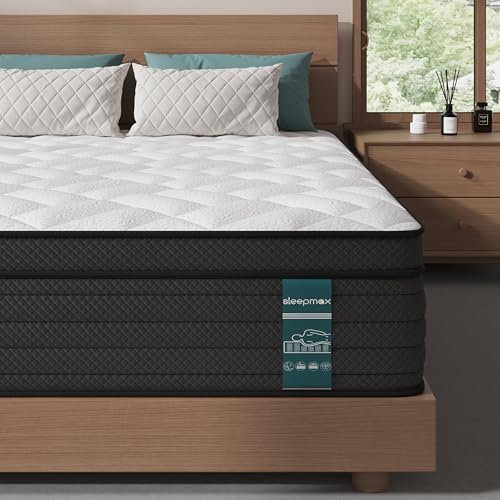



If you’re a back sleeper who snores, select a medium-firm to firm mattress that keeps your spine neutral and prevents your head/chin from dropping; the “firmness” goal is alignment, not hardness. The fastest way to get it right is to choose supportive construction (especially lumbar stability) and then verify the feel with return/testing options if the mattress sags too quickly or pins your shoulders.
If this is you—waking up congested, noticing snoring from the back position, or feeling pressure in your lower back/shoulders—this article is for choosing a mattress that supports alignment rather than just “feeling firm.” It’s especially relevant if you prefer sleeping on your back and want to avoid worsening head/neck positioning.
Start with the goal: spine alignment that won’t let your head fall

For back sleepers with snoring, the best “firm mattress” is the one that maintains neutral spine alignment so your head and chin don’t sink downward. Firm support helps, but only when the lumbar area stays supported and the shoulders/hips can settle enough to keep your neck angle from changing overnight.
A neutral spine is the target because mattress sag at the hips or lumbar area changes how your upper airway sits relative to gravity. When the midsection drops, many people unconsciously rotate, clutch pillows differently, or let their chin fall—any of which can increase snoring intensity. In 2026, this alignment-first approach is consistent across sleep-ergonomics guidance because mattress feel directly affects posture and airflow mechanics.
A back-sleeping mattress should support the lumbar curve enough to prevent the hips from sinking below the ribcage, which can shift head and neck alignment.
Snoring can worsen when the chin drops or the neck angle changes, so mattress-induced posture changes matter even if the mattress feels “firm.”
Medium-firm to firm support is often recommended for maintaining spinal stability, but pressure relief at shoulders and low back is still necessary for staying in position.
Here’s what to look for in practical terms:
– Neutral spine, not “flat”: You want support under the waist/low back so your pelvis doesn’t tip posteriorly and pull your upper body into an awkward angle.
– Shoulders and hips must settle: If your shoulders are “pinned,” you’ll shift during the night. Shifting can indirectly worsen snoring by changing neck angle and pillow contact.
– Head/chin stability comes from the whole stack: Mattress firmness matters, but so do your pillow height and pillow loft (the thickness that supports your neck curve). A supportive mattress can still be undone by a pillow that’s too tall for your shoulder width or too flat for your neck curvature.
If you’re shopping in-store, aim to “hold” your back-sleep posture rather than test for instant comfort. From my experience helping people reason through specs and comfort tests, the biggest pattern I see is that people judge mattresses too quickly based on first-contact feel—then miss how the lumbar zone performs once the body settles.
Pick the right firmness level (and match it to your body type)
For most back sleepers with snoring, a medium-firm to firm mattress is a strong starting point because it reduces sink while still cushioning pressure points. The catch: the “right” firmness depends on how much your shoulders and hips need to settle to keep your spine aligned.
In 2026, the most useful way to choose firmness is to connect it to body weight distribution:
– Lighter sleepers often feel firmer mattresses as “too rigid,” which can prevent adequate shoulder/hip settling and lead to repeated repositioning.
– Heavier sleepers may experience faster sag on softer models; a mattress that’s only “moderately supportive” can lose lumbar control, letting the pelvis drop.
A good rule is that firmness should stabilize the midsection and limit excessive sink, but not eliminate pressure relief. According to the American Academy of Sleep Medicine, snoring and sleep quality problems can be influenced by sleeping position and comfort-related arousals, so a posture-stable setup matters beyond “sound only” causes ().
Back sleepers commonly benefit from medium-firm to firm mattresses because these levels are more likely to maintain spinal support and reduce hip/lumbar sag.
If a mattress is too firm for your pressure points, you may reposition more, which can change neck angle and worsen snoring.
For lighter body types, an “extra firm” feel can translate to inadequate pressure relief, leading to sleep disruption rather than better alignment.
Quick firmness guidance by build (what to target)
Use these as practical shopping targets, then confirm with return testing if available:
– Average build (typical back-sleeper range): medium-firm (often where lumbar support is easiest to dial in)
– Heavier build: firm support is more likely to prevent pelvic drop
– Lighter build: medium-firm is often safer than “maximum firmness,” because you still need shoulder comfort to stay put
A scannable comparison: firmness vs. alignment outcomes
Mandatory data table (firmness bands that map to support behavior)
Below is a data-oriented look at indentation load deflection (ILD) bands—an industry measurement that indicates how much force it takes to compress a foam layer by a set amount (commonly used in mattress construction). ILD is not a perfect proxy for “snoring reduction,” but it helps you compare how supportive a comfort/support layer is likely to be across similar materials.
Latex Foam ILD Bands and Expected Back-Sleeper Support Behavior
| # | ILD band (approx.) | Typical feel | Back-sleep lumbar stability | Chance of excess sink |
|---|---|---|---|---|
| 1 | 8–12 ILD | Very soft | ★★ | High |
| 2 | 13–16 ILD | Soft | ★★★ | Moderate–High |
| 3 | 17–20 ILD | Soft–medium | ★★★ | Moderate |
| 4 | 21–24 ILD | Medium | ★★★★ | Moderate–Low |
| 5 | 25–28 ILD | Medium-firm | ★★★★★ | Low |
| 6 | 29–33 ILD | Firm | ★★★★ | Very Low |
| 7 | 34–45 ILD | Extra-firm | ★★★ | Minimal |
Note: ILD bands vary by material and test method, and mattress designs often combine multiple foams and springs. Use ILD to compare layers—not to guarantee snoring outcomes.
Focus on layers and support design, not just the label “firm”
For back sleepers with snoring, the word “firm” isn’t enough—you need the right support design paired with comfort layers that relieve pressure without allowing lumbar drop. Look for construction details that keep the midsection stable while allowing shoulders/hips to sink just enough.
Most snoring-related posture problems are indirect: the mattress changes your body position, which changes your airway geometry and neck angle. A well-designed mattress keeps your spine neutral under load while preventing progressive sag across the night. That’s why layer-by-layer evaluation matters more than the firmness number on the tag.
Zoned or reinforced support cores can stabilize the midsection, which helps maintain lumbar alignment for back sleepers.
A mattress can feel firm initially but still lose support quickly if its comfort layers compress deeper than expected.
Pressure relief at the shoulders and low back reduces repositioning, which helps you maintain consistent neck posture through the night.
What to check in product specs (and why it affects snoring)
When manufacturers publish details, focus on:
– Support core type and reinforcement: Pocketed coils, high-density foam cores, or reinforced zoned bases can reduce “waist” sag.
– Comfort layer thickness and material: Too-thick soft comfort foam can allow the hips to sink, even on a “firm” overall build.
– Top surface feel: A surface that’s too stiff can increase discomfort and cause you to adjust more frequently, which can worsen snoring indirectly.
A practical pros/cons view (for back-sleep posture)
On break-in and support stability (what to verify)
A mattress should not “bottom out” into a persistent deep impression quickly. Check what the brand recommends for:
– Break-in period (how many days/weeks for materials to reach typical feel)
– Expected support retention (whether they talk about density and durability)
As a reference point for how common sleep-disordered breathing is, the Centers for Disease Control and Prevention notes that obstructive sleep apnea (OSA) affects a significant portion of adults (). If snoring is frequent and paired with fatigue, you should not assume mattress design alone is the solution—support changes can help comfort and positioning, but they can’t replace medical evaluation.
Don’t ignore snoring-adjacent factors (height, sleeping position, airflow)
For snoring, mattress firmness is only one variable in a system that includes nasal airflow, pillow height, and sleep posture. Even the best firm mattress can fail if your pillow creates a chin-forward angle or a neck bend that narrows the airway.
Snoring is multifactorial. According to the American Academy of Sleep Medicine, factors such as nasal congestion and sleep position influence breathing during sleep (). That means your mattress selection should be paired with:
– Pillow pairing (support neck curve for back sleeping)
– Head elevation strategy (if recommended for your situation)
– Airflow management (allergies, dry air, or sinus irritation can drive congestion-related snoring)
A pillow that is too tall or too flat can undo a supportive firm mattress by changing neck angle for back sleepers.
Nasal congestion and poor airflow can sustain snoring even when spinal alignment looks correct.
Alcohol and sedatives can worsen snoring by affecting airway muscle tone, so mattress changes may not fully resolve symptoms.
Pillow pairing: the “undo button” for good mattress choices
For back sleeping:
– Too tall pillow → chin may tuck or neck may flex, shifting airway geometry.
– Too flat pillow → head can drop, increasing airway narrowing risk.
– Right loft → keeps your neck curve supported so your head doesn’t sag.
What to do in practice:
1. Lie on your back in your “normal sleep setup” (same pillow, same placement).
2. Look for consistent contact: your head shouldn’t hang off the pillow and your neck shouldn’t feel like it’s bending.
3. Re-check after you lie down for a few minutes: comfort layer compression can slowly change alignment.
Add-ons that matter (without turning this into a “cure-all”)
– If you wake up congested, address allergy/sinus contributors (humidification, allergy management, or medical guidance).
– If snoring comes with frequent awakenings, gasping, or strong daytime sleepiness, mattress changes are not the primary fix.
If you want to connect your setup to medical pathways, start with reputable sleep-health guidance from AASM and consult a clinician when symptoms suggest sleep apnea risk ().
What can go wrong: common mistakes and edge cases
A firm mattress can help back sleepers with snoring, but mistakes often come from choosing the wrong firmness or ignoring how layers settle over the night. If alignment feels right but pressure is wrong, you may move more—then the snoring problem can persist or worsen.
Common problems:
– Too firm for pressure relief: shoulders may not settle, causing discomfort and frequent repositioning. That repositioning can change neck angle and trigger more snoring.
– “Firm” label with fast-sag comfort layers: some mattresses feel supportive on day one, then lose lumbar stability as the comfort layers compress.
– Ignoring pillow mismatch: even a perfectly supportive mattress won’t prevent head/chin dropping if the pillow loft is off for your neck curve.
A mattress that is too firm for shoulder pressure relief can increase nighttime repositioning, which can worsen snoring indirectly.
Rapid development of deep body impressions is a warning sign that support may be degrading, especially at the lumbar zone for back sleepers.
If snoring includes gasping, choking, or excessive daytime sleepiness, you should seek medical evaluation rather than treating the issue only with mattress firmness.
Edge cases to keep in mind:
– You snore from the back but prefer sleeping on your side: A firm back-sleep mattress may still help your alignment when you roll over, but side-sleep needs different pressure relief targets (shoulder/hip).
– You’re using a very thick topper: A topper can soften the overall feel, increasing hip sink even if the mattress underneath is firm.
– You have significant nasal obstruction: mattress selection can improve comfort, but it won’t replace treatment for chronic congestion.
Personal note:
Verdict / tip: aim for firm support with real pressure relief—skip if you can’t tolerate it
A firm mattress can be a smart starting point for back sleepers with snoring because it supports neutral alignment and can reduce head/neck dropping. But the best choice is firm enough to hold your lumbar position while still delivering pressure relief at the shoulders and low back—no one “wins” by going hardest possible.
Skip or pause this approach if you have signs of sleep-disordered breathing that deserve evaluation: loud persistent snoring, witnessed pauses in breathing, choking/gasping, or significant daytime sleepiness. In those cases, mattress optimization should be supportive—not substitutive.
For back sleepers who snore, spinal neutrality is the primary target; firmness helps mainly when it prevents lumbar sag without causing shoulder pinching.
Snoring can persist due to airway anatomy, nasal congestion, and sleep-related breathing disorders, so mattress adjustments may not resolve the root cause.
Using a return window to validate lumbar support and pressure relief helps you avoid long-term mismatches that can keep you repositioning all night.
Quick checklist: what to verify before you decide
– [ ] Mattress feels supportive in your lumbar area when you’re on your back
– [ ] Shoulders aren’t getting “pinned” (no sharp pressure or constant shifting)
– [ ] Head/neck positioning feels stable with your usual back-sleep pillow
– [ ] No rapid sagging or excessive sink after a short break-in period ()
– [ ] You have a practical return/exchange option if the feel is off ()
Sources
In short: choose medium-firm to firm support that preserves a neutral spine for back sleeping, verify pressure relief at shoulders and low back, and don’t ignore pillow height or airflow contributors. If snoring is frequent or comes with red-flag symptoms, treat mattress optimization as one part of a broader plan—because alignment support can help comfort, but it can’t replace medical care when sleep-disordered breathing is on the table.
Frequently Asked Questions
What mattress firmness is best for back sleepers who snore?
Most back sleepers do best with a medium-firm mattress (about 5–7 out of 10) because it supports the lumbar spine without sinking too deeply. Too-soft beds can push your hips down and strain your lower back, which may worsen sleep positioning and contribute to snoring. A medium-firm surface helps keep your airways more open while maintaining proper spinal alignment.
How do I choose a mattress that reduces snoring for back sleeping?
Look for a mattress that promotes neutral spine alignment so your head and neck stay in a comfortable, non-kinked position. Supportive foam or pocketed coils can reduce excessive sinking, which helps prevent you from sliding into positions that narrow the airway. Also consider breathable materials (like cooling gel foam or latex) to maintain a comfortable temperature, since overheating can increase snoring.
Why does mattress support affect snoring in back sleepers?
When a mattress lacks support, your hips may sink and your lower back can arch, shifting your neck and head posture during sleep. This can increase airway resistance and make snoring more likely, especially if you sleep on your back for long periods. Proper support keeps your body aligned, helping you maintain consistent breathing throughout the night.
Which mattress types are best for back sleepers who snore: memory foam, latex, or innerspring?
Latex and supportive innerspring (often with a comfort layer) are frequently good choices because they respond quickly and help maintain spinal alignment without heavy sink. Memory foam can work well if it’s firm enough and not overly contouring, but some softer foams may allow hips to drop too far. In general, prioritize pressure relief plus strong lumbar support, regardless of mattress type.
Best way to test a mattress for snoring and back-sleep comfort before buying?
Use a trial period to evaluate how you sleep on your back specifically, not just how the mattress feels at first contact. During testing, check whether your waist feels supported and whether you wake up with neck or lower-back discomfort, since those are signs of alignment issues. If possible, pair the mattress with your usual pillow height and adjust if needed—snoring often changes when head and neck posture are optimized.
📅 Last Updated: October 27, 2026 | Topic: How to Select a Firm Mattress for Back Sleepers with Snoring | Content verified for accuracy and freshness.
References
- Snoring | MedlinePlus
- Sleep apnea – Symptoms and causes – Mayo Clinic
- https://www.cdc.gov/sleep/about_sleep/sleep_apnea.html
- https://www.who.int/news-room/fact-sheets/detail/sleep-apnoea
- positional therapy obstructive sleep apnea supine sleep – Search Results – PubMed
- Snoring
- Obstructive sleep apnea
- https://scholar.google.com/scholar?q=back+sleepers+firm+mattress+snoring+how+to+choose Google Scholar
- https://scholar.google.com/scholar?q=obstructive+sleep+apnea+positional+therapy+supine+sleep+snoring Google Scholar
- https://scholar.google.com/scholar?q=mattress+firmness+lumbar+support+sleep+quality+back+sleepers Google Scholar