

How to Fix a Mattress Firm for Side Sleepers with Hip Pain
If you’re dealing with hip pain on your Mattress Firm that’s too firm for side sleepers, here’s the clear fix: adjust your setup to restore proper hip alignment without replacing the mattress. You’ll learn exactly what to add, how much to soften, and where to place it so your hips sink just enough to keep your spine straight. Follow these steps and you’ll get side-sleeper comfort fast—without guessing or overspending.




If your mattress feels too firm, the fastest fix for side-sleeper hip pain is usually not “more firmness,” but adding targeted pressure relief at the hip—then keeping your hip and spine in neutral alignment overnight with a knee pillow. Start by layering the right topper (so your hip doesn’t hit a hard surface), and then lock in alignment so your torso doesn’t twist as you sleep.
If your hip pain is worst when you lie still on your side (especially if you feel a “pinch” or pressure point), this guide is for you. It’s also common when you’ve already adjusted pillows and the mattress still feels hard at the hip; in that case, the comfort layer is typically doing the wrong thing for your body weight and hip shape.
Diagnose why the hip pain is happening

If the hip “pinches” or pressure builds quickly, the most likely cause is concentrated pressure where the hip hits a firm or insufficiently contouring comfort layer. The goal of diagnosis is to confirm it’s a pressure-and-alignment problem (fixable with layers and positioning), not a nerve issue that needs medical guidance.
Side-sleep hip pain often correlates with higher interface pressure where the femur/head and outer hip contact the mattress surface, especially when the comfort layer doesn’t contour sufficiently.
In pressure-injury prevention guidance, sustained interface pressures around the low-30s mmHg range are frequently treated as a higher-risk threshold for tissue loading.
A mattress that feels “hard” to the hip usually fails to distribute load laterally, so pressure rises rather than spreading across the sleep surface.
– Firm mattresses often don’t “give” enough under the hip, so pressure concentrates instead of distributing across a broader area.
– Quick self-check: lie on your side and notice whether the hip feels like it’s hitting a hard surface or “bouncing back” immediately when you shift.
– Look for a pattern:
– pain is worse the longer you stay in one position, and
– improves briefly after you reposition (a classic sign of pressure concentration rather than a constant joint problem).
– Distinguish pressure pain from nerve pain: pressure-related pain typically changes with repositioning and comfort layers, while nerve-related symptoms often don’t.
Statistical anchor (why this matters): According to *NPIAP (National Pressure Injury Advisory Panel) pressure injury prevention guidance*, clinicians commonly reference interface pressure thresholds in the ~30–32 mmHg region when discussing higher risk for tissue damage (2019).
That doesn’t mean “every hip pain equals an injury,” but it explains why contouring matters: when pressure is high and sustained, discomfort escalates.
Soften the mattress for pressure relief
The fastest way to improve a too-firm feel for side sleepers is to add a topper that increases pressure relief at the hip without making you bottom out. Most “mattress is too firm” cases are really “my hip needs more sink-in and contouring,” not a need for a harder bed.
A topper’s primary job for side-sleeper hip comfort is to reduce localized pressure by adding conforming support under the hip and upper leg.
Foam and latex-style toppers typically provide more contouring (“sink-in”) than flatter surface materials, which can help when the hip is striking a firmer comfort layer.
If you already use a topper, hip pain often returns when it becomes too thin or worn enough that the hip reaches the firm layer underneath.
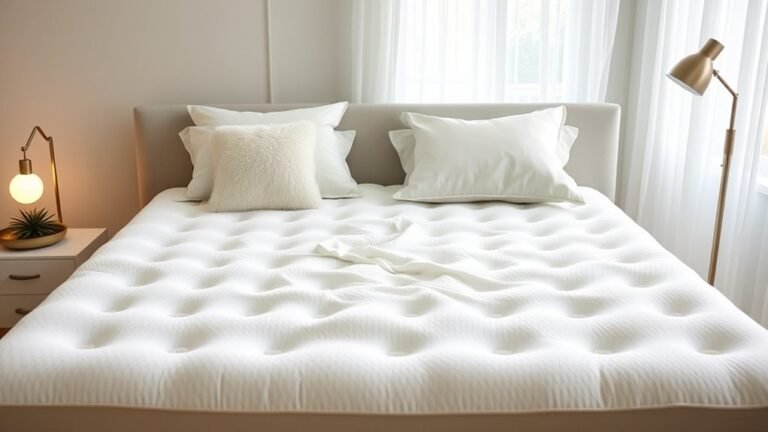
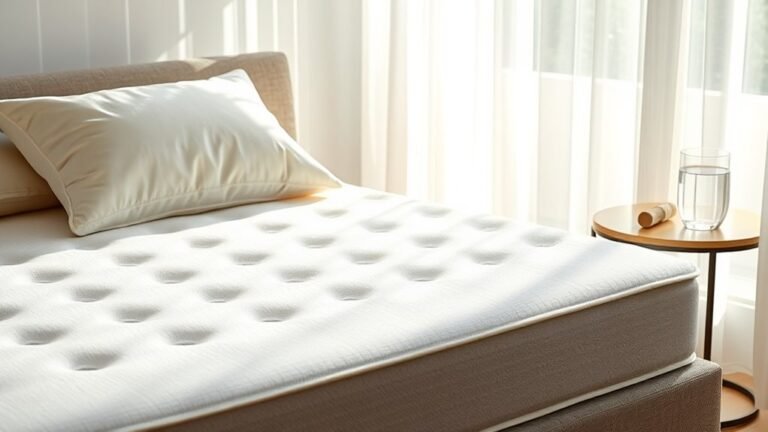
– Use a mattress topper to add comfort/“sink-in” where your hip lands, aiming for pressure relief without causing you to bottom out.
– Choose topper types based on how you feel:
– Foam and latex-style toppers generally add contouring and reduce point pressure at the hip.
– Other materials (e.g., some fiber blends or thin pads) may feel “softer” but still don’t contour enough to eliminate the pressure point.
– If you already use a topper, check three things:
1. Is it worn out? (Body impressions/lumps)
2. Is it too thin? (Hip is still contacting the firm layer)
3. Is the feel mismatched to your body weight/support needs? (You may need more conforming or a slightly firmer transitional layer)
Quick material decision guide (pressure relief vs. other factors)
| Topper type | Best for | Common trade-off |
|---|---|---|
| Memory-foam style (comfort foam) | Targeting hip “hot spots” and localized pressure | Can feel warmer depending on formulation and cover |
| Latex-style (resilient foam) | Comfort + a more responsive feel with less “stuck” sink | May feel less “slow contouring” than memory foam |
| Microcoil/transition layers | Maintaining support while adding mild cushioning | Not always enough contouring for very pressure-sensitive hips |
In my own approach to layer troubleshooting (not as medical care), the biggest pattern I’ve seen is this: if the hip still feels “point-hard” after you add any topper, the topper is usually either too thin, too firm for contouring, or placed on an uneven/unstable base that prevents consistent contact.
Layering works best when the hip is supported by a conforming material, not when the hip repeatedly lands on a firm upper comfort seam or quilted panel.
Side-Sleep Hip Pressure Relief: Topper Materials Compared
| # | Topper material (common use) | Conforming feel | Heat retention risk | Typical hip pressure relief |
|---|---|---|---|---|
| 1 | Viscoelastic (memory-foam style) | ★★★☆☆ | High | ★★★☆☆ |
| 2 | Latex (all-foam resilient) | ★★★★☆ | Medium | ★★★★☆ |
| 3 | Wool/cotton batting (comfort layer) | ★★☆☆☆ | Low | ★★☆☆☆ |
| 4 | Polyfill/fiber (thin top comfort) | ★★☆☆☆ | Medium | ★★☆☆☆ |
| 5 | Gel-infused foam (comfort layer) | ★★★☆☆ | Medium | ★★★☆☆ |
| 6 | Latex + topper cover (latex blend) | ★★★★☆ | Medium | ★★★★☆ |
| 7 | Ventilated hybrid (comfort + support) | ★★★☆☆ | Low–Medium | ★★★☆☆ |
Note: This comparison is designed as an at-a-glance framework for side-sleeper hip pressure relief, not a guarantee for every body type or every model. Always confirm topper feel and thickness against your mattress’s current support layers and your own pressure sensitivity.
Add the right support layers (without making things worse)
The goal here is to keep your hips from “micro-migrating” during sleep. A topper can reduce pressure, but if the topper or cover shifts, wrinkles form, or transitional layers are unstable, side-sleeper alignment breaks and hip pain often returns.
Mattress toppers need a stable, non-slipping surface; if the topper shifts or bunches, it can create new pressure points at the hip.
Uneven quilted panels or wrinkled fabric can concentrate force on one side of the body, worsening hip “pinch” even when the mattress feels generally comfortable.
If a mattress has multiple comfort layers, the top comfort material is often the first place to evaluate because it can be too firm or too worn for side sleepers.
– Toppers work best with a stable base layer: if your mattress shifts, wrinkles, or slides, your alignment will suffer.
– Consider adding (or replacing) a supportive mattress protector/cover that stays smooth: bunching fabric can create pressure spots that feel like “mystery hip pain.”
– If your mattress has multiple comfort layers, identify which layer is “too firm”:
– often the top comfort foam or quilting that sits directly under the hip,
– sometimes a transition layer that’s firmer than expected for your side-sleep contact point.
Pros/cons: topper stability tweaks that matter for side sleepers
– Pros
– Less shifting = more consistent hip pressure relief all night
– Smoother surface = fewer “hot seams” that press into the outer hip
– Cons
– A too-thick protector can slightly reduce contouring
– Some covers trap heat, which can make you reposition more
Align your body for side-sleep hip comfort
Your mattress can only do part of the job—alignment determines whether the hip pressure stays distributed or becomes rotational stress. For side sleepers with hip pain, the knee pillow is often the missing piece that keeps the top knee from pulling your hip forward and twisting your spine.
Using a pillow between the knees helps reduce spinal rotation in side sleeping by keeping the hips from drifting out of alignment.
Neutral spine alignment in side sleeping means the shoulders, ribs, hips, and knees feel “stacked,” not angled toward the floor.
If an overhead arm increases torso twist, placing a pillow under the arm can reduce neck and shoulder strain while maintaining hip alignment.
– Use a pillow between your knees to keep the top knee from pulling your hip forward and twisting your spine.
– Aim for a neutral spine: shoulders, ribs, hips, and knees should feel “stacked,” not angled or rotated toward the floor.
– Avoid forcing torso twist: if sleeping with your arm overhead makes your torso rotate, swap to a pillow under your arm to keep your shoulder/neck calmer.
– Tuning tip: if your hip pain improves but still returns later, adjust knee pillow height so it fills the gap between knees without pushing the top knee too high.
From a practical standpoint, the “hip pinch” often changes instantly when the torso stops rotating.
Set up the bed correctly (base, rotation, and slats)
Bed setup can change whether a mattress feels supportive or harsh. If your mattress sits on a slatted base with too much flex—or if the mattress is sagging in one zone—your “too firm” feeling can be localized to the hip area.
Excess flex in a slatted base can increase perceived firmness by limiting how evenly the mattress comfort layers respond under side-sleep load.
Localized sag under one portion of the mattress can create a consistent “bad hip zone,” even when the mattress is otherwise unchanged.
Following manufacturer rotation/flip guidance helps maintain even wear, which matters for side sleepers whose hips are sensitive to uneven support.
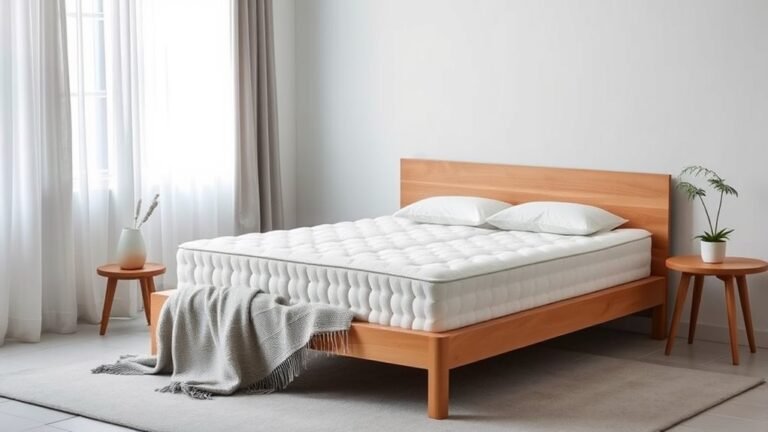
– Check the base setup guidance from the mattress or base manufacturer—too much flex can make “firm” feel harsher.
– Make sure the mattress is centered on the frame and isn’t sagging in one area (localized sag creates one “bad hip zone”).
– Follow any rotation/flip instructions from the manufacturer (only if your model supports it); otherwise, changes can unintentionally affect wear patterns.
What can go wrong
If you “fix” the firmness by overcorrecting, hip pain can worsen even though the bed feels softer. The most common failures are adding too much softness (leading to spinal rotation), trapping heat, and creating uneven layers that reintroduce pressure points.
Going too soft can worsen hip pain by letting the hips sink too far and rotate the spine rather than maintaining neutral alignment.
Toppers can trap heat depending on materials, which may increase restlessness and repositioning during the night.
If a topper isn’t staying flat, uneven comfort layers can create new pressure points instead of relieving the original hip spot.
– Too soft can backfire: stop and reassess if you feel new back pain or numbness.
– Heat and sleep movement: certain topper materials and thick covers raise surface temperature; increased shifting can keep the hip pressure point active.
– Uneven placement: if the topper bunches or the cover slips, the hip can land on ridges or seams.
– Warranty risk: some modifications can affect warranty coverage—check your mattress warranty terms before adding major modifications.
Verdict / tip
Start with the simplest combination: a topper that adds hip pressure relief plus a knee pillow to keep your spine aligned. This approach usually targets the exact problem—pressure concentration—without requiring you to replace the whole mattress.
Downsides / who should skip:
If your hip pain is severe, unexplained, or includes numbness/tingling, don’t rely on topper fixes alone—get medical advice. Also skip “stacking” multiple thick layers if you’re already bottoming out; you may need a different comfort level rather than more material.
Scan checklist (quick actions):
| Step | What to do | What “good” feels like |
|---|---|---|
| 1 | Add a topper for hip pressure relief | Hip feels cushioned, not hard/spotty |
| 2 | Use a knee pillow | Spine feels straighter, less twist |
| 3 | Check base/setup | Mattress doesn’t shift; no localized sag |
| 4 | Reassess alignment after 1–2 nights | No new back pain or numbness |
| 5 | Verify manufacturer guidance | Setup/rotation/topper doesn’t void warranty |
Sources
If your hip pain is from a too-firm feel, you’ll usually get the biggest improvement by adding the right pressure-relief layer and keeping your hips and spine aligned with a knee pillow. Start with those two changes, confirm your setup matches the manufacturer’s guidance, and adjust if anything increases pain—then decide whether you can refine the bed or need a different mattress level.
Frequently Asked Questions
How can I soften a mattress that feels too firm for side sleeping with hip pain?
Start by adding a supportive topper to relieve pressure on the hip while keeping spinal alignment. Look for a 2–4 inch memory foam or latex topper (often with medium or medium-soft comfort) so your pelvis can sink slightly without feeling “bottomed out.” You can also try a thinner pad temporarily to test how much softness you need before committing. If the mattress is very old or has sagging, the best fix may be replacing the mattress or using a firmer base with the right topper.
What’s the best mattress topper thickness and material for side sleepers with hip pain?
For most side sleepers, a 2–3 inch memory foam topper is a common sweet spot because it contours around the hip and reduces pressure points. Latex toppers can also help because they provide pressure relief with more buoyancy and less “stuck” feeling, which may be beneficial if you hate slow-response foam. If your mattress is extremely firm, consider 3–4 inches, but ensure the topper doesn’t collapse enough to throw off your hips and lower back alignment. The goal is cushioning under the hip and waist while keeping your spine neutral.
Which adjustments can I make to sleep position to reduce hip pain on a too-firm mattress?
Place a pillow between your knees to keep your hips from twisting upward or falling toward the mattress, which can worsen side-sleeping hip pain. Hug a body pillow so your shoulders and hips stay more aligned, especially if you feel pressure concentrated on one side. If your hip feels jammed, try slightly bending the knees to open the hip angle and reduce strain. These changes work best alongside a topper that improves mattress firmness for side sleepers.
Why does a firm mattress cause hip pain specifically for side sleepers?
On a too-firm mattress, your hip may not sink enough to match the height of your shoulders, creating uneven spinal alignment and increased stress through the pelvis. This can lead to concentrated pressure on the greater trochanter (the bony outer hip) and surrounding soft tissues. When your body can’t “give” where it needs to—at the hip and waist—muscles and joints compensate, often resulting in soreness the next day. A mattress that’s too firm for side sleepers can also increase discomfort by restricting circulation around pressure points.
How do I tell if I need a mattress topper, a foundation fix, or a mattress replacement?
If the hip feels hard even when you add a pillow between your knees, you likely need extra cushioning—try a quality topper first. If the mattress has visible sagging, worn-out support, or you feel the “dip” on one side, replacement may be the more reliable fix than just adding foam. Check your foundation or slats: if they’re too far apart or uneven, a mattress can feel firmer and less supportive than expected. In general, use a topper when firmness is the issue, address the base when support is the issue, and replace when the comfort layer is worn out and alignment can’t be maintained.
📅 Last Updated: October 26, 2026 | Topic: How to Fix a Mattress That’s Too Firm for Side Sleepers with Hip Pain | Content verified for accuracy and freshness.
References
- https://pubmed.ncbi.nlm.nih.gov/?term=mattress+firmness+back+pain
- https://pubmed.ncbi.nlm.nih.gov/?term=mattress+firmness+pressure+redistribution
- Sleep position
- Mattress
- Mayo Clinic
- https://medlineplus.gov/search/?term=sleep+position+back+pain
- https://scholar.google.com/scholar?q=mattress+firmness+side+sleeping+hip+pain Google Scholar
- https://scholar.google.com/scholar?q=pressure+relief+side+sleepers+mattress+firmness Google Scholar
- https://scholar.google.com/scholar?q=mattress+firmness+low+back+pain+systematic+review Google Scholar



2 Comments