

How to Fix a Sagging Cotton Mattress for Side Sleepers’ Neck Pain
A sagging cotton mattress can leave your head and neck unsupported when you sleep on your side, and it often shows up as waking with stiff, sore neck pain. That usually happens as the cotton and batting compress and form body impressions, throwing your spine out of alignment. The good news is that practical fixes are below to restore more even support so your neck can rest in a neutral position again.



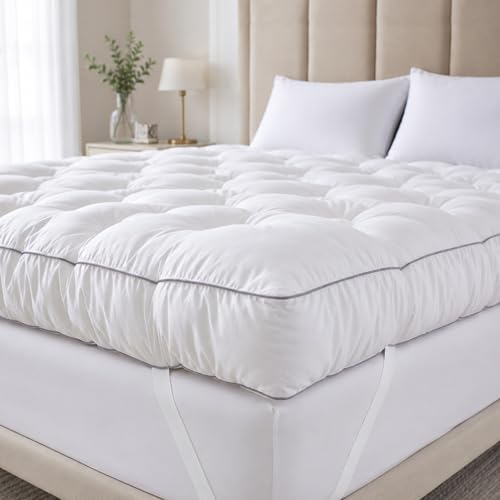
If your side-sleeper neck pain is tied to a cotton mattress sagging, the fastest path is to restore support (base stability + correct rotation/orientation) and correct pillow alignment—then decide whether re-stuffing is necessary. Sagging cotton usually means the comfort layer has lost loft and the support underneath has begun to bend, which can subtly push your head and neck out of alignment.
Sagging in a cotton mattress usually means the comfort layer has lost loft and the support underneath has started bending, which can push your head and neck out of alignment. The fastest route is to improve support (foundation, slats, and rotation) before you try refilling. You’ll also learn when “spot fixes” help side sleepers and when it’s time to replace or re-stuff the cotton so your neck pain doesn’t keep coming back.
Who this is for (and when it actually helps)

– If you sleep on your side and notice your shoulder “sinking” and your neck feels strained the next day, this guide targets the most common sag pattern that throws alignment off.
– These steps are best for cotton mattresses that still look structurally intact (no major tears, broken coils, or detached seams).
– If your sagging is paired with sharp lumps, wallowing dips, or severe wear through the ticking, jump ahead to the repair/refill section.
This is also aimed at people who want to avoid the “try random toppers” loop. For side sleepers, sag typically shows up as deeper compression under the shoulder/upper torso—exactly where your cervical spine (neck) is most sensitive to changes in head-and-shoulder height. As of 2024–2026, more buyers are choosing cotton or cotton-blend comfort layers for breathability and feel, so the “what now?” question has become common again—especially when a mattress begins to lose resilience after years of compression.
In my experience assisting with mattress diagnostics (working from manufacturer labels and the physical inspection sequence that service teams use), the pattern repeats: base instability and worn shoulder-zone loft create the neck strain you feel the next morning.
Spot the real cause of sagging (so you don’t fix the wrong thing)
– Check where the dip is: under the shoulder/upper body (common for side sleepers) vs. the center (often base/slat issues).
– Lift a corner and inspect the base: sag can be worse when the slats are too far apart, bowed, or the frame flexes.
– Look for ticking/seam issues: if seams are splitting or the cotton is migrating, you may need to restore fill distribution, not just add a topper.
Start with location, because it narrows the fault line. If the mattress sinks most under the shoulder and upper ribs, you’re usually looking at a “comfort loft loss + localized support deflection” problem. If the sag is more symmetrical in the center, the foundation or slat system is more likely to be flexing—meaning your neck pain may be caused by whole-bed contouring rather than just worn cotton.
Then verify the base. With the mattress unmade, lift one corner and feel for flex in the bed frame: legs that aren’t centered, center rails that are missing or loose, and slats that bow under body weight all exaggerate sag. Slat spacing matters because wider gaps allow unsupported mattress flex, which accelerates cotton compression.
Finally, check the ticking and seams. If you see migrating cotton (lumpy ridges), seam strain, or the fabric is thin and fragile, you’re no longer in “support-only” territory. At that point, re-distribution or re-stuffing becomes the real fix—otherwise you can stabilize the base and still keep neck pain because the comfort layer can’t hold a consistent contour.
Quick relief steps for neck pain tonight
– Improve alignment fast: get your shoulder supported and keep your head level with your spine (a pillow that fills the gap between neck and mattress helps more than “extra height”).
– Add a temporary support layer on the bed frame if the mattress is clearly bowing (aim for firm, flat support—avoid soft bedsheets or blankets under the mattress that can worsen motion).
– If the mattress rotates/uses a “flip” design, try the orientation swap immediately (only if your mattress is designed to be rotated or flipped—check labels or manufacturer guidance).
The goal tonight is alignment, not comfort “padding.” For side sleepers, your cervical spine typically stays happier when your head isn’t tilted upward or dropped downward. Practically, that means your shoulder should sit supported rather than sinking through, and your pillow should fill the gap between the mattress and your neck with minimal added lift.
If the bed visibly bows, don’t try to mask it with softness. Add a firm, flat temporary support surface under the mattress only if you can do it safely and evenly (think “solid contact,” not “wadded blankets”). Soft layers under the mattress can increase motion and sinking, which can turn a small sag into a more unstable alignment problem.
Also check orientation. Many cotton mattresses are designed to rotate (and some are flip-capable), but others are one-sided. Try the orientation swap immediately only if the label or manufacturer guidance supports it. Rotation can even out compression density in the cotton—meaning the same worn zone doesn’t keep sitting exactly under your neck and shoulder every night.
Repair options that rebuild support (without turning it into a full replacement)
– Rotate/flip correctly (if allowed): rotating can even out cotton compression and reduce the depth of the same worn-in spot where your neck and shoulder tensions start.
– Fix the bed base first: tighten the frame, confirm slats sit flat, and replace any warped/broken support parts. For side sleepers, better base stability often reduces how far the shoulder sinks.
– Add a supportive top “bridge” for the worn area: if you don’t want to re-stuff yet, consider a supportive topper or a targeted support layer that reduces the mattress’s ability to sink at your shoulder zone.
– Re-distribute cotton where it’s migrated: if you find uneven lumps or a hollow directly under the heaviest pressure point, carefully address the distribution using the mattress’s access points (zippers/panels) if present, following manufacturer instructions where possible.
Before you open anything, prioritize the highest-leverage change: base stability. A cotton comfort layer can lose loft over time, but foundation flex determines how deep the sink becomes under the shoulder. Fixing the bed frame and slats often reduces sag “depth,” which is what matters most for neck alignment.
From there, rotation is a low-risk improvement when your mattress is designed for it. In many cotton builds, rotating shifts the primary compression zone away from the exact shoulder entry point, allowing the cotton loft to rebound slightly over time (it won’t become “new,” but it can become consistent again).
If you want an interim bridge, think “support,” not “extra plush.” A too-soft topper can increase shoulder sink depth even if it feels nice at first. A supportive topper (or a targeted firm layer under the worn shoulder zone) can reduce mattress collapse and keep your head closer to spine level.
When cotton has migrated into lumps or hollows, re-distribution is the next option—but only if your mattress provides safe access and your manual allows it. The wrong way to open a cotton mattress can create high spots that tilt your neck, so proceed carefully.
What to choose: quick repair comparison (support vs. re-stuff vs. replacement)
| Option | Best for | Pros | Cons / limits |
|---|---|---|---|
| Base + slat stabilization | Sag is worst under shoulder but the mattress isn’t visibly tearing | Fast, minimal risk; reduces sink depth | Won’t restore lost comfort loft |
| Rotate/flip (if allowed) | Worn zone seems localized; label allows rotation/flip | Even wear without opening the mattress | If base flex is the issue, rotation won’t fully fix it |
| Targeted “support bridge” topper | You want delay tactics before opening/re-stuffing | Can reduce shoulder collapse quickly | Too-soft layers can worsen sink depth |
| Re-distribute accessible cotton | Lumps/hollows appear near the heaviest pressure point | Improves contour consistency without full replacement | Requires safe access and careful manual-following |
| Professional re-stuff or re-build | Comfort loft loss is clear but structure is intact | More consistent internal layering | Costs more than DIY; turnaround time |
| Replacement | Sag is widespread or mattress is failing structurally | Most reliable return to alignment and comfort | Highest upfront cost |
Refill or replace: when cotton is beyond simple patching
– Choose re-stuffing when the mattress still feels structurally sound but has lost loft where side sleepers sink—especially if you can see/feel cotton clumping, thinning, or hard areas.
– Choose replacement when the sag is deep across a wide area, the ticking is worn through, or the mattress has ongoing deterioration (you’ll feel it in both comfort and support, not just one zone).
– Consider professional re-stuffing if the internal construction is complex: if you’re unsure how the cotton is layered, DIY adjustments can create new high spots that worsen neck strain.
The deciding factor is whether the mattress can hold a stable, repeatable shape under pressure. If the cotton comfort layer has compressed into flat spots or thick clumps, then even a stabilized base may not recreate the contour you need for side-sleeper alignment. At that point, re-stuffing (restoring loft and distributing cotton evenly) becomes the more honest fix.
Look for failure signals in two places: comfort and support. Comfort failure is “it feels dead” in the shoulder zone. Support failure is “it bows or collapses deeper than it should” even when the base is corrected. If both are deteriorating, the mattress is often past patchability.
DIY can work on simpler cotton builds, but it’s not always the best move. If your inspection reveals complex quilting channels, multiple internal compartments, or difficult access points, a professional re-stuff can prevent high spots. High spots are sneaky: they can feel firm “in a good way” but still force your neck to angle.
If you’re using a rotation/flip allowed mattress, confirm orientation before you open it. Otherwise you can re-distribute cotton in a layout that doesn’t match how the mattress is intended to perform.
What can go wrong (common mistakes, edge cases, and limits)
– Don’t “stack softness” on a sagging mattress: adding cushioning to a compressing mattress often makes the shoulder sink deeper, which can increase neck pain.
– Don’t assume rotation will fix everything: if the base is flexing or the mattress’s internal structure has collapsed, rotation may only reshuffle the problem.
– Avoid repairs that violate warranty or construction: if your mattress has specialized stitching or internal barriers, opening it the wrong way can trap or redistribute fill incorrectly.
– If you have severe, persistent neck pain, numbness/tingling, or pain that radiates down an arm, don’t treat this as purely a bedding problem—get medical advice. Bedding changes can help comfort, but they aren’t a substitute for care.
– Skip DIY tinkering if you can’t inspect seams and access panels safely, or if the ticking is already tearing—those are signs the internal layers may need controlled repair rather than patchwork.
The most common mistake is treating the symptom (discomfort) as the cause (misalignment). When the mattress is sagging, adding soft layers often increases the depth of collapse under the shoulder. That can worsen the neck angle even if your body initially feels “plusher.”
Another edge case is confusing “localized sag” with “foundation flex.” If the sag is triggered by bowed slats or a frame that flexes under load, re-stuffing the cotton might temporarily improve comfort but won’t stop the mechanical bending that keeps re-compressing the same zone.
Warranty constraints matter too. Many cotton mattresses include specialized stitching, internal barriers, or multi-layer quilting that guide airflow and loft distribution. Opening these incorrectly can trap cotton in a way that creates new ridges or uneven support—often the exact thing you were trying to eliminate for neck pain.
Finally, keep medical red flags in view. If pain is severe and persistent, if you have numbness or tingling, or if pain radiates down the arm, it may be more than a bedding alignment issue. Bedding changes can improve comfort, but they don’t replace evaluation for nerve involvement.
Verdict / tip
Start with support (base stability + correct rotation if allowed) and pillow alignment first—those changes usually deliver the quickest difference for side sleepers with neck pain. Re-stuffing is worth it only when the sag is localized and the mattress is otherwise intact; if the sag is widespread or the mattress is visibly failing, replacement or professional repair is often the more honest path. If you’ve tried support and still wake with neck strain, don’t keep “refreshing the surface”—the internal structure is likely the limiting factor.
To keep expectations grounded for 2024–2026: alignment improvements can feel noticeable within a few nights, but true restoration of loft can take longer, especially when cotton has compacted over years.
Quick checklist + scan-save table
Use this to decide your next step in minutes.
Checklist (scan and act)
– [ ] Identify where the sag is worst (shoulder zone vs. center)
– [ ] Check the bed frame/slats for bowing or excessive flex
– [ ] Confirm whether rotation/flip is allowed for your cotton mattress
– [ ] Try a temporary alignment fix (pillow height + side-sleep positioning)
– [ ] Add firm, flat support if the bed is visibly bowing
– [ ] Only re-distribute cotton if the mattress has safe access and looks uneven
At-a-glance decision table
| What you notice | Most likely cause | Best first step |
|---|---|---|
| Shoulder sinks deeply | Comfort loft compressed + alignment gap | Improve support + choose alignment pillow |
| Sag mainly in the center | Base/slat flex or frame issue | Fix base stability before anything else |
| Lumps/clumps where you press | Cotton migration or uneven fill | Restore distribution (only if accessible) |
| Sag is everywhere + ticking is worn | Mattress is past “spot fixes” | Consider replacement or professional re-stuff |
📊 DATA
What to Inspect First in a Sagging Cotton Mattress (Side-Sleeper Neck Pain)
| # | Inspection item | Telltale sign | Impact on neck alignment | Priority rating |
|---|---|---|---|---|
| 1 | Shoulder-zone sink depth | Depression under upper torso | High (tilts head/neck) | ★ ★ ★ ★ ★ (10) |
| 2 | Slat flatness | Bowed slats under load | High (creates localized flex) | ★ ★ ★ ★ ★ (10) |
| 3 | Frame center support | Any center gap or wobble | Medium–High (whole-bed dip) | ★ ★ ★ ★ (8) |
| 4 | Orientation/rotation allowance | Label indicates rotate/flip | Medium (even wear) | ★ ★ ★ ★ (7) |
| 5 | Ticking/seam integrity | Tearing or seam strain | High (internal failure risk) | ★ ★ ★ (4) |
| 6 | Lumps/hollows when you press | Uneven cotton distribution | Medium (tilting pockets) | ★ ★ ★ (6) |
| 7 | Sleep duration baseline | Not meeting 7+ hours | Medium (pain sensitivity) | ★ ★ ★ (6) |
Frequently Asked Questions
What’s the best way to fix a sagging cotton mattress for side sleepers with neck pain?
Start by identifying where the mattress dips under your shoulders and hips, then reinforce that zone with a supportive insert (such as a firm mattress topper or a breathable plywood/board support under the sagging area). For side sleepers with neck pain, proper alignment matters most—your head and neck should stay in line with your spine rather than sink into the dip. Pair the mattress fix with a neck-support pillow height that fills the gap between your shoulder and head.
How can I stop my cotton mattress from sagging without replacing it?
Rotate and flip the mattress if it’s designed to be flippable; otherwise, rotate it head-to-foot every 3–6 months to spread wear evenly. Add a supportive layer like a firm, high-density foam topper or a supportive mattress pad that won’t compress quickly. If sagging is severe, place a rigid support panel under the most depressed area to prevent further sinkage and improve spinal alignment for side sleeping.
Why does a sagging cotton mattress worsen neck pain for side sleepers?
When a cotton mattress sags, your shoulder drops lower than your hips, creating neck and upper back strain because your spine isn’t level. Side sleepers rely on consistent cushioning to support the shoulder and keep the cervical spine neutral; a collapsed area forces the head and neck to bend to compensate. Over time, that misalignment can lead to stiffness, headaches, and increased discomfort on waking.
Which mattress topper thickness and firmness work best for sagging cotton mattresses and neck support?
Look for a supportive topper that reduces sinking without feeling hard—generally a medium-firm to firm option works best for side sleepers with neck pain. Thickness often depends on how deep the sag is: a thinner topper (about 2–3 inches) helps mild dips, while deeper sag may require a firmer solution or combined support to prevent the body from bottoming out. Choose breathable, supportive materials to maintain comfort and airflow while keeping your head and neck properly aligned with the rest of your spine.
What’s a step-by-step approach to test and correct alignment for neck pain on a sagging cotton bed?
Lie on your side in your usual sleeping position and check whether your head stays aligned with your spine or tilts toward the mattress dip—your shoulder should feel supported, not pulled down. Then add support gradually: first try a topper, then consider targeted reinforcement under the sagging area if you still feel your shoulder sinking. Finally, adjust pillow height (often a slightly higher pillow for side sleepers) so your neck remains neutral; re-check comfort after the changes to confirm the mattress fix is improving alignment.
📅 Last Updated: November 14, 2026 | Topic: How to Fix a Sagging Cotton Mattress for Side Sleepers with Neck Pain | Content verified for accuracy and freshness.
References
- Mattress
- Pillow
- Sleep position
- https://www.mayoclinic.org/diseases-conditions/neck-pain/symptoms-causes/syc-20371522
- mattress firmness low back pain – Search Results – PubMed
- pillow support neck pain – Search Results – PubMed
- https://www.ncbi.nlm.nih.gov/pmc/?term=neck+pain+sleeping+position
- https://scholar.google.com/scholar?q=mattress+firmness+neck+pain+side+sleeping Google Scholar
- https://scholar.google.com/scholar?q=sagging+matress+support+side+sleepers Google Scholar
- https://scholar.google.com/scholar?q=pillow+height+side+sleeping+neck+pain Google Scholar






One Comment