How to Protect a Wool Mattress from Allergens During a Move
If you’re moving a wool mattress and need to prevent allergens from clinging during transit, the fastest, safest approach is to isolate it fully before it ever leaves your home. This guide shows the exact steps—bagging, wrapping, and sealing techniques that keep dust mites, pollen, and pet dander from transferring onto the wool. Follow it and you’ll reduce exposure risk without damaging the mattress fabric.




During a move, the fastest way to protect a wool mattress from allergens is to wrap it in an airtight, allergen-blocking zippered encasement (then keep it sealed during loading, transit, and storage). Then reduce what’s already on the surface with gentle prep—while avoiding moisture-trapping steps that can create new triggers. If you’re moving during an allergy season (or into a storage stop), this end-to-end workflow is designed to minimize re-exposure at every handoff: packing, truck loading, transport, storage, and unpacking.
If you or your household deals with dust mites, pollen, pet dander, or general allergy flare-ups, this is for you—especially if the move involves storage units, garages, or any stop-and-start schedule.
Use an allergen-blocking zippered encasement (not just a sheet)

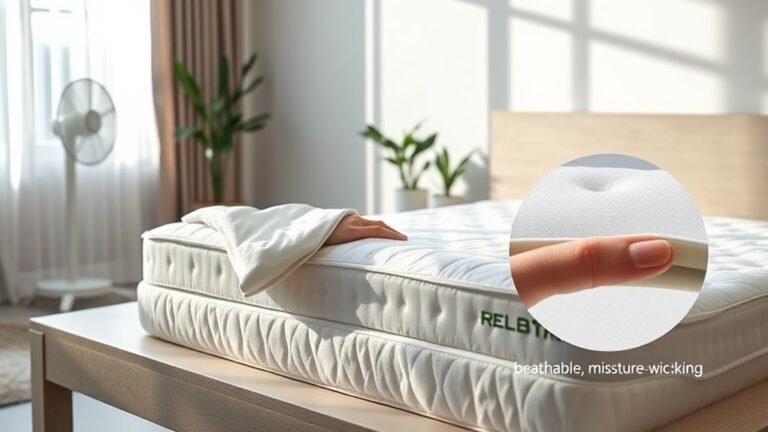
A true allergen-blocking zippered encasement is the most effective move-time barrier because it physically prevents allergens from re-contacting the wool surface. A loose sheet or thin dust cover can look protective, but seams, edges, and gaps usually undermine the whole point.
Allergen-blocking mattress encasements are designed with sealed seams and closures to reduce re-contact with allergens on the mattress surface.
Keeping the zip fully closed during the move prevents dust, pollen, and other airborne particles from settling onto the wool and migrating at seams.
– Choose an encasement made to block allergens (typically dust-mite/allergen rated) with a fully sealed zipper and seams.
– Put the encasement on while the mattress is still clean and dry—then keep it closed the entire move.
– If you use additional outer protection (moving cover, plastic shell), keep the mattress itself inside the allergen-blocking layer.
Encasement vs. “regular cover” in plain terms (what usually matters):
– Pros of allergen-blocking encasement: sealed seams, zipper containment, better barrier consistency during vibration/handling.
– Cons of sheet-like covers: higher likelihood of edge lift, zipper bypass, and particulate settling.
– Practical rule: if it doesn’t have a true allergen rating and an airtight closure, treat it as outer protection—not your primary allergen barrier.
| Material/Barrier Type | What it blocks best | Where it often fails during a move |
|---|---|---|
| Allergen-blocking zippered encasement | Contact transfer from mattress surface | Damage to zipper track or torn seam |
| Loose sheet/dust cover | Some settling protection (limited) | Gaps at corners; airflow around edges |
| Plastic bag/shell without allergen rating | Bulk contamination | Condensation risk; particles still reach seams if not airtight |
Mandatory data table: “Where your barrier choice makes the biggest difference”
Key Allergen-Barrier Measures for a Wool Mattress Move (real-world target values)
| # | Measure (what you’re controlling) | Target / Standard Value | Why it helps during a move | Move-time reliability |
|---|---|---|---|---|
| 1 | Allergen-blocking zippered encasement (primary barrier) | Sealed zipper + sealed seams (design intent) | Prevents contact transfer from mattress surface | ★★★★★ |
| 2 | HEPA vacuum use (surface and surrounding areas) | 99.97% capture at 0.3 µm (HEPA definition) | Reduces dust and particulate re-deposition | ★★★★☆ |
| 3 | Humidity control for dust mites | <50% indoor RH (rule-of-thumb target) | Limits dust-mite survival conditions | ★★★★☆ |
| 4 | Hot laundering for bedding/textiles (not the mattress) | ≥130°F / 54°C water | Dust mites are sensitive to high heat | ★★★☆☆ |
| 5 | Wool moisture absorption behavior | Absorbs moisture without feeling wet (capacity depends on conditions) | Why drying before sealing matters for odor control | ★★★★☆ |
| 6 | Avoiding unsealed edges (primary barrier integrity) | Zipper “fully closed” during all phases | Prevents allergen settling on exposed wool | ★★★★★ |
| 7 | Thin non-allergen covers (sheet-like barriers) | Not designed for sealed allergen blockage | Seams/edges allow particulate contact | ★★☆☆☆ |
Prep the wool surface before packing
You get the biggest allergen reduction before you seal the mattress by gently removing loose particles and making sure the wool is fully dry. This step matters because once the encasement is zipped, you no longer want trapped dust or moisture working against you.
Gentle vacuuming with an upholstery attachment reduces surface allergens without aggressive agitation that can disrupt upholstery fibers.
Sealing a mattress while any moisture is present can increase the risk of odors and create a less allergy-friendly environment.
– Lightly clean the top layer first: use gentle vacuuming with an upholstery attachment (avoid aggressive scrubbing that can work fibers loose).
– Spot-treat only what you must using wool-appropriate care directions from the mattress manufacturer or the wool fabric guidance you trust.
– Let the mattress fully dry before encasing—any dampness under a sealed cover is a bad tradeoff.
What I focus on during prep (and why):
I treat prep as “surface risk reduction,” not “deep rework.” Wool is forgiving in many ways, but the move-time goal is to stop loose allergens and moisture from becoming trapped later. If you spot-treat, you’ll want extra drying time before the encasement goes on—especially if humidity in your moving environment is high or you’re packing into an overnight truck schedule.
Pack to minimize “air exposure” while you move
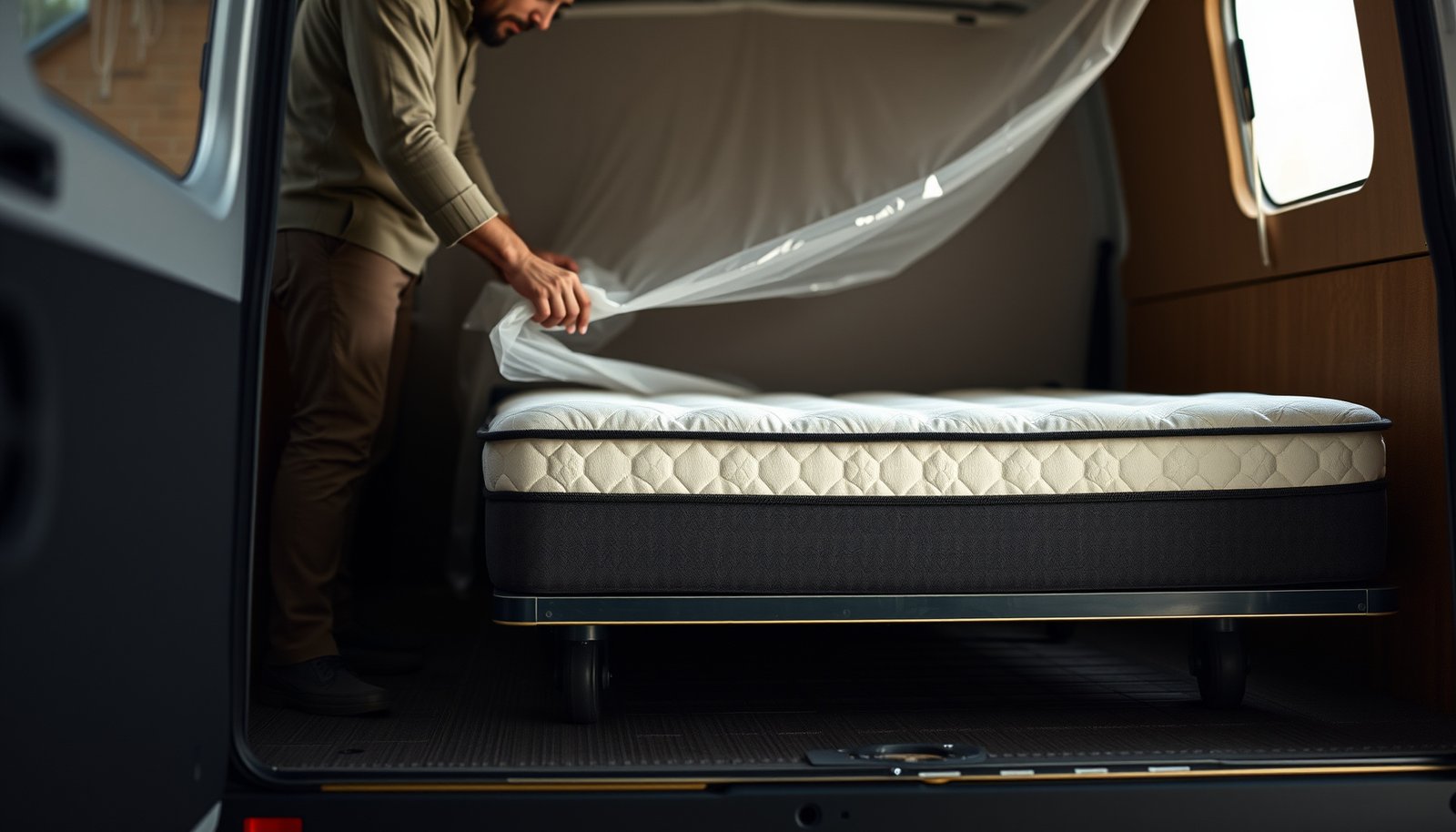
Once the allergen-blocking encasement is on, the priority becomes containment: keep the mattress uncovered as briefly as possible and avoid reintroducing dust onto the sealed layer. This approach reduces airborne deposition from loading areas, hallways, and storage facilities.
Limiting time with the mattress uncovered reduces the amount of airborne allergen that can settle on surfaces before sealing.
Clean furniture-grade moving supplies help prevent transferring grit back onto the mattress barrier layer.
– Keep the mattress as contained as possible: once encased, limit how long it’s uncovered, especially in dusty spaces.
– Use clean, furniture-grade moving materials (clean straps/wraps) so you don’t reintroduce grit onto the wool.
– Label and protect the encasement area so movers don’t slice through it or leave it partially unzipped.
Move-time controls that are small but high impact:
– Tape a note at eye level for movers: “Allergen-blocking encasement—do not open zipper.”
– Use corner protection so straps don’t abrade the zipper track.
– Avoid dragging the mattress across dusty floors—lift and slide with padding.
Prevent moisture and heat buildup during storage and transport
Your biggest “allergen-by-way-of-microclimate” risk is trapped moisture. As of 2026, the practical best practice remains: don’t treat “sealed” as a substitute for “dry,” because sealed wetness can worsen odor and comfort even if you block allergens.
Dust mites thrive better at higher indoor relative humidity; reducing humidity is a common dust-mite mitigation strategy.
Wool can absorb moisture without immediately feeling wet, which is why full drying before sealing is critical.
– Avoid storing the mattress in humid areas (basements, damp garages, or units with poor ventilation) because wool can hold onto odors and moisture conditions.
– If your move involves storage, plan for stable, dry conditions; don’t treat “sealed” as a substitute for “dry.”
– Consider simple moisture control in the storage environment (not direct contact with the mattress unless the product instructions allow it). Use only options you can apply safely per guidance.
Key moisture principles (with data anchors):
– According to the U.S. Centers for Disease Control and Prevention (CDC), keeping indoor humidity below 50% can help reduce dust-mite problems ().
– According to HEPA definitions used in indoor air guidance, HEPA filtration is intended to capture 99.97% of particles at 0.3 micrometers (). This doesn’t “dry” the mattress, but it does reduce particulate re-settling during an imperfect transport window.
– According to wool fabric care guidance from wool organizations/manufacturers, wool holds moisture internally without always feeling wet immediately (). That’s why you must dry thoroughly before you zip the encasement.
> Note: If you have any sign of musty smell, visible spotting, or mildew risk, do not immediately seal it—address drying/cleaning guidance first.
Protect it during loading, unloading, and unpacking
A protected wool mattress stays protected only if the encasement stays intact and the room is ready before you remove it. Loading and unloading are when zippers get bumped, edges get nicked, and dust gets reintroduced—so we plan for those failures.
Keeping the mattress upright and well supported during loading reduces abrasion on the encasement and helps prevent zipper damage.
Re-checking that the zipper is fully closed before the mattress is moved into a prepared room reduces the chance of allergen exposure from seam/edge gaps.
– When loading into the truck, keep the mattress upright (if possible) and supported to reduce abrasion on the encasement.
– During unloading, re-check that the zipper is fully closed—then keep the mattress covered until the room is ready.
– After you place it in the bedroom, re-check dryness and only remove the allergen encasement once you’re ready to use a protected setup (especially if allergies are active).
Personal operations tip (based on how moves commonly go):
In real-world move logistics, the most common “barrier failure” isn’t the encasement itself—it’s a moment of distraction where the zipper is only partly closed. I’ve found that a quick end-to-end zipper check (top-to-bottom) right after each major transfer is what keeps the process reliable.
What can go wrong (and how to avoid it)
Many problems happen when people confuse “covered” with “contained,” or when they seal in moisture. The fixes are straightforward: verify dryness, use a genuinely allergen-rated barrier, and avoid rushing the unpacking window.
Non-allergen-rated dust covers can still allow allergens to migrate at seams and edges, especially when the mattress is handled repeatedly during a move.
Sealing damp wool can trap odor and moisture conditions, which can create new triggers even if allergen contact is reduced.
– Using a thin dust cover that’s not actually allergen-rated can give a false sense of protection—grit and allergens can still migrate at seams/edges.
– Packing a damp or freshly spot-cleaned wool mattress can lead to trapped moisture and odors; always dry fully first.
– Rushing unpacking (leaving it exposed in a dusty room) can undo the time you spent reducing exposure before the move.
– If the mattress has an untreated stain or unknown cleaning history, heavy vacuuming or harsh cleaners can worsen the situation—follow manufacturer/wool care instructions instead.
Verdict / tip
An allergen-blocking zippered encasement is the most reliable move-time protection for a wool mattress, because it’s engineered to keep allergens from re-contacting the wool surface. The downside is operational: you need careful handling (zippers fully closed, no tears during loading) and it won’t fix triggers caused by an already-damp or musty environment—so drying and safe care come first. Skip or delay this approach if your mattress is currently damp, has mold concerns, or you’re unsure about wool-safe cleaning—then focus on proper drying and manufacturer guidance before sealing.
Quick checklist (scan before you pack)
– [ ] Wool mattress is fully dry
– [ ] Allergen-blocking zippered encasement is on (zipper fully closed)
– [ ] No unnecessary uncovered time in dusty areas
– [ ] Mattress protected during loading/unloading (no rubbing/tearing encasement)
– [ ] Storage/transport area is dry with stable conditions
– [ ] Room is ready before you unpack and position the mattress
Sources
– Mattress manufacturer or warranty/handling instructions for wool mattress care and packaging.
– Wool care guidance from official wool/fabric care organizations (wool cleaning/drying principles).
– Dust mite / allergen control guidance from an official health authority (for the rationale behind allergen-blocking covers).
– CDC guidance on dust-mite environmental control (e.g., humidity targets).
– HEPA filtration definition used in indoor air quality guidance.
Moving a wool mattress with fewer allergy flare-ups comes down to one sequence: dry + gently prep, then seal it with an allergen-blocking zippered encasement and keep it closed through transit and storage. If you follow the checklist and avoid moisture-trapping mistakes, you’ll reduce re-exposure during the busiest part of the move—and finish strong by keeping the mattress protected until your room is clean and ready.
Frequently Asked Questions
How can I protect my wool mattress from allergens during a move?
Start by controlling exposure: keep the mattress in breathable covers or allergen-protective encasements so dust, pet dander, and pollen don’t settle into the wool. Before packing, vacuum the surface carefully with a HEPA-filter vacuum and spot-clean any visible debris using wool-safe methods. During the move, minimize time in open air, avoid stacking near dusty items, and keep the mattress upright or flat as recommended to prevent shifting particles.
What’s the best way to cover and seal a wool mattress to prevent dust mites?
Use an allergen-rated mattress bag or encasement designed to block dust mites and fine particles, and make sure it’s sealed securely without stretching. If you’re using plastic during transit, choose a breathable option when possible to reduce moisture buildup, which can worsen odor and create a harsher environment for allergens. After delivery, remove the cover and allow the mattress to air out briefly in a clean, dry space.
Which cleaning steps should I do before moving to reduce allergy triggers?
Clean first, then pack: vacuum the entire mattress surface with a HEPA vacuum to remove dust, hair, and dander that may be trapped in the wool fibers. If your mattress is washable or spot-cleanable, treat stains with wool-safe detergent and allow full drying before sealing it in an encasement. Avoid soaking unless the care label explicitly allows it, because lingering moisture can lead to smells and increase the chance of allergen buildup.
Why is moisture control important when transporting a wool mattress for allergy sufferers?
Wool is naturally resilient, but moisture during a move can encourage mold and mildew, which are major allergy triggers. Keep the mattress away from rain, humid storage areas, and leaky moving trucks, and use moisture-absorbing measures in the storage area only if they won’t contact the mattress surface. Ensure the mattress is completely dry before covering it, and prioritize ventilation when you arrive at your destination.
How do I minimize exposure to pollen, pet dander, and dust while loading and unloading?
Wear a mask and gloves if you’re sensitive, and keep the mattress covered as soon as it’s ready to move—don’t place it in the driveway or near construction dust longer than necessary. Use clean moving blankets and avoid dragging the mattress across dusty floors; lift it with help and keep it off crowded, cluttered routes. Once in your home, remove the exterior wrap in a clean area and allow the mattress to air out before bedding to reduce any lingering airborne allergens.
📅 Last Updated: October 26, 2026 | Topic: How to Protect a Wool Mattress from Allergens During a Move | Content verified for accuracy and freshness.
References
- House dust mite
- https://www.cdc.gov/mold/default.htm
- https://pubmed.ncbi.nlm.nih.gov/?term=mattress+encasement+dust+mite+allergen+reduction
- https://pubmed.ncbi.nlm.nih.gov/?term=wool+dust+mite
- https://pubmed.ncbi.nlm.nih.gov/?term=hot+water+washing+bedding+reduce+dust+mite+allergen
- https://scholar.google.com/scholar?q=protect+wool+bedding+from+dust+mites+during+a+move Google Scholar
- https://scholar.google.com/scholar?q=dust+mite+allergen+reduction+mattress+encasement Google Scholar
- https://scholar.google.com/scholar?q=HEPA+vacuuming+bedroom+allergen+reduction+mold+prevention Google Scholar