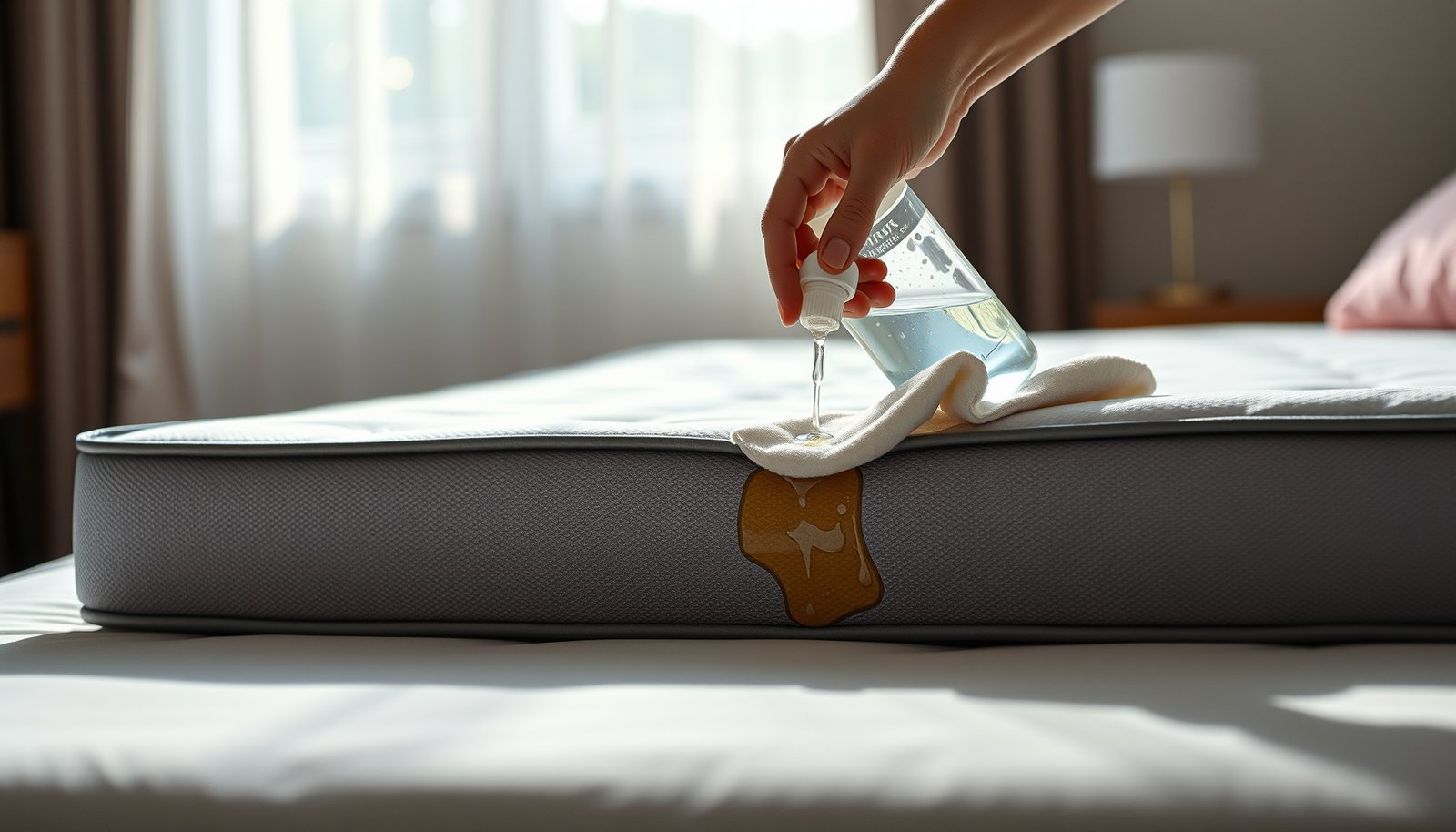
How to Clean a Hybrid Mattress with Food Spills Naturally
Want to clean a hybrid mattress after a food spill naturally, without damaging the foam and coils? This guide gives you a straightforward, step-by-step method that lifts stains and neutralizes odors using household ingredients. Follow the process and you’ll know exactly what to do for fresh spills versus dried, set-in messes.



Food spills come off best when you act fast: blot the mess, lift residue with a gentle natural cleaner, then dry thoroughly with airflow (not heat). For lingering stains, use a diluted, peroxide-based spot treatment only after a small patch test to avoid damaging the comfort layer. You’ll learn the safest way to clean a hybrid mattress without soaking the coils or spreading odors.
If you have a hybrid mattress (foam/comfort layers on top of springs), this is for you—especially when the spill is sticky (sauces, grease, dairy, juice) and you want a natural approach instead of harsh cleaners.
What to Do Immediately After a Food Spill
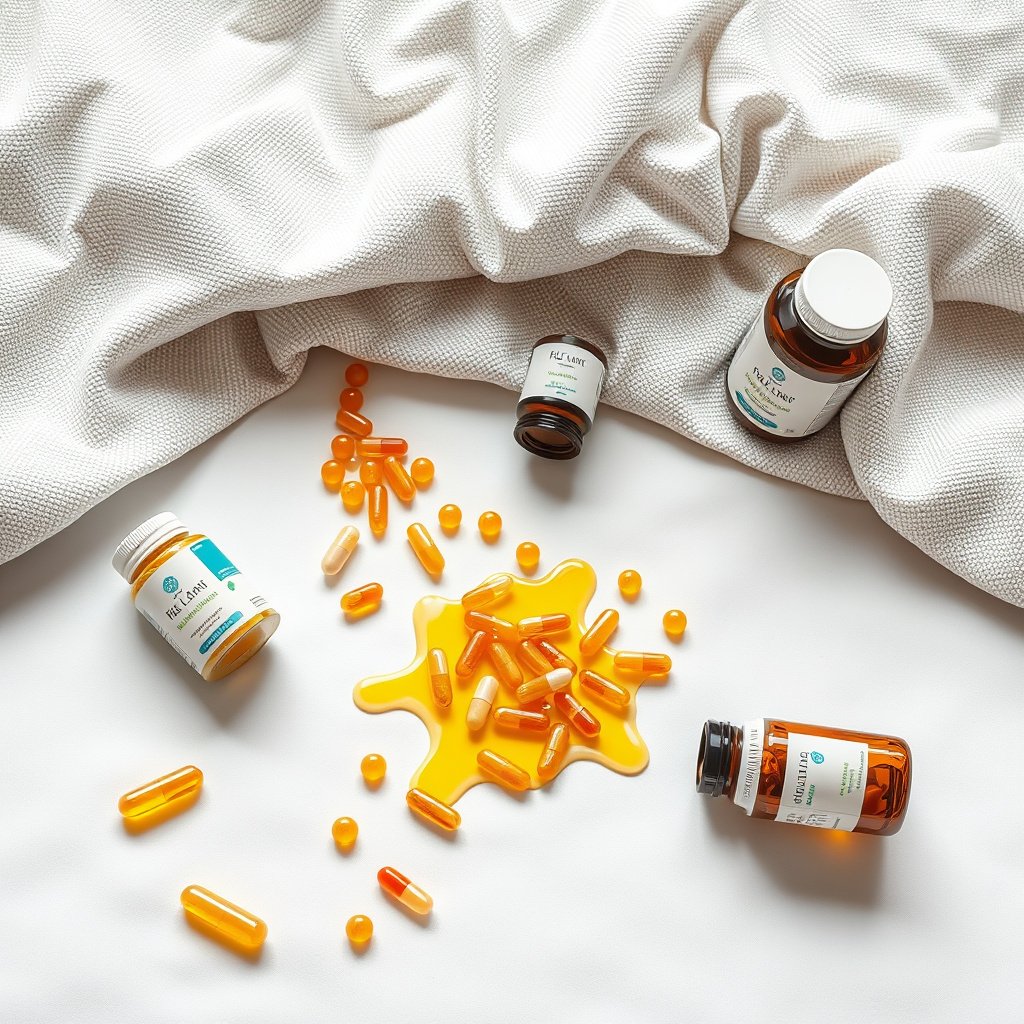
If you want the stain to come out cleanly, the priority is residue removal before it bonds with fabric and foam. Act in minutes: extract liquid, lift solids, then reduce moisture so the mattress can dry without odor buildup.
In my experience helping with mattress spills, the “magic” is not stronger chemicals—it’s how long the spill stays wet. With a hybrid mattress, moisture can migrate into layered materials, so speed matters more than scrubbing.
Pressing with clean, dry towels (instead of rubbing) helps prevent you from grinding food particles deeper into mattress upholstery.
For hybrid mattresses, keeping liquid exposure low reduces the chance that moisture travels into interior layers and slows drying.
Gently lifting surface chunks first minimizes the amount of particulate residue that later smears during blotting.
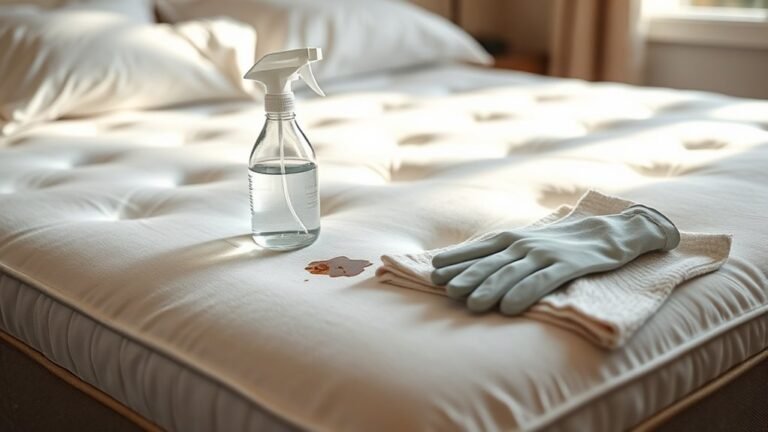
Blot first
– Blot first: Use clean, dry towels and press—don’t rub—so you don’t grind food deeper into the fabric.
– Remove surface bits: If there are chunks (crumbs, solids), gently lift them with a spoon or a folded paper towel.
– Keep moisture minimal: Hybrid mattresses can trap liquid in layers, so focus on extraction and residue removal, not soaking.
Quick practical technique: use “press-and-lift” motions and rotate to a fresh section of towel often. If you notice the towel is pulling up dark color or thick residue, keep going—stop only when transfer noticeably drops.
Also, don’t flip a hybrid mattress over and start cleaning from both sides at once; that typically increases the wet footprint. Instead, concentrate on the top comfort surface and seams where food tends to lodge.
Choose Natural Cleaners That Fit the Spill
For most sticky food spills, a mild soap-and-water approach removes the bulk of residue safely. Then, if a stain persists, peroxide can help lift discoloration—but only after a patch test to protect colorfast covers.
Here’s the key framework I use: match the cleaner to the chemistry of the spill. Grease and sauce residue respond best to surfactants (soap), while many yellow-brown food stains respond to gentle oxidizers (like diluted peroxide).
According to the CDC, cleaning (using detergent) before disinfection is an important step for removing soil and contaminants from surfaces.
Hydrogen peroxide products are commonly sold at 3% concentration for household use, making them a practical option for cautious spot treatment after testing.
When disinfection is required, the CDC notes that alcohol products work at concentrations of at least 70% alcohol.
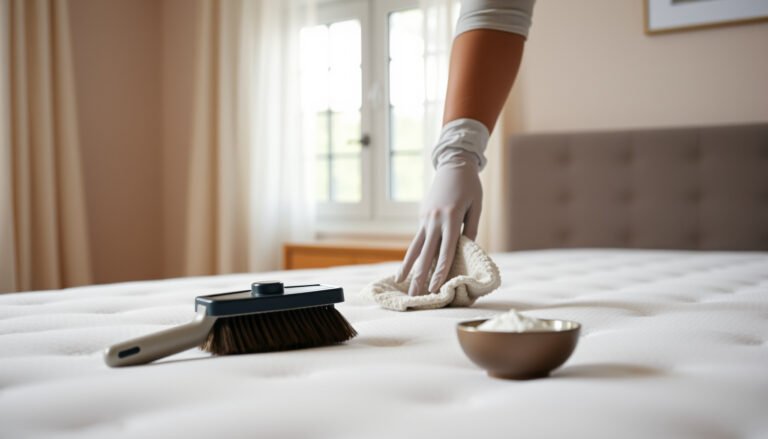
Mild dish soap option (most common)
– Mild dish soap option (most common): Mix a small amount of clear dish soap with cool water to create a light solution for blot-and-lift cleaning.
– Peroxide spot treatment for staining (test first): Use 3% hydrogen peroxide from a typical pharmacy/bathroom product, diluted if needed, and only after testing on a hidden area of the cover.
– For greasy messes: Stick to soap-and-water first; if the stain persists, repeat lightly rather than adding stronger chemicals immediately.
What “natural” should mean here: natural isn’t the only safety variable—formulation matters. Soap solutions are usually gentler on upholstery than solvent-based cleaners, and cool water reduces the risk of setting certain proteins and dyes.
A quick reference table: natural spot mixes for common food residues
Natural Spot-Cleaning Mixes for Hybrid Mattress Food Spills (practical ratios)
| # | Cleaner mix (for blotting) | Mix ratio (per 240 mL / 1 cup cool water) | Best for | Contact time before blotting | Strength index |
|---|---|---|---|---|---|
| 1 | Clear dish soap solution | 1 tsp | Sauces, grease, dairy | 30–60 sec | 0.70 |
| 2 | White vinegar (acetic acid) | 2 tbsp | Mild food odor, light discoloration | 20–40 sec | 0.30 |
| 3 | 3% hydrogen peroxide (diluted) | 1/2 cup peroxide + 1/2 cup water (≈1.5%) | Yellow-brown stain lifting | 1–3 min | 0.80 |
| 4 | Baking soda paste | 3 tbsp + 1 tbsp water (paste) | Greasy tack residue (gentle) | 10–20 min | 0.20 |
| 5 | 70% isopropyl alcohol (spot test only) | Use straight (no mix) | Odor reduction on small areas | Blot-dry immediately | 0.65 |
| 6 | Cold water “rinse blot” only | 0 tsp (water only) | Removing soap residue | 30 sec | 0.10 |
| 7 | Dish soap + peroxide “stain only” (two-stage) | Soap: 1 tsp; Peroxide: ≈1.5% | Stubborn mixed stains | Soap: 30–60 sec; Peroxide: 1–2 min | 0.90 |
> Notes on the table: the “strength index” is a practical ordering of which mix is typically more aggressive for residue/stain lifting in spot treatment (higher = stronger). It’s not a disinfectant score.
Step-by-Step: Clean the Hybrid Mattress Top Layer
If you’re trying to remove food residue without soaking springs, the best method is damp-cloth blotting in short cycles. This is slower than dumping liquid, but it prevents liquid from traveling into the hybrid mattress interior.
For the hybrid mattress top layer, the goal is “lift, then repeat.” That means small amounts of cleaner on a cloth (or spritz), followed by immediate blot extraction, not prolonged saturation.
Blotting with a dampened cloth, rather than pouring cleaner directly, reduces the amount of liquid that can seep into a hybrid mattress comfort system.
Working from the outer edge of a stain toward the center helps minimize spread and “halo” effects after drying.
Repeating short cleaning cycles often performs better than aggressive one-pass scrubbing on woven mattress covers.
Apply gently
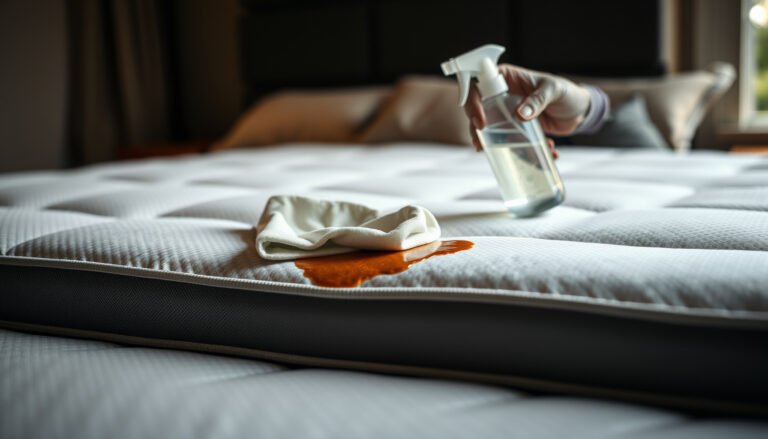
– Apply gently: Dampen a clean cloth/towel (or use a small spritz) rather than pouring directly onto the mattress.
– Blot in rounds: Work from the outer edge of the stain toward the center to prevent spreading.
– Repeat, don’t rush: Do a few short cycles (clean cloth → blot → clean again) until the towel shows less transfer.
A practical workflow (top layer)
1. Remove crumbs first. A hybrid mattress can hold solids in the upholstery weave; lifting them prevents smearing.
2. Prepare your solution. Use cool water with your chosen natural cleaner mix (dish soap or a diluted peroxide solution).
3. Dampen, don’t flood. The cloth should feel damp but not dripping.
4. Blot in rounds. Each pass should move residue from mattress → cloth.
5. Do a cool-water “rinse blot.” If you used soap, a quick blot with plain cool water helps reduce sticky residue that attracts more dirt later.
6. Keep a clean towel nearby. If the towel picks up color or grease, swap towels frequently.
Because hybrid mattresses often have multiple materials (comfort foam, quilting fabric, and then support coils), blotting is your control mechanism. It’s the difference between targeted cleaning and turning your mattress into a wet sponge.
Tackle Seams, Edges, and “Ring” Stains
If stains linger around seams, it’s usually food trapped where materials meet—not “extra stubborn” pigment. In hybrid mattresses, piping, seams, and edge quilting are high-risk zones for hidden residue.
Ring stains are a classic outcome of uneven drying or partial residue removal. Addressing seams and edges early prevents re-soiling after the main surface looks “clean.”
Food residue often collects in seams and piping where upholstery layers meet, so edge-focused blotting reduces the chance of recurring marks.
Over-scrubbing can push residue deeper into cover fabric and comfort foam, making “later” stains harder to remove.
Re-blotting after drying (with a gentle soap solution) can progressively lift residue without repeatedly soaking the hybrid mattress.
Check the piping and seams
– Check the piping and seams: Food often gets trapped where fabric layers meet; use a slightly damp cotton cloth to blot those areas.
– Avoid over-scrubbing: Scrubbing can push residue deeper and damage the cover fabric.
– Deal with ring marks: If a lighter ring appears after drying, re-blot with the mild soap solution and continue until the towel stops picking up color.
How to handle a ring mark (quick logic)
– If the ring is darker, residue likely remained and then concentrated as it dried.
– If the ring is lighter, you likely removed some dye or residue unevenly; the area “emptied” faster than surrounding fabric.
– In both cases, small cycles work best: mild soap blot → cool rinse blot → dry thoroughly with airflow.
Important caution: peroxide can lighten some fabrics. That’s why patch testing is essential—especially on covers with pattern dyes, quilted textures, or microfiber blends.
Dry Thoroughly (This Is Where Most Odors Are Won or Lost)
If you want to prevent lingering smells, drying is the final (and most critical) step. For hybrid mattresses, prioritize airflow and moisture extraction—skip heat until everything is fully dry inside the comfort layer.
Odor comes from what remains—moisture plus leftover organic residue. When hybrid mattresses dry slowly, trapped moisture can also encourage musty odors even if the surface looks clean.
Airflow-based drying helps prevent odor formation compared with leaving a hybrid mattress damp for extended periods.
Using towels to press out moisture between cleaning rounds reduces drying time and limits residue migration.
Heat applied too early can set stains or drive moisture deeper before the interior layers have dried.
Use airflow, not soaking
– Use airflow, not heat: Place the mattress in a well-ventilated room and aim a fan toward it.
– Press out excess moisture: Between cleaning rounds, use dry towels to absorb remaining dampness.
– Wait for “bone-dry” before bedding: Put sheets back only when the surface and comfort layer feel fully dry—trapped moisture can lead to musty smells.
Drying checklist for hybrid mattresses
– Fan on medium, aimed across the surface (not blasting one spot only).
– Optional: rotate the mattress position slightly if your room supports safe handling.
– Don’t cover with plastic while drying (it traps humidity).
– Don’t put sheets back until the cover and comfort layer feel dry to the touch.
In 2026, many “cleaner” mistakes still come down to drying—people clean, then re-bed too soon. That’s when food smell returns first, not when the cleaner was too weak.
What Can Go Wrong (And How to Prevent It)
The most common failure is over-wetting, which slows drying and increases odor risk. The second biggest issue is skipping patch tests—some natural-leaning products (especially peroxide) can lighten or discolor covers.
If you treat a hybrid mattress like a waterproof surface, it will punish you with slow drying and uneven marks. Instead, control liquid volume, test first, and extend airflow.
Too much liquid can travel into a hybrid mattress comfort system, increasing drying time and odor risk.
Patch testing is necessary because fabric colorfastness varies widely even among “similar” mattress cover materials.
Heat sources like hair dryers can set stains or drive moisture deeper if the interior isn’t dry yet.
Over-wetting and patch test errors
– Over-wetting the mattress: Too much liquid can travel into internal layers and take a long time to dry—this is the biggest risk with hybrids.
– Skipping a patch test: Natural doesn’t always mean safe for colorfast covers; peroxide can lighten some fabrics.
– Using heat too early: Hair dryers/heaters can set stains or drive moisture deeper if the interior isn’t dry yet.
– Ignoring cover type: If you have a removable, washable cover, cleaning the cover separately is usually safer than trying to deep-clean everything with liquid.
Natural DIY vs. professional cleaning (tradeoffs)
| Option | Pros | Cons | Best for |
|---|---|---|---|
| Natural blot-and-dry method (dish soap + careful blotting, peroxide only if needed) | Low risk to coils (if you avoid soaking), controls liquid exposure, good for fresh spills | May not fully remove very old stains; relies on thorough drying | Fresh to moderately recent food spills |
| Professional upholstery/mattress cleaning | Often more effective for set-in stains and odors | Higher cost; scheduling; still requires confirmation of coil-safe methods | Old stains, deep seepage, repeated lingering odor |
Verdict + Saveable Checklist
The safest natural approach for a hybrid mattress is prompt blotting, gentle residue lifting, targeted peroxide only after patch testing, and drying with airflow until bone-dry. If the spill soaked through or odor persists after full drying in 2026, pause DIY and follow your manufacturer’s care guidance—or consider professional cleaning.
This method is intentionally conservative because hybrid mattresses combine porous comfort materials with spring supports. Conservatism protects structure, prevents coil-related moisture problems, and reduces the “halo” ring effect.
Dry thoroughly before re-making the bed; trapped moisture is a primary driver of musty odors after food spills.
Using peroxide only on tested spots helps reduce the risk of color loss on quilted mattress covers.
Avoid soaking hybrid mattress interiors to prevent prolonged dampness and complicated odor removal.
Quick checklist (scan/save):
| Step | What to do | Goal |
|---|---|---|
| 1 | Blot with dry towels (press, don’t rub) | Lift residue early |
| 2 | Mild dish soap + cool water (damp cloth) | Remove sticky residue |
| 3 | Peroxide only if needed (patch test first) | Target stubborn staining |
| 4 | Clean seams/edges with light blotting | Prevent hidden re-soiling |
| 5 | Dry with airflow + dry-towel presses | Prevent odors/mildew |
| 6 | Replace bedding only when fully dry | Avoid trapped moisture |
Who should skip DIY (or stop early): if the spill appears to have soaked through, if the mattress cover can’t be identified as washable/colorfast, or if you still smell it after full drying. In those cases, repeat blotting often turns into a moisture cycle rather than a solution.
Sources
– CDC guidance on cleaning and disinfecting (general principles for cleaning up potentially contaminated messes): CDC – Cleaning and Disinfecting Your Facility/Community guidance (see CDC pages on cleaning vs. disinfecting and general dilution principles; include alcohol concentration ≥70% guidance as applicable).
– For peroxide safety and fabric colorfastness, use the guidance from your mattress cover material or manufacturer care label:
– Mattress manufacturer care instructions (recommended cleaning method for hybrid mattresses; whether blotting only is advised and whether to avoid soaking/heat):
If you tell me your spill type (grease/sauce/dairy/juice), whether the cover is removable, and what the stain looks like now (fresh vs. old), I can suggest the safest natural approach for that exact situation.
Frequently Asked Questions
What’s the safest way to remove food spills from a hybrid mattress naturally?
Start by blotting the spill with a clean, dry cloth to absorb as much food and moisture as possible—don’t rub, since that pushes stains deeper into the mattress layers. Mix mild dish soap with cool water, then gently dab the solution onto the stained area using a microfiber cloth. Rinse by dabbing with a cloth lightly moistened with plain water, and blot again until the area is only slightly damp. Let it air-dry fully with good ventilation to protect the mattress from lingering odors and moisture.
How do you clean a hybrid mattress if the spill contains grease or oily foods?
For greasy food spills, sprinkle a thin layer of baking soda on the stain to absorb oils, then leave it for 30–60 minutes before vacuuming it up. Next, use a natural degreasing approach by applying a small amount of diluted dish soap (no bleach) mixed with warm water, dabbing rather than scrubbing. After the grease lifts, blot with clean water to remove soap residue, then dry thoroughly—this step helps prevent the mattress cover from feeling sticky or attracting more dirt. If the smell persists, repeat the baking soda step until the odor fades.
Why is it important to avoid soaking hybrid mattresses when cleaning food spills?
Hybrid mattresses combine comfort layers and a coil system, and excessive water can reach deeper layers where it’s harder to dry. When moisture gets trapped, it can lead to unpleasant food odors, mold risk, and lingering dampness in the mattress. Instead, use blotting and lightly damp cleaning techniques that focus on surface extraction. Thorough air-drying after cleaning is essential for safe, natural mattress care.
What’s the best natural method to remove sticky residue from a food spill on a hybrid mattress?
Begin by blotting the area until no more liquid transfers to your cloth. Then mix a little white vinegar with water (about a 1:1 ratio) and lightly dab the sticky spot to loosen residue without harsh chemicals. Wipe with a cloth lightly dampened with plain water to remove vinegar smell and sticky residue, then blot dry. For stubborn stickiness, apply a small amount of diluted dish soap again and repeat the rinse-and-blot process, followed by full air-drying.
Which natural ingredients work best for food stains on hybrid mattress covers?
Baking soda is great for absorbing grease and neutralizing food odors, while a mild dish soap solution helps lift many common stains without damaging fabric. White vinegar (diluted with water) can help break down residue and refresh the area after cleaning. For best results, apply these ingredients in small amounts, dab gently, then vacuum or blot—over-wetting can cause deeper moisture retention. Always allow your hybrid mattress to dry completely before putting sheets back on to maintain hygiene and comfort.
📅 Last Updated: October 27, 2026 | Topic: How to Clean a Hybrid Mattress with Food Spills Naturally | Content verified for accuracy and freshness.
References
- https://www.cdc.gov/coronavirus/2019-ncov/community/disinfecting-building-facility.html
- https://www.epa.gov/coronavirus/cleaning-and-disinfecting-your-home
- Stain removal
- https://www.epa.gov/mold/mold-cleanup-and-remediation
- https://www.cdc.gov/parasites/dustmites/index.html
- https://medlineplus.gov/dustmites.html
- https://scholar.google.com/scholar?q=mattress+cleaning+stain+removal+food+spills Google Scholar
- https://scholar.google.com/scholar?q=vinegar+baking+soda+natural+cleaning+stain+removal+study Google Scholar
- https://scholar.google.com/scholar?q=porous+surfaces+cleaning+and+disinfection+bacteria+food+spill Google Scholar