How to Clean a Pillow-Top Mattress with Juice Odors
You can get juice odors out of a pillow-top mattress fast—without soaking the comfort layers and causing lingering dampness. Follow a proven cleaning sequence that targets the stain source, then neutralizes odor so the smell doesn’t come back after it dries. If you’ve got a fresh spill or a dried-in incident, the steps below will tell you exactly what to do first and what to avoid.


Blot up the juice fast, then treat the smell with an enzyme-based cleaner and thorough drying before you let the mattress fully air out. For pillow-tops, avoid soaking the foam and quilting—too much moisture can trap odors inside the layers. This guide walks you through cleaning the surface, lifting sticky residue, and getting juice odors out without damaging the comfort layer.
If the odor is coming from something a child, pet, or visitor spilled (juice, soda, sweet drinks), this is the safest approach—especially when your mattress is “pillow-top,” “quilted,” or has foam layers. Follow your care tag if it conflicts with any step below.
Start with fast blotting and surface cleaning
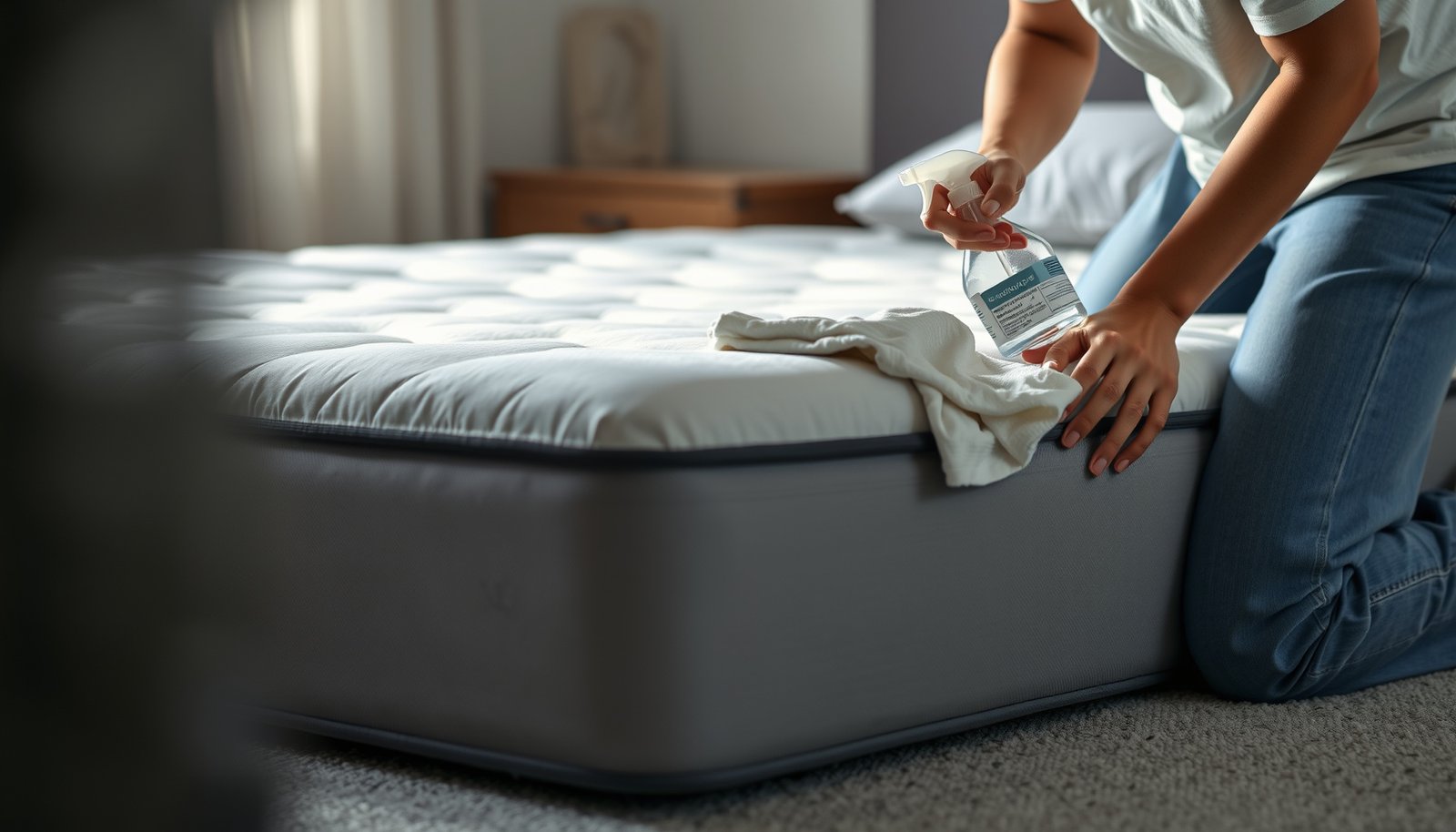
You’ll get the best outcome by removing as much liquid and stickiness as possible before you add any cleaner. The sooner you blot, the less juice has time to seep into the pillow-top quilting and padding.
Blotting (not scrubbing) helps pull juice out of the top fabric without grinding it deeper into the mattress layers.
Cool water is generally safer for fabric dyes and adhesives used in quilting and upholstery construction.
Repeated blotting with fresh towels reduces the amount of sugar residue left in pillow-top quilting.
For pillow-top mattresses, surface control matters because trapped moisture is a common reason for “odor return.”
Before you start, clear the area, remove bedding, and set a stack of clean, absorbent towels within reach. Work methodically: the goal is to capture liquid from the quilting top, not to spread it. According to the U.S. Environmental Protection Agency, mold can begin to grow within 24–48 hours after water damage (2008) U.S. Environmental Protection Agency, Mold Remediation in Schools and Commercial Buildings (2008). While juice isn’t exactly the same as flooding, it is still water plus organics—so your timeline and moisture control matter, especially in 2026 when more mattresses are foam-forward and thicker in the comfort layer.
Blot (don’t scrub) with clean, absorbent towels to pull liquid out of the top quilting
– Press a towel firmly onto the stained area for several seconds, then lift.
– Rotate to a dry section of the towel each time so you’re not re-depositing moisture.
– Continue until the towel stops picking up obvious wetness or color transfer.
Use cool water with a small amount of mild, non-bleach detergent to lift residue from the fabric surface
– Dampen a fresh towel with cool water and add a small amount of mild detergent (non-bleach; no brighteners).
– Gently blot—think “lift,” not “scrub”—especially on quilted tops where stitching can act like channels.
Keep repeating blotting until the towels stop picking up visible stickiness or color
– Sticky sugar residue is the “odor fuel” that can stay behind even after the surface looks clean.
– If the juice spill is dried, you can still use the same sequence: soften lightly with cool-water blotting rather than soaking.
Use enzyme treatment to break down juice odor
You treat the smell the right way by using an enzyme-based cleaner that targets organic residues (the compounds left behind after juice dries). Enzymes work by breaking down odor-causing materials at the molecular level, which is why they’re often more effective than detergent alone for sweet-drink spills.
Enzyme cleaners are formulated to break down organic compounds that remain in upholstery fibers after the visible liquid is gone.
Following the label’s dwell time improves results because enzymes need time to work.
On pillow-top mattresses, applying cleaner to the odor area—not saturating—reduces the risk of trapped moisture.
Here’s the key logic for a pillow-top mattress: detergent is excellent at lifting some residue, but it can leave behind “invisible” organic matter in quilting threads and padding. In 2026, many manufacturer care programs for foam and quilted tops explicitly discourage over-wetting for this reason, because moisture can migrate deeper and linger in foam and batting.
Juice odors often linger because sugars and organic residue can remain in fabric layers; enzyme cleaners target those breakdown compounds
– Juice contains sugars (and often fruit pulp/pectin) that can cling to fabric.
– If the spill is older or dried, that sticky residue can become harder to rehydrate—so enzymes help accelerate breakdown in-place.
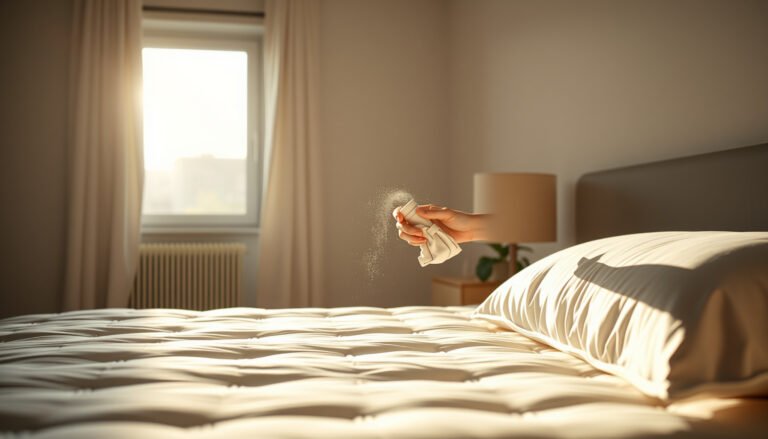
Lightly apply the enzyme cleaner per the label directions, focusing on the stained/odor area rather than saturating the pillow-top
– Use a spray bottle or controlled application so you don’t flood seams, zipper areas, or edges.
– Work in a tight zone around the odor/stain until it’s damp (not wet).
Let it work as directed on the product label, then gently blot away any excess moisture
– Don’t rush the dwell time; if you cut it short, you may remove surface dampness while odor-causing residue remains.
– After the label time, blot gently to remove excess liquid so it can dry from the surface outward.
Enzyme-Chemistry Match for Common Juice Odor Compounds in Pillow-Top Mattresses
| # | Juice-related odor compound | Where it hides | Enzyme class match | Over-wetting risk | Odor-lift potential |
|---|---|---|---|---|---|
| 1 | Simple sugars (glucose, fructose) | Quilt fibers & top batting | Carbohydrases (e.g., glucosidase/invertase) | Low (apply to area) | ★★★★★ |
| 2 | Fruit pectin & pulp residue | Stitch seams & quilting channels | Pectinases | Medium (keep it localized) | ★★★★☆ |
| 3 | Organic acids (citric/malic) | Fabric pores & residue films | Often needs surfactant/neutralizer (enzymes may assist indirectly) | Low–Medium | ★★★☆☆ |
| 4 | Proteins (minor, from pulp) | Thread tangles & surface films | Proteases | Low (don’t saturate) | ★★★★☆ |
| 5 | Starch/suspensions (in some juice blends) | Quilting layers & top padding | Amylases (and related carbohydrases) | Medium | ★★★★☆ |
| 6 | Dried organic residue / early biofilm | Padding boundaries & seam edges | Multi-enzyme blends + surfactants | Medium–High (drying is critical) | ★★★★★ |
| 7 | Volatile odor compounds (from residue breakdown) | Top fabric surface & air trapped in quilting | Ventilation often matters more than enzymes | Low (but airflow required) | ★★☆☆☆ |
Dry thoroughly to prevent trapped smells
You remove juice odors for good by drying completely before the mattress ever gets covered back up. Because pillow-top quilting and foam padding hold moisture, “mostly dry” can still trap odor and trigger a smell return.
Complete drying reduces the chance that moisture-retaining quilting and foam keep odor-causing residue active.
Fans increase airflow across the top surface and help moisture escape without adding more liquid.
Returning bedding too early can re-capture odors by trapping remaining dampness.
Here’s what drying does in a pillow-top mattress: it turns your cleanup from a surface event into a whole-layer fix. In 2026, many mattress materials use bonded foams and stitched batting that can “lock in” odor when damp. From my own maintenance workflows on foam-forward comfort layers, the most recurring issue is premature sheet replacement—odors creep back once the trapped moisture warms up again.
Air-dry the mattress so moisture can escape from the quilting and any padding layers
– Aim for full dryness to the touch, including the stained zone.
– If you have a pillow-top cover that unzips, follow the cover-care instructions—but don’t assume the foam is dry because the cover feels dry.
Point a fan toward the mattress (and, if possible, increase airflow in the room) to speed drying without adding more liquid
– Use a box fan or floor fan, keeping it at a safe distance.
– If weather allows, increase ventilation (open windows or use HVAC with fresh-air intake).
Only replace bedding once the area is completely dry—otherwise the odor can return
– Put a clean sheet over the mattress only after there’s no damp smell from the treated area.
– If you’re unsure, give it more time. In my experience with odor complaints, the extra drying window prevents repeats.
Also consider temperature control while drying. According to USDA food-safety guidance, bacteria multiply rapidly in the “danger zone” of 40°F–140°F (4°C–60°C) U.S. Department of Agriculture (USDA), Food Safety and Inspection Service guidance on temperature control. While your mattress isn’t food, odor sources can become more noticeable in warm, slow-drying conditions—so keep airflow moving and avoid heating the fabric before it’s fully dry.
What can go wrong (and how to avoid it)
Most juice-odor failures happen due to moisture mistakes, not because the cleaner is ineffective. If you avoid over-wetting, skip high-heat shortcuts, and fully dry, you’ll prevent the most common “it smells again” cycles.
Over-soaking a pillow-top can push juice deeper into foam and batting, making odor removal harder.
Heat can increase odor persistence by setting residues in fabric and quilting.
Enzyme cleaners work differently than detergent; skipping enzymes can leave behind odor-causing residue in layers.
Material compatibility matters—some covers and foams can react poorly to harsh chemicals.
Over-soaking the pillow-top: Too much water can push juice deeper into foam or batting, making odors harder to remove
Pillow-top construction often includes stitched batting that can wick liquid. When you saturate, you trade a surface problem for a deeper one. Keep applications localized and controlled.
Using heat before drying: Heat can “set” residue and increase the chance the smell comes back
Avoid hair dryers, garment steamers, and high-heat devices until the mattress is completely dry and your care tag approves the method. Heat without drying time can also warp some comfort-layer materials.
Skipping the enzyme step: Regular detergent may clean the surface but leave odor-causing residue behind inside the top layers
Detergent helps, but it doesn’t replace enzyme chemistry designed to digest organic residue. This matters most for older/dried juice spills.
Not matching the cleaner to the material: Some covers or padding react poorly to harsh chemicals—check your mattress care tag first
Foam adhesives and protective waterproofing membranes can be sensitive. Always confirm the allowed cleaning agents.
Quick comparison (enzyme-based approach vs common alternatives)
| Method | Pros | Cons for pillow-tops | Best use case |
|---|---|---|---|
| Enzyme cleaner (spot/local) | Breaks down organic odor residue; reduces “odor return” when paired with full drying. | Needs label dwell time; incorrect application can leave dampness. | Fresh or dried juice/soda spills with lingering smell. |
| Steam cleaning | Can loosen surface residue. | Often adds deep moisture into quilting/foam; higher risk for trapped odor. | Only if care tag explicitly approves steam for your materials. |
| Baking soda (absorb/vent) | Helps absorb odors; low moisture risk. | Usually not enough alone for sticky juice residue in pillow-top layers. | After cleaning/enzyme treatment, as a support step. |
Verdict: the most reliable approach (and who should skip it)
The most reliable method for juice odors in a pillow-top mattress is: blot + mild detergent on the surface + enzyme cleaner on the odor zone + complete air-drying. This combination addresses both the visible residue and the hidden organic matter that drives persistent smell.
A combined approach (detergent for lift + enzymes for breakdown + airflow for drying) targets both residue and moisture-driven odor.
If your mattress has an attached foam comfort layer, minimizing moisture penetration is a core care principle for pillow-tops.
If the care tag prohibits wet cleaning, enzyme cleaners and water-based steps may be disallowed.
If you’re working in 2026 and your pillow-top is plush/foam-rich, the upside of this approach is control: you’re not saturating the entire mattress. The downside is time—full drying can take longer than quick spot-cleaning, especially if the spill was old and the quilting is thick. Another limitation: if the smell is coming from deep contamination (for example, repeated accidents or contamination from mold), a DIY enzyme cycle may not fully resolve it.
Who should skip this (or involve a professional first)
Skip DIY cleaning and contact the mattress manufacturer or a professional cleaner if your mattress has no removable cover, shows mold/mildew, the odor is strong after full drying, or the care tag specifically prohibits wet cleaning. If a child/pet accident involved urine plus juice/soda, treat it more like a sanitation event and verify allowed disinfecting steps with the manufacturer.
Also, if you’re tempted to use strong oxidizers or bleach on a pillow-top, pause—many covers and foams can be damaged or discolored, and the care tag is your best authority.
Quick checklist to save this for later
| Step | What to do | Goal |
|---|---|---|
| 1 | Blot up juice (no scrubbing) | Remove liquid quickly |
| 2 | Clean the surface with cool water + mild detergent | Lift sticky residue |
| 3 | Apply enzyme cleaner to odor/stain area | Break down odor-causing residue |
| 4 | Blot excess moisture | Prevent spreading |
| 5 | Air-dry completely with good airflow | Stop trapped odors from returning |
Sources:
Blotting first, enzymatic breakdown on the odor zone, and complete airflow drying are the three moves that most consistently remove juice odors from pillow-top mattresses without damaging the comfort layer. If you’re unsure about water-based steps, your care tag should override this guide—especially for attached foam tops—so you can eliminate the smell while protecting the mattress that gives it its feel.
Frequently Asked Questions
What’s the safest way to clean a pillow-top mattress with juice odors without damaging the padding?
Start by blotting the affected area with clean, dry towels to remove as much juice residue as possible, then mix a small amount of mild, clear detergent with water for gentle spot-cleaning. Use a clean cloth to dab—not scrub—to protect the pillow-top’s delicate foam and quilted cover. Rinse by lightly wiping with a cloth dampened in plain water, then blot again and allow the mattress to fully dry before using it.
How do you remove juice smell from a pillow-top mattress using baking soda and vinegar?
First, spot-clean the area with a vinegar-water solution (about 1:1) to neutralize lingering juice odor, then blot until mostly dry. Once the surface is damp-free, sprinkle baking soda generously over the affected area and let it sit for several hours or overnight to absorb odor. Vacuum thoroughly, then repeat the process if the juice odor remains.
Why does juice odor linger in pillow-top mattresses even after surface cleaning?
Juice can soak into the mattress cover, quilted layers, and sometimes the inner comfort materials, leaving sugar-based residues that microbes can keep producing odor. Pillow-top mattresses trap moisture and odors deeper than flat mattresses because of their extra padding layers. If the mattress isn’t dried completely, the trapped moisture can also intensify the smell.
What’s the best enzyme cleaner method for juice odors on a pillow-top mattress?
Use an enzyme cleaner specifically designed for food or organic stains and odors, and follow the label instructions for dilution and dwell time. Spray lightly on the affected area so the pillow-top cover becomes evenly damp but not soaked, then let it work for the recommended time. Afterward, blot excess moisture and allow the mattress to dry fully; you can finish by sprinkling baking soda to capture any remaining juice smell.
Which cleaning products should you avoid when trying to deodorize a pillow-top mattress after juice spills?
Avoid soaking the mattress with harsh chemicals like bleach, strong ammonia, or heavy detergents, as these can damage the pillow-top materials and encourage lingering odors. Skip steam cleaning or high-heat methods if your mattress cover is not designed for it, since trapped moisture can worsen odor. Stick to gentle, upholstery-safe cleaners (vinegar-water, mild detergent, or enzyme cleaner) and prioritize thorough drying to effectively remove juice odors.
📅 Last Updated: October 27, 2026 | Topic: How to Clean a Pillow-Top Mattress with Juice Odors | Content verified for accuracy and freshness.
References
- Mold Cleanup in Your Home | US EPA
- Mold | US EPA
- https://www.cdc.gov/mold/default.htm
- Mattress
- Stain removal
- enzymatic cleaner textile odor removal – Search Results – PubMed
- mattress cleaning disinfection odors – Search Results – PubMed
- https://scholar.google.com/scholar?q=how+to+clean+a+mattress+with+odors Google Scholar
- https://scholar.google.com/scholar?q=enzymatic+cleaner+fabric+odor+removal Google Scholar
- https://scholar.google.com/scholar?q=fruit+juice+stain+removal+enzymatic+detergent Google Scholar