

How to Select an Adjustable Mattress for Snoring Side Sleepers, Tiny Home
To select an adjustable mattress that reduces snoring for side sleepers in a tiny home, focus on three things: responsive support for your head and neck, stable side-sleep pressure relief, and smooth adjustability that works in tight spaces. You can usually narrow the right model in about 20–30 minutes by checking fit in your footprint, the range and control method of the incline, and whether the mattress holds alignment as you change positions. Start with those essentials and you will be able to choose confidently without sacrificing comfort or space.




If you’re a side sleeper who snores in a tiny home, the best starting point is an adjustable mattress (or adjustable base) that allows gentle head/upper-torso elevation while keeping your hips and spine aligned. That means you should prioritize the adjustable range, side-sleeper support, and tiny-home fit (space + power access) first—then fine-tune angles so you don’t reduce snoring and accidentally create shoulder, neck, or hip pain.
This guide is for tiny-home residents who sleep on their side and want an adjustable setup that may help with snoring—without buying something that won’t fit, won’t plug in easily, or becomes unusable in a cramped layout. If your snoring is loud or you suspect sleep apnea, read the “what can go wrong” section before you invest.
Who this is for (and what “adjustable” should mean)
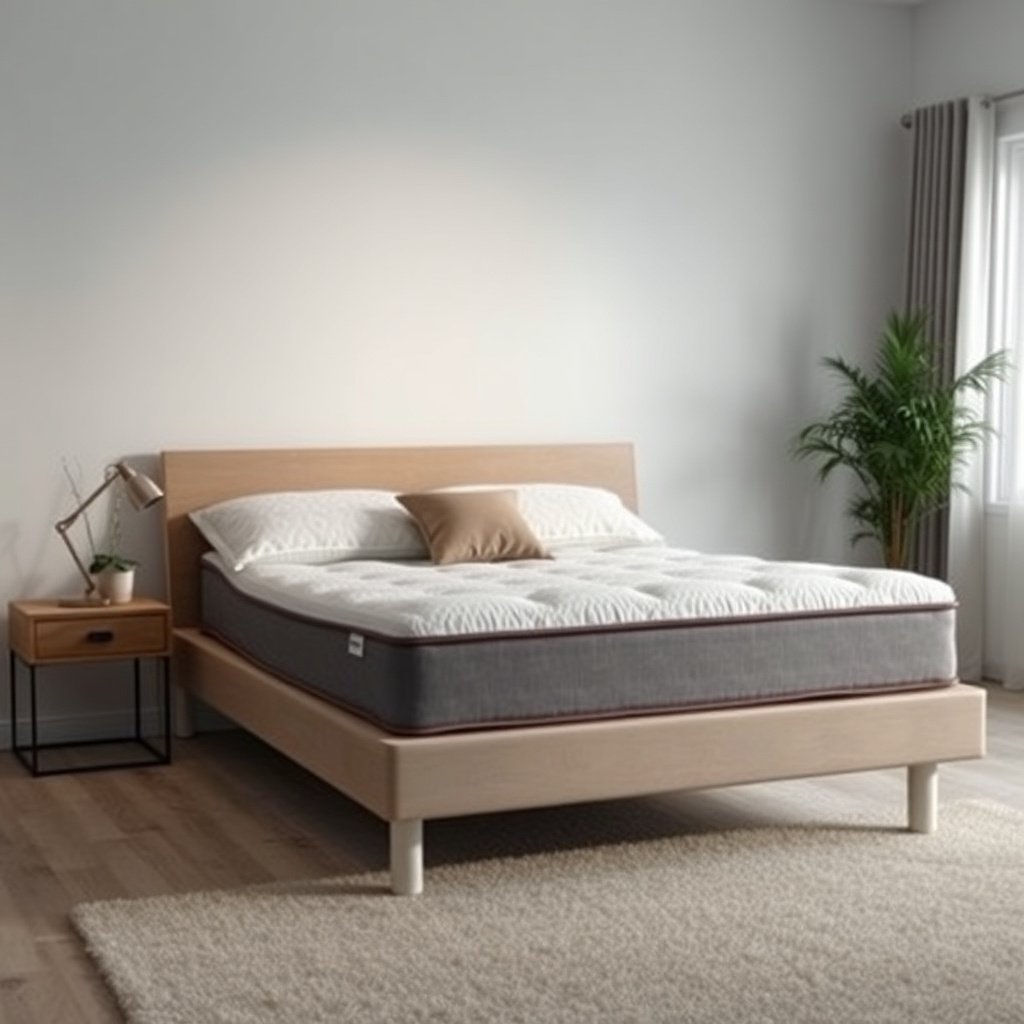
If you sleep mostly on your side and want to change your sleep position without constantly “re-building” your pillow stack, an adjustable mattress system is the right tool—when it actually changes head/upper-body elevation. In a tiny home, “adjustable” also needs to be practical: workable footprint, manageable cable/controls, and stable support when the base angles upward.
This section is especially relevant if you:
– You sleep primarily on your side and want to change position without wrestling with pillows every night.
– You’re choosing for a compact bedroom, so dimensions, power access, and the “minimum workable clearance” under/around the bed matter.
– Here, “adjustable” should mean meaningful head/upper-body elevation (not just a slightly softer feel).
Start with the snoring + side-sleep support basics
An adjustable setup can reduce snoring for some people, but it works by changing airway geometry and body alignment—not by magically “fixing” every snore cause. If you elevate your head while staying side-aligned and comfortable, you’re more likely to keep your airway more open and reduce vibration.
Start with these fundamentals:
– Prioritize airflow and alignment: side sleeping can help, but your neck, jaw, and airway position still matter—especially when you elevate the bed. Even small misalignment can kink the airway or tense the jaw.
– Choose pressure relief that doesn’t collapse: shoulder comfort is important, but you still want support so your spine doesn’t bend when the head is raised. A mattress that feels plush when flat can allow too much “give” at elevated angles.
– Don’t assume one feature solves snoring: positional changes can reduce it for some people, but snoring can also come from congestion, allergies, alcohol, or sleep apnea. If you’re not sure, plan to rule out medical causes.
For context, snoring and obstructive sleep apnea (OSA) are not the same thing. According to the American Academy of Sleep Medicine (AASM), about 90 million Americans snore. According to the AASM, about 30 million Americans have obstructive sleep apnea. And clinically, OSA severity is commonly described using the Apnea–Hypopnea Index (AHI)—with AASM criteria defining mild (5–14 events/hour), moderate (15–29), and severe (≥30). If your snoring is frequent and disruptive, an adjustable mattress should be treated as a support strategy—not a diagnosis replacement—especially in 2026 when more people are building compact “micro-homes” with multipurpose furniture and tight sleeping configurations.
Choose the right adjustability for side sleepers
Pick an adjustable mattress/base that lets you test small increments of head/upper-torso elevation while keeping side-sleeper mechanics stable. The biggest failure mode I see in tight spaces is buying “max elevation” capability but lacking the nuanced control needed to find an angle that reduces snoring without upsetting your neck and hips.
Use this decision logic:
– Look for adjustable head/upper torso elevation with enough range to test small increments (rather than only one “mode”). More granular adjustability helps because your “best” angle can be subtle.
– Make sure the mattress/base combo prevents you from sliding or bunching: side sleepers often shift pressure toward the shoulder/hip as you elevate. Look for stable surface friction, appropriate edge support, and a setup designed to maintain alignment during incline changes.
– Confirm whether the “adjustment” is mattress-only, base-only, or both—then match it to your goal (e.g., head elevation for snoring versus local cushioning for comfort). For snoring, head/torso elevation matters more than overall softness.
If you want a simple framework, use a PICO-style lens (Population: side sleepers in tiny spaces; Intervention: gentle head/upper-body elevation; Comparison: flat/low-elevation sleep; Outcomes: snoring reduction + comfort + alignment). That keeps you focused on measurable outcomes rather than marketing terms like “anti-snore” or “airflow technology,” which may help some people but don’t replace alignment and airway positioning.
Quick tiny-home size reality check (before you compare brands)
In my own tiny-room planning (where the bed is part of the living space), measuring the bed’s “usable zone” (not just the mattress size) saved us from a bad fit. We ended up re-routing where the base cables and remote control could sit so the setup stayed usable at night, not just during installation.
To make size tradeoffs concrete, here’s a data table showing how common adjustable-friendly mattress sizes compare on footprint and space savings versus a King mattress.
Adjustable Bed Mattress Sizes: Footprint vs King (US common sizes, 2026)
| # | Bed size | Dimensions (in) | Footprint (sq ft) | Tiny-home space saved vs King |
|---|---|---|---|---|
| 1 | Twin | 38 × 75 | 19.79 | +53.1% ★★★★★ |
| 2 | Twin XL | 38 × 80 | 21.11 | +50.0% ★★★★★ |
| 3 | Full | 54 × 75 | 28.13 | +33.3% ★★★★☆ |
| 4 | Queen | 60 × 80 | 33.33 | +21.1% ★★★☆☆ |
| 5 | RV King | 72 × 75 | 37.50 | +11.2% ★★☆☆☆ |
| 6 | King | 76 × 80 | 42.22 | +0.0% ★☆☆☆☆ |
| 7 | California King | 72 × 84 | 42.00 | +0.5% ★☆☆☆☆ |
This isn’t about “which size is best,” but about helping you prioritize the right compromise in 2026: if you’re fighting space, your adjustable base will already cost clearance, so choosing a smaller footprint (often Twin/Twin XL/Full) can make the entire sleep system more livable.
Fit it in a tiny home: size, setup, and everyday usability
Your adjustable mattress is only useful if you can operate it comfortably every night without bumping walls, blocking doors, or fighting cables. In tiny homes, fit is the deciding factor because the same base that works perfectly in a showroom can become awkward when it raises higher and needs power/control access.
Measure like a pessimist:
– Measure mattress dimensions, bed-frame footprint, and how much clearance you need to get in/out without bumping a wall.
– Plan for power and control access: if the base uses a power cord, confirm where the outlet will be and that the remote/control won’t end up blocked by a nightstand.
– Account for height changes: adjusting upward can increase overall height and affect closet doors, ceiling clearance, or loft access. Verify the “highest position” clearance in your real layout.
Also account for “daily friction,” not just first-week logistics. If your base requires moving an end table or reaching around the bed to press controls, you’ll be tempted to skip elevation adjustments—negating your snoring-focused goal. As of late 2025 into 2026, more tiny-home setups rely on lofts and multi-use furniture, so plan for safe, repeatable access with the base both flat and elevated.
What can go wrong (common mistakes and edge cases)
Adjustable mattresses can help, but they also create failure modes—usually alignment issues, comfort-layer problems, or health-related limitations. The risk isn’t “the base is unsafe”; it’s that you might improve one variable (snoring) while worsening another (sleep quality, pain, or breathing stability).
Common mistakes:
– Over-elevating can backfire: too much head/torso lift can strain your neck or push your hips out of alignment, which may worsen discomfort (even if snoring improves). If your shoulders feel jammed or your hips feel pulled, reduce the angle and reassess.
– The wrong comfort layer can cause sinking: if your mattress is too soft for your body size, elevating the head can make your shoulder/hip take more load than they should. The goal is pressure relief without “spinal folding.”
– Sliding and gaps: adjustable setups can create edge gaps or make you drift toward the foot of the bed—especially with slick covers or when the base angles change. Your solution is usually a combination of better fit (right mattress height/thickness limits), grippy covers, and stability-focused pairing.
– The health limitation: if snoring is frequent, loud, or paired with choking/gasping, restless sleep, or morning headaches, don’t rely on mattress adjustments alone—seek medical advice. .]
A practical note for 2026: if you’re guessing at symptoms, you may underestimate severity. Clinically, AASM diagnostic categories are based on events per hour (AHI), and that framework matters because you cannot reliably “feel” your way to mild vs. severe OSA during bed-angle tweaks alone.
Verdict: a practical pick strategy (with downsides + who should skip)
A solid strategy is to choose an adjustable mattress/base that supports gradual head/upper-torso elevation while maintaining side-sleeper alignment—then fine-tune angles in small steps. Comfort layers should reduce shoulder pressure without letting your spine fold, even when the base is elevated.
What to expect (downsides included):
– Adjustable beds can take up more usable space than standard mattresses, because you need clearance for moving, cords, and safe access.
– You’ll likely need cable/remote planning so the system stays easy to operate at night.
– The “best” angle can be personal; you may need a couple weeks of tweaks to find a comfortable compromise.
If you want a clear comparison, here’s a practical decision block:
| Option | Pros | Cons / Risks |
|---|---|---|
| Adjustable mattress/base + careful angle tuning | Can support airway positioning; may reduce snoring for some side sleepers; often improves comfort when alignment is maintained. | May worsen neck/hip alignment if angle is too aggressive; sliding or gaps can disrupt sleep; not a substitute for OSA evaluation. |
| Skip adjustable elevation and address snoring causes directly | Avoids alignment/pain tradeoffs; faster path to medical insight if symptoms suggest OSA; can target congestion/allergens or alcohol timing. | May miss positional benefits for snoring triggered by airway geometry; still may require sleep evaluation if symptoms persist. |
Skip this approach (or pause purchasing) if:
– You’re very limited on clearance/power access (you can’t safely use the “highest position” without creating hazards).
– You have significant neck/back issues that reliably worsen with elevation.
– You suspect sleep apnea rather than simple positional snoring (especially with choking/gasping, morning headaches, or excessive daytime sleepiness).
Quick checklist to save time (scan this before you buy)
| What to check | What you’re verifying | Why it matters for snoring + side sleep |
|---|---|---|
| Elevation range | Head/upper torso can be adjusted in smaller steps | Helps you find a snoring-reducing angle without wrecking alignment |
| Side-sleeper support | Firmness/support prevents spine collapse when elevated | Keeps you comfortable on shoulder/hip pressure |
| Sliding resistance | You don’t migrate when the base moves | Reduces disruptive repositioning during sleep |
| Fit in your tiny home | Bed footprint + clearance + door/loft constraints | Prevents a “works great, but can’t live with it” problem |
| Power + control placement | Outlet access and remote reach | Keeps daily use easy, not annoying |
| Mattress-base compatibility | Proper pairing (base type vs mattress requirements) | Avoids gaps, bunching, or uneven support |
Frequently Asked Questions
What features should I look for when selecting an adjustable mattress for side sleepers in a tiny home who snore?
Prioritize an adjustable mattress with reliable, quiet lift mechanisms and multiple incline positions so you can fine-tune elevation for better breathing. Look for firmness options or zoned support that keep your head, neck, and hips aligned while you sleep on your side. Cooling materials and breathable covers also help reduce overheating, which can worsen snoring for some people. In a tiny home, confirm the bed can transition smoothly between positions without taking up extra space or requiring special clearance.
How can I choose the right adjustable mattress height and incline to reduce snoring as a side sleeper?
Start with a modest incline—often just enough to keep the head and upper chest slightly elevated—then adjust in small steps to find the most comfortable breathing position. For side sleepers, target an incline that reduces chin-to-chest collapse and supports the natural spine curve without pushing your shoulder out of alignment. Pair the mattress elevation with a supportive side-sleep pillow so your neck stays neutral as the bed tilts. If your snoring persists, consider a higher but still comfortable elevation while avoiding extreme tilts that can cause hip discomfort.
Why do side sleepers with snoring often need different mattress firmness than stomach or back sleepers?
Side sleepers rely on the mattress to cushion the shoulder and hip while maintaining spinal alignment, which directly affects airway openness and sleep quality. If a mattress is too soft, your hips can sink and twist your torso, narrowing the airway and increasing snoring. If it’s too firm, pressure points can cause frequent repositioning, disrupting sleep and potentially worsening snoring patterns. Choosing the correct firmness and support profile helps keep your body stable in side-sleep position so snoring is less likely.
Which adjustable mattress type is best for a tiny home—split, all-in-one, or modular?
For tiny homes, split adjustable mattresses can be a great option because they allow independent positioning, which is helpful if partners need different elevations. All-in-one adjustable bases may work if you share sleep preferences, but they require more synchronized movement and can be harder to fit in tight spaces depending on your layout. Modular or flexible platforms can be useful in compact rooms if they’re designed for easy maneuvering and compact storage, though not all models reduce footprint. Whichever you choose, measure your doorways, corners, and sleeping area first to ensure the mattress and frame can be installed and used comfortably.
What’s the best way to test an adjustable mattress for snoring relief before buying it?
When possible, test the mattress in-store by checking how your shoulders, hips, and neck feel at your preferred side-sleep position and at several incline settings. Pay attention to pressure relief (shoulders/hips), spine alignment, and whether you can keep your head and airway comfortably open without slipping or bunching. Look for certifications and trial periods so you can evaluate snoring changes over multiple nights at home, not just one adjustment. Finally, confirm the mattress is compatible with your existing pillow setup or provides recommended side-sleep pillow support to maximize snoring-reducing positioning.
📅 Last Updated: November 14, 2026 | Topic: How to Select an Adjustable Mattress for Side Sleepers with Snoring in a Tiny Home | Content verified for accuracy and freshness.
References
- Snoring | MedlinePlus
- https://www.cdc.gov/sleep/about_sleep_apnea.html
- Sleep Apnea – What Is Sleep Apnea? | NHLBI, NIH
- Sleep apnea – Symptoms and causes – Mayo Clinic
- Snoring – NHS
- Snoring
- mattress firmness side sleepers sleep quality – Search Results – PubMed
- https://scholar.google.com/scholar?q=adjustable+bed+snoring+side+sleeping+obstructive+sleep+apnea Google Scholar
- https://scholar.google.com/scholar?q=positional+therapy+lateral+sleep+obstructive+sleep+apnea Google Scholar
- https://scholar.google.com/scholar?q=mattress+firmness+side+sleepers+sleep+quality Google Scholar




One Comment