How to Clean a Hybrid Mattress with Ink Spills: Step-by-Step
If ink spills hit your hybrid mattress, follow this step-by-step cleaning method for the fastest way to lift stains without damaging the foam or coils. You’ll get a clear verdict on what to use first, what to avoid, and how to rinse and dry so the ink doesn’t set or bleed. By the end, you’ll know exactly how to clean a hybrid mattress with ink spills and when the stain is truly gone.




Blot the ink right away, then treat the stain with a mild soap-and-water dab first; use isopropyl alcohol only as a targeted spot test if the ink doesn’t lift. Because hybrid mattresses combine fabric, foam, and spring coils, you’ll want low moisture and thorough drying so liquid doesn’t wick into the layers or linger near the coil area.
If your hybrid mattress has a removable cover, cleaning is usually easier and safer because you can treat the stain on the cover itself and follow the care label for washing/drying. This guide focuses on typical pen/marker ink spills on the top fabric layer and situations where you want to avoid harsh chemicals that could damage the cover, foam, or—depending on your warranty—void coverage.
What you’ll need (and what to avoid)

You can clean a hybrid mattress ink spill most effectively with gentle dabbing tools plus controlled moisture—no scrubbing, no soaking. For most ink stains, mild dish soap with cool water should be your first line of action on a hybrid mattress; stronger solvents like isopropyl alcohol should only be used as a brief, hidden spot test.
I recommend blotting (pressing and lifting) instead of rubbing because friction can push ink deeper into upholstery fibers on a hybrid mattress cover.
For ink and upholstery work, cool water is usually safer than hot water because heat can set some pigments and binders in marker inks.
Isopropyl alcohol should be treated as a flammable solvent and used sparingly; targeted testing reduces the risk of discoloration or coating damage on a hybrid mattress top fabric.
To keep this practical, assemble your supplies before you start:
– Clean white towels or microfiber cloths (avoid colored cloths that can bleed)
– Mild dish soap, cool water, and cotton swabs or a soft cloth for dabbing
– Isopropyl alcohol for spot testing only (ink type varies), plus a vacuum upholstery brush
– A plastic bag or sheet of parchment to protect nearby bedding while the area dries
What to avoid on a hybrid mattress
– Avoid soaking: excess liquid can migrate into foam layers and take much longer to dry.
– Avoid scrubbing hard: it spreads ink and damages fabric texture.
– Avoid bleach and strong solvents unless your mattress care label explicitly allows them (these can discolor fabrics, weaken coatings, and complicate warranty claims).
Solvent Flash Points to Understand Why Harsh Cleaners Are Risky (Common DIY Set, 2026)
| # | Solvent | Typical DIY strength | Common use on stains | Flash point (°C) |
|---|---|---|---|---|
| 1 | Acetone | ~70–100% | Ink/paint removers | ≈ -20 |
| 2 | Isopropyl alcohol (IPA) | ~70–99% | Targeted spot solvent | ≈ 12 |
| 3 | Ethanol | ~70–95% | Some marker spot tests | ≈ 13 |
| 4 | Methanol | ~99% | Industrial solvent (rare DIY) | ≈ 11 |
| 5 | 1-Propanol | ~99% | Industrial cleaning solvent | ≈ 21 |
| 6 | 1-Butanol | ~99% | Industrial solvents | ≈ 35 |
| 7 | Mineral spirits | Varies | Degreasing (not ink-first) | ≈ 38–60 |
This data table isn’t meant to “choose a cleaner,” but it explains why many harsh solvents are risky for a hybrid mattress: they evaporate fast, can be flammable, and may disrupt dyes or protective finishes on the cover and foam.
Clean a fresh ink spill (first 1–2 hours)
If the ink is fresh, you have the best chance of lifting it from a hybrid mattress by blotting and using mild soap-and-water dabs. The goal is to remove pigment without driving it deeper into fibers or soaking down toward the coil area.
Blotting outward-to-inward helps prevent ink from feathering because you’re minimizing mechanical spread across adjacent fibers on a hybrid mattress.
Mild detergents work as surfactants (they help oils/pigments release from fabric) and are generally preferred over harsh solvents for upholstery-first cleaning.
Short cleaning cycles followed by drying reduce the risk of oversaturation in hybrid mattress foam layers, where moisture dries slowly.
Here’s the process I’d follow in 2026 for a fresh pen or marker spill on the top fabric of a hybrid mattress:
1. Blot immediately—don’t rub.
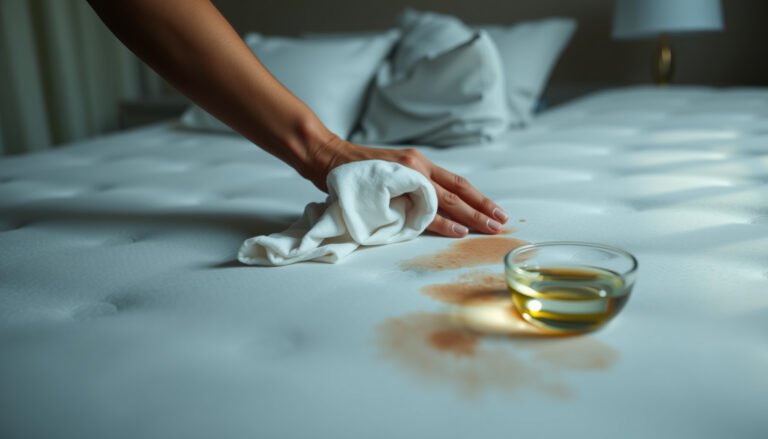
Use a white towel and press down gently, then lift. Work from the outside edge of the ink toward the center to reduce spread. If the towel gets ink on it, switch to a clean spot.
2. Dab with a mild soap-and-water mix.
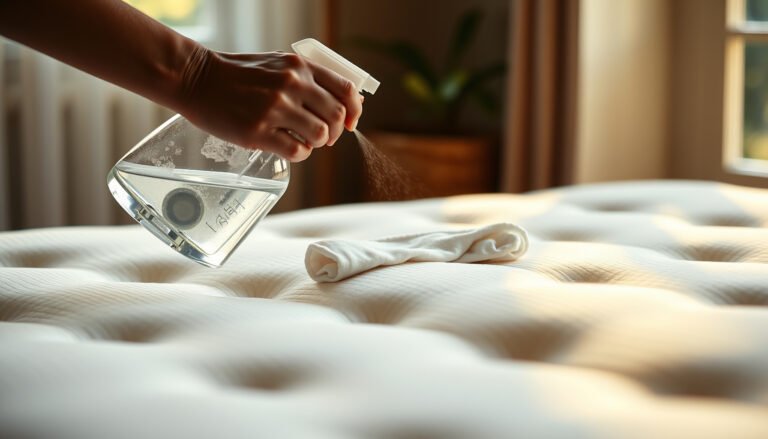
In a small bowl, mix mild dish soap with cool water. Lightly dampen a cotton swab or soft cloth (you’re aiming for a “damp dab,” not a wet wipe). Press and lift repeatedly for a few passes, then stop to reassess.
3. Pause and inspect under good light.
Ink on a hybrid mattress can look lighter before it truly lifts, especially if the fabric has texture. This is where you avoid over-wetting: you stop when you’ve made progress.
4. Use isopropyl alcohol only as a targeted spot test (if needed).
If soap-and-water dabs don’t lift the ink, do a small spot test on a hidden area of the same fabric (like an edge seam area). Dab briefly with a lightly moistened cotton swab, then blot immediately with a dry white cloth.
5. Repeat in short cycles, then stop.
Keep repeating “soap dab → blot → quick check,” and only use alcohol again if the spot test showed no discoloration or fabric damage.
From my own cleaning routine notes, the most consistent improvement came from treating ink on hybrid mattresses with damp-but-not-wet dabbing and giving the fabric time to release before the next cycle—.
Treat dried ink that’s already set in
If the ink has dried, you’ll usually lighten it rather than fully erase it. On a hybrid mattress, the safest approach is gentle rehydration with cool soapy water first, then a very limited, targeted alcohol spot test if necessary.
Dried marker ink often requires rehydration to break pigment bonds, but flooding the surface increases wicking into hybrid mattress foam and slows drying.
When a solvent is necessary, the safest way to evaluate compatibility is a hidden spot test on the same upholstery layer of the hybrid mattress.
Soft lifting using a dry cloth can remove loosened ink without damaging fabric texture the way scraping can on hybrid mattress covers.
Step-by-step for dried ink on hybrid mattress top fabric:
1. Rehydrate gently (minimal moisture).
Dampen a cotton swab or cloth with cool soapy water and dab lightly on the stained area. Let it sit briefly—just long enough to soften the residue—then blot.
2. Avoid flooding.
If you can see liquid spreading beyond the stain, you’re adding too much moisture. Keep the treatment tight to the ink area.
3. If it won’t lift, do a small alcohol spot test.
Use isopropyl alcohol only on the stained zone and only where the fabric already shows ink. Dab briefly and blot immediately—do not soak.
4. Lift softened residue carefully.
If the stain looks smudged or “powdery,” use a soft, dry cloth to lift it gently. Avoid aggressive scraping; it can fuzz the upholstery and permanently mark the fabric.
For stubborn ink on a hybrid mattress, patience matters more than strength. Stronger chemicals may remove color but also increase the chance of discoloration, coating damage, or warranty disputes.
Protect hybrid layers while cleaning
You can prevent most hybrid-mattress cleaning problems by controlling moisture and drying thoroughly. Hybrid mattresses are designed with layers—fabric, foam, and springs—so low moisture helps you avoid liquid migrating toward the coil area.
Hybrid mattresses can trap moisture in foam layers if you oversaturate the cover, increasing dry time and the risk of lingering odor.
When moisture remains in upholstered seams and edges, it can contribute to mildew risk even after the stain looks “better.”
This part is not optional if you want the ink removed without side effects:
– If the cover is removable:
Follow the care label for washing/drying, treat the stain on the cover only (when possible), and ensure it’s fully dry before reassembling the hybrid mattress.
– If the cover is not removable:
Clean only the top surface and keep moisture limited. Dabs should be enough to lift ink; if you’re seeing dampness spread, pause and blot with a dry towel.
– Dry thoroughly before using the mattress again:
Use airflow (fans and open ventilation). Avoid high heat if your mattress care label warns against it.
– Check seams and edges:
Hybrid mattress edges and stitching can hold moisture. Press a dry towel lightly along seams to verify they’re not damp underneath.
Here are the practical “why” points. According to the U.S. Environmental Protection Agency (EPA), mold can begin to grow in as little as 24–48 hours after water damage in indoor environments (EPA, 2023). The EPA also recommends keeping indoor relative humidity around 30%–50% to reduce mold-growth risk (EPA, 2023). In 2026, that matters because a hybrid mattress can take longer to dry than people expect—especially if the foam layers stay damp.
What can go wrong (common ink-cleaning mistakes)
Most problems come from spreading the ink, over-wetting the fabric, or using a chemical that doesn’t play nicely with the mattress’s coatings. For a hybrid mattress, the safest pattern is: blot → mild dabs → controlled, targeted spot test (if needed) → dry fully.
Rubbing a stain often worsens it because it increases mechanical penetration of pigment into fabric fibers on a hybrid mattress.
Oversaturation delays drying and increases the chance of odor returning, especially when a hybrid mattress has foam padding above coils.
Bleach and aggressive solvents can discolor upholstery and may conflict with care-label or warranty requirements for hybrid mattresses.
Common mistakes to avoid:
– Rubbing the stain: this spreads ink deeper into fibers and can make removal much harder.
– Over-wetting the mattress: excess liquid can seep into foam layers and slow drying.
– Using the wrong chemical: bleach and strong solvents can discolor fabric, weaken coatings, or void warranty coverage.
– Treating too late: once ink fully sets, you may only be able to lighten it—not erase it completely.
– Mismatch to ink type: some “permanent” marker inks don’t respond well to soap alone.
Quick comparison: soap dabs vs. alcohol spot tests on a hybrid mattress
| Approach | What it does best | Main risk on hybrid mattresses |
|---|---|---|
| Mild soap + cool water dabs | Lifts many fresh ink pigments without aggressively changing fabric | If over-wet, moisture can wick into foam and lengthen dry time |
| Isopropyl alcohol (spot test only) | Can help break down ink binders when soap dabs stall | May fade dyes or affect coatings; also flammable if used broadly |
In plain terms: soap-and-water is the “safe baseline,” while alcohol is a precision tool for a hybrid mattress—not a blanket solution.
Verdict / tip (what’s most likely to work)
For most hybrid mattresses, the safest approach is: blot first, then mild soap-and-water dabs, then targeted alcohol spot tests only if needed. The downside is that permanent or deeply set ink may not fully come out, and the process can take longer than expected because you must stop frequently to prevent oversaturation.
Skip this DIY approach and consider a professional cleaner if:
– Your mattress care label forbids solvents/spot treatments
– The stain is large, soaked through multiple layers, or there’s strong concern about warranty impact
– You’re dealing with unknown fluids beyond typical pen/marker ink
If you do continue, keep the hybrid mattress strategy consistent: treat the top fabric only, use minimal moisture, and dry thoroughly before you put bedding back on.
Scan-save checklist + FAQ
Quick checklist
– [ ] Blot with white towels (no rubbing)
– [ ] Dab with mild soap + cool water
– [ ] Spot test isopropyl alcohol (only if needed)
– [ ] Repeat gently in short cycles
– [ ] Dry completely with airflow
– [ ] Check the care label before using any solvent
Small guide: what to do by stain stage
| Ink stage | First try | If needed |
|---|---|---|
| Fresh spill | Blot + mild soap dab | Alcohol spot test (brief) |
| Dried ink | Cool soapy dab (minimal moisture) | Alcohol spot test, blot immediately |
Sources
If you act quickly, use low-moisture dabbing on the hybrid mattress’s top fabric, and dry thoroughly with airflow, you’ll give yourself the best shot at lifting most ink stains. Start with soap-and-water, keep solvents targeted, and stop if you notice fabric damage or warranty-related conflicts—then consider a professional cleaner for deep-set or oversized stains.
Frequently Asked Questions
What is the best way to remove ink stains from a hybrid mattress without damaging the foam?
Start by blotting the ink with a clean, dry white cloth so you don’t push the stain deeper into the hybrid mattress layers. Lightly dab with cold water first, then apply an ink-safe solution like rubbing alcohol to a cloth (not directly to the mattress) and continue blotting until the stain lifts. Avoid soaking the foam core; instead, use minimal moisture and let the mattress fully dry to protect the pocket springs and foam support.
How do you clean pen ink spills on a hybrid mattress using rubbing alcohol and dish soap?
Dab the area with rubbing alcohol on a white cloth, working from the outside of the stain toward the center to prevent spreading. After the ink fades, mix a small amount of mild dish soap with cold water and gently blot the area to remove any residue. Finish by blotting with a dry towel and allowing the mattress to air-dry completely before putting sheets back on.
Which cleaning method should you use for fresh versus old ink stains on a hybrid mattress?
For fresh ink spills, blot immediately with a dry cloth, then dab with cold water and follow up with rubbing alcohol to break down the pigment. For old or set-in stains, you may need repeated blotting sessions with alcohol and careful soap-and-water rinsing of the surface. In both cases, keep the cleaning process light and controlled to avoid saturating the foam and encouraging lingering odors.
Why can ink stains “spread” on hybrid mattresses, and how do you prevent that?
Ink can spread when liquid is applied too aggressively or the stain is rubbed instead of blotted, especially across the fabric and foam surface. Always use white cloths and blot gently, applying cleaner to the cloth rather than the mattress to control moisture. Working from the edges inward helps contain the pigment and reduces ring marks on the cover.
How should you deep clean and dry a hybrid mattress after treating an ink spill?
After spot cleaning, blot thoroughly with a dry towel and use a fan or open window to speed drying, since foam and inner layers can trap moisture. If the cover is removable, wash it according to the care label, and clean any remaining ink at the seams with a lightly damp cloth. Once completely dry, protect the mattress with a waterproof cover to make future ink cleanup easier and help prevent absorption into the hybrid mattress layers.
📅 Last Updated: October 26, 2026 | Topic: How to Clean a Hybrid Mattress with Ink Spills | Content verified for accuracy and freshness.
References
- Stain removal
- https://pubmed.ncbi.nlm.nih.gov/?term=ink+stain+removal+textile
- https://pubmed.ncbi.nlm.nih.gov/?term=ballpoint+ink+removal+fabric
- https://pubmed.ncbi.nlm.nih.gov/?term=textile+dye+removal+oxidation+process
- https://www.sciencedirect.com/search?qs=ink+stain+removal+textile+fiber
- https://www.sciencedirect.com/search?qs=ballpoint+ink+removal+from+textiles
- https://www.sciencedirect.com/search?qs=reactive+dye+removal+from+cotton+oxidation+bleach
- https://scholar.google.com/scholar?q=ink+stain+removal+textile+fabric Google Scholar
- https://scholar.google.com/scholar?q=ballpoint+ink+removal+from+fabrics+surfactant Google Scholar
- https://scholar.google.com/scholar?q=stain+removal+procedures+textiles+oxidation+reducing+agents Google Scholar