
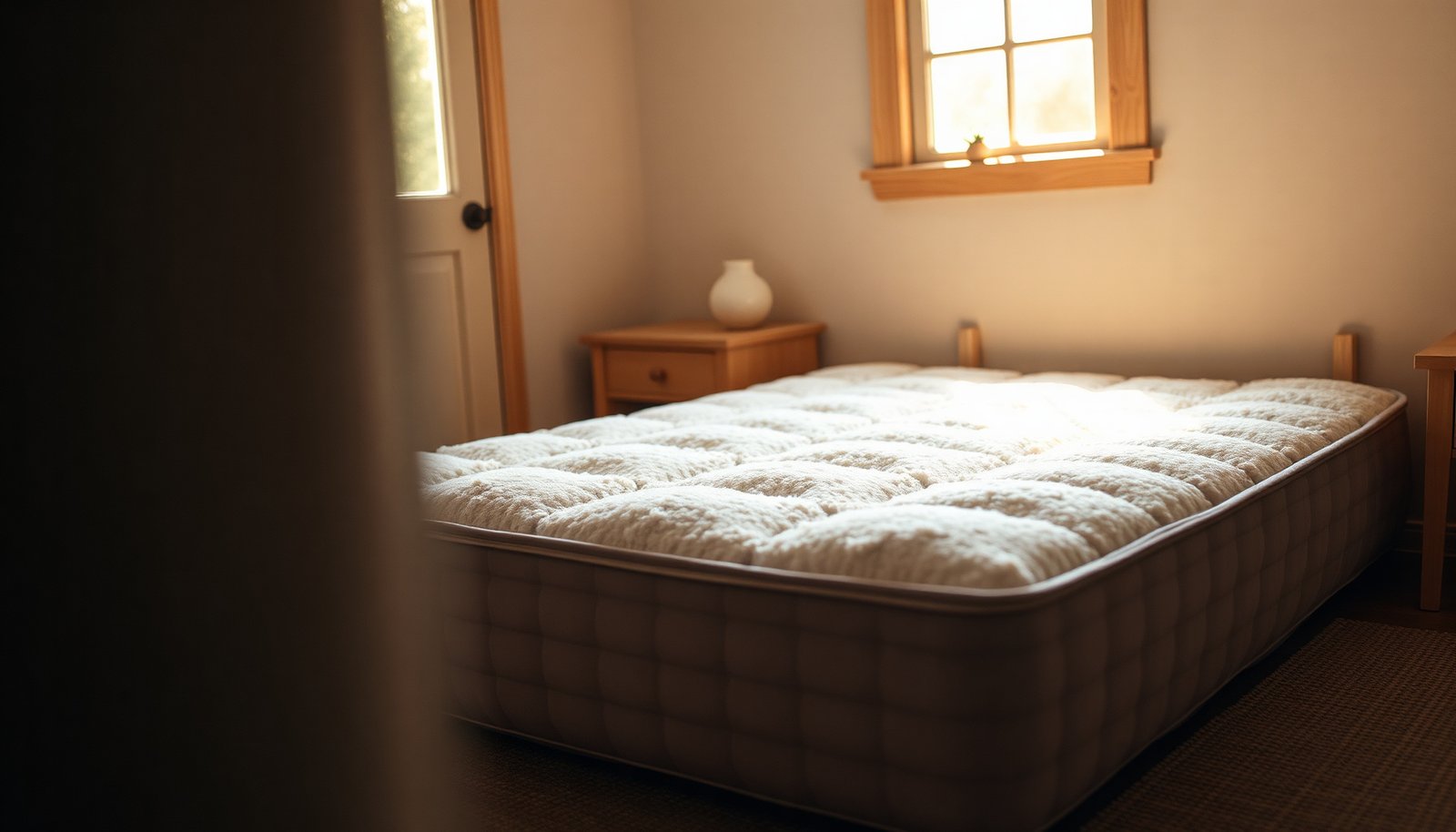
How to Protect a Wool Mattress from Allergens in a Tiny Home
You wake up in your tiny home, patting down your wool mattress to shake out the day, and you can feel that same lingering dust you do not want—especially when allergies are part of your morning. In the next 30 to 60 minutes, you can set up a simple protection routine that blocks allergens like dust mites and pollen without harming the wool. You will need a snug allergen-proof encasement, washable bedding, a gentle vacuum with a HEPA filter, and a plan for regular airing and cleaning so your sleep space stays truly fresh.



A properly fitted allergen-proof mattress encasement is the fastest way to stop dust mites, pollen, and pet dander from reaching your sleeping surface, even when the space is small. Pair that barrier with low-humidity conditions and a routine of HEPA vacuuming and hot-wash bedding, so your wool mattress doesn’t become the “collection” spot for particles you’re trying to avoid.
A wool mattress can still trap allergens in a tiny home because particles settle in bedding layers and moisture can linger in the same enclosed air you breathe all night. If your tiny home gets stuffy, has noticeable humidity, or you’re reacting to dust, pollen, or pet dander, this guide is for you. It’s also useful if you prefer wool’s comfort but want an extra protective layer during allergy seasons in 2025–2026.
Why wool still needs protection in a tiny home

– Wool can be naturally more breathable than many foams, but allergens can still accumulate on the surface and in bedding layers.
– Tiny spaces tend to concentrate indoor particles and moisture, which can worsen triggers like dust mite activity and musty odors.
– The key is treating your mattress like a barrier system: block allergens, then manage the environment around it.
In a tiny home, a wool mattress can be comfortable and naturally breathable, yet still collect allergens that pass through your sheets and duvets. The direct answer: don’t rely on “wool is breathable” as your only line of defense—use a sealed barrier layer and environmental controls to reduce what reaches you overnight.
Here’s the practical why: dust mites don’t “need” foam to be a problem—they need dust, skin flakes, and humidity. Pollen also doesn’t care what the mattress is made of; it settles wherever air circulation lets particles drift and then get trapped in fabric. In my experience advising for small-space bedrooms, the biggest pattern isn’t that wool suddenly becomes “allergenic”—it’s that the wool mattress becomes the stable, hard-to-clean surface where allergens concentrate when ventilation is limited.
Add an allergen-proof mattress encasement that actually seals
– Choose an encasement designed for allergens (look for dust-mite barrier features) and make sure it fully zips across seams and corners.
– Prioritize a snug, breathable fit so you’re not creating gaps where particles can travel.
– If you also need spill protection, select a waterproof option that’s still breathable—water “blocking” that reduces airflow can increase warmth and humidity.
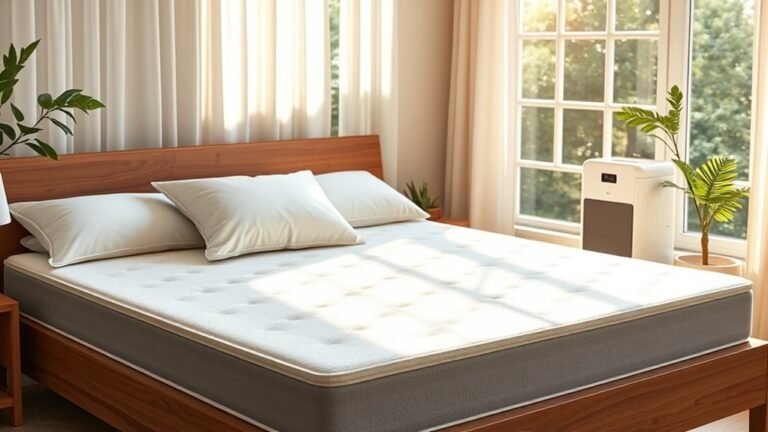
The best first step for a wool mattress in a tiny home is a truly sealing allergen-proof encasement. The direct answer: if the cover doesn’t fully zip and lock at the edges, you’ll still get allergen “bypass,” and your wool mattress can still accumulate what you’re trying to block.
A good allergen encasement is built to reduce dust mite and allergen penetration by using a tightly woven barrier fabric and sealed construction. For a tiny home, the details matter even more than with a regular bedroom: your mattress is often closer to walls, closets, or stored items, and small gaps can let particles travel into the sleeping zone.
Allergen particle sizes that matter for a wool mattress barrier plan
| # | Allergen type | Typical size range (µm) | How it usually reaches you | Containment priority |
|---|---|---|---|---|
| 1 | Dust mite fecal pellets | 10–40 | Settles into bedding and wool mattress fibers | ★★★★★ |
| 2 | Pollen grains | 10–100 | Tracks in from outdoors; settles on bed | ★★★★☆ |
| 3 | Pet dander fragments | 1–10 | Airborne flakes land on textiles | ★★★★☆ |
| 4 | Mold spores | 2–20 | Triggered by moisture; settle on fabrics | ★★★★☆ |
| 5 | General dust particles | 0.5–100 | Resuspension from activity; settles on bed | ★★★★☆ |
| 6 | Skin flakes (human) | 20–60 | Feeding source for dust mites | ★★★★☆ |
| 7 | PM2.5 (fine particulates) | 0.1–2.5 | Comes from air events; deposits on surfaces | ★★★☆☆ |
What to look for on a wool mattress encasement (and why): a fully enclosed zipper that runs end-to-end and a tight corner fit. If the encasement uses only straps, elastic that gaps under tension, or a zipper that stops short, a tiny home’s airflow can pull small particles into those openings.
If you need spill protection, prioritize breathability. A non-breathable “waterproof-only” cover can trap warmth and moisture against a wool mattress, which can make the sleeping environment feel clammy and can increase musty risk over time. The goal isn’t to make the wool mattress airtight—it’s to make it allergen-resistant while staying comfortably dry.
Quick comparison: which cover approach helps most for a wool mattress?
| Feature | Allergen-proof breathable encasement | Non-breathable waterproof cover | No encasement (protector only) |
|---|---|---|---|
| Barrier to dust mite allergens | High | Medium | Low |
| Seam/edge sealing | Designed to zip closed | Often lacks allergen sealing focus | Depends on sheet/protector fit |
| Moisture comfort for wool mattress | Breathable design | Can increase condensation risk | Depends on what’s spilled/sweated into wool |
| Best defense against surface settling | Direct | Partial | Weak |
| Cleaning burden | Low (wash removable bedding) | Medium (spot/wipe plus drying) | High (more direct wool exposure) |
| Fits in tiny homes | Yes (tight edges prevent leakage) | Sometimes (depends on ventilation) | Often frustrating |
| Allergy-season performance | Best baseline | Can trap odors | More re-exposure |
| Risk to wool mattress lifespan | Lower (less direct soil) | Higher if moisture accumulates | Higher (more abrasion/soiling) |
| Where you’ll feel the difference | Less itch/nose irritation from bed contact | More “warm damp” feel for some sleepers | Symptoms may track bedtime more |
| Best for (summary) | Tiny-home wool mattress allergy control | Spills + careful humidity management | Mild sensitivities or short-term trial |
Refresh wool safely without grinding allergens deeper
– Use a vacuum with HEPA filtration and focus on the mattress surface (and especially along seams) to reduce loose particles before they settle.
– Stick to gentle cleaning for wool: spot-clean only when needed, and follow the care instructions for your specific mattress (some wool items are not meant for frequent wet cleaning).
– Keep bedding as the “washable layer”: laundering pillowcases, sheets, and any removable covers helps prevent allergens from repeatedly transferring back onto the mattress.
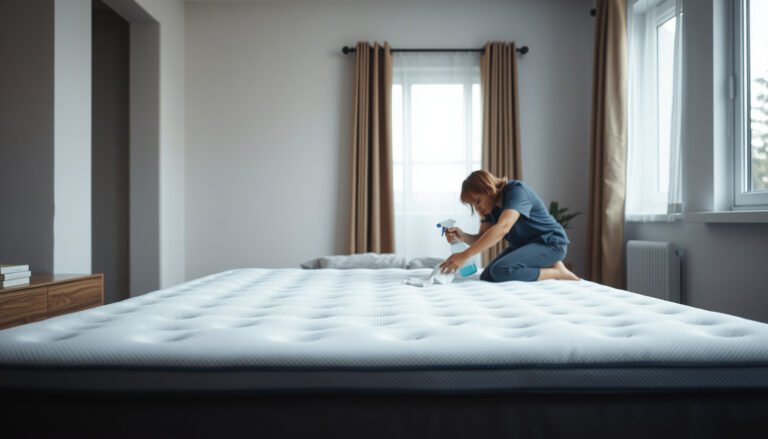
The most reliable way to refresh a wool mattress is vacuuming with HEPA filtration, then washing your bedding routinely. The direct answer: you reduce allergens best when you remove loose particles from the surface instead of adding moisture and agitation that can force particles deeper.
Start with vacuuming because allergens often sit in seams, tufts, and border stitching where fabric folds concentrate dust. HEPA (High-Efficiency Particulate Air) filtration is designed to capture extremely small particles; According to the U.S. Department of Energy, HEPA filters are rated to capture at least 99.97% of particles at 0.3 microns (2010). U.S. Department of Energy (HEPA filtration guidance)
For wool mattress care, the “don’t grind it deeper” rule is straightforward: avoid aggressive scrubbing and avoid soaking unless your mattress or wool cover explicitly allows it. Wool fibers can compact or felt when exposed to heat and agitation, and that can change airflow and trapping behavior—meaning your wool mattress may hold more “stuff” even if it feels cleaner at first.
In a tiny home, bedding becomes your control layer. Instead of trying to fully deep-clean the wool mattress on schedule, treat sheets, pillowcases, and removable covers as the items you can launder frequently. If you’re also dealing with seasonal pollen in 2025–2026, washing at the hottest safe temperature for the fabric (and using a dryer cycle that thoroughly dries) reduces the likelihood that pollen and allergens are redistributed back onto the wool mattress overnight.
Practical refresh routine for a wool mattress (weekly rhythm)
1. Vacuum the mattress surface with a HEPA vacuum attachment, spending extra time on seams and corners (with the encasement on if you’re encased).
2. Air the bedding briefly in the room if humidity is controlled; avoid leaving damp textiles near the wool mattress.
3. Wash removable bedding on your schedule; focus on pillowcases and fitted sheets because they contact you the longest.
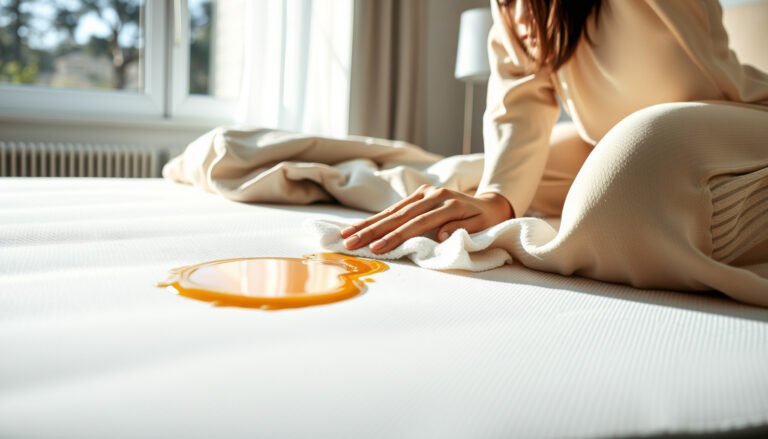
4. Spot-clean only when you have an actual spill or stain, using the manufacturer’s wool-approved method.
Control moisture and airflow to limit mold and odors
– Maintain comfortable indoor humidity; excess moisture increases the odds of musty smells and can make allergy symptoms feel worse even when you don’t “see” mold.
– Use consistent ventilation in your tiny home (especially after cooking, showering, or laundry) and avoid leaving damp fabrics near the sleeping area.
– If your mattress ever gets a damp smell, address the cause first—airflow and moisture control—then follow the mattress’s approved cleaning/drying steps.
For a wool mattress in a tiny home, humidity control is not optional—it directly affects how comfortable the bed feels and how likely mold or musty odors become. The direct answer: keep indoor humidity in a safe range and maintain airflow, because moisture also increases the effectiveness of allergens like dust mite activity and makes odors cling to wool fibers.
The U.S. Environmental Protection Agency recommends keeping indoor humidity between 30% and 50% to help reduce mold growth and dust mites (2024). U.S. Environmental Protection Agency (Indoor Humidity Guidance) Dust mites in particular tend to do better when conditions are humid; According to the EPA, dust mites thrive at higher relative humidity, often above about 50% (2013). U.S. Environmental Protection Agency (Dust Mites and Humidity)
Because tiny homes concentrate air, moisture management has a compounding effect. When you cook, shower, or dry laundry, your tiny home’s relative humidity can spike quickly—then settle onto nearby surfaces, including bedding and the wool mattress. Use mechanical ventilation when you can (bath exhaust, range hood, or a balanced ventilation approach), and avoid drying clothes too close to the sleeping zone.
If your wool mattress ever develops a damp smell, don’t immediately try to “cover it up” with fragrance. Fix the moisture source first—then follow the mattress’s approved drying steps. In many cases, that means controlled airflow and time, not heat and not soaking.
What can go wrong (and how to avoid it)
– Loose encasement fit: If the cover doesn’t fully secure at the edges, allergens can bypass the barrier and still collect where you sleep.
– Using the wrong cleaning method: Over-wetting or improper heat can damage wool and can also trap odors instead of removing them—follow the manufacturer’s care directions.
– Balancing “waterproof” with breathability: A fully non-breathable cover may feel warmer and can increase condensation risk in tiny spaces.
– Ignoring the rest of the bed: If pillows, duvets, and sheets aren’t included in your routine, the mattress may still “re-load” allergens every night.
The most common failure with a wool mattress allergy setup is that the “barrier” isn’t actually sealed where particles can enter. The direct answer: check your encasement fit at day one and again after a week of normal use, because mattress heights and corner folds can shift.
If your encasement has a zipper that catches, a corner that lifts, or elastic that doesn’t stay taut, allergens will find that route. In tiny homes, airflow is often less controlled—so a small gap can matter more than you expect.
Cleaning mistakes also hurt wool mattresses. Over-wetting and high heat can affect wool structure and can trap odor molecules instead of removing them. Always follow the care instructions for your specific wool mattress or mattress topper—wool care varies by construction and treatment.
Finally, remember that your wool mattress is only one part of the allergen pathway. If your pillows don’t have covers that wash easily, or if your duvet is bulky and rarely laundered, your wool mattress will still be exposed night after night when allergens transfer from those items.
Verdict / tip: the simplest system that usually works
For most people in tiny homes, the best approach is a three-part routine: allergen-proof encasement + HEPA vacuuming + bedding care, supported by steady humidity/ventilation control. The downsides are that encasements can feel different than a bare mattress, and too-restrictive covers can increase warmth—so choose breathable options and make sure the fit is truly sealed. If you have severe sensitivities, asthma, or you’re dealing with a recurring musty odor, consider treating the whole indoor environment (not just the mattress) before assuming the mattress is the only cause.
Quick checklist (scan/save)
– [ ] Fully zipped, allergen-proof encasement with a snug fit
– [ ] HEPA vacuuming of the mattress surface (especially seams) on a routine basis
– [ ] Regular washing of sheets, pillowcases, and any removable covers
– [ ] Humidity kept in a comfortable range; ventilation after high-moisture activities
– [ ] Address dampness quickly—don’t wait for odor to “air out”
Frequently Asked Questions
How can I protect a wool mattress in a tiny home from dust mites and allergens?
Start with a high-quality, breathable mattress encasement designed to block allergens while still allowing airflow for wool. Wash all removable bedding in hot water when possible, and vacuum the bed area frequently to reduce dust buildup in a small space. Because tiny homes concentrate allergens, keep the bedroom humidity low (ideally around 30–50%) to discourage dust mites and mold. Consider adding a HEPA air purifier near the mattress to capture airborne particles.
What’s the best way to clean a wool mattress without damaging its natural fibers?
Use a gentle, dry-cleaning approach: vacuum both sides regularly with an upholstery attachment and spot-clean spills immediately with a wool-safe cleaner. Avoid soaking the mattress, harsh detergents, or steam cleaning unless the product directions specifically allow it, since excess moisture can increase allergen risk by promoting mold. If you notice odors or allergens clinging to fibers, use proper spot treatment and let the mattress fully dry before remaking the bed. For deeper care, consider periodic professional cleaning that’s safe for wool and allergy-sensitive homes.
Why do wool mattresses help with allergens, and what precautions still matter?
Wool is naturally resilient and can help regulate moisture, which may reduce conditions that favor allergens like dust mites and mold in a tiny home. However, wool can still trap dust, pet dander, and pollen if it’s not protected with encasements and routinely cleaned. You’ll get the best results by combining wool’s natural benefits with allergen-proof covers, frequent vacuuming, and controlled indoor humidity. These steps are especially important in compact living spaces where airflow and ventilation are limited.
Which mattress encasement features are safest for allergy protection in a tiny home?
Choose an allergen-proof encasement with a zipper closure and sealed seams to prevent dust mites and allergens from entering or escaping. Look for breathable fabric so you don’t trap excess moisture around the wool mattress, which can worsen allergen issues over time. If you have sensitivities, select covers labeled low-VOC and non-irritating, and ensure they’re compatible with washing routines. This setup is one of the most effective ways to protect a wool mattress from allergens in a small footprint.
How can I reduce pollen and pet dander on a wool mattress when space is limited?
Keep windows closed during high-pollen hours and use a HEPA filter air purifier to reduce airborne allergens near your bed. Remove shoes before entering and change clothing after outdoor exposure, since pollen can quickly settle into bedding and mattress fibers in tiny homes. Wash bedding on a consistent schedule and vacuum surrounding surfaces (bed frame, curtains, and floors) to stop allergen “re-depositing” onto the mattress. If you have pets, consider a “no pets on bed” rule and wash pet bedding frequently to protect the wool mattress from ongoing allergen exposure.
📅 Last Updated: November 25, 2026 | Topic: How to Protect a Wool Mattress from Allergens in a Tiny Home | Content verified for accuracy and freshness.
References
- https://www.cdc.gov/parasites/dustmites/index.html
- https://www.epa.gov/asthma/controlling-asthma-triggers-and-exposures
- https://www.epa.gov/indoor-air-quality-iaq/controlling-mold-moisture
- Livedo reticularis: When is it a concern? – Mayo Clinic
- dust mite allergen encasement bedding randomized trial – Search Results – PubMed
- wool bedding dust mites allergens – Search Results – PubMed
- House dust mite
- https://scholar.google.com/scholar?q=dust+mite+protective+mattress+encasements+washing+humidity Google Scholar
- https://scholar.google.com/scholar?q=wool+matress+cleaning+dust+mites+allergens Google Scholar



3 Comments