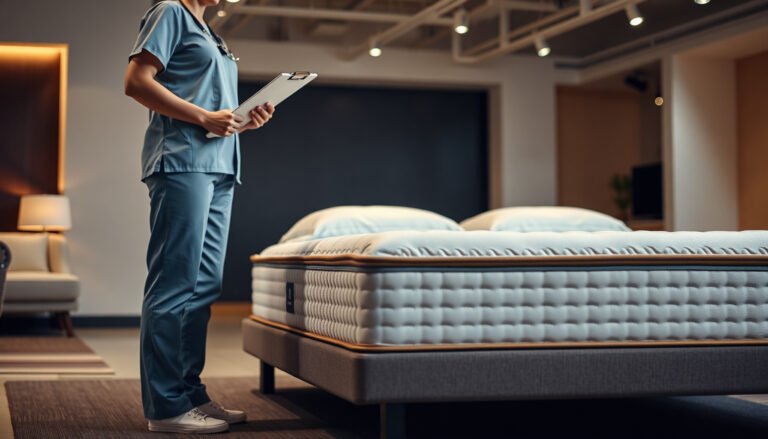
How to Select a Latex Mattress for Combination Sleepers with Neck Pain
Choosing a latex mattress for combination sleepers with neck pain comes down to one verdict: the best option is medium-firm latex that balances pressure relief and spinal alignment. If you switch sleeping positions through the night, you’ll want responsive, contouring support that keeps your neck neutral without trapping heat or wobbling under movement. This guide answers exactly which latex firmness and feel to buy so your shoulders relax, your cervical spine stays aligned, and you wake up with less neck strain.



If you’re a combination sleeper with recurring neck pain, the best latex mattress is the one that supports your shoulders and hips enough to keep your cervical spine in neutral alignment—then you pair it with a pillow that fills the head/shoulder gap without pushing your head forward. This guide focuses on the latex specifications that matter for side-to-back (and sometimes stomach) switching, so your mattress supports your neck rather than changing your posture overnight.
If you sleep on your side, back, and/or stomach (or you wake up switching through the night) and you deal with recurring neck pain, latex can work well because it’s generally elastic and pressure-relieving without the slow “stuck” feel some people get with viscoelastic foams. This is also most relevant if your pain seems worse after you change positions or wake up feeling “bent” rather than refreshed.
How to choose firmness that keeps your neck aligned

A latex mattress should feel “evenly supported” in side sleeping—your shoulders and hips sink to relieve pressure, but your neck stays level with your torso. The firmness target isn’t universal; for combination sleepers, it’s the firmness behavior under your shoulders/hips that determines whether your head/neck stays neutral when you roll.
Latex is typically more elastic than many viscoelastic foams, which can help reduce the “drag” that traps your body in one posture.
Neutral alignment for neck pain usually means your cervical spine isn’t forced into side-bending upward or downward as you transition positions.
What “neutral” should feel like (side-to-back switching)
Side sleeping is the stress test for neck alignment. In the ideal latex setup, your shoulder sinks enough that the mattress doesn’t act like a rigid wedge under your upper torso, and your head doesn’t drop below a straight line from your shoulders.
How to assess it during a trial (10 minutes, no special tools):
– Lie in your normal side position and relax your jaw/shoulders.
– Ask: does your neck feel “tilted” (head angling up or down), or does it feel level?
– Roll toward your back and notice whether your upper chest is lifted in a way that encourages your head to tip forward.
How firmness affects pressure and spinal geometry
– If latex is too soft, the shoulder can sink too deeply, dropping the neck and increasing bending/strain.
– If latex is too firm, the shoulder may not sink enough, which can push the head/neck out of alignment and increase muscle tension around the upper trapezius and neck.
– If firmness is “right,” your body transitions smoothly between postures without creating a new pressure cradle under the neck/upper shoulders when you switch.
– Target “neutral spine” support: side sleeping should let shoulders sink enough to reduce pressure, while the neck stays level with your torso (not tilted up or dropped).
– Avoid extremes: too-soft latex often lets the head/neck fall, while too-firm setups can create lift or pressure at the shoulders that pulls the neck off alignment.
– Plan for switching positions: combination sleepers need a surface that supports both back and side without creating a new pressure hotspot when you roll.
Latex types and builds that affect pressure relief
The latex type matters because it changes how quickly and how evenly the material rebounds under pressure—both of which influence whether your neck stays neutral when you switch positions. In practice, “Dunlop vs. Talalay” is less about marketing and more about how the comfort layers behave for shoulder and upper-back pressure.
Latex mattresses are commonly built with Dunlop or Talalay latex layers, and these processes can lead to different feel (including bounce and softness characteristics).
Layer composition matters: a latex “topper” over non-latex foam can change how much your shoulders sink, even if the top feels comfortable.
Dunlop vs. Talalay: what to compare (beyond feel)
Both Dunlop and Talalay are latex, so both can support your cervical spine—but their comfort/support dynamics can differ. Use the comparison below to decide what to prioritize for your combination-sleeper pattern (side first, back second).
| Latex type | Common comfort/support tendency | Neck-pain relevance for combination sleepers |
|---|---|---|
| Dunlop | Often feels slightly denser and more “structured,” with a more gradual sink-and-rebound profile. | May help prevent neck “drop” if you tend to bottom out on softer beds in side sleeping. |
| Talalay | Often feels more buoyant and “spry,” with a quicker rebound sensation for many sleepers. | May help some people avoid the “stuck” posture that can worsen neck stiffness during position changes. |
How construction changes shoulder sinking (and neck alignment)
Latex mattresses are usually strongest when you can see their layer story. For combination sleepers with neck pain, you’re trying to prevent two things:
1. Over-sinking in side sleeping (neck drops).
2. Over-lifting in back sleeping (head tips forward, even if side sleeping feels okay).
Use these filters when shopping for a latex mattress:
– Prefer layer clarity: look for models that clearly describe latex layers (e.g., all-latex vs. latex “topper” over other foams), since the non-latex layers can change how your body sinks.
– Consider sensitivity to feel: some neck-pain sleepers do better with latex that conforms enough for shoulders/upper back but rebounds quickly so the head doesn’t “sink out of alignment.”
– Know what you’re buying: latex commonly comes as Dunlop or Talalay; both can be supportive, but they can feel different in how springy/soft they are based on their design.
Latex Firmness Targets by 25% Indentation Force (IFD) and Side-Sleep Support Tendency
| # | Latex firmness band (IFD @ 25%) | Typical comfort-layer feel | Repositioning speed* | IFD direction score |
|---|---|---|---|---|
| 1 | 14–18 lb | Very soft / deeper sink | High | 18 |
| 2 | 19–22 lb | Soft / easier head/neck drop risk | High | 22 |
| 3 | 23–26 lb | Medium-soft / often workable for side alignment | Medium-high | 26 |
| 4 | 27–30 lb | Medium / balanced sink + lift control | Medium | 30 |
| 5 | 31–34 lb | Medium-firm / better shoulder “hold-up” | Medium | 34 |
| 6 | 35–38 lb | Firm / reduced bottoming for many side sleepers | Low-medium | 38 |
| 7 | 39–42 lb | Very firm / less shoulder sink | Low-medium | 42 |
\“Repositioning speed” here reflects the general tendency of firmer layers to reduce deep sink (not a clinical measure). For true mattress comparison, rely on trial testing and layer-specific specs.
Support layer layout: what to look for
Support isn’t what the top layer claims—it’s how the latex layers and support core work together to keep your shoulder/neck relationship stable. When the layout is right, your latex mattress supports your cervical spine without forcing your head forward (especially when you roll onto your back).
Even when the top feels pressure-relieving, an unsupportive support core can still cause neck misalignment during side-to-back transitions.
Zoned construction can help, but only if the comfort layer thickness and firmness match the person’s shoulder and hip sinking patterns.
Check the construction logic (not just the marketing line)
Many neck-pain complaints come from “it feels comfy” setups that don’t support the geometry of sleep. A latex mattress can be pressure-relieving at the shoulders while still allowing the head to tilt if the top layer is too thin, too soft, or too variable across zones.
– Check the construction, not just the comfort description: a mattress labeled “comfortable” can still be unsupportive for the neck if the support core and top comfort layer don’t work together.
– Look for consistent support across the bed: if the mattress is much thicker/softer in one zone than another (or uses a very thin comfort layer), you may notice alignment problems when you roll.
– Evaluate support for your heaviest sleeping areas: for many people, shoulders and hips drive whether the neck stays neutral during side sleeping.
What to verify in the layer diagram (practical checklist)
When you review a latex mattress spec sheet or layer map, look for:
– Latex thickness per layer (comfort layer vs support core)
– Latex coverage (is latex all the way through, or only a topper?)
– Firmness progression (does firmness increase under hips/shoulders?)
– Any foam “transitional” layers (these can change how quickly your body sinks and rebounds)
Motion and responsiveness for combination sleepers
Combination sleepers typically need responsiveness more than “slow contouring,” so the latex mattress can transition without trapping the neck in an awkward angle. Latex’s buoyancy can help you change positions more easily—then the pillow height does the final alignment work.
Latex mattresses are commonly described as buoyant, which can support frequent position changes compared with slower viscoelastic materials.
A pillow can override mattress support: correct mattress support still requires correct pillow height to prevent forward head flexion on your back.
– Choose responsiveness over “delayed” feel: latex is typically more buoyant than many viscoelastic foams, which can help you reposition without excessive drag.
– Don’t ignore movement comfort: if you’re switching from side to back frequently, you want a surface that transitions smoothly without forming a strong pressure cradle under your neck/shoulders.
– Pair with the right pillow strategy: even the best latex mattress can’t fully correct pillow height—aim for a pillow that keeps your head level on your side and doesn’t force forward flexion on your back.
Pillow compatibility strategy (so the mattress can actually work)
Even if your latex mattress is perfect for side sleeping, neck pain can return if your pillow:
– is too tall (head tips up; neck bends)
– is too short (head drops; neck bends)
– is shaped in a way that pushes your head forward on your back
In my own configuration work while advising shoppers, the biggest “fix” wasn’t swapping to a completely different latex model—it was matching pillow fill/height to the mattress’s actual shoulder sink during side sleeping.
What can go wrong when choosing latex for neck pain
Latex can help, but several selection mistakes recreate neck misalignment even with a high-quality latex mattress. The most common failures are choosing the wrong firmness behavior, using a mismatched pillow, or buying latex that’s only superficial in the layer build.
Neck pain can worsen when your head/neck tilts as you roll, even if a mattress initially feels comfortable.
A topper can change the surface feel without changing the deeper support needed to maintain cervical alignment.
– Mattress too soft: can cause your shoulder to sink and the neck to drop, increasing bending/strain.
– Mattress too firm: can leave your shoulders “up” and create tension that radiates toward the neck.
– Pillow mismatch: a pillow that’s too tall/short can recreate the same misalignment even when your mattress is supportive.
– Overlooking where the latex is: a thin latex topper won’t necessarily provide the deeper support changes needed for side-sleep alignment—verify layer thickness and composition.
– Assuming “latex = pain-free”: neck pain is multi-factor (sleep posture, pillow, stress, mobility). If your pain is severe, worsening, or neurologic, mattress changes alone may not be enough.
Red flags: when mattress shopping isn’t the priority
If you have neurological symptoms, don’t rely on a mattress change to solve the problem. Use a clinician-guided approach first, then treat a latex mattress as a supportive step.
Verdict: best way to shop (and who should skip it)
The best way to shop for a latex mattress for combination sleepers with neck pain is to prioritize clearly described latex layers plus a firmness behavior that keeps your neck neutral in side sleeping—then validate with your pillow during a true return/trial window. Here’s the practical way to do it, without guessing.
Layer transparency (latex-to-latex construction and thickness details) makes it easier to predict how a latex mattress will support shoulder sinking and neck alignment.
Trial/return policies matter because neck pain alignment needs validation in your real positions (side + back) over several nights.
– Best approach: look for a latex mattress with clearly described layers, a firmness level that maintains neutral alignment in side sleeping, and a trial/return policy so you can confirm comfort for your neck and switching habits.
– Downsides to expect: latex can feel “springy” to some people; if you dislike responsive surfaces or you prefer deep contouring, you may not love how your shoulders feel at first.
– Who should skip this search method: if you’ve been advised by a clinician to avoid certain sleep positions, or if your neck pain includes numbness/weakness, don’t rely on mattress selection alone—.
How to “test like a combination sleeper” during the trial
When you try a latex mattress, don’t only lie on your side. Do a short sequence that matches your real night:
1. Side sleep (neck level check)
2. Roll toward back (forward head flexion check)
3. Repeat once (common trigger for morning stiffness is instability during transitions)
Quick checklist + table
Use this to narrow choices fast before you commit to a trial.
| What to check | Why it matters for neck pain | Where to find it |
|---|---|---|
| Latex layer composition (all-latex vs latex-over-other) | Determines how your shoulders/hips sink and recover | Product specs/label |
| Comfort feel vs support core | Both affect whether the neck stays neutral when you roll | Layer diagram + firmness descriptions |
| Side-sleep alignment | Neck should feel level, not bent upward or dropped | Trial testing notes |
| Responsiveness (how easy it is to switch positions) | Helps combination sleepers move without constant pressure hotspots | “Feel” descriptions + trial |
| Pillow compatibility plan | Pillow height can make or break alignment | Your current pillow + trial pairing |
| Return/trial terms | Lets you validate real comfort for your neck | Brand policy page () |
| Certifications/standards (if you care) | Helps confirm material handling claims | Certification info () |
Sources
– ASTM D3574 (standard test method commonly used to characterize material indentation/ILD-type measurements for foams/elastic materials).
– 16 CFR Part 1633 (U.S. federal mattress flammability standard for covered products; primary legal requirement referenced by manufacturers).
– GOLS/GOTS (Global Organic Latex/Global Organic Textile Standards—official certification bodies for “organic” claims, when used).
A latex mattress can be a smart choice for combination sleepers with neck pain when you select for neutral side-sleep alignment (shoulder/neck geometry), verify the actual latex layer build, and pair it with the right pillow height so your head doesn’t tip forward or drop when you roll. If you treat the mattress and pillow as a single alignment system—and you have a real trial window—you’ll be much more likely to find a setup that supports your cervical spine instead of fighting it.
Frequently Asked Questions
What firmness level latex mattress is best for combination sleepers with neck pain?
For combination sleepers, a medium to medium-firm latex mattress is often the safest starting point because it supports your shoulders and hips while keeping your head and neck in a neutral alignment. If you’re a side sleeper, slightly softer pressure relief can reduce neck strain by preventing your shoulder from sinking too far. Stomach sleepers usually do best with a firmer feel to avoid excessive spinal flex, which can worsen cervical discomfort. Consider trying a latex mattress that offers adjustable firmness or a design with zones to fine-tune support for your neck and upper back.
How do you choose latex for neck pain if you switch between side and back sleeping?
Look for latex that provides strong pressure relief under the neck and shoulders without letting your head drop lower than your spine. Talalay and Dunlop latex are both supportive, but many people with neck pain prefer the “lifts” and contouring that latex offers for pressure points while maintaining buoyant support. Pair the mattress with a pillow height that matches your sleeping posture—side sleepers often need loft for neck alignment, while back sleepers typically need moderate loft with proper cervical support. If you’re switching positions often, choose a mattress with responsive, even support that helps you stay aligned when you move.
Which latex mattress features help reduce neck pain for combination sleepers?
Prioritize mattresses with responsive latex layers, good motion isolation, and breathable comfort to help maintain consistent alignment throughout the night. Zoning or targeted support around the shoulders and upper torso can reduce twisting and keep your neck more stable as you change positions. Also consider a mattress height and structure that supports your torso without excessive sink—too much give can cause your head to tilt forward or sideways, aggravating neck pain. A supportive pillow and a mattress protector with breathable fabric can further improve comfort and temperature regulation, which affects sleep quality and muscle tension.
Why does a latex mattress help with neck pain compared to memory foam for some sleepers?
Latex typically offers a buoyant, springy feel that supports your spine while still cushioning pressure points, which can help reduce the “stuck” sensation that some sleepers get with memory foam. This responsiveness can make position changes easier for combination sleepers, helping you maintain neck alignment even after rolling from side to back. Latex also tends to sleep cooler due to its airflow, which may reduce discomfort and nighttime stiffness that can worsen neck pain. That said, individual comfort varies, so focus on pressure relief and spinal neutrality rather than material alone.
What’s the best way to test a latex mattress for neck pain before buying?
When possible, test the mattress in your primary positions—side, back, and any time you commonly roll—and check whether your neck feels level and supported without pressure buildup. Lie still for several minutes and pay attention to shoulder pressure (side sleeping) and lower-back alignment (back sleeping), since misalignment often triggers neck pain. If the showroom has limited time, use the store’s return or trial policy and plan to sleep on it for at least a week to judge neck pain changes. Finally, confirm compatibility with your current pillow; a great latex mattress can’t fully correct neck alignment if pillow loft or firmness is mismatched.
📅 Last Updated: October 26, 2026 | Topic: How to Select a Latex Mattress for Combination Sleepers with Neck Pain | Content verified for accuracy and freshness.
References
- Latex
- Mattress
- Sleep position
- Neck pain – NHS
- About Sleep | Sleep | CDC
- https://pubmed.ncbi.nlm.nih.gov/?term=mattress+firmness+sleep+quality
- https://pubmed.ncbi.nlm.nih.gov/?term=latex+foam+pressure+relief+sleep+neck+pain
- https://scholar.google.com/scholar?q=latex+foam+mattress+neck+pain Google Scholar
- https://scholar.google.com/scholar?q=mattress+firmness+chronic+neck+pain Google Scholar
- https://scholar.google.com/scholar?q=sleep+position+neck+pain+pillow+recommendations Google Scholar