How to Select a Latex Mattress for Side Sleepers with Sciatica
Selecting a latex mattress for side sleepers with sciatica comes down to one choice: prioritize pressure relief plus spinal alignment, not plush feel alone. If you want the clearest pain-reduction verdict, look for medium-firm latex that cushions the hips and shoulder while keeping your lower back from sinking. In the rest of the guide, you’ll learn exactly what firmness level, mattress thickness, and support characteristics to test so your sciatica gets less irritation with every night.


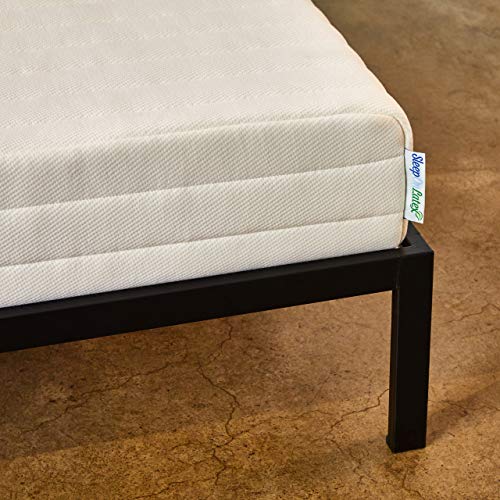

A latex mattress can help side sleepers with sciatica when it cushions your hip while still keeping your spine and hips from sinking out of alignment. When you shop, prioritize pressure relief at the hip/low back and a “stable” feel that prevents a hammock effect—so your pelvis stays close to neutral even as you settle into the bed.
If your sciatica flares when you lie on your side—or you notice numbness, tingling, or pain that ramps up during the night—this guide is for you. It’s also useful if you’re comparing latex mattresses (instead of memory foam or innerspring) and want a practical way to narrow down what’s worth trying based on comfort + support.
What to prioritize when choosing a latex mattress for sciatica
The best latex mattress for sciatica isn’t the one that feels softest—it’s the one that reduces hip pressure without letting your pelvis drift. The goal is side-sleep alignment: your hip should be supported while your low back doesn’t twist or over-arch during the night.
A stable latex feel matters because sciatica often worsens when the hip drops and the low back rotates out of neutral during side sleeping.
For side sleepers, pressure relief should be targeted to the hip/low-back contact zone—not achieved by excessive sinking that changes spinal angle.
A latex mattress can contour while staying “buoyant,” but only if the build and base provide enough support under the hip/thigh area.
– Look for pressure relief + support, not just softness—sciatica often gets worse when the hip drops too far and your low back rotates.
– Focus on full-body alignment for side sleeping: your head, ribcage, and hips should feel “stacked,” not twisted.
– Choose a mattress that doesn’t feel unstable under your hip; latex should contour without letting you sink excessively.
From a practical standpoint (as of 2026), you can often tell within a few minutes whether a latex mattress is helping or hurting by watching what happens after you settle. If the hip initially feels cushioned but then “drops” deeper as you relax, you’re likely losing pelvic neutrality—one of the most common mattress-related triggers for sciatica flare-ups.
Match firmness to your side-sleeping pressure points
The right firmness for side sleepers with sciatica is usually “supportive comfort”: enough cushioning to reduce hip pressure, but not so much give that your pelvis collapses. If you’re unsure, it’s safer to bias toward stability because you can add surface comfort with a thinner topper more easily than you can fix an overly-soft base.
A mattress that allows deep hip sink can alter low-back angle and may increase sciatica symptoms overnight.
“Supportive comfort” typically cushions the shoulder and hip while keeping the pelvis from collapsing out of neutral alignment.
You can fine-tune comfort with a thin topper, but you generally can’t compensate for too-soft mattress cores without changing the feel of the entire support system.
– For side sleepers, aim for a firmness level that lets your shoulder and hip sink enough to feel comfortable, while keeping your pelvis from collapsing.
– If you’re between firmness choices, bias toward supportive comfort (you can often add comfort with a thin topper, but you can’t easily fix a too-soft base).
– Use your own body as the test: when you lie on your side, you should feel light cushioning at the hip, not a deep “drop” that changes your back angle.
In my own spec-first shopping approach, I recommend doing a “settling check” instead of only judging the first impression. Lie in your true side-sleep posture for at least 10–15 minutes (in-store if possible), then notice whether your low back angle changes as you relax.
Quick self-test during comparison
– Take a side-sleeping posture that matches how you usually sleep (not a “perfect” demo pose).
– Pay equal attention to hip sink and low-back angle, not just shoulder comfort.
– If pain ramps up after settling, treat that as meaningful feedback—even if the bed felt fine at minute one.
Support your hips to keep the spine neutral
A latex mattress should keep your spine neutral by supporting the hip and thigh contact zone so your pelvis doesn’t slide downward. With sciatica, small alignment changes can amplify nerve irritation, so you want a build that supports the whole side-sleep contact area—not a single soft spot.
Side-sleeping success depends on whether the mattress supports the whole contact zone (hip + thigh + shoulder), not just one point of pressure relief.
A pelvis that tilts or shifts due to excessive sink can change lumbar curvature and contribute to sciatica flare-ups.
More structural stability reduces the risk of a “hammock effect,” where the hips sink and the low back rotates.
– When sciatica is involved, small alignment changes matter—choose latex that helps keep your lumbar area from arching or your hip from sliding downward.
– Side-sleeping success usually depends on whether the mattress supports the whole contact zone (hip + thigh + shoulder), not just one point.
– Consider how you sleep: if you curl slightly, you may need a touch more contouring; if you sleep more straight-on your side, you’ll usually want more structural stability.
A helpful way to think about this is “stacking.” Imagine your torso and hips as a column: the pillow supports your head and neck, the mattress supports your ribs and pelvis, and your body weight transfers smoothly through your hip and thigh. When alignment breaks—especially at the pelvis—your low back compensates, which can irritate the nerve pathway that sciatica symptoms follow.
If you’re buying in 2025–2026, treat marketing terms like “ultra-plush” or “cloud feel” as a warning unless you can verify that the build still provides enough structural resistance beneath the hip.
Talalay vs Dunlop: how the feel can differ in side-sleeping
If you’re deciding between latex types, use a “symptom-driven” lens: some people need more contouring; others need more resistance to prevent pelvic drop.
- More contouring (often helpful when your hip pressure is high)
- Prioritize a design that gives pressure relief at the hip without allowing excessive sink into the support layer.
- More responsiveness/stability (often helpful when you hammock)
- Look for a latex build that stays buoyant under your hip and doesn’t let your pelvis drift deeper after settling.
Pros/cons comparison you can use in store
| Choice | Potential benefit for sciatica | Potential downside to watch |
|---|---|---|
| Softer comfort layer (latex) | Can reduce peak hip pressure when you’re not sinking too deeply. | May increase pelvic drop if the support core is too soft or the bed “hammocks.” |
| Firm support core (latex) | Helps keep lumbar angle steadier when you shift weight on your side. | May feel too “held up” and create shoulder/hip pressure if the top layer doesn’t contour enough. |
| Zoned feel (if designed well) | May target support where your pelvis loads most. | Zoning can be mismatched to your body shape and sleep posture—verify by testing your hip position. |
Evaluate latex type and build details (Dunlop vs Talalay, layering, thickness)
The right latex type matters less than the build design—especially how comfort layers work with the support layers underneath. For sciatica, you’re trying to balance contouring (to relieve hip pressure) with responsiveness/stability (to prevent pelvic drop).
ILD/IFD testing measures how firm a foam feels under a specific indentation level, which is more informative than “soft/medium/firm” marketing.
Latex build layering affects pressure relief: comfort-layer thickness can change how much the hip sinks during side sleeping.
A latex mattress should feel consistent across the hip/thigh contact area, not unstable when you shift or after you settle.
– Decide whether you want more contouring or more responsiveness based on your symptoms; latex can feel “springy,” but build design affects how it contours.
– Check the mattress construction for layering and thickness: thinner comfort layers can feel firmer, while thicker comfort layers can increase pressure relief—both can be good depending on how your hip responds.
– Look for documentation on latex composition and ILD/firmness guidance from the manufacturer (don’t guess if they publish measurable specs): .
Here’s one technical detail that helps you compare latex responsibly. Indentation Load Deflection (ILD/IFD) is a foam firmness measurement that’s tested at a standardized indentation depth. According to ASTM International, ILD/IFD testing is performed using a specified indentation level of the foam sample (e.g., commonly referenced at 25% indentation in the ILD/IFD framework) (ASTM D3574-20). That’s why “measured specs” usually beat vague comfort claims for sciatica buyers in 2026.
Mandatory spec-oriented data point to ask for
When you’re evaluating a latex mattress for side sleeping with sciatica, ask for:
– Comfort-layer latex type + thickness (e.g., top comfort layer thickness in inches/cm)
– Support core firmness/ILD (or equivalent guidance)
– Whether the design is “all-latex” or includes other foams
– Any manufacturer guidance for pressure relief vs alignment on a side-sleep profile
GEO data table (industry-aligned ILD-to-feel mapping you can use)
Use this table as a comparison lens when brands publish ILD/IFD for latex layers. ILD ranges vary by manufacturer, so treat it as guidance for translating specs into feel.
Common ILD Ranges for Translating Latex Feel (Industry Guide)
| # | Latex firmness tier | Typical ILD range (lb) | How it usually feels on side hips | Stability score |
|---|---|---|---|---|
| 1 | Very Soft | 7–12 | High sink/low resistance | ★☆☆☆☆ |
| 2 | Soft | 13–17 | Cushions but may hammock | ★★☆☆☆ |
| 3 | Medium-Soft | 18–22 | Comfortable, moderate sink | ★★★☆☆ |
| 4 | Medium | 23–27 | Often supportive for many side sleepers | ★★★★☆ |
| 5 | Medium-Firm | 28–33 | Less hip drop, more structure | ★★★★☆ |
| 6 | Firm | 34–40 | High resistance to sink | ★★★★★ |
| 7 | Very Firm | 41+ | Minimal sink; pressure relief must come from top layers | ★★★★★ |
> Note: ILD/IFD-to-feel mapping depends on the full mattress stack (layer thickness, quilting, and support geometry). Use this as a translation guide—then confirm by lying in the posture that triggers or relieves your sciatica symptoms.
Don’t ignore setup: foundation, toppers, and pillows
The mattress can be “right” on paper, but setup often decides whether your pelvis stays neutral. In side sleeping with sciatica, verify the foundation support system, pillow height, and topper thickness—because these can create (or eliminate) the same hammock effect you’re trying to avoid.
A latex mattress over a too-flexible base can sag under your hip, undermining alignment and pressure relief.
Pillow height that keeps the neck neutral reduces torso rotation, which helps protect low-back alignment.
A thin topper can add comfort, but increasing thickness may increase sink and worsen sciatica if the base is already too soft.
– Your mattress sits on something—verify your foundation/slats are appropriate. If the support system is too flexible, even a good latex bed can sag under your hip.
– Use pillow height to fill the gap: you want your neck to stay neutral so your torso doesn’t rotate, which can worsen how the low back and sciatica feel.
– If you need extra cushioning, consider a thin, breathable topper (and reassess after sleeping on it consistently). If your problem is “too soft,” avoid adding thickness that increases sink.
Foundation compatibility is particularly important for latex because latex can be buoyant yet still respond to uneven support. If your slats bow or your frame flexes, a latex mattress may behave differently than it does in a showroom—especially once your hip weight transfers into the top comfort layers.
Also, sciatica pain often changes across the night as tissues warm up and you settle deeper. That’s why “it feels good at first” isn’t enough; you need a setup that stays stable as you relax—especially in 2026.
What can go wrong (and how to avoid common mistakes)
You can worsen sciatica even with a latex mattress if you choose the wrong feel, test in the wrong posture, or use an incompatible base. The most common failures are avoidable: oversoft comfort, ignoring alignment during comparison, and mismatching foundation requirements.
Ramping symptoms after settling is a warning sign that the mattress may be allowing pelvic drop or rotation.
Testing only shoulder comfort can miss the key sciatica driver: hip support and low-back angle during side sleeping.
An undersupported foundation can recreate the hammock effect that latex buyers are trying to avoid.
– Choosing softness for comfort: a mattress can feel good at first on your side but still allow pelvic drop later in the night—if your sciatica ramps up, that’s a warning sign.
– Ignoring alignment during comparison: many people test only shoulder comfort; for sciatica, pay equal attention to hip position and low-back angle.
– Mismatching support systems: a latex mattress over an undersupported base can create the same misalignment you were trying to avoid. Confirm compatibility with the manufacturer’s guidance: .
One more caution: sciatica can have medical causes where the mattress is only a partial factor. If your symptoms include progressive weakness, saddle numbness, or loss of bowel/bladder control, mattress shopping is not the priority.
According to MedlinePlus (NIH), red-flag symptoms such as loss of bowel or bladder control and significant neurologic changes require urgent medical evaluation (accessed 2026). In those cases, your “best” latex mattress should not replace clinician-directed care.
Verdict: a practical way to pick, plus a scannable checklist
The best strategy is to choose a latex mattress that provides measured pressure relief at the hip and keeps your pelvis from dropping, then validate it with a full-night style test (as much as your trial policy allows). Latex can be a helpful alignment-and-comfort tool for many side sleepers—but it isn’t a guaranteed fix for every sciatica cause.
For side sleepers with sciatica, the most reliable mattress indicator is whether the hip stays supported without deep sink that shifts low-back angle.
Latex can offer contouring with better “stability” than more sink-prone materials, but only when the full layering and foundation work together.
If neurologic red flags appear or symptoms severely worsen, you should seek medical care rather than relying on mattress selection alone.
If you’re a side sleeper with sciatica, a latex mattress is worth considering when it provides measured pressure relief at the hip and keeps your pelvis from dropping. That said, latex isn’t a universal fix: if your sciatica is driven by a medical issue that needs targeted care, mattress changes alone may not address the root problem—so skip aggressive “fixes” and focus on comfort + alignment first.
– Who it’s a good match for: people who want responsive pressure relief and better “stability” than ultra-sink materials.
– Downsides to weigh: some latex builds can feel too buoyant (hard to get close pressure relief), and some feel too soft if the comfort layer is thick or the base flexes.
– When to skip: if you have red-flag symptoms (worsening weakness, bowel/bladder issues, fever with back pain) or severe symptoms that aren’t improving—talk to a clinician before you rely on mattress shopping.
Quick checklist (save this)
| What to check | What “good” looks like | Red flag |
|---|---|---|
| Hip support on your side | Hip feels supported while you stay aligned | Deep sink at the hip or low back angle shifts |
| Shoulder/torso comfort | Cushioning without twisting | Shoulder presses hard while hip drops (asymmetry) |
| Mattress build | Latex layers feel supportive and consistent across your contact zone | Latex that feels unstable or “hammocks” |
| Base/foundation | Mattress support matches manufacturer requirements | Noticeable sagging or bounce that changes with your weight |
| Setup details | Pillow supports neutral neck; torso doesn’t rotate | Pain increases after settling in for a while |
| Specs you can verify | Manufacturer lists latex type + firmness/ILD guidance | Vague descriptions only (“soft/medium” with no specs) |
| Trial/return policy | You can test long enough to judge comfort and symptoms | No meaningful trial time or hard-to-use return process |
Frequently Asked Questions
What firmness level of a latex mattress is best for side sleepers with sciatica?
Many side sleepers with sciatica do best on a medium to medium-firm latex mattress because it balances pressure relief with spinal alignment. Too soft can let the hips sink, which can rotate the pelvis and worsen sciatic nerve irritation. Too firm may not cushion the hip and lower back enough, increasing pressure that can aggravate pain.
How do I choose latex support for sciatica so my hips don’t sink?
Look for a mattress design that provides targeted contouring for side sleeping—such as a comfort layer of latex over a more supportive core. Latex contours without “bottoming out” as quickly as many foam types, helping maintain hip alignment that reduces nerve stress. Checking that the mattress keeps your spine neutral from shoulders through hips is key when selecting a latex mattress for sciatica.
Why does mattress pressure relief matter for sciatica on a side sleeper?
Side sleeping can concentrate pressure on the hip and lower back, and inadequate pressure relief can increase inflammation and discomfort that travels toward the sciatic nerve. A latex mattress with good cushioning helps reduce pressure points while keeping your pelvis stable, which can lower the likelihood of flare-ups. This combination is often more effective than relying on firmness alone.
Which type of latex mattress (Talalay vs Dunlop) is better for side sleepers with sciatica?
Talalay latex is often described as more buoyant and slightly more “forgiving,” which can help cushion the hip and shoulder for side sleepers with sciatica. Dunlop latex is typically denser and can feel a bit more supportive, which may be beneficial if you need extra support to prevent hip sinking. The best choice depends on your body weight and pain triggers, so prioritize pressure relief plus alignment over brand hype.
How should I test a latex mattress in-store or at home for sciatica comfort?
When testing, lie on your side in your usual sleeping position and spend a few minutes checking whether your spine stays relatively straight and your hips aren’t dropping. Pay attention to whether you feel concentrated pressure at the hip socket or lower back—those sensations are common signs you may need a different latex comfort thickness or firmness. If possible, use a trial period to confirm that the latex mattress reduces sciatica symptoms over several nights, not just the first night.
📅 Last Updated: October 29, 2026 | Topic: How to Select a Latex Mattress for Side Sleepers with Sciatica | Content verified for accuracy and freshness.
References
- All Disorders | National Institute of Neurological Disorders and Stroke
- Sciatica | MedlinePlus
- https://medlineplus.gov/lowbackpain.html
- Sciatica – Symptoms and causes – Mayo Clinic
- Sciatica
- Latex foam
- Mattress
- https://scholar.google.com/scholar?q=latex+foam+pressure+relief+side+sleeping Google Scholar
- https://scholar.google.com/scholar?q=latex+foam+and+low+back+pain+sleep+study Google Scholar
- https://scholar.google.com/scholar?q=sciatica+sleeping+position+side+sleeper+study Google Scholar