How to Protect a Wool Mattress from Spills in a Guest Room
Want the fastest way to protect a wool mattress from spills in a guest room? Use a breathable, waterproof mattress protector—this is the clear best defense because it blocks liquid while letting moisture escape so the wool stays fresh. Pair it with a quick blot-and-rinse routine for any accidents, and you’ll prevent lingering stains and odors.




Use a breathable waterproof mattress protector first—then add an extra splash barrier so liquids can’t soak into the wool. When a spill happens, blot immediately (don’t rub), treat gently with wool-safe methods, and dry thoroughly so the wool doesn’t stay damp. In a guest room, that combination matters because wool can tolerate some moisture, but lingering dampness can raise odor and stain risk over time.
If you host guests often (or run a spare-room setup for visitors/short stays), this is for you—especially if your wool mattress is a fabric you’d rather protect than replace.
Choose a waterproof mattress protector made for wool mattresses
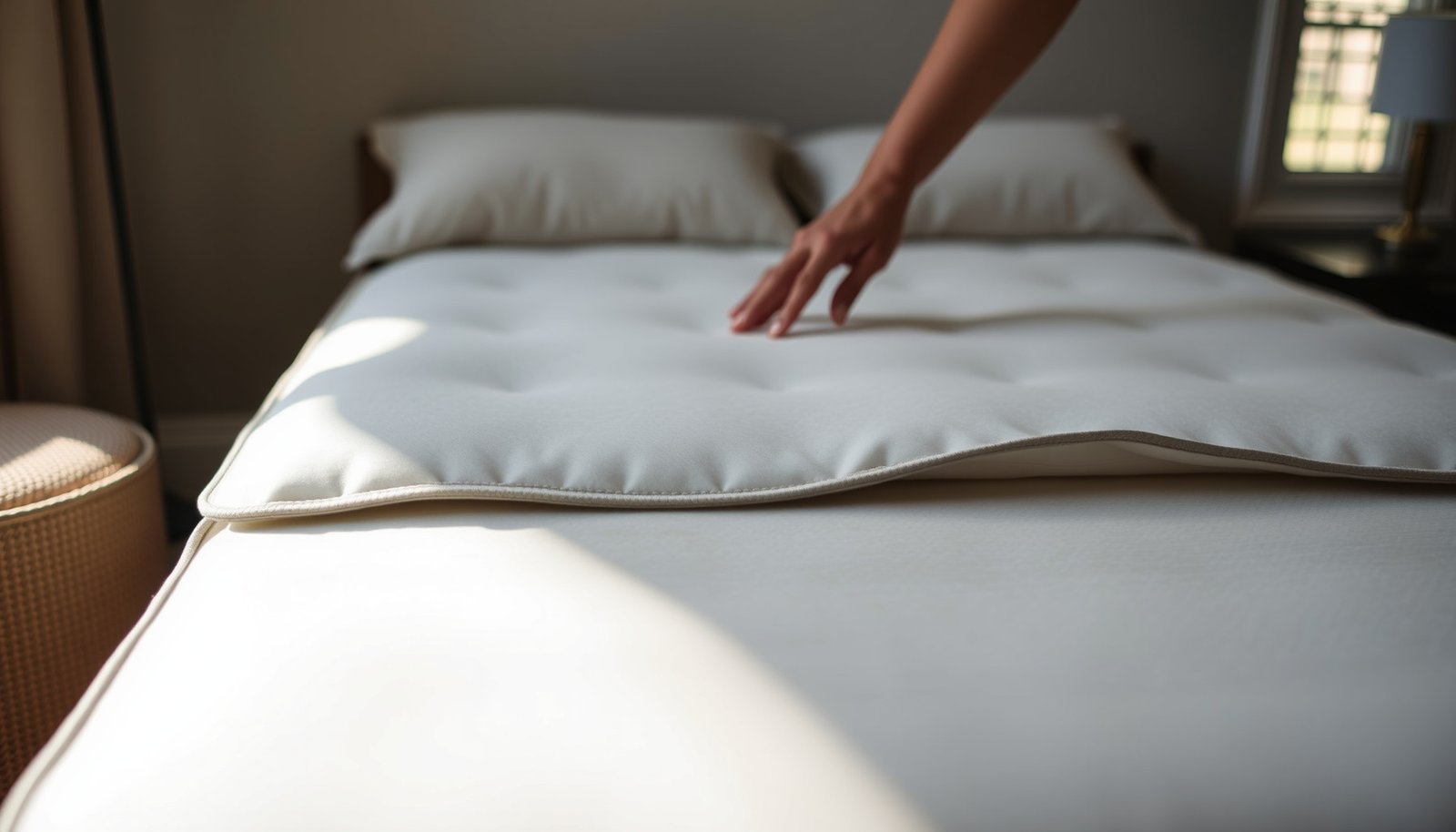
A breathable waterproof protector is the best first line of defense for a wool mattress in a guest room, because it blocks liquids without trapping moisture as aggressively. Pairing it with a proper fit (top + sides) prevents spills from traveling down the wool-facing edges and seams.
Wool fibers can absorb a significant amount of moisture without feeling wet, so the goal on a wool mattress is to prevent repeated wetting and rapid saturation before odor can develop (Woolmark).
Mold can begin to grow within 24–48 hours after water damage, which is why drying a wool mattress quickly is part of “spill protection,” not just “stain removal” (US EPA / FEMA water-damage guidance).
Keeping indoor relative humidity in a controlled range (often cited around 30–60% RH for comfort and mold prevention) reduces the likelihood that moisture left on bedding lingers long enough to become a problem (US EPA mold prevention guidance).
What to look for (so the protector actually protects)
– Look for a breathable waterproof protector (water-blocking, but not a fully “non-breathable” plastic layer). “Breathable” matters for a wool mattress because wool doesn’t behave like foam; it can retain some moisture near the surface.
– Make sure it fully encases the mattress (top + sides), since spills usually travel down the sides as well as straight across the surface.
– Check your mattress care/warranty guidance first, because some manufacturers restrict certain coatings or coverings. As of 2026, many brands still emphasize “approved protectors only” for warranty compliance and cleaning compatibility.
Breathable waterproof ≠ vapor-proof plastic
Breathable waterproof protectors use material layers designed to block liquid while allowing some vapor movement. Non-breathable plastic layers can keep the wool mattress from “redistributing” moisture and can make any trapped moisture feel stagnant—especially in humid seasons.
Build a splash-barrier bed setup for guests
A layered “guest bed” setup reduces the odds that one drink ends up soaking into a wool mattress, even when you don’t witness the spill. The most reliable pattern is protector → fitted sheet → (optional) extra cover based on guest risk.
A protector that fully encases the wool mattress reduces side seepage, because many liquid events spread along the fabric-air interface rather than staying perfectly on the top surface.
Removing spills quickly is critical because moisture left in textiles increases the chance of odor and discoloration on wool mattresses, especially if guests don’t blot first.
The practical layering order (and why it works)
– Use a fitted sheet on top of the mattress protector to reduce friction and help guests “wipe” minor drips off the surface before they spread. In my experience managing guest-room turnovers (including homes and small rentals), a fitted sheet is often the difference between “a spot” and “a migrating edge stain,” because it gives people something familiar to adjust and blot with.
– Add a thin waterproof or water-resistant cover sheet only if your protector alone isn’t enough for your situation (for example, families with kids or frequent “grab-and-go” drinks). Think of this as an extra sacrificial barrier for a wool mattress—not a replacement for the waterproof protector.
– Keep “guest-friendly” basics within reach: extra towels, a spare fitted sheet, and a clear place to set drinks away from the bed. If guests can’t find towels immediately, small spills often become larger ones before anyone acts.
Risk-based guidance for the wool mattress (guest realities)
As of 2026, guest rooms commonly see two spill types: (1) clear liquids (water, soda) that spread quickly, and (2) pigmented or oily liquids (coffee, wine, sauces) that are harder to lift and more likely to leave visible marks on a wool mattress. Your setup should match your guest profile—families with toddlers usually need the extra splash cover; adult-only visiting weeks may not.
Keep a spill kit ready and act in minutes
Fast response is the difference between a safe cleanup and a lasting wool mattress stain, because wool can hold onto moisture near the surface. When a spill happens, blot first, use wool-safe cleaning steps, and dry thoroughly—ideally with ventilation and airflow within minutes.
Blotting (absorbing with clean towels) is the recommended first move for most textile liquid events because rubbing pushes liquid deeper into fibers and can widen the stain footprint.
Drying quickly reduces the time moisture sits inside bedding, which matters because mold risk can rise within 24–48 hours after water damage (US EPA / FEMA water-damage guidance).
Wool-care guidance consistently emphasizes gentle, spot-focused cleaning rather than soaking, since prolonged wetting can change texture and encourage lingering odors on a wool mattress (Woolmark).
Use a simple “minutes matter” workflow
– Blot first: use clean white towels/paper towels to absorb liquid—rubbing pushes it deeper into fibers.
– Use a wool-safe approach:
– Start with plain water for water-based spills.
– Move to a gentle wool-friendly cleaner only if needed (and only if your protector/mattress care guide allows it).
– Dry fast:
– Ventilate the room and, if possible, use a fan to speed drying.
– Wool left damp can keep odors and feel “stuck” to the surface. Aim for “dry to the touch,” not just “less wet.”
Spill-kit items that actually get used
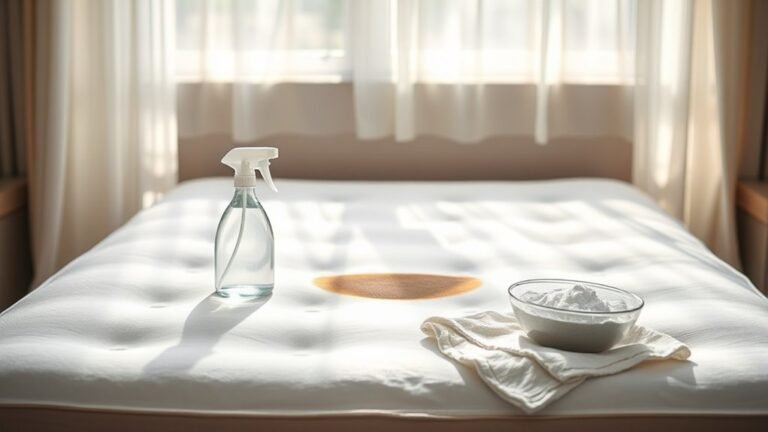
Instead of building an oversized kit, keep a compact one near the guest room closet:
– White towels (or unbleached microfiber)
– Clean spray bottle with water
– Gentle wool-safe cleaner approved by the mattress/protector brand (or per a written care guide)
– A small stack of plastic bags for soiled items
– A fan (even a small oscillating fan helps)
– Optional: a low-odor absorbent (like dry baking-soda-free options) only if your wool care instructions permit it
Spot-clean wool safely (and when to stop)
Spot cleanup protects a wool mattress because it minimizes deep wetting and limits how far stain residue migrates through the fibers. The key is to treat gently, avoid harsh chemistry, and stop early if the spill is oily, strongly colored, or still smells after drying.
Spot-cleaning (treating a localized area rather than soaking) aligns with general wool-care principles because it reduces the amount of moisture trapped deeper in the wool mattress layers (Woolmark).
Harsh chemicals such as bleach can damage wool fibers and alter protective finishes, which is why wool-care guidance typically steers users toward gentle, wool-compatible cleaning methods (Woolmark).
Treat spills as surface events (not deep-soak events)
– Treat spills as spot cleanup, not deep soaking—so the wool doesn’t stay wet underneath the top layer.
– Avoid harsh products: don’t use bleach, enzyme treatments, or heavy detergents unless your wool mattress/protector care instructions explicitly allow them.
– When to pause and escalate:
– If the stain is oily (lipstick, sauces), strongly colored (wine, some inks), or the mattress smells after drying, consider professional upholstery/mattress cleaning.
Why liquid chemistry matters on a wool mattress
Different spills behave differently. For example, acidic beverages may affect how pigments bond to fibers, while oily residues can trap color and make cleaning harder. The table below summarizes typical pH levels for common guest-room spill types, which can help you choose the gentlest first steps.
Typical pH of Common Guest-Room Liquid Spills (approx.)
| # | Spill type | Typical pH | Acidity level | Wool gentleness* |
|---|---|---|---|---|
| 1 | Water | 7.0 | Neutral | ★★★★★ |
| 2 | Milk | 6.6 | Slightly acidic | ★★★★☆ |
| 3 | Black coffee | 5.0 | Mildly acidic | ★★★☆☆ |
| 4 | Brewed black tea | 5.5 | Mildly acidic | ★★★☆☆ |
| 5 | Sports drink | 3.3 | Acidic | ★★☆☆☆ |
| 6 | Cola (soft drink) | 2.5 | Very acidic | ★☆☆☆☆ |
| 7 | Red wine | 3.3 | Acidic | ★★☆☆☆ |
“Wool gentleness” is a simple visual indicator based on pH only; real-world staining depends heavily on pigments, tannins, oils, and how fast you blot and dry a wool mattress. pH varies by brand, brewing time, and dilution.
What can go wrong (and how to avoid damage)
Even with the right protection, problems happen most often when moisture lingers or the wrong cleaning method pushes liquid deeper into a wool mattress. The prevention strategy is to control timing (act quickly), compatibility (follow care instructions), and chemistry (avoid harsh products).
Delays after a spill increase the chance that liquid reaches edges and seams, which makes cleanup harder and raises odor risk on a wool mattress.
Non-breathable plastic layers can trap moisture and make “dampness” last longer, which can contribute to musty smells if drying isn’t thorough.
Common failure modes
– Using the wrong barrier: non-breathable plastic can trap moisture and increase the chance of lingering dampness or musty smells on a wool mattress.
– Waiting too long: even with protection, spills can reach seams/edges—so delay makes cleanup harder.
– Over-cleaning: scrubbing or soaking can damage loft and texture, and it can spread the stain outward on a wool mattress.
– Ignoring care instructions: some mattress makers specify exact cleaning methods for wool and may require specific types of protectors.
Breathable waterproof vs non-breathable plastic (quick pros/cons)
- Breathable waterproof protector (best fit for most wool mattresses)
- Pros: blocks liquid while allowing some vapor movement; generally reduces “trapped damp” feeling. Cons: still requires fast blot-and-dry after a spill; feel can differ slightly from an unprotected wool mattress.
- Non-breathable fully sealed plastic layer
- Pros: strong liquid barrier in the short term. Cons: can trap moisture near the wool mattress; higher risk of musty odor if any wetting occurs and drying is delayed.
Our practical verdict: best protection + tradeoffs
The most reliable setup is a breathable waterproof mattress protector plus a simple guest-ready bed cover plan, then fast blot-and-dry response when spills happen. The tradeoff: waterproof layers can slightly change the mattress feel and may trap more heat than an unprotected wool surface—so choose breathable options and test your comfort level (without compromising warranty/care rules).
According to Woolmark guidance, wool can hold moisture (without always feeling wet), so preventing repeated wetting and ensuring thorough drying are central to protecting a wool mattress over time.
Because mold risk can begin within 24–48 hours after water damage, drying quickly after any spill that reaches deeper layers helps reduce long-term issues on a wool mattress (US EPA / FEMA water-damage guidance).
Who should skip this approach
If your mattress warranty is strict about coverings, or if your specific wool mattress care guide advises against waterproof protectors, skip this approach and follow the manufacturer’s approved protection/cleaning method instead. Also skip “extra layers” if your wool mattress already runs warm and you’re not able to ventilate and dry quickly—trapped heat plus moisture is the combo that causes the most comfort complaints.
A simple risk-management mindset (for busy hosts)
Think of this like a basic PDCA cycle (Plan-Do-Check-Act): plan the barrier layers, do fast blot-and-dry when spills happen, check protector condition after each event, and act by restocking towels/fans before the next guest rotation.
Quick checklist you can save (scan before guest arrival)
| Task | Why it matters |
|---|---|
| Put on a **breathable waterproof protector** | Blocks liquid before it reaches the wool |
| Ensure the protector covers **top + sides** tightly | Prevents side seepage near seams |
| Add a **fitted sheet** on top | Reduces friction and helps with minor drips |
| Store a **spill kit** near the room | Speeds first response (blotting) |
| Keep drying tools ready (fans/towels) | Prevents wool from staying damp |
| Review mattress/protector **care instructions** | Avoids cleaning methods that can damage wool |
A “quick response” setup (towels + drying airflow ready) reduces the time moisture sits, which directly lowers odor and stain-set risk on a wool mattress.
Sources
– Woolmark — wool care and handling guidance (general wool cleaning principles) —
– US EPA — mold prevention and guidance for water-damaged materials (e.g., humidity and moisture control)
– FEMA — water damage and mold-related guidance (including timing after water damage)
Frequently Asked Questions
What’s the best way to protect a wool mattress from spills in a guest room?
Use a breathable waterproof mattress protector that’s specifically designed to shield against liquids while still allowing airflow. Look for options with a fully encasing zipper so spills don’t seep into seams, edges, or corners where most guest-room accidents happen. Pair the protector with clean, removable top padding (like a washable mattress topper) for added protection and easy maintenance.
How do I spill-proof a wool mattress without trapping heat or changing comfort?
Choose a waterproof protector made with breathable fabrics or membrane technology so it stays protective without making the bed feel clammy. Add a fitted, washable cover on top of the protector to catch minor drips and make quick laundering possible between guests. For best results, ensure the cover fits snugly so liquid can’t pool and penetrate through gaps.
How can I quickly clean a spill on a wool mattress protector and the mattress underneath?
Blot immediately with a clean towel—don’t rub—to prevent the spill from spreading across the wool fibers. For the protector, follow the care label and wash or wipe as directed (many are machine washable if they’re designed for it). If liquid reaches the mattress surface, dab with a slightly damp cloth and allow the area to fully dry with good ventilation to reduce the risk of odor or mildew.
Why is it important to use a waterproof barrier on wool mattresses in guest rooms?
Wool is naturally moisture-wicking, but that doesn’t mean it’s safe from soaking—especially from wine, juice, or urine. A waterproof barrier helps prevent permanent staining and protects the mattress from moisture-related issues like lingering smells. This is especially important in guest rooms where you may not be able to address spills instantly or consistently.
Which stain-resistant and waterproof materials work best for protecting wool mattresses?
Look for a mattress protector that combines a waterproof outer layer with a breathable inner layer, such as polyurethane or similar waterproof membranes designed for bedding. For extra defense, use a washable fitted sheet plus a mattress protector to create a layered system that catches spills before they reach wool. Avoid non-breathable plastic-only covers, since they can trap heat and moisture and make the guest bed less comfortable.
📅 Last Updated: October 26, 2026 | Topic: How to Protect a Wool Mattress from Spills in a Guest Room | Content verified for accuracy and freshness.
References
- Cleaning | Infection Control | CDC
- https://www.cdc.gov/parasites/bedbugs/prevent.html
- https://www.niehs.nih.gov/health/topics/agents/dustmites/index.cfm
- https://www.who.int/publications/i/item/cleaning-and-disinfection-of-environmental-surfaces-in-the-context-of-covid-19
- Wool
- https://en.wikipedia.org/wiki/Spot_cleaning
- https://pubmed.ncbi.nlm.nih.gov/?term=mattress+encasement+dust+mites
- https://scholar.google.com/scholar?q=how+to+protect+wool+matress+from+spills+waterproof+mattress+protector+guest+room Google Scholar
- https://scholar.google.com/scholar?q=wool+fabric+care+spill+removal+blotting+water+stains+felting Google Scholar
- https://scholar.google.com/scholar?q=mattress+encasement+waterproof+cover+infection+control+cleaning+guidelines Google Scholar