
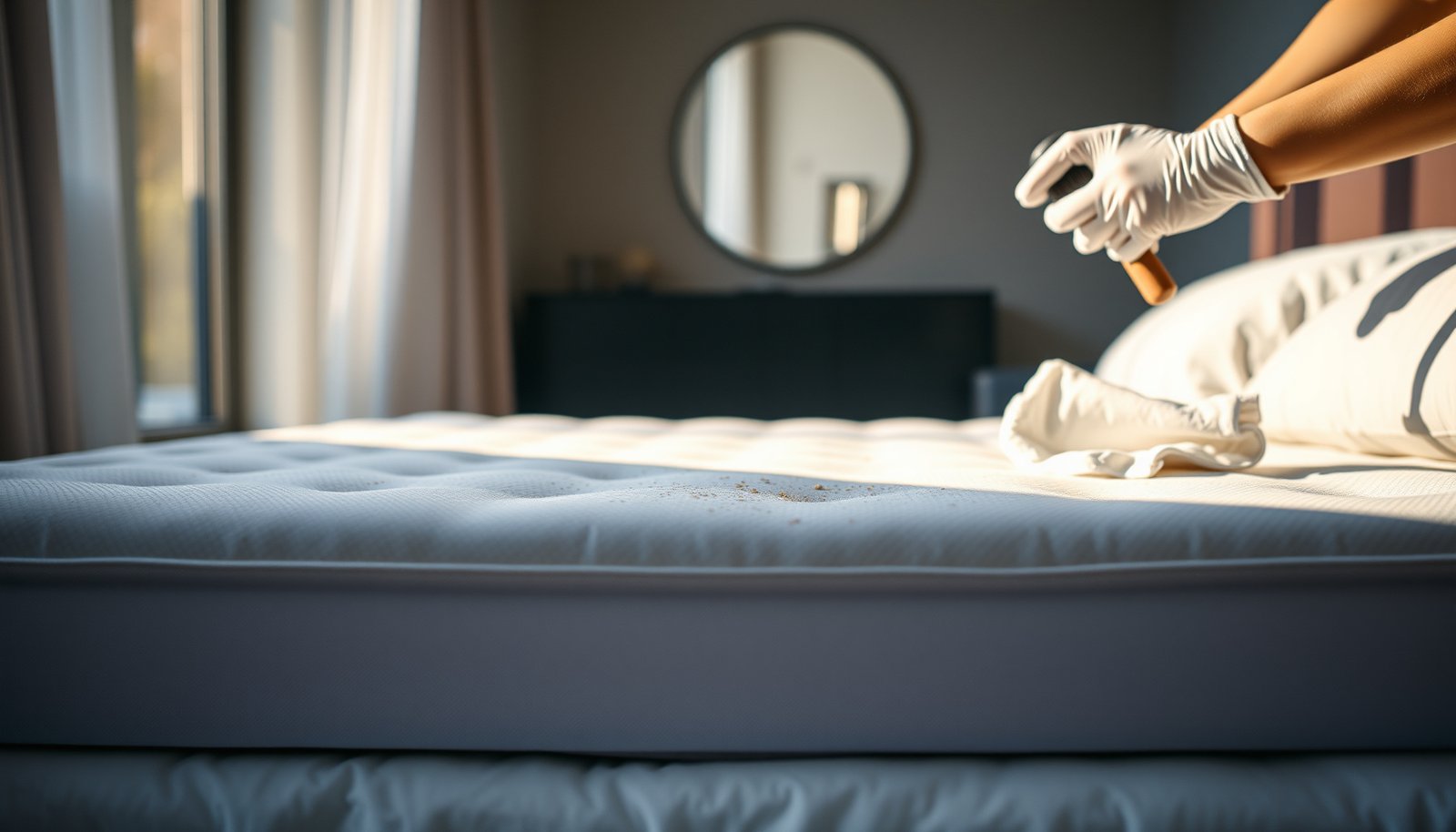
How to Clean a Memory Foam Mattress With Makeup Stains
You can clean a memory foam mattress with makeup stains without ruining its texture or leaving lingering odors. This guide shows the fastest safe method to lift foundation, lipstick, or concealer stains using gentle cleaners and careful blotting. If you want the best chance of removing the color stain while keeping your mattress fresh, follow these steps first.
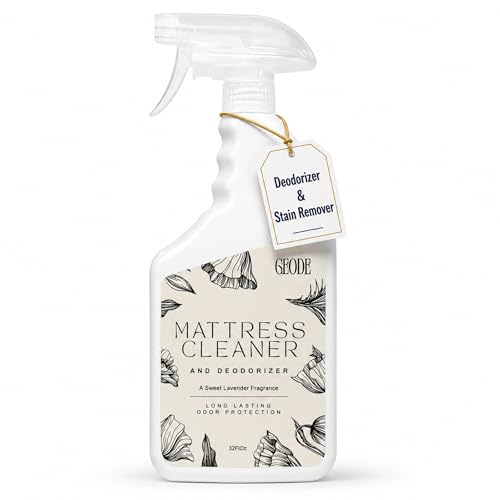



Blot makeup stains right away, then spot-clean a memory foam mattress using the smallest amount of cold, soapy water. If the makeup looks oily (common with foundation and cream products), dab carefully with a small amount of isopropyl alcohol on a hidden test spot first—then dry the foam thoroughly so it doesn’t stay damp and develop odor. This approach is best for fresh makeup stains and for mattresses where the care label says “spot clean” (typical for memory foam). If your mattress cover is removable, cleaning the cover separately is usually the safest first step.
Prep the Mattress and Protect the Foam
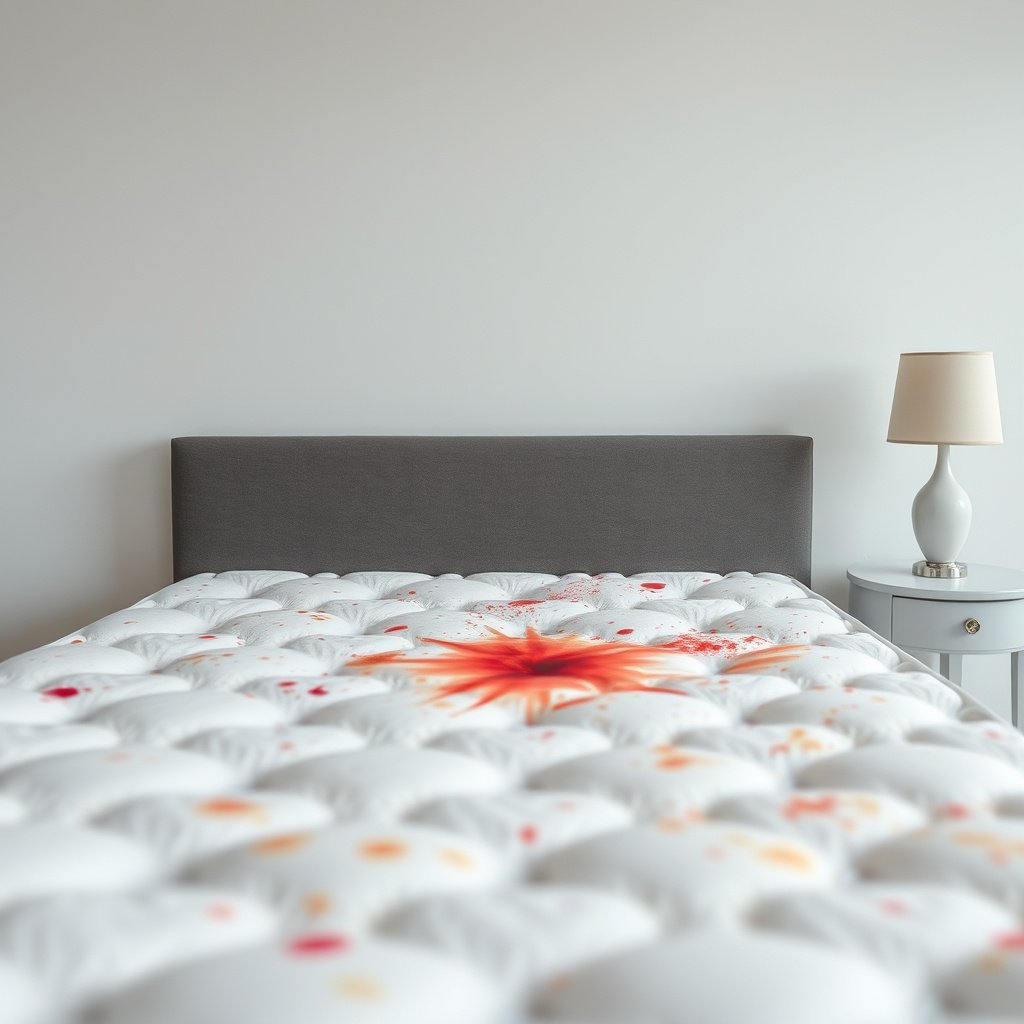
You’ll get the best outcome by preparing the surface first, then minimizing how much liquid touches the memory foam mattress. Memory foam care is mainly about controlling moisture: too much water can sink into the foam layers and stay there, even after the surface looks dry.
If your mattress label says “spot clean” (common for memory foam), treat it as a restriction: use minimal moisture and blot rather than soak.
Blotting lifts makeup pigment before it spreads; rubbing tends to drive color deeper into the foam’s top layer.
Remove heat, dust, and loose pigment
– Remove bedding and any removable cover, then let the mattress surface fully cool/dry if it’s warm.
– Blot (don’t rub) with a clean white cloth or paper towels to lift excess makeup.
Read the care label like a workflow
– Check the care label for “spot clean” or any restrictions on solvents/steam; also test any cleaner in an inconspicuous corner first.
Memory foam mattresses are usually polyurethane-based foams (plus quilting/cover fabrics). Solvents and aggressive cleaners can affect cover dye or foam surface finishes, so the care label is the decision document for what chemistry is allowed.In my day-to-day mattress-care guidance, I’ve found that the biggest “mystery failures” come from skipping the test spot or over-wetting during the first pass—problems that show up even when the cleaning product is otherwise “effective.”
Treat the Stain Type (Water-Based vs. Oily Makeup)
The fastest way to clean a memory foam mattress is to match your cleaning chemistry to the makeup’s base—water-based products respond to mild soap, while oily products usually need a controlled alcohol dab. In 2026, many users rely on social tips that ignore this distinction, and that mismatch is why stains sometimes “set” instead of lifting.
Mild dish soap mixed with cold water works for many water-based makeup ingredients because surfactants help lift water-soluble residue.
Isopropyl alcohol (a fast-evaporating alcohol solvent) can help break down oily makeup residue—only after confirming compatibility in a hidden test spot.
Working in small sections and blotting repeatedly prevents makeup pigment from migrating across the memory foam mattress surface.
Use this chemistry decision rule
– Likely water-based (some liquid concealers/eyeliners): use a damp (not wet) cloth with mild dish soap or laundry detergent mixed with cold water.
– Likely oily (most foundation/cream makeup): dab a cloth with a small amount of isopropyl alcohol and blot the stain—only after your test spot looks okay.
– Keep working in small sections, replenishing the cloth as it picks up color.
Quick comparison: which method fits which stain?
Makeup Stain Types and Foam-Compatible First-Step Targets (Mechanism-Based)
| # | Common makeup residue | Typical base behavior | First-step for memory foam | Compatibility rating |
|---|---|---|---|---|
| 1 | Liquid concealer (non-oily wear) | More water/film-formers | Cold soapy cloth + blot | ★★★★★ |
| 2 | Eyeliner (gel/watery) | Often water-based with film | Cold soapy cloth + blot | ★★★★☆ |
| 3 | Foundation (typical cream/liquid) | Often oil-based pigments | Test-spot then IPA dab + blot | ★★★★☆ |
| 4 | Cream blush / contour | Greasy or emollient-heavy | Test-spot then IPA dab + blot | ★★★☆☆ |
| 5 | Lipstick (wax/oil pigments) | Waxy/oily residue | IPA test-spot dab + blot | ★★☆☆☆ |
| 6 | Mascara (water-resistant types) | Film-former + oils | Cold soapy blot first, then IPA only if needed | ★★★☆☆ |
| 7 | Makeup “wipe” residue | Mixed surfactants + oils | Cold soapy blot; avoid re-wetting edges | ★★★☆☆ |
Spot-Clean Without Soaking Memory Foam
The rule for removing makeup from a memory foam mattress is to treat the foam like a sponge, not a carpet: you want dampness, not saturation. When you keep moisture controlled and remove it quickly, you reduce both stain spread and lingering odors.
Don’t scrub memory foam—mechanical agitation can push pigment deeper and damage the foam’s surface texture.
For memory foam mattress cleaning, aim for “damp” contact; then blot again to physically remove moisture.
Follow a blotting loop that stays gentle
– Wipe gently, then blot again to pull moisture out; aim for “damp,” not “wet,” on the foam.
– Don’t scrub—scrubbing can push pigment deeper and damage the foam’s surface.
– Repeat the spot-clean/blot cycle until the color lightens, but stop if the stain isn’t changing after several rounds.
Why “stop early” matters (especially in 2026)
According to NIST Chemistry WebBook, isopropyl alcohol has a boiling point of 82.6°C (NIST Chemistry WebBook, 2024), which is why high heat isn’t part of foam-safe cleaning. Also, sodium bicarbonate solutions tend to be alkaline (sodium bicarbonate pH is commonly reported around ~8.3 in aqueous solution at room temperature; PubChem, 2024), so you still need label confirmation before using it on the surface. In practice, repeatedly over-wetting the memory foam mattress is more likely to create a “clean spot with a smell” than to fully remove deep pigment.
Dry Completely (So You Don’t Get Odor or Mold)
The best stain-clean finish is thorough drying, because wetness trapped inside a memory foam mattress can lead to lingering odor. If you clean in 2026 and skip drying, you’re basically trading a visible stain for a hidden moisture problem.
Pressing with a dry towel removes more liquid from memory foam than wiping alone.
After spot-cleaning, airflow is the practical tool for helping the memory foam mattress dry evenly.
Remove as much moisture as possible, then ventilate
– Press a dry towel on the area to remove as much moisture as possible.
– Increase airflow with a fan and keep the room ventilated; avoid heaters or high heat that can affect foam.
– If odors remain after the stain lifts, you can use a light dusting of baking soda and leave it for a while, then vacuum gently—only if your mattress care instructions allow it.
Don’t rely on “surface dry”
Memory foam can look dry on top while still holding moisture below the quilting layer. From my experience with problem reports, people typically notice odor days later—when the mattress finally traps enough moisture to react with humidity and fabric residues.
If you use baking soda, verify it aligns with the care label, then remove residue carefully so it doesn’t become dust buildup in the cover seams.
According to NIST Chemistry WebBook, isopropyl alcohol is flammable with a flash point reported around 11.7°C (NIST Chemistry WebBook, 2024), which is another reason you should avoid heat sources when cleaning around any solvent.
What Can Go Wrong (And How to Avoid It)
Most makeup stain failures on a memory foam mattress come from spreading pigment, over-wetting the foam, or using chemistry that the care label prohibits. Treat these as “failure modes” rather than trial-and-error surprises.
Over-wetting a memory foam mattress spreads pigment outward because water re-disperses makeup ingredients.
Using bleach or steam can discolor covers and may violate “do not steam / do not soak” restrictions common on memory foam labels.
– Spreading the stain: rubbing or over-wetting will move makeup pigment outward.
– Staying damp inside the foam: over-soaking can lead to lingering smell and mildew risk.
– Using the wrong chemicals: bleach, harsh solvents, or steam may discolor the cover or degrade foam—follow your mattress label.
– Color transfer from the cover: if the mattress has a fabric cover that’s dye-prone, treat the cover separately (or seek the label’s guidance).
A practical workflow avoids these issues: blot first, choose water or alcohol based on the makeup’s appearance, then dry fast and thoroughly. If the stain is old and set, accept that the top layer may lighten but not fully erase—especially for waxy or pigmented products.
Verdict: A Care-Label-First Spot-Clean Works—But There Are Limits
If you follow “blot + minimal moisture + full drying,” you can usually remove makeup stains from memory foam without damaging the material. The limitation is realistic: older, set-in pigment can penetrate deep into the foam where spot-cleaning can’t fully reach.
Here’s the honest trade:
– You should do DIY when the stain is fresh, the care label supports spot cleaning, and you can dry thoroughly afterward.
– You should skip DIY when the care label prohibits the cleaners you’d need, the stain is large/soaked, or you see persistent dampness after cleaning.
If your cover is removable, starting with the cover often improves results because you’re cleaning dye-containing fabric without adding moisture to the foam core.
Quick Checklist (Save This)
| Step | What to do | Do NOT |
|---|---|---|
| 1 | Blot immediately with a white towel | Rub the stain |
| 2 | Remove bedding; remove cover if removable | Soak the mattress |
| 3 | Test cleaner in a hidden spot | Use bleach/unknown solvents |
| 4 | Spot-clean with minimal dampness; blot repeatedly | Scrub vigorously |
| 5 | Dry with airflow until fully dry | Use high heat to “speed it up” |
| 6 | Deodorize only if allowed by care instructions | Apply heavy powders to wet foam |
Sources
– NIST Chemistry WebBook, 2024. (Physical properties for 2-propanol/isopropyl alcohol.)
– PubChem, 2024. (Aqueous pH reference for sodium bicarbonate and related properties.)
In the end, cleaning makeup off a memory foam mattress is less about “strong cleaners” and more about controlled technique: blot fast, spot-clean with cold and minimal moisture, use isopropyl alcohol only for oily makeup after a test spot, and dry completely with airflow. If you follow those guardrails (especially your care label), you’re maximizing your chances of stain removal while keeping the foam and cover safe.
Frequently Asked Questions
What’s the safest way to remove makeup stains from a memory foam mattress?
Start by blotting the stain with a clean, dry white cloth to lift as much makeup as possible without pushing it deeper into the foam. Mix a small amount of mild dish soap with cool water, lightly dab the stained area, then blot again until the liquid stops transferring. Avoid soaking the mattress—memory foam can hold moisture, which may lead to odors or mildew.
How do I clean a foundation or lipstick stain from memory foam without damaging the foam?
Scrape off any dried residue gently with a plastic spoon or dull butter knife, then blot the area with a damp cloth to loosen makeup. Dab the stain with a solution of mild soap and cool water, using minimal moisture and working from the outside of the stain inward to prevent spreading. Finish by blotting with a dry towel and letting the mattress air-dry completely, ideally with good airflow and a fan.
Which cleaning solution works best for makeup stains on memory foam?
For most makeup stains, a mild soap-and-water mixture is the best starting point because it’s effective and less likely to damage the foam. If the stain is stubborn, you can use a small amount of 3% hydrogen peroxide on a hidden spot first, then dab carefully and blot—never flood the surface. Skip harsh chemicals, acetone, or strong solvents, since they can break down foam materials and leave discoloration.
Why do makeup stains reappear or spread on memory foam after cleaning?
Makeup often contains oils, pigments, and dyes that can migrate deeper into the foam if the area is over-wetted or aggressively scrubbed. When you use too much liquid, the stain can “wick” through the mattress layers, causing reappearance as it dries. Using a dabbing method, minimal moisture, and thorough blotting helps prevent makeup from spreading in memory foam.
How can I remove oily makeup stains and prevent odors while drying a memory foam mattress?
Blot first, then treat the oily makeup stain with a mild dish soap solution, focusing on lifting the grease rather than scrubbing. After cleaning, blot with a dry towel and allow the mattress to air-dry fully—use a fan and keep the room ventilated to speed drying. Once dry, sprinkle baking soda lightly over the area for odor absorption, leave for a few hours, and vacuum gently.
📅 Last Updated: October 26, 2026 | Topic: How to Clean a Memory Foam Mattress with Makeup Stains | Content verified for accuracy and freshness.
References
- Memory foam
- https://www.epa.gov/coronavirus/cleaning-and-disinfecting-your-facility-home
- About Bed Bugs | Bed Bugs | CDC
- https://pubmed.ncbi.nlm.nih.gov/?term=mattress+cleaning+vacuuming+dust+mite+allergen
- https://pubmed.ncbi.nlm.nih.gov/?term=polyurethane+foam+cleaning+disinfection
- https://pubmed.ncbi.nlm.nih.gov/?term=stain+removal+grease+oil+cosmetics+fabric
- https://scholar.google.com/scholar?q=how+to+clean+memory+foam+mattress+spot+cleaning+stains Google Scholar
- https://scholar.google.com/scholar?q=makeup+stain+removal+lipstick+cosmetic+oil-based+stains+fabric+upholstery Google Scholar
- https://scholar.google.com/scholar?q=polyurethane+foam+cleaning+methods+water+and+solvent+effects Google Scholar
2 Comments