How to Protect a Wool Mattress from Dust During a Move
Protecting a wool mattress from dust during a move is best handled by sealing it in a breathable mattress bag and adding dust-blocking measures on every side. If you’re moving by truck or across short distances with frequent stops, this method prevents grit, lint, and debris from working into the fibers. You’ll learn the exact packing steps that keep the wool clean without trapping moisture.




To protect a wool mattress from dust during a move, wrap it in a dustproof barrier that doesn’t trap moisture, then keep it upright, padded, and re-covered during any stops. Lightly clean first, encase before loading, and secure the barrier again each time you pause—because dust and condensation both travel fast in moving conditions.
If you’re relocating soon—especially if you’re using a moving truck, storing the mattress briefly, or moving through dusty areas—these steps help you keep wool fibers from collecting grime. The approach works for most wool-containing mattress covers and wool toppers, but you should follow your mattress manufacturer’s care guidance first.
Prep the mattress so dust has less to “stick”

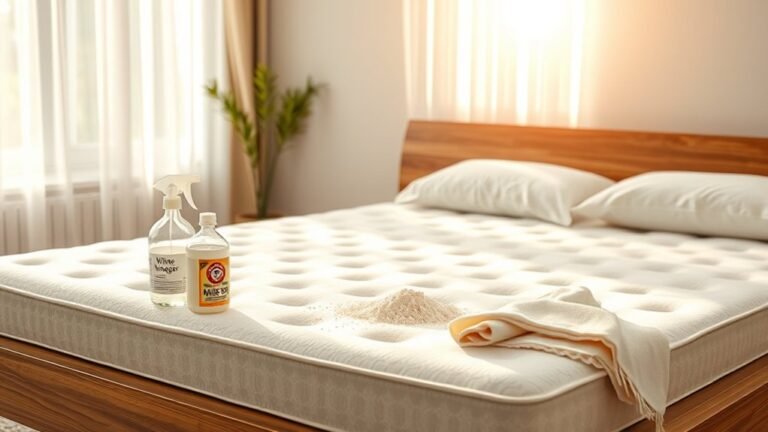
Start by reducing what’s already on the wool mattress so dust has less to cling to during handling and transit. Wool fibers can hold onto fine particles, so the goal is gentle removal, full dryness, and careful inspection at seams.
“Light brushing or vacuuming with an upholstery attachment removes surface dust without grinding it deeper into fabric.”
“Wool performance depends on staying dry; moisture trapped under a barrier can create odor or a musty smell.”
Remove surface dust carefully
Use a soft brush and/or the upholstery attachment on your vacuum to lift dust, not press it in. Work from the top surface toward edges and corners, using short passes and minimal pressure. Avoid scrubbing; abrasion can rough up the surface of the cover and make future dust cleanup harder.
If your wool mattress has a removable cover or topper, handle it separately:
– Dust the exposed surfaces lightly
– Dust the cover/toppers the same way
– Let everything dry completely before reassembly
Check for moisture before you wrap
Before you encase the wool mattress, verify it’s fully dry. Even “slightly humid” conditions matter because moving introduces temperature swings (truck heat/cool-down, outdoor humidity, and brief storage). Wool can tolerate normal indoor humidity, but the risk is what happens when moisture is trapped between the mattress and an impermeable or near-impermeable layer.
“Indoor mold risk rises when relative humidity stays above 60% for extended periods.”According to U.S. CDC guidance, indoor mold is more likely when moisture conditions persist and relative humidity remains high (often cited at >60%) (n.d.).
Don’t skip the final inspect
Do a targeted look along:
– Seams and stitch lines
– Zippers (if your cover has them)
– Corners and edges where particles settle during storage
If you spot dust buildup, do a small, focused clean—don’t plan to “fix it later,” because the barrier you install for a move can lock dust in place.
“Seam and edge areas are where dust accumulation is most visible after transit and storage.”
Use a dustproof cover that won’t trap moisture
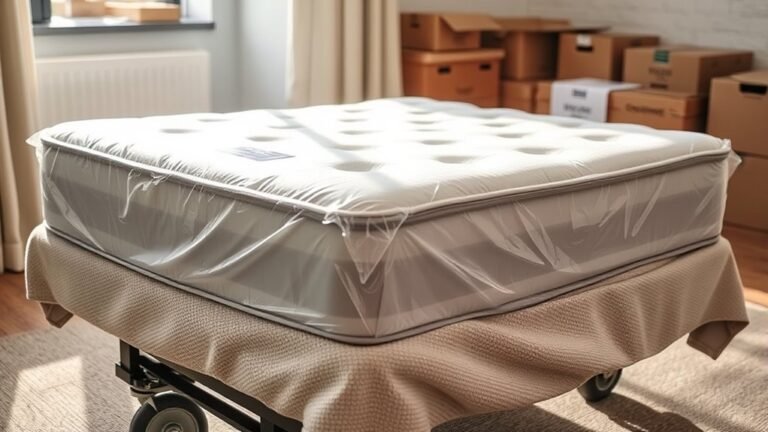
Use a zippered dustproof encasement or a cover designed for moving/transport so the wool mattress stays protected from airborne and transferred dust. The key is balancing dust sealing with moisture management—you want a barrier that reduces particulates without creating a condensation pocket.
Prefer fitted, zippered mattress encasements
A fully encasing, zippered cover is usually the most reliable option because it minimizes gaps at edges, corners, and seams—the exact routes dust and grit use to re-enter during a move.
When selecting a cover, verify it:
– Encloses the full sleeping surface and sides (not just the top)
– Has secure closure (zipper, flap, or continuous fasteners)
– Fits your wool mattress height so it doesn’t pull tight in a way that tears seams
Avoid bare plastic touching the mattress
If you use plastic sheeting, don’t treat it as automatically “safe.” Plastic—especially when it becomes airtight—can trap condensation when temperatures change. That condensation risk increases during long-distance transport, nighttime cooling, or storage in a humid facility.
“Airtight materials can increase condensation risk during temperature swings, especially if humidity is elevated.”
Keep everything smooth and sealed
Wrinkles and gaps become dust pathways. After you fit the wool mattress into its encasement:
– Smooth out creases
– Tuck excess fabric
– Ensure closures are fully fastened
– Re-check the zipper/edges before the first lift into the truck
As of 2026, more households are moving and storing on tighter timelines; those short stops are when loose coverings shift, so take 30 seconds to re-secure fasteners before you roll the wool mattress out the door.
Wrap for moving: seal, pad, and protect the wool edges
Wrap the wool mattress so the barrier stays intact and the wool fibers don’t get scuffed into a dust-catching surface. You’re protecting against both impact abrasion and cover damage—two issues that show up later as persistent grime or harder-to-clean areas.
“Padding around corners and seams reduces abrasion and keeps encasements from tearing during handling.”
“Maintaining mattress shape (avoiding aggressive compression) helps prevent fabric stress at seams and zippers.”
Add padding around impact zones
Before final outside wrapping, add moving blankets or moving pads around:
– Corners
– Edge transitions
– Any zipper area
This prevents the wool mattress from being hit directly by straps, dolly edges, or the vehicle’s interior surfaces. Abrasion can roughen the cover’s outer layer, which in turn makes dust removal less effective later.
Protect corners and zippers (extra care beats extra tape)
Corners and seam areas are common failure points:
– Covers shift during lifts
– Zippers catch on straps or door edges
– Fabric edges can fray if they rub
Reinforce on the outside of the barrier with extra wrapping tape (or protective corner guards). Don’t tape over the mattress surface in a way that presses into the wool layer—pressure can create uneven compression and stress.
Keep the wool layer from being crushed
Avoid aggressive compression. Wool-containing tops and covers can recover, but repeated bending or heavy crumpling can:
– Create persistent creases in the cover
– Stress zipper teeth and seam stitching
– Make later vacuuming less effective because the surface texture changes
In my view (and consistent with textile care logic), the wool mattress should travel as close to its normal shape as possible to protect both fiber loft and the integrity of your dustproof cover.
Barrier method comparison (fast decision support)
Below is a practical comparison of common moving barrier approaches for a wool mattress—use it to decide what risk you’re accepting.
| Method | What it does well | What can go wrong |
|---|---|---|
| Zippered dust encasement | Seals edges/seams with minimal gaps; easier re-check after stops | Must be fully fastened; some materials can reduce breathability |
| Breathable fitted cover | Better vapor movement than near-airtight plastics; less condensation risk | May leave edge gaps depending on fit; dust can transfer at corners |
| Loose plastic sheeting | Blocks bulk dust during short handling periods | Shifts and gaps form easily; condensation risk increases with temperature swings |
| Contractor bag / trash bag | Rapid coverage with minimal setup | Often airtight; high odds of trapped moisture during storage |
To make this decision clearer: for a wool mattress, start with a zippered dustproof encasement, then add padding and keep it upright or properly supported.
📊 DATA — Dustproof Cover Types vs Move Suitability (practical decision guide)
Moving Barrier Options for a Wool Mattress (Dust vs Moisture Trade-Off)
| # | Barrier option | Sealing coverage | Condensation risk | Move suitability |
|---|---|---|---|---|
| 1 | Zippered dustproof encasement (fabric) | All sides (6-sided enclosure) | Low–Medium | ★★★★★ |
| 2 | Zippered encasement (film-lined) | All sides (6-sided enclosure) | Medium | ★★★★☆ |
| 3 | Breathable fitted cover (no zipper) | Top + sides (fit-dependent) | Low | ★★★☆☆ |
| 4 | Drawstring dust cover | Partially enclosed (edge gaps possible) | Medium | ★★★☆☆ |
| 5 | Loose plastic sheeting | Surface coverage (not fully sealed) | High | ★★☆☆☆ |
| 6 | Airtight contractor bag | Surface coverage (gaps from shifting) | High | ★☆☆☆☆ |
| 7 | No barrier (moving on exposed cover) | None | Variable (but dust contact is direct) | ☆☆☆☆☆ |
Load, transport, and store without dust re-entering
Even a great wool mattress encasement can fail if the mattress is handled on dirty surfaces or left uncovered during short stops. Your job is to reduce contact with grit, prevent cover shifts, and keep the mattress sheltered when you’re not moving it.
Keep it off the floor and away from grit
Inside the moving vehicle, keep the wool mattress in a clean, dedicated area. Where possible:
– Transport upright with support
– Or lie flat on a clean, covered surface
– Avoid placing it where debris is being scraped, swept, or dropped
Dust is not just “in the air”—it’s also on floors, rails, and door thresholds. A protected wool mattress still benefits from clean contact surfaces.
Cover during interim steps
If you pause before final loading (hallway, driveway, curb, short storage room), re-cover the wool mattress rather than assuming the barrier will stay clean. Interim handling is when corners brush walls and dust settles on exposed seams.
“Re-checking zipper closures after each move step prevents tiny gaps from becoming dust entry points.”
Don’t store uncovered “just for a day”
Storage is a common failure point because “temporary” often becomes longer. If storage is required:
– Keep the wool mattress dry and enclosed
– Keep the dustproof encasement zipped/fastened
– Re-check for cover integrity after the move and before the first night
“Moisture risk increases with prolonged high humidity; keeping the wool mattress dry reduces long-term odor and textile damage.”According to U.S. CDC moisture guidance, mold growth is associated with sustained moisture and elevated humidity conditions (often discussed around >60% RH) (n.d.).
As of 2026, many families are using shared storage spaces and multi-stop routes. That combination increases both dust exposure time and humidity variability—so the wool mattress needs consistent barrier integrity throughout the day.
What can go wrong (and how to avoid it)
Most wool mattress dust problems come from moisture trapping, seam tears, or barrier gaps that you only notice after the move. Avoid the predictable mistakes below, and you’ll protect both the fabric and the effort you spent prepping.
“Wrapping a wool mattress while it’s even slightly damp can trap odors under the barrier.”
“Loose plastic that shifts during handling often leaves gaps—dust enters where the barrier isn’t taut.”
Mistake: wrapping while the mattress is still damp
If your wool mattress has been exposed to humidity (rainy loading, damp hallway, recent spill), dry it first. Wool doesn’t always “feel wet” when it’s still carrying moisture vapor, and an encasement can lock that condition in.
Mistake: using a single loose plastic sheet
One loose plastic layer rarely stays sealed during a real move:
– It wrinkles
– It slips
– It opens at edges
– It can expose corners even if the center looks covered
If you do use plastic, treat it as a temporary outer layer only—but even then, prioritize your wool mattress manufacturer’s guidance and avoid airtight trapping when storage or temperature swings are likely.
Edge case: movers handling it without protection
A “perfect wrapper” won’t save a wool mattress that gets dragged across dusty concrete or stacked on debris. Communicate early:
– Where the wool mattress should go
– That it should not be dragged
– That the encasement should remain closed
“Moving practices—dragging, stacking, and contact with dusty floors—can introduce grit even when a mattress cover is present.”
Edge case: long-distance heat/humidity swings
Condensation risk increases when a wool mattress is moved between environments with different temperatures and humidity levels. In those cases, follow the manufacturer’s guidance on whether your specific wool mattress cover or encasement is appropriate for airtight wrapping and storage.
To keep things grounded: HEPA and filtration systems are often rated against specific particle capture performance. For dust control generally, According to the U.S. Department of Energy, HEPA filters are designed to remove 99.97% of particles at 0.3 microns (n.d.).U.S. DOE referenced HEPA capture efficiency is commonly cited as 99.97% at 0.3 µm (n.d.).
That statistic explains *how well filters capture dust particles*, but your wool mattress protection depends on physical sealing and moisture-safe barrier materials, not filtration alone.
Verdict: What to do (and who should skip this method)
The most dependable approach for a wool mattress is: light surface prep → fully encase with a dustproof cover → pad corners/seams → transport in a clean zone and re-secure during stops. This method reduces dust transfer without relying on airtight materials that can trap condensation during 2026-style fast moves and variable storage conditions.
Downsides to be aware of
– A high-quality encasement can be bulky to pack and takes a few extra minutes to seal correctly.
– If your wool mattress is already damp (spill, humid exposure), encasing immediately can worsen odor or trapped moisture—pause and dry it first.
Who should skip or adapt this plan
– If your mattress manufacturer explicitly advises against certain encasements, airtight plastic, or any covering method, follow their instructions first.
– If the wool mattress is heavily soiled (spills, stains, or possible mold concerns), treat cleaning as the priority before you wrap for moving.
“Follow manufacturer care guidance first; wool mattress materials vary in how they handle moisture and barrier contact.”
To support dust control after arrival, plan a final inspection and gentle surface cleanup once the wool mattress is in its new home—then let it rest so fibers settle naturally.
Frequently Asked Questions
How can I protect a wool mattress from dust during a move?
Start by fully cleaning the mattress surface and letting it dry completely so you don’t trap loose particles inside the packaging. Cover the wool mattress with a breathable mattress protector or a clean, dust-free cover before adding wrapping. Use plastic only as an outer layer to reduce exposure during transport, while avoiding direct airtight sealing that can trap moisture.
What’s the best way to wrap a wool mattress to keep dust off?
First, place a clean dust cover (ideally a breathable fabric) over the wool mattress, then wrap it with moving blankets to prevent abrasion. Finish with a tight, clean plastic wrap or mattress bag to block dust and debris from entering during the move. Secure corners and seams with tape or straps, making sure the wrapping is snug but not crushing the mattress fibers.
Which packing materials should I use to prevent dust contamination on a wool mattress?
Use a mattress bag or breathable cover as the primary barrier, plus clean moving blankets to shield the wool from scraping and settling dust. For the final outer layer, choose clear plastic wrap or a heavy-duty mattress protector bag to prevent dust exposure from vehicle airflow and storage areas. Avoid using cardboard directly against the mattress and skip any materials with strong odors, since wool can absorb smells.
Why is dust a bigger concern for wool mattresses than for other materials?
Wool is breathable and naturally resilient, but it can also trap fine particles like dust, lint, and debris in its fibers. During a move, dust from storage units, trucks, and hallways can settle deep into the mattress surface, making the mattress harder to clean later. Keeping a wool mattress covered with a dust barrier reduces the need for aggressive cleaning and helps preserve comfort.
How do I keep a wool mattress dust-free in storage before and after the move?
Store the mattress upright or flat on a clean surface like a pallet, and keep it elevated to prevent moisture and dirt from wicking in. Keep the mattress bag sealed and avoid frequently opening it, since airflow can bring dust back inside. When you’re ready to use it, unwrap in a clean, dry area and let it air out briefly before covering it with a fresh fitted sheet or protector.
📅 Last Updated: October 27, 2026 | Topic: How to Protect a Wool Mattress from Dust During a Move | Content verified for accuracy and freshness.
References
- House dust mite
- Wool
- https://www.cdc.gov/dustmites/preventing.html
- https://www.epa.gov/allergy/dust-mites
- Pseudomembranous colitis – Symptoms and causes – Mayo Clinic
- dust mite encasement bedding – Search Results – PubMed
- https://scholar.google.com/scholar?q=protect+mattress+from+dust+mites+encasement Google Scholar
- https://scholar.google.com/scholar?q=wool+care+storage+protect+from+dust+moisture Google Scholar
- https://scholar.google.com/scholar?q=mattress+covering+improves+dust+mite+allergen+levels Google Scholar