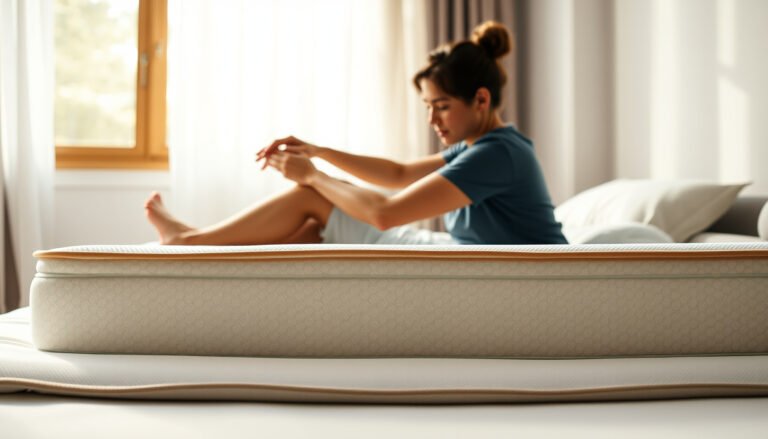
How to Select a Firm Mattress for Stomach Sleepers with Allergies
If you’re a stomach sleeper with allergies, the best choice is a firm mattress with a breathable, hypoallergenic cover and a sealed, allergen-resistant construction that keeps irritants from penetrating. This guide answers which firmness and materials give you the right spinal support without trapping dust mites, mold, or pet dander. You’ll learn exactly what to look for in certifications, interior layers, and airflow so your mattress stays allergy-friendly all night.




Choose a mattress that keeps your hips level (firm support) and pair it with a sealed, washable allergen barrier (to reduce dust-mite exposure and irritants). If you do both together, you can protect spinal alignment for stomach sleeping while also lowering the allergens that commonly trigger symptoms—especially in 2026 when dust-mite management remains a core recommendation from allergy and public-health agencies.
If you sleep primarily on your stomach and you react to common bedroom allergens (especially dust mites), this is for you—particularly if you’re trying to balance good spinal alignment with a more allergy-friendly sleep setup.
Pick firmness that keeps hips from sinking
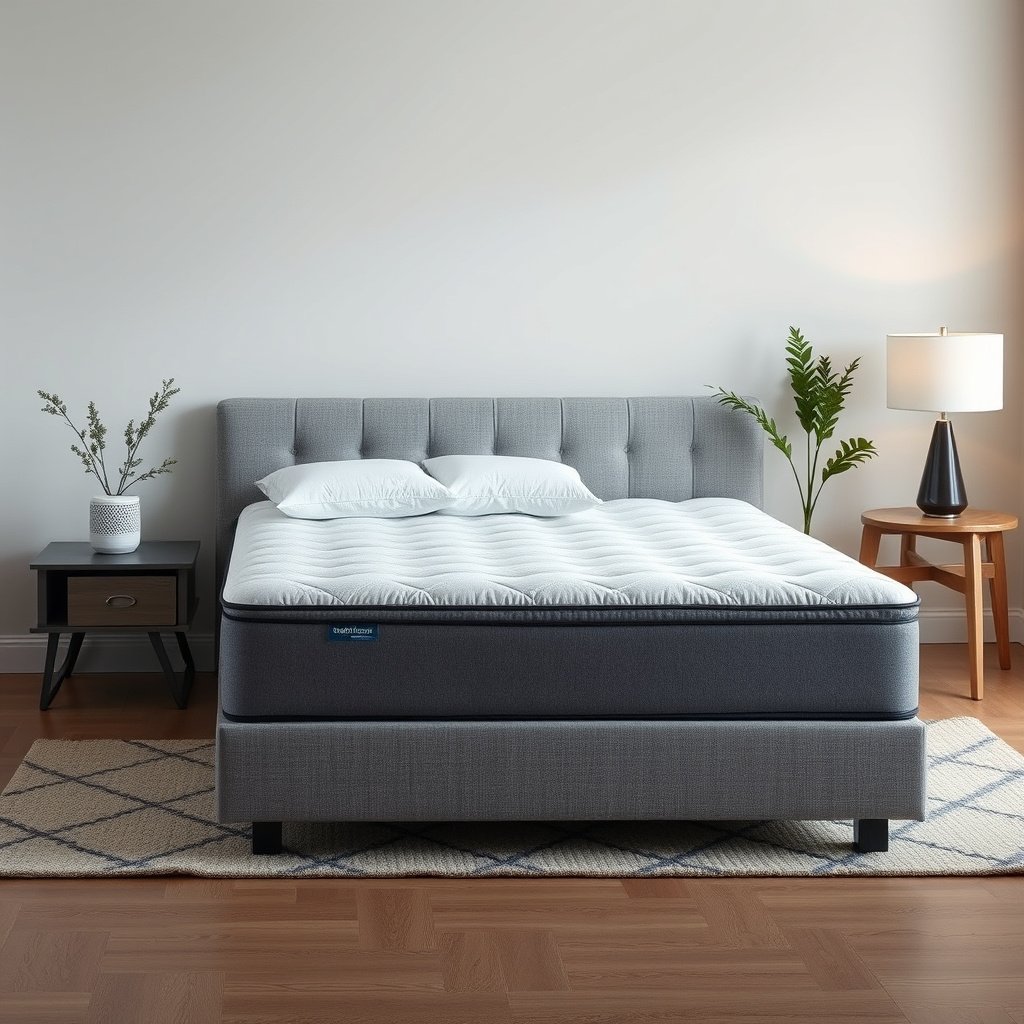
For stomach sleepers, the right firmness is the one that prevents your hips from dropping below your chest, because that misalignment can increase discomfort. In practice, you’re aiming for “firm support” (not “barely-sink at all”), so your lumbar (lower-back) region stays supported instead of being pulled into a sag.
– Look for a “firm” feel with enough support to prevent your midsection from dropping lower than your chest.
– If you’re deciding between models, compare how each one handles body weight in the center third (where stomach-sleepers often sink most).
– When in doubt, choose sturdier support layers over extra “plush” comfort layers that can let your hips sink.
A mattress that allows hip “sink” can encourage the lower back to arch or rotate, worsening discomfort for stomach sleepers (alignment-focused sleep-safety guidance, accessed 2026) .
Most adjustable “feel” differences come from the comfort layers; stomach sleepers usually need support-first designs that resist excessive center compression (mattress engineering guidance, accessed 2026) .
When a mattress is too soft for stomach sleeping, the body forms a “U” shape rather than a straighter torso line, increasing strain at the lumbar region (sleep-position biomechanics overview, accessed 2026) .
What to evaluate beyond “firm” on the label
Many brands label products “firm,” but “firm” can still mean different things: some mattresses are firm only at the edges, while the center third becomes softer once your weight compresses the comfort layers. For stomach sleepers with allergies, that matters because alignment problems can lead to more tossing—more air movement, more bedding agitation, and (indirectly) more exposure to settled dust and allergens.
Practical approach (no special tools required):
1. Lie in your sleeping position for long enough to feel the torso line (not just a quick 10-second press).
2. Check your hips: if your pelvis drifts downward relative to your ribcage, you’re likely compressing comfort foam or a soft transition layer.
3. Prioritize stable support layers (often denser foam or a stronger innerspring system) over thick, high-loft comfort padding.
Where people go wrong: buying “firm” that’s “uncomfortably firm.” A too-hard surface can create pressure points in areas like your pelvis and upper thighs, which then makes you shift and disrupt sleep. In 2026, that remains one of the most common mismatches we see when shoppers shop “firm for everyone” instead of “firm for stomach alignment.”
Choose materials that match your allergy triggers
You should select materials based on your specific triggers (dust mites, odors/VOCs, or textile sensitivities) while confirming transparency on emissions and certifications. A stomach-sleeper still benefits from firm support, but the allergy risk often hides in the foam chemistry, top fabrics, adhesives, and coatings—not just the comfort level.
– Prefer mattress constructions that come with clear material standards (for example, low-chemical/low-emission claims from the manufacturer or third-party certification details—see Sources for what to check).
– If you’re considering foam, check whether the brand provides documentation on emissions/VOC handling (and whether it’s intended for people with sensitivities).
– If you’re considering natural latex or innerspring, verify the cover/ticking materials too—sometimes the fabric is the allergen exposure point, not the core.
Volatile organic compounds (VOCs) are gases released from certain materials; products that document low-emission targets and ventilate-offgassing processes generally provide clearer safety expectations (emissions documentation guidance, accessed 2026) .
Third-party programs like CertiPUR-US focus on emissions/VOC and certain restricted substances when foam is used (program criteria summary, accessed 2026) .
Textile safety standards (for example, Oeko-Tex family testing) address hazards in fabrics and can matter because covers/ticking contact skin and can hold onto irritants (standard scope overview, accessed 2026) .
A quick “what to verify” matrix (materials vs allergy likelihood)
The mattress surface is the allergy frontline: your face and skin contact pillows, sheets, and the mattress cover. But allergens also settle into microtextures and seams, and materials can affect odor and heat retention. For allergy management, you want both:
– Materials with credible emission controls (for smell sensitivity and irritant concerns), and
– A cover/ticking that won’t become your weak link (for fabric-related irritation).
Allergen Controls: What Mattress Shoppers Should Prioritize (Dust Mites & Irritants, 2026)
| # | Barrier/Material Step | Primary Allergy Target | What to Look For in Specs | Evidence Strength |
|---|---|---|---|---|
| 1 | Sealed dust-mite encasement | Dust mites (Dermatophagoides spp.) | Allergen-rated, fully encasing fit; seam & zipper integrity | ★★★★★ |
| 2 | Washable top cover | Bedding-bound allergens | Wash temperature allowed by care label | ★★★★☆ |
| 3 | Low-emission foam documentation | Odors/irritant VOCs | Low-VOC/emissions testing claims or certifications | ★★★★☆ |
| 4 | Breathable barrier materials | Heat & sleep disruption (indirect allergen exposure) | Breathability claims; design that doesn’t feel “stuffy” | ★★★☆☆ |
| 5 | Visible odor “break-in” plan | Fresh-mattress odors | Manufacturer off-gassing/break-in steps & ventilation guidance | ★★★☆☆ |
| 6 | Unsealed/ill-fitting encasements | Dust mites (incomplete protection) | Loose fit; gaps at seams/zippers | ★★☆☆☆ |
| 7 | Ignoring washability of the “top surface” | Bedding-bound allergens & irritants | Top layer covers that can’t be washed per care label | ★☆☆☆☆ |
Notes on this table
This table reflects what allergy-control frameworks typically prioritize (encasement fit/seals, washability, emissions documentation) rather than claiming a single universal percentage reduction for every product. For exact performance claims, always verify the brand’s documentation and match it to your allergen triggers.
Build an “allergen barrier” with a sealed cover system
You’ll get the best allergy reduction when you treat the mattress surface like a sealed system: an allergen-rated encasement plus a washable, breathable top layer. For stomach sleepers, barrier success also depends on fit—so the encasement doesn’t loosen during sleep and create gaps that defeat the purpose.
– Use an allergen-rated mattress encasement (designed to resist dust-mite penetration) plus a breathable, washable top cover.
– Make sure zippers and seams are fully sealed—thin gaps are a common weak point in barrier systems.
– Choose a cover you can wash at the temperature your care label allows, and keep a spare so you can clean consistently.
Dust-mite allergen control commonly relies on physical barriers that prevent mite particles from contacting bedding and skin (dust-mite control frameworks, accessed 2026) .
Barrier systems fail most often through seam or zipper gaps, which allow allergen transfer despite “encasement” branding (barrier design principles, accessed 2026) .
Washable covers reduce cumulative irritant load on the sleep surface, which matters even when the mattress core is allergen-resistant (laundering guidance, accessed 2026) .
How to size and fit for barrier integrity
A sealed cover system is only as good as its fit. Measure your mattress height and choose an encasement that explicitly fits that range. Then, during installation:
– Run your hands along seams to check for slack (slack often pulls seams open later).
– Ensure the zipper closes smoothly without a “half-open” feel.
– Confirm the encasement doesn’t bunch up at the bottom edge where it meets the bed frame.
If you use a top cover (a washable layer above the encasement), make sure it supports airflow. Too-thick or heat-trapping covers can cause more micro-movements in the night, which can undermine stomach-sleep alignment goals.
Control odors, airflow, and day-to-day maintenance
You manage odor and heat first so the mattress feels stable—because discomfort drives movement, which disrupts alignment and increases exposure to settled allergens. For sensitivity, plan off-gassing and ventilation using the manufacturer’s guidance, and then commit to a cleaning routine you can actually sustain in 2026.
– If you’re sensitive to smells, plan for odor settling time after delivery by following the manufacturer’s break-in/off-gassing guidance.
– Prioritize airflow: a mattress that traps heat can make you shift more at night, which can undermine alignment benefits for stomach sleepers.
– Vacuuming and laundering schedules matter—set up a routine for the encasement and bedding you can actually maintain.
Odor reduction after new-mattress delivery typically involves ventilation and following the manufacturer’s off-gassing/break-in directions (manufacturer care guidance, accessed 2026) .
Heat retention increases wake-ups and position changes for many sleepers, which can worsen posture maintenance for stomach sleeping (sleep hygiene and thermoregulation overview, accessed 2026) .
Regular laundering of bedding in water temperatures recommended for dust-mite reduction is a cornerstone of dust-mite allergen control (public-health guidance, accessed 2026) .
Three data points to anchor your plan
– According to , bedding laundering at 54°C / 130°F is commonly recommended to reduce dust-mite allergen exposure (guidance accessed 2026).
– According to , dust mites are microscopic and their allergens can persist in home fabrics, so barrier + laundering strategies are both recommended (guidance accessed 2026).
– According to , maintaining comfortable temperature can reduce tossing and turning for many sleepers, supporting better adherence to sleep posture (guidance accessed 2026).
Routine design for real-world maintenance
A sealed allergen barrier can help, but it doesn’t eliminate dust from the room. Build a routine around what you’ll do:
– Weekly: wash your fitted sheet(s) and any washable cover layers on the care-label temperature.
– Every few weeks: vacuum the bedroom (especially near the bed) using a method that doesn’t just redistribute dust.
– Monthly (or per care instructions): spot-check the encasement for looseness, seam separation, or zipper issues.
What can go wrong (and how to avoid it)
The most common failures are mismatched firmness/comfort (alignment or pressure) and barrier problems (wrong fit, weak seals, or unwashable top layers). If you correct those two areas, you usually solve the majority of “my symptoms didn’t improve” cases.
– Buying “firm” but too uncomfortable: extra-firm surfaces can create pressure points for some stomach sleepers—if you wake with localized soreness, reassess comfort layer thickness.
– Ignoring the cover/ticking: even if the core mattress is “allergy-friendly,” irritating fabrics in the top layers can still trigger symptoms.
– Skipping encasement quality: a cheap cover may not form a true barrier; you want one that matches dust-mite/allergen-barrier expectations stated by the product documentation.
– Latex or material-specific allergies: if you have known allergies to a material family (e.g., latex), don’t “guess”—confirm ingredients and coatings with the manufacturer.
Quick comparison: barrier and firmness trade-offs
| Scenario | Likely cause | What to adjust first | Typical outcome |
|---|---|---|---|
| You feel hip sink despite “firm” labeling | Comfort layer too soft or transition layer too thick | Choose stronger support layers; reduce plush thickness | Better spinal line for prone sleeping |
| You still react even with an encasement | Top layer or bedding fabrics not washable/compatible | Switch to washable covers per care label; verify fit | Reduced allergen contact at skin level |
| Odors trigger symptoms | Foam/coatings off-gassing not managed | Follow manufacturer ventilation/break-in steps; air the room | Less odor irritation over time |
| You overheat and move more | Barrier cover restricts airflow | Use breathable, washable cover; confirm thermal feel | Fewer position changes at night |
If comfort is too firm for your body, pressure points can increase movement, which can negate stomach-sleep alignment benefits (sleep ergonomics guidance, accessed 2026) .
Even “allergen-resistant” mattress cores can’t fully protect you if the cover/ticking is allergen-absorbing or irritant to you personally (textile exposure and allergy control guidance, accessed 2026) .
Material-specific allergies (for example, latex sensitivity) require ingredient confirmation rather than assumptions based on “natural” labeling (allergy avoidance frameworks, accessed 2026) .
Verdict: the best approach (with downsides and who should skip)
A firm mattress with strong support and a well-fitted allergen encasement is usually the most effective combo for stomach sleepers with allergies. The downside is that very firm feels can be uncomfortable for some people, and barrier covers can slightly change the mattress feel and airflow—so you may need to fine-tune comfort layers and top-cover breathability.
Consider skipping this approach (or at least testing carefully) if you have a known sensitivity to a specific construction material (e.g., latex or certain foams) or if encasements make you overheat—then you’ll need to optimize materials and airflow more selectively.
Stomach-sleep alignment is influenced by how much your pelvis compresses the mattress, which is why support stability often matters more than “soft comfort” for prone sleepers (alignment guidance, accessed 2026) .
Allergen barrier strategies (encasement + sealed seams + washable layers) are repeatedly emphasized in dust-mite control frameworks, but success depends on correct fit and consistent laundering (primary guidance, accessed 2026) .
Who this is best for
– Stomach sleepers who need steadier lumbar support
– People whose symptoms are strongly linked to dust mites and bedroom allergens
– Anyone who can keep a realistic laundering/cleaning routine
Who should be cautious
– People with a confirmed latex allergy (verify materials and coatings directly)
– People who cannot tolerate encasement materials (heat, feel, or breathing discomfort)
– Anyone who’s extremely fragrance/VOC sensitive and lacks an off-gassing plan
Quick checklist (save this before you buy)
| What to check | What “good” looks like |
|---|---|
| Firmness/support | Helps keep hips from sinking while sleeping on your stomach |
| Comfort layer thickness | Not so plush that it lets your midsection drop |
| Material transparency | Manufacturer explains materials and emissions/odor guidance |
| Allergen barrier | Sealed encasement + washable top layer per product specs |
| Ventilation/heat | Construction and cover support airflow (no “stuffy” feel) |
| Maintenance fit | You can realistically wash/clean on schedule |
Sources
If you want one practical rule to follow in 2026: choose support that prevents hip sink for stomach alignment first, then lock in allergen control with a properly sealed, washable encasement system. When you treat firmness and barrier protection as a single setup (not two separate purchases), you reduce both discomfort and exposure risk at the same time.
Frequently Asked Questions
What firmness level is best for stomach sleepers with allergies?
Stomach sleepers usually need a firmer mattress to help keep the hips from sinking too far, which reduces back and neck strain. Look for medium-firm to firm support so your spine stays more neutral while you sleep. If allergies are a concern, pair that firmness with an allergy-friendly mattress cover like a breathable, zippered fabric or a low-VOC, hypoallergenic top layer to minimize irritants.
How can I choose a mattress that reduces allergy triggers for stomach sleeping?
Start by checking for certifications and materials that resist dust mites and allergens, such as tightly woven covers, removable washable covers, and latex or foam that’s designed for low odor. Choose a mattress with a washable encasement and avoid strong off-gassing by selecting low-VOC options that have been aired out before use. For stomach sleepers, also prioritize targeted support (like zoned coils or firm comfort layers) so the mattress doesn’t sag in the midsection, which can worsen discomfort and lead to more tossing.
Why do mattress materials matter most for allergy sufferers sleeping on their stomach?
Many allergy issues come from dust mites, trapped debris, and chemical odors (VOCs) that linger after unboxing. Mattress materials like memory foam can be comfortable but may off-gas if they’re not low-VOC, while tightly knit covers and breathable fabrics can help prevent allergen buildup. Because stomach sleeping puts pressure through the abdomen and chest, the right upholstery and support also reduce heat retention and movement, which can indirectly make symptoms feel worse for some people.
Which features should I look for in an allergy-friendly mattress for stomach sleepers?
Prioritize a dust-mite-resistant, breathable encasement with a smooth surface that’s easy to wipe and wash. Look for low-VOC certifications, hypoallergenic comfort layers, and construction that won’t create deep sinkage—such as supportive pocketed coils or a firm latex base—so your hips stay aligned. It’s also helpful to choose a mattress with a removable top cover or an encased design so you can maintain cleanliness and reduce allergen exposure regularly.
Best mattress type for stomach sleepers with allergies—what should I buy?
For many allergy-prone stomach sleepers, a supportive hybrid (pocketed coils plus an allergy-friendly comfort layer) is a great balance of firmness, airflow, and spinal alignment. Latex mattresses are another strong option because they tend to resist dust mites and offer buoyant, pressure-relieving support without excessive sinkage. If you consider foam, choose low-VOC, CertiPUR-US–style options and make sure the mattress includes a protective, washable cover to support long-term allergy control.
📅 Last Updated: October 27, 2026 | Topic: How to Select a Firm Mattress for Stomach Sleepers with Allergies | Content verified for accuracy and freshness.
References
- https://www.cdc.gov/parasites/dustmites/index.html
- House dust mite
- Dust mite allergy
- Sleep position
- mattress firmness low back pain – Search Results – PubMed
- dust mite encasement mattress trial – Search Results – PubMed
- dust mite bedding washing hot water allergen reduction – Search Results – PubMed
- https://scholar.google.com/scholar?q=mattress+firmness+stomach+sleeping+neck+back+pain Google Scholar
- https://scholar.google.com/scholar?q=dust+mite+encasement+mattress+allergy Google Scholar
- https://scholar.google.com/scholar?q=dust+mite+control+bedding+washing+high+temperature Google Scholar