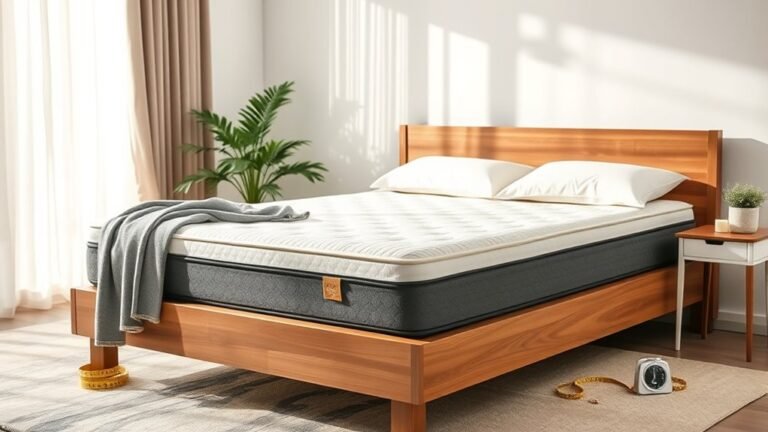
How to Budget for a New Mattress: Step-by-Step Cost Plan
With a clear mattress budget, you’ll know exactly what to spend on the mattress itself, delivery, and any needed accessories before you check final prices. This step-by-step cost plan walks you through choosing the right size and comfort range, estimating your total out-of-pocket cost, and comparing options that match your needs. You’ll also verify the details that protect your purchase, including warranty, trial period, and return terms.
Budgeting for a new mattress is easiest when you set a single “out-the-door” spending cap first, then split it into size/fit, delivery/base, and protection needs. If you do it this way, you won’t get surprised by checkout add-ons and you’ll compare options based on comfort value—not sticker price.
If you’re replacing an old mattress, moving to a different bed size, or feeling ready for better sleep but don’t know where your money will actually go, this is for you. It’s especially useful if you’re comparing brands online and want a method that doesn’t rely on guesswork.
Who this applies to (and why your budget matters)

A budget matters most when the mattress itself isn’t the only cost—and with mattresses, that’s nearly always true. This approach helps you forecast the real total (delivery, potential base/foundation changes, and protective extras) so your “plan” survives the final checkout screen.
From a planning standpoint, this is particularly relevant in three situations: your current bed is uncomfortable, you’re buying online, or you’re sharing the bed with someone whose comfort preferences differ. In those cases, a clear cap reduces the temptation to “just add one more upgrade” after you’ve already committed to a certain size and comfort target.
Start with the numbers that decide the whole budget
Start by choosing the bed size and confirming it fits your frame before you set any money targets. When people skip the fit check, the budget usually breaks later—because they end up paying for a compatible foundation, deeper sheets, or the wrong-size solution twice.
Here’s how I recommend structuring the first pass. In my own shopping, the tape-measure step sounds boring, but it consistently prevents the most expensive mistake: assuming “queen” means the same thing as the frame you already have. Measure both the available platform space and the mattress maximum height if you’re replacing a specific setup (like an existing low-profile bed frame).
– Pick your mattress size first (twin, full, queen, king, etc.) and confirm it fits your frame—size mistakes can add cost fast.
– Decide a spending cap before browsing, then separate “must-have” comfort needs from “nice-to-have” features.
– List what you already have (frame, base/box spring, tools, protector) so you don’t accidentally budget twice.
Common U.S. Mattress Sizes and Nominal Dimensions (Inches)
| # | Mattress size | Width (in) | Length (in) | Budget fit takeaway |
|---|---|---|---|---|
| 1 | Twin | 38 | 75 | Most often fits narrow frames |
| 2 | Twin XL | 38 | 80 | Check dorm/loft clearance |
| 3 | Full | 54 | 75 | Plan for wider bed space |
| 4 | Queen | 60 | 80 | Most common “middle ground” size |
| 5 | King | 76 | 80 | Verify bed clearance and sheet fit |
| 6 | California King | 72 | 84 | Measure length if frame is tight |
| 7 | Split King | 76 | 80 | Plan two-sheet sets or split-compatible |
Estimate the full cost, not just the mattress price
Estimate your total “out-the-door” cost by treating the mattress as one line item in a small project plan. If you only budget the mattress price, you’re likely to miss the costs that commonly appear at checkout or during setup.
The main idea: include anything that changes the bed’s usability right away. That usually includes delivery (and whether it includes setup), the right foundation/base for your mattress type, and basic bedding refresh. Protectors and new sheets are not “extras”—they’re often the difference between quick use and costly friction (like wrong sizing) or warranty-eligibility issues.
– Include delivery and setup (if offered), plus any extra fees shown during checkout.
– If your frame isn’t designed for your mattress type, budget for a compatible foundation/base or you may lose support.
– Add protective items and upkeep you’ll likely need: mattress protector, new sheets, and any replacement bedding for the new thickness.
Also keep compliance in view. In the U.S., mattress flammability requirements are regulated through the Consumer Product Safety Commission (CPSC) under 16 CFR Part 1632 (smoldering ignition) and 16 CFR Part 1633 (open-flame ignition) (2026). That matters for budgeting indirectly: reputable sellers generally price products that are designed to meet these federal requirements, and “too-good-to-be-true” deals can be harder to verify.
Compare options without blowing the budget
Compare mattresses based on the comfort variables that drive satisfaction: support quality, firmness range, and pressure relief (how well the surface reduces “hot spots” and sagging pressure). Features are useful, but a budget comparison works best when you limit decision-making to what impacts day-to-day sleep.
Read warranty and return policies as part of value—not fine print. According to the CPSC mattress flammability rules, manufacturers must comply with federally defined ignition-test standards (i.e., 16 CFR Part 1632 and 16 CFR Part 1633) (2026). While these standards don’t define comfort, they support the idea that “compliance” is part of product integrity—so policy clarity is the other part of risk management.
Here’s a quick comparison structure you can use while shopping online:
Budget-first vs price-first (practical differences)
– Budget-first
– You start with an out-the-door cap, then filter options.
– You check compatibility with your base/frame before purchasing.
– You plan for protector + sheets from the start.
– Price-first
– You may find a lower mattress price, then discover delivery, taxes, and foundation requirements later.
– Comfort mismatches lead to returns/exchanges that can be restricted or fee-based.
– Budget creep becomes hard to reverse after checkout.
– Focus on what changes your comfort most (support, firmness range, and feel), not every advertised feature.
– Read warranty and return terms before you commit—value can drop fast if returns are limited or expensive .
– If you’re choosing between materials (foam, hybrid, innerspring), prioritize the one that fits your needs and tolerance (heat retention, motion transfer, pressure relief), then stop “feature creep” when you hit your cap.
What can go wrong when budgeting for a mattress
Budgeting goes wrong when your assumptions don’t match how mattress setups and policies actually work in the real world. The good news is that most issues are predictable once you know where the “hidden cost” typically comes from.
Here are the most common failure points and why they matter. I’ve seen people get stuck because they planned around the mattress price only, not the full system: frame + foundation + bedding + coverage rules.
– Forgetting the base/frame compatibility: a cheaper mattress can become a costly mistake if it doesn’t work with your bed system.
– Underestimating total checkout costs: delivery, taxes, and any optional fees can push you past your planned cap.
– Buying solely on price or firmness words: “firm” varies widely by brand, and comfort mismatches can lead to returns (with potential fees or restrictions).
– Ignoring warranty conditions: stains or damage may affect coverage, so protect your investment early (details depend on the manufacturer).
Also watch for “thickness surprises.” If your new mattress is notably thicker than your old one, fitted sheet depth and bed clearance become real constraints. That’s why your budget should reserve room for a protector and sheet refresh—even if you think you’ll reuse what you have.
Verdict: Use a cap + compatibility check (and keep room for returns)
A practical mattress budget is one number you can actually spend plus a short list of likely extras (delivery, protector, and possibly a compatible base). The downside is that being too strict can narrow your options and still leave you uncomfortable—so keep a little flexibility for exchange/return rules if that’s part of your plan.
If you can’t handle any return hassle or you’re replacing due to urgent health/sleep needs, consider skipping the “riskier” deals and focusing on the clearest warranty/return setup possible. In other words: don’t only budget dollars—budget the risk you’re willing to take.
Quick checklist (save this):
| Budget step | What to do | Don’t forget |
|---|---|---|
| Size + fit | Confirm your mattress size and frame compatibility | Measure if unsure |
| Set a cap | Choose your out-the-door spending limit | Include non-mattress fees |
| Add essentials | Budget for delivery/setup, protector, and any needed base | Check thickness compatibility |
| Plan for comfort | Prioritize support/feel over extra features | Stop when you hit your cap |
| Verify terms | Read warranty and return policy before checkout | Note timelines and any fees |
Frequently Asked Questions
How do I estimate the total cost of a new mattress before I buy?
Start by setting a realistic mattress budget that includes more than the sticker price—factor in delivery fees, removal of the old mattress, taxes, and any required accessories. Many shoppers also forget to budget for a new mattress protector or foundation/support system if their current base isn’t compatible. If you’re buying online, confirm shipping timelines and return or warranty costs so the total expense matches your plan.
What’s the best way to budget for a new mattress when I have limited money?
Break your mattress purchase into a timeline: decide when you need relief (sleep quality, back pain, or replacement schedule) and save weekly or biweekly toward that date. Consider prioritizing sleep essentials first (mattress + proper support), then add optional items like upgraded pillows after the core purchase. If you’re using a financing option, compare the total cost with and without interest so your monthly payment fits your budget without surprises.
Which mattress features are worth paying for if I want good value?
Focus your spending on what affects comfort and support, such as mattress firmness level, pressure relief (for side sleepers), and proper lumbar support (for back sleepers). Look for reliable materials and construction details—like the type and thickness of comfort layers—rather than only marketing claims. If you’re tight on budget, you can often save by choosing a mid-range model and investing in a quality mattress protector to extend lifespan.
Why should I account for my existing bed frame or box spring in my mattress budget?
The right mattress performance depends on compatible support; an unsuitable base can reduce comfort and shorten mattress life. Check whether your current bed frame provides adequate slat spacing for your mattress type (especially foam and hybrid mattresses) or if you need a new foundation. Budgeting for support upfront can prevent ongoing discomfort and costly re-purchases later.
How much should I set aside for a replacement mattress over time?
A common approach is to calculate your yearly mattress budget by dividing your target replacement cost by the expected lifespan—then save that amount each year. For example, if you expect to replace your mattress every 7–10 years, spreading the cost helps you avoid last-minute purchases when your sleep quality drops. This “set aside annually” method also makes it easier to compare options based on cost per year rather than just upfront price.
📅 Last Updated: November 02, 2026 | Topic: How to Budget for a New Mattress | Content verified for accuracy and freshness.
References
- https://www.consumerfinance.gov/consumer-tools/build-a-budget/
- https://www.britannica.com/technology/mattress
- Mattress
- Sleep | Sleep | CDC
- https://www.nia.nih.gov/health/sleep-and-aging
- mattress replacement guidelines – Search Results – PubMed
- mattress firmness low back pain – Search Results – PubMed
- https://scholar.google.com/scholar?q=how+to+budget+for+a+new+mattress Google Scholar
- https://scholar.google.com/scholar?q=mattress+replacement+cost+lifespan+guidelines Google Scholar
- https://scholar.google.com/scholar?q=mattress+firmness+sleep+quality+systematic+review Google Scholar