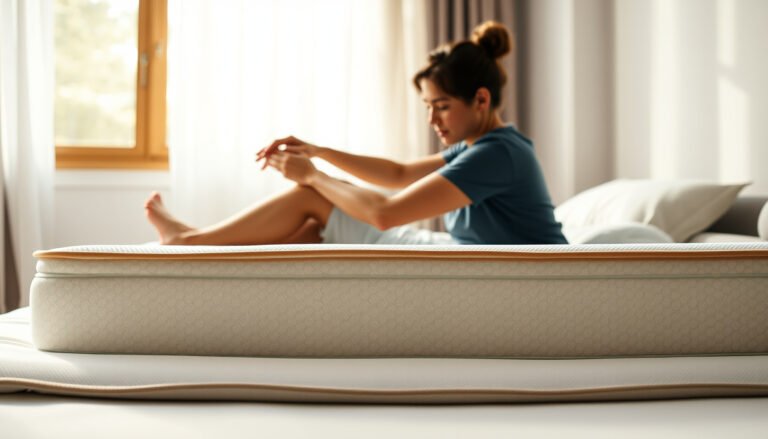
How to Make a Mattress Shortlist: Simple Steps for Choosing
Shortlisting a mattress can feel overwhelming when every store touts a different “best” model. You can create a clear, testable shortlist in about 30–45 minutes using a simple checklist of sleep needs, firmness, size, and budget. All you need is your current mattress details, a few preference answers, and the questions that help you compare each option quickly.




Making a mattress shortlist is the fastest way to narrow your options to a realistic set of “finalists” you can compare side-by-side. Start with your sleep needs, filter by comfort/feel and materials that match those needs, then verify warranty and return terms so you end up with 3–5 strong candidates instead of endless browsing.
If you’re dealing with back/side-sleeper pressure, overheating, or mattress sag concerns, a shortlist is the fastest way to narrow down what actually matters. This guide is written for shoppers who want a structured process (not guesswork) and plan to compare several models at once.
Start your mattress shortlist with your sleep needs

A mattress shortlist becomes dramatically easier when you begin with what your body is asking for—pressure relief, support, temperature control, and movement behavior. The goal in this step is to translate “I need a better mattress” into a shortlist filter you can apply consistently.
Start by writing down your sleep position(s) (side, back, stomach) and your top problem areas. Side sleepers often prioritize pressure relief at the shoulders and hips; back sleepers typically need support to keep the spine aligned; stomach sleepers usually need enough firmness and support to prevent the midsection from sinking. If you already know what bothers you most—pressure points, support that feels unstable, motion transfer from a partner, or heat buildup—capture that in plain language so you don’t lose it during browsing.
Next, note fit constraints that affect which mattress models even qualify. These include body type (because different weights interact differently with comfort layers), preferred sleeping temperature (cooling vs. warmth), and practical requirements such as edge support if you frequently sit or sleep near the edge. If you sleep with a partner, motion transfer also matters, because comfort-layer “bounce” or “hug” changes how movement travels across the bed.
Finally, decide how you’ll shop: in-store, online, or both. Your mattress shortlist filters should match your trial/return options. For example, if you’re buying online with a trial period, you can shortlist based on “best guess” comfort feel and then validate it. If you’re buying in-store with limited test time, you’ll want your shortlist to lean more heavily on comfort/feel cues you can verify quickly—like sink depth and shoulder/hip pressure behavior.
Pick the right comfort level (firmness and feel)
The right comfort level for your mattress shortlist is the one that provides pressure relief without sacrificing spinal support. Since firmness ratings aren’t standardized across brands, you’re really selecting a “feel profile” that works for your body and position.
Begin by matching “feel” to your sleep position. Side sleepers usually need more pressure relief, which often means a comfort layer that allows controlled contouring around shoulders and hips. Back and stomach sleepers often need more support to maintain alignment and reduce midsection sag. Exact firmness varies by manufacturer, so don’t treat “medium-firm” as a universal promise.
Use your trial/return policy to test the comfort level—because firmness ratings and feel descriptions often don’t translate across manufacturers. When you lie down, compare what changes: do you sink too much under the shoulders? Does your lumbar area feel lifted or stuck? Does the mattress feel “even,” or does it create hot spots? A good mattress shortlist will include models that feel meaningfully different so you can identify which direction works.
As you test options, record what you like and what you don’t with consistent notes. Examples of useful notes include:
– “Less sink in at shoulders”
– “More contour over hips”
– “No pressure on shoulders/hips after 10 minutes”
– “Too much bounce (partner movement felt quickly)”
Those notes help you eliminate mismatches quickly and prevent decision fatigue from turning into “maybe this one is fine.”
Compare materials and construction for your priorities
Your mattress shortlist gets sharper when you map your priorities (cooling, pressure relief, durability, motion control) to specific comfort and support materials. Construction isn’t just technical—it determines how the mattress behaves over time and how it feels day-to-day.
First, prioritize what you care about most. If overheating is your main problem, focus on cooling features and airflow-supporting materials (for example, breathable covers, open-cell foams, or designs intended to improve heat dissipation). If you wake up with pressure, focus on comfort-layer materials and thickness that provide enough contouring to distribute weight. If durability and sag resistance are your concern, focus on the transition and support core (the deeper layers that stabilize the bed). If you share the bed, motion control becomes a core priority—some materials reduce motion transfer more effectively than others.
Then check for construction signals you can verify in specs instead of relying only on marketing. Pay attention to:
– How many layers the mattress has (and where the cushioning sits)
– Whether the comfort layer is foam, latex, hybrid pocket coils, or something else
– What the support core is made of (and what role it plays)
– Whether the mattress is “mattress-like” or “pillow-top-like” in how it feels (some builds can feel softer on top but firm under support)
If you’re sensitive to smell or want lower-emissions materials, look for third-party foam certifications in the product specs. CertiPUR-US® is one of the most common frameworks shoppers see for foam emissions and content criteria. According to CertiPUR-US® program criteria, the program includes requirements intended to limit specific chemical classes and emissions and uses testing/documentation to support those claims (program criteria document, most recently updated in the last several years as of 2024). For details, check the exact certification language on the product spec sheet.
To make this step easier, use a material-to-priority comparison while building your mattress shortlist:
| Priority in your sleep life | Material/build patterns to look for (in specs) | What to listen for during testing |
|---|---|---|
| Cooling / overheating | Breathable cover fabrics; designs that aim to improve airflow; comfort layers intended to reduce heat retention | Hot spots get worse quickly vs. stay comfortable |
| Pressure relief (side-sleeper) | Comfort layers designed to contour at shoulders/hips | Shoulder/hip “stress points” soften within ~10–15 minutes |
| Support / alignment (back) | Stable transition and support layers; limited excessive sink | Lumbar support feels steady, not “floating” |
| Motion isolation (partners) | Materials that damp movement (often certain foam constructions) | One partner’s movement doesn’t wake you |
| Durability / sag resistance | Stronger support core; balanced comfort-to-support ratio | Feel doesn’t change noticeably after weeks of use |
| Edge support (sleep/sit near edge) | Support/edge stability features (often spec’d) | You don’t sink dramatically when you use the perimeter |
Use specs, warranties, and reviews to narrow to finalists
Your mattress shortlist should become your shortlist of 3–5 “finalists” once you can compare comfort, support, durability expectations, and practical trial terms using the same checklist. Specs and policies don’t replace lying down, but they do prevent expensive surprises.
Create a simple comparison scorecard with categories that match your priorities: comfort (feel and pressure behavior), support (stability and alignment), temperature (heat retention cues from specs/reviews), and durability expectations (including warranty coverage language). Also include “support responsiveness”—how quickly the mattress returns after you move, and whether it feels consistent across the sleeping surface.
Read the warranty coverage details, not just the warranty length. The coverage language matters because it defines what counts as a defect versus normal wear. Look for how the company measures “body impressions,” what size/depth threshold may apply, and whether certain areas or uses are excluded. According to the U.S. Consumer Product Safety Commission, mattress flammability compliance is handled under 16 CFR Part 1632 and 16 CFR Part 1633 (federal mattress flammability standard requirements), which is separate from comfort durability coverage—but it’s still a reminder that standards and warranties are different documents with different purposes (CFR provisions as maintained in the U.S. Code of Federal Regulations, current editions).
Use reviews to spot patterns, not one-off complaints. For example:
– Heat retention patterns (“feels warmer after X weeks”)
– Consistency issues (“one person loves it, another felt it too firm/soft”)
– Sag concerns (“developed impressions sooner than expected”)
– Odor/motion behavior patterns (especially during break-in)
When you see the same theme across independent reviewers, that’s a strong signal for your mattress shortlist—just remember people have different preferences and body types.
What can go wrong when making a mattress shortlist
A mattress shortlist fails most often when shoppers confuse comfort metrics, rely on marketing, or skip policy details. These mistakes turn a structured process into guesswork again.
Common pitfalls include:
– Confusing “firm” with “good support.” Some firmer beds still lack adequate pressure relief for side sleepers, which can feel worse even if your spine stays “supported.”
– Over-trusting review language. Words like “medium-firm,” “hotel-like,” or “exactly like the store display” can be misleading because feel changes with body weight and sleep position.
– Ignoring fit basics. Mattress comfort can be affected by sleep surface height, cover thickness, and foundation compatibility. Also confirm that your purchase is actually returnable in the required condition (opened/used policies vary).
– Building a shortlist without checking the trial/return terms early. If you can’t return it after it’s used as required (or if there are restocking fees), your shortlist should exclude models that don’t align with your risk tolerance.
Also watch for the “hidden variable” problem: the same mattress can feel different across foundations (platforms vs. slatted frames) and toppers. If you’re making a mattress shortlist for a specific bed setup, verify compatibility before you lock in your finalists.
Verdict: choose 3–5 finalists, not one “perfect” bed
A good mattress shortlist ends with 3–5 realistic finalists, not a single “perfect” mattress. The best decision is the one that meets your non-negotiables and holds up when you validate comfort/support over the trial window.
Here’s the practical approach: select finalists that each satisfy your requirements across comfort needs, support needs, temperature needs, and warranty/return terms. Then compare them using the same checklist so your final decision is based on fit—not hype. Even with careful shortlisting, your best pick may shift after a few weeks as your body acclimates and you notice whether alignment and pressure relief remain consistent.
Downside to this approach: it takes effort upfront to define criteria and read warranty/return terms. If you already know the exact firmness/feel you want and you’re comfortable buying from a retailer with a trial/return policy you fully understand, you can simplify—but you’ll still want to verify foundation compatibility and basic fit.
Who should skip the shortlist-heavy approach: shoppers who want a single, low-risk purchase without trial access, or those with highly unpredictable priorities (for example, frequent sleep-position changes) who may need more iterative testing than a typical 30–120 day trial.
Quick shortlist checklist (copy/paste)
Use this as your worksheet while building a mattress shortlist and narrowing to finalists:
| Filter | What to write down | Pass/Fail |
|---|---|---|
| Sleep position fit | Side/back/stomach + pressure/support issues | |
| Comfort feel | Contouring vs. buoyant vs. balanced; any “sink” concerns | |
| Temperature | Cooling features or heat concerns noted in specs/reviews | |
| Support & alignment | Whether it feels stable (not collapsing) during comparison | |
| Construction | Comfort layer type + support core type (as described in specs) | |
| Warranty basics | Length + coverage language (defects vs. normal wear) | |
| Return/trial terms | Time window + condition requirements + return cost (if any) | |
| Practical fit | Bed frame compatibility, required platform/foundation |
U.S. Mattress Size Surface Area Reference (in²)
| # | Size (in.) | Typical Dimensions | Surface Area (in²) | Space vs. Twin |
|---|---|---|---|---|
| 1 | Twin | 38 × 75 | 2,850 | 0 |
| 2 | Twin XL | 38 × 80 | 3,040 | +190 |
| 3 | Full | 54 × 75 | 4,050 | +1,200 |
| 4 | Queen | 60 × 80 | 4,800 | +1,950 |
| 5 | King | 76 × 80 | 6,080 | +3,230 |
| 6 | California King | 72 × 84 | 6,048 | +3,198 |
| 7 | Split King (2× Twin XL) | 76 × 80 (paired) | 6,080 | +3,230 |
FAQ
How many mattresses should be on a shortlist?
Aim for 3–5 mattresses. A larger shortlist usually leads to “comparison overload,” while a smaller one increases the risk that comfort/feel mismatches your body.
What if I’m not sure about the right firmness level?
Shortlist by feel direction instead of exact firmness (e.g., “more contour for pressure relief” vs. “more support to prevent midsection sink”), then use your trial period to confirm your mattress shortlist picks.
How do I use reviews without getting misled?
Look for repeated patterns (heat retention timelines, sag complaints, motion transfer behavior) rather than isolated stories. Also compare reviews that include sleep position, body type, and foundation details when available.
Should I prioritize materials or comfort first?
Comfort first—because you need your pressure relief and support in the places that matter to you. Materials second—because they explain why the comfort/support behavior may change over time and how heat or motion is handled.
Sources
– U.S. Consumer Product Safety Commission (CPSC), federal mattress flammability standards: 16 CFR Part 1632 and 16 CFR Part 1633.
– CertiPUR-US® program criteria and supporting documentation used for foam material claims (use the official CertiPUR-US® criteria and documentation provided by the program).
– Manufacturer warranty and return-policy documents: use the exact published warranty coverage language and return/trial conditions from each brand or retailer you’re considering (because defect definitions and trial requirements vary by seller).
A mattress shortlist works because it forces your decision criteria into the real-world categories that affect sleep: pressure relief, support alignment, temperature behavior, and practical trial/warranty terms. Define your needs, compare comfort feel and construction with consistent notes, and narrow to 3–5 finalists you can validate. When you commit with that structure—rather than hype—you reduce the risk of buying something that looks good on paper but doesn’t fit your body in sleep.
Frequently Asked Questions
What criteria should I use to build a mattress shortlist?
Start by filtering for your needs: sleep position (side, back, stomach), preferred firmness, and any support requirements for back or hip pain. Then compare mattress type (memory foam, latex, hybrid, innerspring) based on feel and motion isolation, and set a budget range before reviewing models. Finally, shortlist brands or models that clearly list materials, offer trial periods, and have warranty terms that match how long you expect to keep the mattress.
How do I compare mattresses in my shortlist without getting overwhelmed?
Use a simple scoring checklist for each shortlisted mattress—support, comfort, pressure relief, temperature control, motion transfer, edge support, and ease of getting out of bed. If possible, test similar setups at home or in-store using your normal sleep position, and note whether you sink too much or feel pressure points. Narrow to the top 2–3 options, then verify durability cues like foam density, coil gauge, and warranty length.
Which mattress features matter most for side sleepers?
Side sleepers typically need better pressure relief around shoulders and hips, so look for responsive comfort layers (like medium-firm memory foam or latex) paired with stable support. A mattress that’s too firm can push into bony areas, while one that’s too soft may cause the hips to sink and misalign the spine. In your mattress shortlist, prioritize pressure relief, contouring, and sufficient lumbar support, and pay attention to thickness and support core design.
Why should I include trial periods and warranty terms when shortlisting a mattress?
A trial period reduces the risk of buying a mattress that feels great initially but doesn’t support you after a few weeks of real sleep. Warranty terms signal expected durability and how the company handles issues like sagging or defects, which affects long-term value. When making a mattress shortlist, focus on the length of the trial, return shipping rules, coverage for body impressions, and whether the warranty is prorated.
Best way to narrow down a mattress shortlist when you and a partner have different preferences?
Begin by comparing both sleepers’ needs—often one person benefits from more pressure relief while the other needs firmer support to keep hips aligned. In your shortlist, consider hybrid or zoned support designs for a balance of comfort and edge-to-center stability, and look for motion isolation if you’re easily disturbed. Test for “couples” factors like sleep surface responsiveness, temperature neutrality, and how easy it is to move across the mattress when both people shift positions.
📅 Last Updated: November 02, 2026 | Topic: How to Make a Mattress Shortlist | Content verified for accuracy and freshness.
References
- Mattress
- Sleep
- low back pain mattress firmness – Search Results – PubMed
- mattress firmness sleep quality – Search Results – PubMed
- mattress durability wear and comfort – Search Results – PubMed
- pressure redistribution mattress interface pressure – Search Results – PubMed
- dust mite encasement mattress allergy – Search Results – PubMed
- https://scholar.google.com/scholar?q=mattress+firmness+sleep+quality Google Scholar
- https://scholar.google.com/scholar?q=mattress+material+foam+allergens+sleep Google Scholar
- https://scholar.google.com/scholar?q=pressure+redistribution+mattress+support+sleep Google Scholar