How to Choose a Non-Toxic Mattress: What to Look For
You can buy a non-toxic mattress with confidence by knowing which materials, certifications, and construction details to verify before you pay. This step-by-step approach will help you shortlist safer options, interpret common labels, and avoid hidden sources of odor and chemical exposure, typically in an hour or two of focused research. You only need a few product specs, the brand’s documentation, and a checklist of what to confirm so the mattress you bring home is the one that supports cleaner, healthier sleep.



Choose a non-toxic mattress by prioritizing certified low-emission materials, safer independently tested textiles, and a flame-resistance approach that’s documented—not vague “natural” promises. As of 2026, the smartest strategy is to match each concern (foam emissions, fabric chemistry, and flame-barrier method) to the specific documentation that proves it.
If you’re shopping because of sensitivities (odor/off-gassing), skin/allergy concerns, or general indoor-air quality goals, this is for you. It also helps if you’re trying to compare “green” mattresses that use different materials and labeling systems.
Check the materials for non-toxic signals
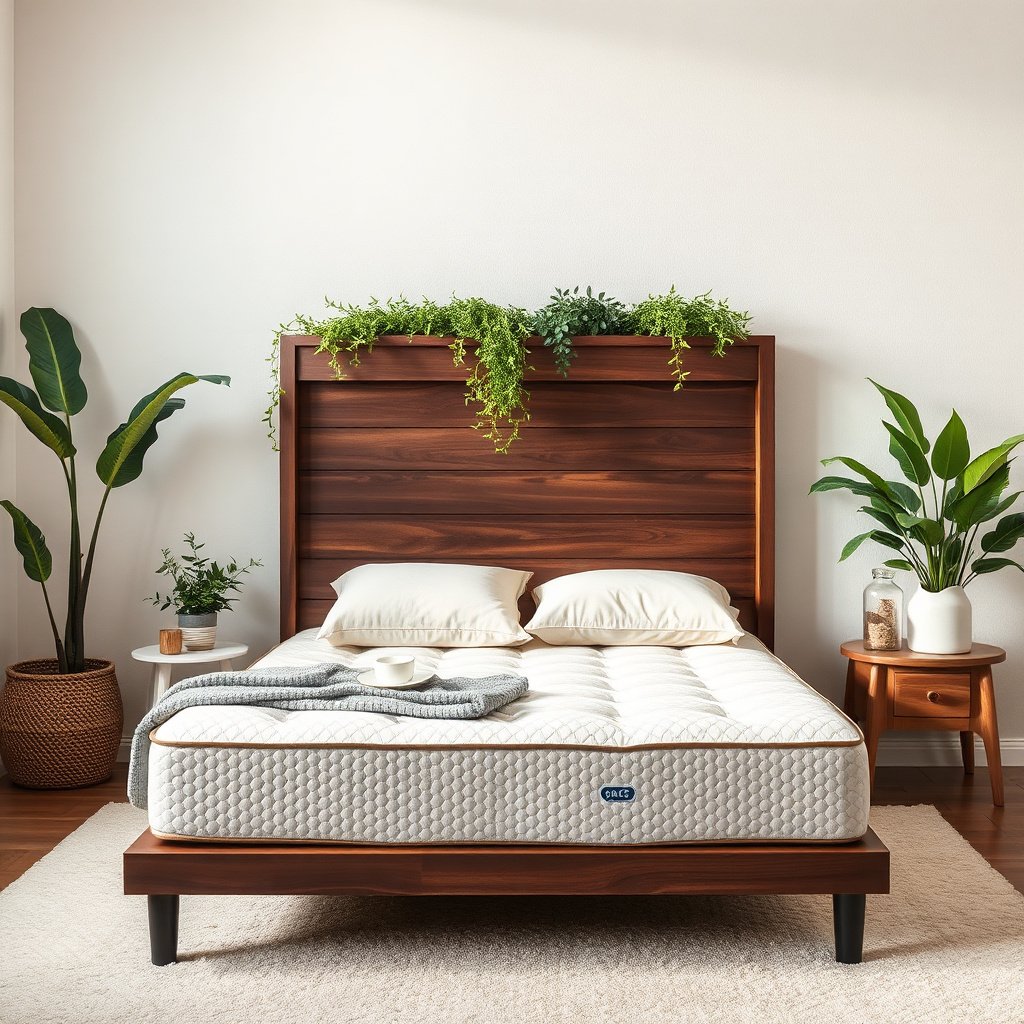
Choosing the “right” mattress starts with understanding what’s inside. Look for low-emission foam or latex and textiles that have been tested—not just materials that sound benign.
– Start with what’s inside: look for low-emission foams (or alternatives like latex) and tested fabrics rather than “chemical-free” marketing.
“Non-toxic” isn’t a single lab result; it’s usually the sum of emission performance + restricted substances + construction choices. The practical way to start is to identify which layers contact you directly: the comfort layers, the support core, and the cover/barrier system.
– Prioritize a mattress construction you can understand (core + comfort layers + cover/barrier), so you know what’s in contact with your body.
In my experience reviewing ingredient-style spec sheets, brands that openly describe layer-by-layer construction are often the ones that can also explain what’s certified, what’s not, and why. When a mattress is described only as “proprietary,” you typically can’t verify claims.
– Watch for red flags like unclear ingredient lists or “proprietary blend” descriptions with no third-party verification.
If you can’t find component-level details (especially for foams and the cover fabrics), assume the documentation gap is real—and build your decision around what you can confirm.
A reminder: indoor air quality matters because we spend the majority of time indoors. The U.S. Environmental Protection Agency notes that people spend about 90% of their time indoors (U.S. EPA, Indoor Air Quality resources). That’s why “new mattress” odor and persistent chemical exposure are both legitimate concerns, especially for fragrance-sensitive sleepers.
Look for certifications (and read what they cover)
Certifications are the fastest way to reduce uncertainty because they translate marketing into measurable criteria. The key is to treat each badge as covering a specific component, not the entire mattress.
– Use third-party labels as your shortcut: CertiPUR-US (for certain foam emissions/chemicals), GREENGUARD Gold (low chemical emissions for indoor air), and OEKO-TEX Standard 100 (textile testing).
– CertiPUR-US is commonly used for polyurethane foam used in mattresses and sleep products, focusing on emission and chemical restrictions for that foam.
– GREENGUARD Gold is designed to evaluate chemical emissions for indoor environments (often focusing on emissions performance relevant to indoor air).
– OEKO-TEX Standard 100 focuses on harmful substances in textiles; OEKO-TEX states its testing program covers over 100 harmful substances (OEKO-TEX Standard 100 program documentation).
– Don’t assume one badge covers everything—certifications usually apply to specific components (foam vs. fabric vs. overall product), so match the label to the material you’re buying.
For example, a mattress can have certified foam while the cover textiles (or the barrier layers) may not be independently tested. Your goal is component alignment: foam → foam certification; textiles → textile certification; overall emission claims → an indoor emissions program (when applicable).
– If a brand won’t provide cert details or documentation, treat that as a risk—especially when they make strong “non-toxic” promises.
Strong claims are fine; unverifiable claims are where problems start. If you’re comparing “green” mattresses in 2026, insist on paperwork or a cert number you can validate.
Non-Toxic Documentation Signals to Look For in 2026
| # | Program / label type | Primary focus | Typical mattress layer | Evidence you can request | Third-party verification |
|---|---|---|---|---|---|
| 1 | CertiPUR-US | Foam emission & chemical criteria | Polyurethane foam support/comfort | Certification details for the foam product | Yes |
| 2 | GREENGUARD Gold | Low chemical emissions for indoor air | Often covers overall product emission performance | Certification listing and scope | Yes |
| 3 | OEKO-TEX Standard 100 | Textile harmful substance testing | Cover fabric, quilting textiles, some components | Test coverage and cert details for textiles | Yes |
| 4 | GOTS (Global Organic Textile Standard) | Organic textile + processing criteria | Organic cover/quilt textiles | Organic/processing certificate scope | Yes |
| 5 | GOLS (Global Organic Latex Standard) | Organic latex requirements | Latex comfort layers | Organic latex certificate scope | Yes |
| 6 | SCS Indoor Advantage Gold | Indoor air chemical emissions criteria | Varies by certified components/products | Certification listing and product/component scope | Yes |
| 7 | Self-declared “non-toxic” / “chemical-free” | Marketing claim without standardized criteria | Any layer (scope not independently proven) | No verifiable cert scope to request | No |
Choose a safer cover, padding, and flame-retardant approach
A “non-toxic” mattress can still include flame-resistance systems required by law, so the goal is to understand the method. Focus on safer textile layers and a documented barrier/approach that reduces direct chemical exposure.
– For the top layers (cover + quilting + padding), look for independently tested textiles (for example, OEKO-TEX) or organic certifications where applicable.
The cover and quilting are what your skin actually contacts. If you’re sensitive to odor or irritants, the textile layer is often where you’ll notice differences first—both in initial smell and how you feel after hours of use.
– For flame resistance, prefer designs that rely on barrier layers or inherently flame-resistant constructions (when documented) rather than unspecified “chemical flame retardants.”
Flame resistance can be achieved through multiple engineering approaches, and jurisdictions often require mattresses to pass flammability standards. In the U.S., mattress flame-resistance requirements are regulated under CPSC rules (commonly referenced as 16 CFR Part 1633 for most modern mattress fire-safety testing frameworks) U.S. CPSC mattress flammability regulation (16 CFR Part 1633). The non-toxic concern isn’t “is it flammable,” it’s “how is it engineered,” and what reaches you during everyday use.
– If you see mention of fiberglass or the brand won’t explain its flame-barrier method, ask for specifics before buying.
Fiberglass itself may not be the whole story; the key is whether the material is properly contained by barrier fabrics and whether the brand provides a clear explanation of the flame-resistance design and documentation.
Reduce exposure with setup, ventilation, and maintenance
You can lower perceived risk immediately with smart setup and reasonable airing-out practices. Even low-emission mattresses can off-gas during the initial curing/packaging phase, so plan for controlled ventilation.
– Ventilate: even low-emission materials can have initial odor, so plan for a break-in/air-out period in a ventilated space.
This step is especially important if you’re unusually sensitive to smells. If you live in a humid climate or have pets/infants, airing out on a schedule (rather than “leave it forever”) helps you keep indoor air manageable.
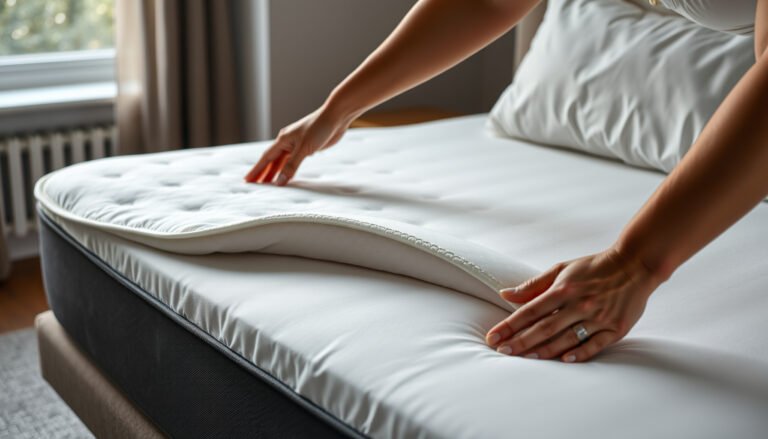
– Keep it clean without compromising materials: use a breathable, well-fitted mattress protector and avoid harsh cleaners that could add residues.
A protector can also help you avoid direct contact with dust, skin oils, and allergens. For non-toxic goals, choose protectors that are breathable and—ideally—independently tested for textile chemistry.
– If you react to smells, buy from a brand with a clear return policy so you’re not stuck if the mattress doesn’t work for you.
Documentation lowers risk, but it can’t guarantee comfort and tolerance for every sleeper. A good return policy is a practical safety net.
What can go wrong (common mistakes and edge cases)
Non-toxic shopping can still fail when you assume labels are universal or when you ignore component gaps. Here are the most common pitfalls we see when comparing mattresses in 2026.
– “Natural” doesn’t always mean low-emission. Plant-based materials can still off-gas during initial curing, and labeling may be inconsistent across brands.
“Natural” is not a lab-tested emissions category. If you’re choosing for indoor-air goals, seek emission-focused certifications or component test documentation.
– One certification doesn’t equal full coverage. A mattress could have certified foam but uncertified cover textiles, or vice versa.
Read the scope. Certifications typically apply to specific product parts or formulations—not always the whole assembly.
– Flame-retardant claims can be confusing. Some “chemical-free” language may still involve flame barriers that aren’t clearly described—always look for documentation.
“Chemical-free” is often interpreted as marketing shorthand, but your real question is: What’s the mechanism, and is the barrier properly contained and documented?
– Sensitive sleepers need extra caution. If you have severe chemical sensitivities, you may need stricter component-level proof than typical shoppers.
In those cases, consider whether you need more than consumer certifications (for example, asking for specific test reports or more detailed scope notes). If you can’t get it, skip the mattress—even if the marketing looks good.
Quick comparison: certification-led vs marketing-led decisions
| Decision style | How it reduces risk | Where it can fail |
|---|---|---|
| Certification-led | Matches each concern to component-level testing (foam emissions, textile substances, indoor emission criteria). | Can still miss unknown layers if scope isn’t clearly stated (barriers, adhesives, or covers). |
| Marketing-led | May sound reassuring but often lacks measurable criteria, component scope, or verifiable documentation. | Higher chance of exposure to uncertified cover/barrier materials or unclear flame-barrier approaches. |
Verdict: a practical non-toxic strategy (with downsides)
If you want the best odds, choose mattresses that combine independent certifications with transparent material/design details—then verify the specific parts you care about (foam emissions, cover textiles, and flame-barrier method). This reduces uncertainty in the areas that matter most for everyday indoor air.
Downsides: this approach can mean higher costs, more homework, and occasional “initial smell” that improves with ventilation. Skip this route (or be extra careful) if the brand won’t share documentation, if you can’t ventilate/return, or if you require medical-grade assurances beyond what consumer certifications provide.
| Criteria (what you actually care about) | Documentation-led buying | Marketing-led buying |
|---|---|---|
| Component-level scope | Explicitly states which layers/components are tested | Often vague about which layers are covered |
| Third-party verification | Certification program details can be requested/validated | Claims rely on internal labeling without standardized criteria |
| Foam emissions evidence (if foam is used) | Foam emissions/chemical restrictions tied to a foam program | “Low odor” claims with no emission testing linkage |
| Textile safety evidence (cover/quilt) | Textiles tested against a recognized textile standard | “Organic” or “safe fabric” language without test scope |
| Flame-resistance mechanism transparency | Explains barrier layers/inherently safer approaches when applicable | Uses “chemical-free” phrasing without mechanism documentation |
| Return policy alignment | Clear process for returns if odor/comfort issues appear | Hidden restocking fees or unclear odor-related return terms |
| Air-out guidance | Provides specific ventilation/initial setup instructions | No guidance beyond generic “let it air out” |
| Ability to ask for documentation | Brand can supply certification scope/spec sheets for relevant components | Refuses or delays documentation requests |
| Indoor-air mismatch risk | Limits risk by targeting verified low-emission layers | Unverified layers can still drive exposure/odor |
| Best fit for severe sensitivity | More likely to meet strict tolerance needs due to clearer evidence | Higher chance of failure without component-level proof |
| Verdict | More reliable pathway to “non-toxic” outcomes because you can verify scope | Higher uncertainty because claims may not match tested components |
Non-Toxic Mattress Quick Checklist (scan/save)
| What to check | What “good” looks like | What to question |
|---|---|---|
| Foam emissions | Low-emission certification for the foam (e.g., **CertiPUR-US** / equivalent) | Vague “low odor” claims with no specs |
| Textile safety | Independently tested cover textiles (e.g., **OEKO-TEX Standard 100**) | “Organic” marketing with no test/cert details |
| Flame resistance approach | Clear explanation of barrier/inherently safer method | “Chemical-free” without a documented method |
| Transparency | Brand provides certs/specs for components | “Proprietary” layers with no documentation |
| Setup | Instructions for airing out/initial odor | No guidance + no easy returns |
Sources:
– CertiPUR-US program documentation (foam emission/chemical criteria)
– UL GREENGUARD Gold program documentation (low chemical emissions for indoor air)
– OEKO-TEX Standard 100 documentation (textile testing/limits)
– U.S. CPSC mattress flammability regulation (commonly referenced as 16 CFR Part 1633)
Choosing a non-toxic mattress is less about chasing a single “perfect” label and more about aligning proof to each risk area—materials, textiles, and flame-resistance method. If you can verify scope and document compliance, you’ll make a decision that’s both more defensible and more comfortable for real-world indoor air.
Frequently Asked Questions
What should I look for in a non-toxic mattress to reduce chemical exposure?
Start by choosing a mattress made without harsh chemical treatments and with clear disclosure of materials. Look for certifications like CertiPUR-US® for foam content, OEKO-TEX® for textiles, or GREENGUARD Gold for low chemical emissions. Also check for “no added flame retardants” or safer alternatives, since many non-toxic mattress options aim to avoid traditional flame chemicals. Finally, prioritize a mattress with breathable, naturally sourced materials where possible, and avoid products with vague labeling.
How can I verify a mattress is truly non-toxic before buying?
Read the product specs for ingredient transparency—materials, adhesives, flame-retardant approach, and foam type should be clearly listed. Look for third-party certifications and confirm they apply to the specific mattress model, not just the company. If available, request or review an independent lab report for emissions (often linked to GREENGUARD standards) rather than relying only on marketing claims like “eco-friendly.” You can also check for low-odor guidance and plan for a ventilation period after delivery.
Which mattress materials are the safest for non-toxic sleep?
Many shoppers consider latex (especially natural latex) and organic wool as strong non-toxic mattress materials because they can be breathable and naturally resistant to dust mites. Plant-based foams or low-VOC materials are also commonly sought, particularly when backed by certifications such as CertiPUR-US®. For innerspring mattresses, choose ones with organic or low-chemical covers and minimize chemical-intensive cushioning layers. If you’re sensitive to odors, prioritize mattresses that emphasize low-emission construction and have documentation for coatings and adhesives.
Why do “natural” mattresses sometimes still contain concerning chemicals?
“Natural” can be a marketing term and may not reflect the full ingredient list, including adhesives, flame barriers, or fabric treatments. Even non-toxic mattresses may include flame retardants or chemical stabilizers, and some “green” products use materials that aren’t independently tested for emissions. Always check certifications and the exact construction layers—what matters most is what’s inside, not just the outside cover. If you’re buying for allergies or chemical sensitivity, focus on independent testing and clear material disclosure.
What is the best way to choose a non-toxic mattress if I have allergies or chemical sensitivity?
Choose a mattress with low-emission credentials, allergen-resistant covers, and minimal chemical additives, and consider options with organic cotton or wool covers. Look for dust-mite resistant materials and avoid heavy fragrance, stain treatments, or opaque “proprietary” chemical layers. After purchase, let the mattress air out in a ventilated room for the recommended time, and consider using a certified barrier-free protector if you tolerate coverings. If symptoms persist, prioritize mattresses with thinner comfort layers and fewer foam types to reduce overall chemical off-gassing risk.
📅 Last Updated: November 02, 2026 | Topic: How to Choose a Non-Toxic Mattress | Content verified for accuracy and freshness.
References
- Volatile Organic Compounds' Impact on Indoor Air Quality | US EPA
- Formaldehyde | US EPA
- https://www.epa.gov/chemicals-under-tsca/flame-retardants
- eCFR :: 16 CFR Part 1633 — Standard for the Flammability (Open Flame) of Mattress Sets
- https://www.cdc.gov/biomonitoring/Phthalates_Fact_Sheet.html
- volatile organic compounds mattress foam emissions – Search Results – PubMed
- flame retardant chemicals mattresses foam – Search Results – PubMed
- https://scholar.google.com/scholar?q=non-toxic+mattress+chemical+exposure+VOC+flame+retardants Google Scholar
- https://scholar.google.com/scholar?q=indoor+air+volatile+organic+compounds+from+foam+mattresses Google Scholar
- https://scholar.google.com/scholar?q=phthalate+exposure+from+home+furnishings+mattress+foam Google Scholar