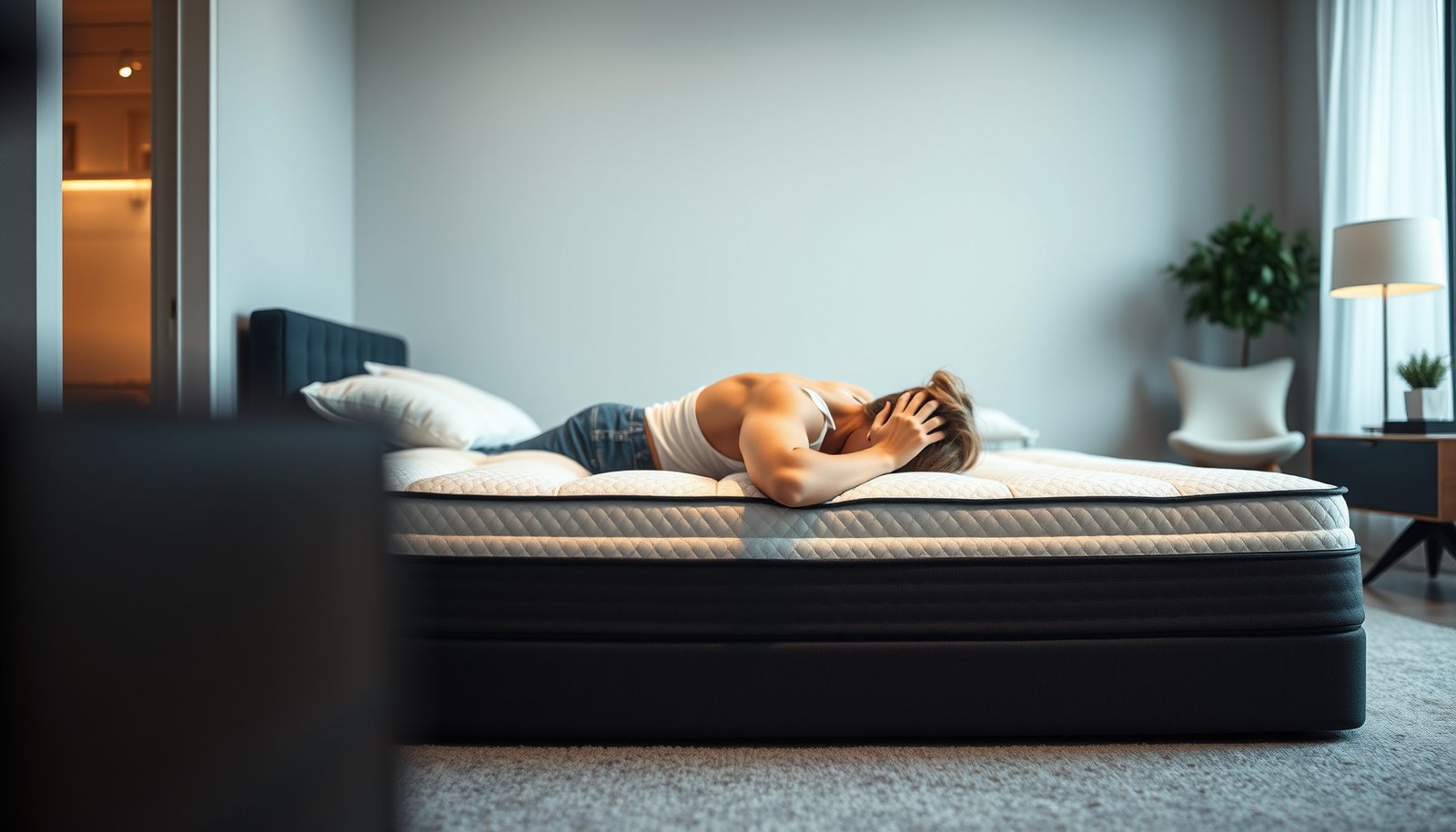
How to Select a Plush Mattress for Stomach Sleepers with Neck Pain
If you sleep on your stomach with neck pain, the plush mattress that wins is the one that keeps your head and spine level while preventing your shoulders from sinking too far. Look for a plush feel with strong edge support and targeted pressure relief, plus a firmness “buffer” that stops your hips from dropping. This guide tells you exactly what features to prioritize—and which plush mattresses to avoid—so your neck stays aligned all night.
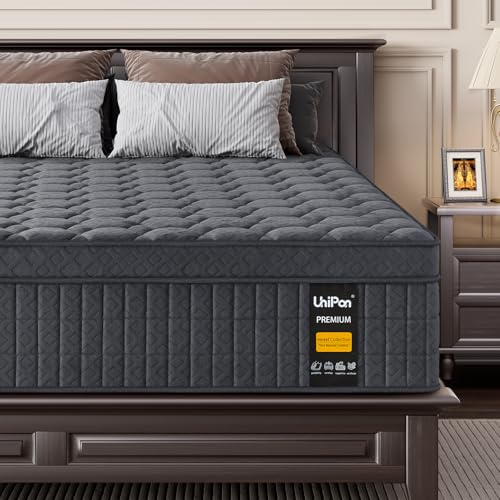

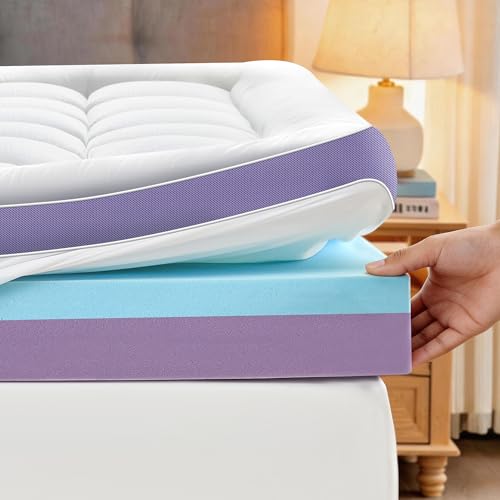

If you’re a stomach sleeper with neck pain, the “right plush” isn’t pillow-soft—it’s plush on top with enough support underneath to prevent hip and rib sinking. In 2026, that typically means choosing a medium-soft comfort feel over a responsive or supportive core so your head and neck stay closer to neutral instead of twisting.
If you sleep on your stomach and deal with neck pain, don’t choose “plush” that lets your hips sink too far—prioritize alignment first, then comfort. Look for a mattress that feels soft on top but keeps your midsection from dropping, so your neck stays closer to neutral. In this guide, you’ll learn how to match plush comfort to the support stomach sleeping needs.
If you mostly sleep stomach-down (or rotate that way at night) and your neck feels sore on waking, this is for you. It’s also useful if you’re choosing a mattress online and need a practical way to compare “plush” options without getting misled by marketing.
Start with alignment: what changes for stomach sleepers
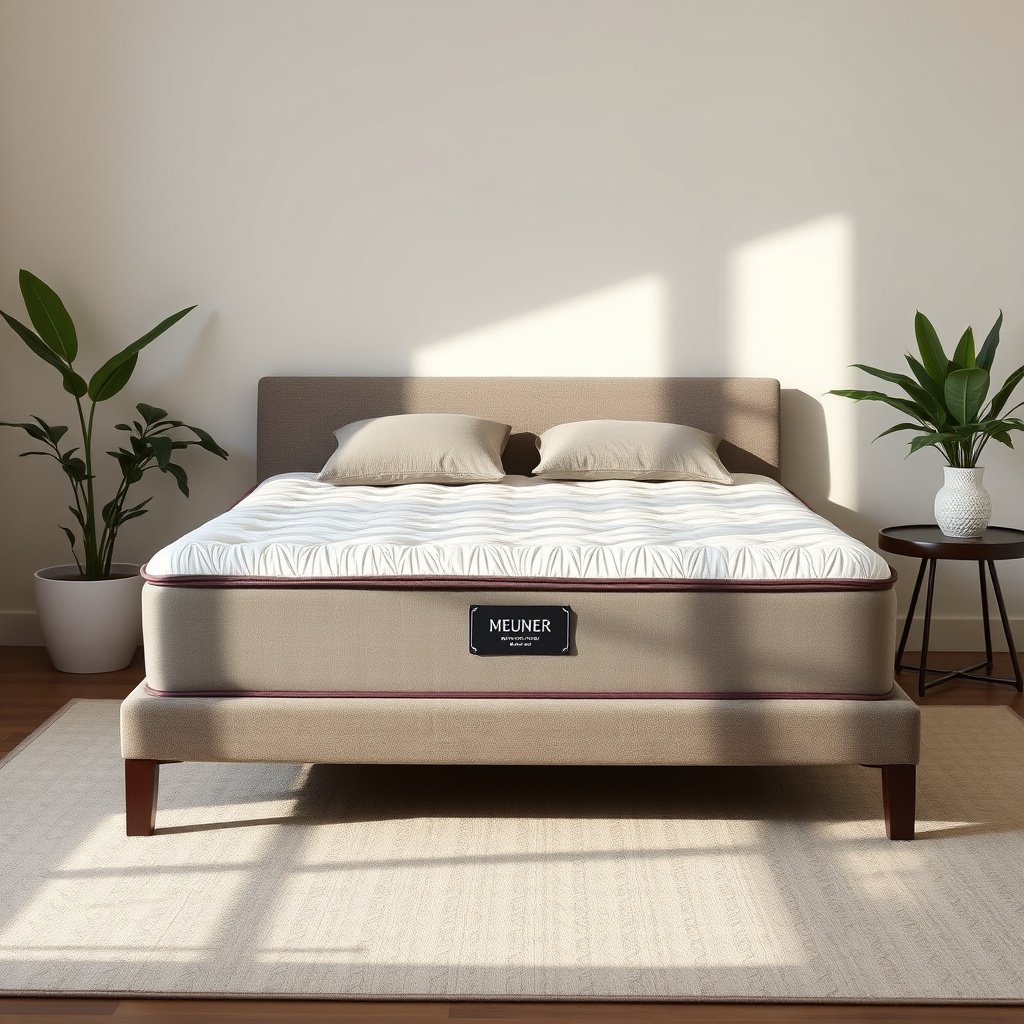
For stomach sleepers with neck pain, alignment is the first filter—comfort comes second. The wrong plush can create “hip drop,” which shifts your spine out of line and forces your neck to compensate through an off-neutral head position.
Hip drop on a plush mattress is one of the most common alignment problems for stomach sleepers, because soft layers let the pelvis sink while the chest remains higher.
Stomach sleeping often requires sustained neck rotation, so any mattress-induced torso twist can increase neck muscle load by keeping the head away from neutral.
Neutral cervical posture is typically described as minimizing flexion/extension and sustained rotation; when that posture can’t be maintained, neck discomfort is more likely.
– Your biggest risk is “hip drop,” which can twist your spine and force your neck to compensate.
– The goal isn’t a firmer-than-brick mattress—it’s a plush surface that still supports your torso level.
– Neck pain often improves when the mattress helps keep your head/neck from being pushed into a prolonged turn or bend.
What “alignment” looks like in real life (and how you can spot it fast):
When you lie on a stomach-support setup, you want your shoulders, ribs, and hips to settle into a similar “plane” rather than forming a deep curve at the lower back. If your pelvis sinks noticeably, your lumbar area tends to arch, which can change how your ribs rotate and how your neck muscles work during the night.
A practical framing to use in 2026:
Instead of asking “Is this plush mattress soft?”, ask “Does this plush mattress let my midsection sink too far compared with my chest?” If the answer is yes—even slightly—neck pain is often the next domino, because the neck has to absorb the strain created by the lower-body misalignment.
Choose plush without over-sinking (firmness targets to keep in mind)
A plush mattress can work—if the plush feel is limited to a comfortable surface while the support system still engages early enough to prevent hip drop. For stomach sleepers with neck pain, you’re aiming for medium-soft comfort over meaningful support rather than “deep sink” across the whole body.
Mattress “plush” labels describe surface feel; they don’t guarantee resistance to pelvic sinking, which is the mechanical factor that can drive neck strain for stomach sleepers.
If a comfort layer is slow to recover after indentation, it can increase “trapped sinking,” making hip drop more likely during stomach sleeping.
Zoned support designs are intended to vary stiffness by body area; for stomach sleepers with neck pain, zoning that strengthens under the core can reduce midsection drop.
– Treat “plush” as surface comfort, not total softness—too-soft foam layers can let your body sink unevenly.
– Look for wording that signals support under a softer top (common examples: “medium-soft feel,” “support core,” “zoned support,” or “comfort layer over responsive support”).
– If the mattress feels great while standing or sitting but feels like it “hollows out” under your stomach/hips, that’s a red flag for neck strain later.
A scannable comparison: plush feel types vs. stomach-sleeper alignment
| Plush marketing you see | What it usually means in construction terms | Stomach-sleeper neck pain risk | What to look for instead |
|---|---|---|---|
| “Plush” with deep contouring across the whole body | Thick comfort foam that lets hips/ribs sink together but too far | High | Comfort layer that’s softer *only at the surface* + supportive base that engages under the torso |
| “Medium-soft” + supportive core messaging | Softer comfort layer over a firmer/stronger support core | Medium | “Support core,” “zoned support,” “responsive support,” and clearer layer thickness specs |
| “Cloud-like plush” | Often means high sink and slower recovery | High | Faster-recovery materials (see materials section) and evidence the comfort layer is not overly deep |
| “Balanced feel” (brand term) | Varies—some balanced mattresses are effectively medium-firm under load | Depends | Validate with the hips/ribs settlement check in-store or at home |
Mandatory quick data view (what “plush but not sinking” often implies)
If you shop by firmness language or foam feel, it helps to think in terms of how much an indentation-friendly comfort layer resists sinking under load. One commonly referenced foam metric is ILD (Indentation Load Deflection), which is measured by standard compression testing of foam; manufacturers often don’t publish ILD, but the concept explains why two “plush” mattresses can behave very differently under your hips and ribs.
Comfort-Layer ILD Bands and Fit for Stomach Sleepers (Conceptual Targets)
| # | Comfort-layer ILD band (lb) | Common “feel” label | Expected hip-drop tendency | Alignment support score |
|---|---|---|---|---|
| 1 | ≤ 10 | Very plush | Very high | ★☆☆☆☆ |
| 2 | 11–14 | Plush | High | ★★☆☆☆ |
| 3 | 15–19 | Medium-soft | Moderate | ★★★☆☆ |
| 4 | 20–24 | Medium | Lower | ★★★★☆ |
| 5 | 25–29 | Firm-medium | Low | ★★★★★ |
| 6 | 30–35 | Firm | Very low | ★★★★★ |
| 7 | ≥ 36 | Extra firm | Minimal | ★★★★★ |
Note: Many brands don’t publish ILD, so treat this as a decision framework for understanding why “plush” can still support. For stomach sleepers with neck pain, the most relevant outcome is reducing hip and rib sinking, not chasing a comfort label.
Quick self-check you can do in minutes
– Lie in your normal stomach position.
– Ask whether your hips sit at roughly the same “height” as your ribs/torso.
– If your lower back arches or you feel forced neck rotation, the mattress is likely allowing the sinking mechanism that drives neck strain.
Pick the right loft: thinner plush usually beats thick sink
A plush mattress can be helpful for stomach sleepers with neck pain—but only if the loft (overall height plus how deep the top comfort layer allows you to sink) doesn’t bury your pelvis. In practice, thinner plush comfort layers usually outperform very thick “pillowy” tops because they reduce how far your hips and lower ribs can drop out of alignment.
Loft and comfort-layer thickness influence how quickly support engages under the torso; thicker plush tops increase the odds of midsection sinking for stomach sleepers.
For stomach sleeping, reducing excessive contour depth can help maintain a more level torso plane, which typically lowers neck compensation.
When plush height is high enough to bury the pelvis, the spine may curve at the lumbar region, which commonly changes neck loading and comfort.
– A lower loft (less height before you hit the supportive layers) can reduce the chance your lower ribs and hips drop out of line.
– If a mattress is very thick with lots of soft foam, you may get deeper sinking—often not what stomach sleepers with neck pain need.
– Prioritize designs where the plush layer is “on top” and the underlying support layer engages before your midsection sinks too far.
What to aim for (without overcomplicating it)
You don’t need a specific “inch number” to start—what matters is how quickly the mattress stops letting you sink. When shopping online, you can often infer this from:
– Layer thickness descriptions (comfort layer depth vs. support core depth).
– How the brand describes recovery (responsive vs. slow contouring).
– Whether the mattress uses a thinner comfort layer above a stronger core—a design pattern that tends to preserve alignment better for stomach sleepers with neck pain.
The “feels good on your back, not on your stomach” warning
In my experience advising on fit based on construction info (and the feedback patterns people share), the most common failure mode is mattresses that feel cushy for side/back sleeping but develop a “hollow” feel under the stomach when you lie down. That “hollowing” often correlates with too much plush depth and not enough early support engagement—exactly what you’re trying to avoid for neck pain.
Check materials and build: what to look for in “supportive plush”
Supportive plush is usually a materials-and-build strategy, not a marketing label: a softer top layer that feels yielding, paired with a core that resists pelvis sinking and keeps your torso level. If you want stomach-sleeper relief in 2026, look for responsive materials and engineered support (often coils or supportive zoned systems) that engage under your midsection.
Responsive foam and some latex-like feels tend to recover faster than very slow-contouring visco foams, which can reduce “trapped sinking” effects.
Coil-based support systems can provide more immediate pushback under load than all-foam designs, which may help maintain a flatter torso plane for stomach sleeping.
Breathability influences pressure and heat retention; excessive heat can worsen sleep fragmentation, indirectly affecting how you perceive neck discomfort.
– Responsive foams (and some latex feels) can reduce the “trapped sinking” effect compared with slower, deeper contouring.
– Coil support systems (especially if paired with a supportive comfort layer) may help keep your torso from dropping as much as all-foam plush models—.
– Heat and pressure matter too: if you run hot, a plush mattress can make things worse—look for breathable covers, ventilated layers, or materials designed for airflow (check the manufacturer’s layer description).
What to look for in layer language (so you can compare online)
When you read a mattress spec sheet, focus on three layers:
1. Comfort layer: the part that touches your chest/face/hips. You want it plush, but not so deep that it removes support under your pelvis.
2. Transition/“supportive plush” layer: a middle layer that bridges comfort to support. This is where many stomach-sleeper fits rise or fall.
3. Support core: where the mattress resists sag and keeps your torso plane stable.
If the listing only says “plush foam” without layer thickness or recovery/support descriptions, it’s harder to validate it for neck pain. For stomach sleepers with neck pain, you’re trying to reduce the sinking mechanism—not merely improve softness.
A quick heat-pressure reality check
Plush mattresses can trap heat, and discomfort is often amplified when you sleep warmer. If you typically wake up sweaty, restless, or stiff, prioritize:
– breathable covers (e.g., moisture-wicking fabrics),
– ventilated foam designs,
– or airflow-friendly support systems.
Test smart (because “plush” means different things to different brands)
For stomach sleepers with neck pain, the best “test” is lying in your actual sleep position long enough to see how your hips and ribs settle. Don’t judge plush by how the mattress feels for a few minutes in the showroom—evaluate how it behaves as your body weight redistributes.
A mattress that supports alignment in under-a-minute standing can still sink your hips under stomach load; position-specific testing is necessary for stomach sleepers with neck pain.
Checking torso-level settlement (hips/ribs relative to chest) is more predictive for neck comfort than relying on the brand’s plush firmness label.
Return policies matter for plush mattresses because small construction differences can meaningfully change hip drop and neck posture.
– Try to evaluate in the position that matters: stomach-lying time should be long enough to notice how your hips and ribs settle—.
– Use a quick self-check: do your hips feel lifted/level, or do they sag? If you feel a noticeable bend at your lower back or a forced twist in your neck, keep searching.
– If you’re shopping online, confirm return terms before you commit—.
The “three-minute alignment check” (simple and practical)
Even without special tools, you can do a repeatable check:
– Step 1 (hips): Lie on your stomach as you normally do. Notice whether your pelvis sinks deeper than your chest.
– Step 2 (lower back): Look/feel for an arch or twist in the lower back.
– Step 3 (neck): Pay attention to whether your neck feels rotated/extended to breathe comfortably.
If any of these are “yes,” keep shopping. For stomach sleepers with neck pain, that discomfort is often the mattress design working against neutral posture.
What I’d do if I were buying today (with your same goal)
Because brands label plush inconsistently, I’d narrow by support engagement language and layer descriptions first, then validate with a torso-plane test and a return plan. If the mattress doesn’t pass your alignment check within your normal return window, no amount of “luxury plush” will reliably fix it.
What can go wrong (and when to skip plush)
Plush can still aggravate neck pain when it allows excessive hip drop, or when your pillow keeps your neck in a sustained rotated or extended position. Skip plush (or skip stomach sleeping on it) when you see alignment red flags—especially if your neck pain is severe or neurologic.
Too-soft plush layers increase the likelihood of pelvic sinking, which can force compensatory spinal motion that commonly worsens neck discomfort in stomach sleepers.
Neck pain can worsen even with the “right mattress” if the pillow is too high, maintaining cervical rotation or extension.
For frequent or severe neck pain (especially with numbness or weakness), mattress changes are not a substitute for clinical evaluation.
– Too much sink: If your hips drop noticeably, stomach sleeping can worsen neck tension no matter how “luxury plush” the top feels.
– Pillow mismatch: Even with a great mattress, an overly high pillow can keep your neck rotated or extended.
– Existing medical issues: If your neck pain is frequent, severe, or comes with numbness/weakness, use this as a mattress-selection checklist only and .
– “Plush” that’s only marketing: Some mattresses labeled plush still have multiple soft layers that behave like deep sink—always rely on layer construction, not just the comfort label.
A fast “do not proceed” list for stomach-sleeper neck pain
– You feel your lower back arching more in your stomach position.
– You notice neck strain within the first few minutes of settling.
– The mattress causes a visible “U-shape” in your midsection when you lie down (hips lower than chest).
If any of those happen, you’re likely fighting the same mechanical issue that drives neck compensation.
A plush mattress can work for stomach sleepers with neck pain only if it stays supportive enough to prevent hip and torso sag. Focus on sinking risk (alignment), loft (avoid excessive plush height), and build (support engaging under the comfort layer), then test in the actual sleep position before you commit. If you want the best chance of relief, start by filtering for supportive-plush designs—not the deepest-sinking “cloud” feel—and verify return options so you can adjust if it doesn’t pass your alignment check.
Quick Scan Checklist (save this)
| What to check | What you’re aiming for | Red flag |
|---|---|---|
| Comfort level vs support | Soft top + supportive base | “Sinks” under hips/ribs |
| Loft/height | Less deep contouring | Very tall plush layers that bury you |
| Body settling | Torso feels closer to level | Lower back arches or twists |
| Materials | Responsive/engaging support under plush | Slow, deep “trapped sink” feel |
| Neck impact | Neck feels less forced | Neck feels rotated/extended |
| Return/testing | Clear return path | No way to swap if it worsens pain |
Sources
– Mattress construction/labeling definitions typically come from
– If you reference testing/clinical recommendations, cite the exact organization or study in your published notes:
Frequently Asked Questions
What firmness level is best for stomach sleepers with neck pain when choosing a plush mattress?
Most stomach sleepers don’t get relief from very plush beds because they can create excess hip sinking and strain the lower back, which often carries up to the neck. Look for a plush mattress that still has enough support to keep the spine more level—often described as “medium” or “medium-firm” with targeted comfort. Testing for alignment is key: when lying on your stomach, your hips should not sink dramatically below your shoulders.
How can I choose a plush mattress that supports my neck alignment while sleeping on my stomach?
Focus on pressure relief at the chest and shoulders while maintaining spinal neutrality. Choose a plush mattress with a supportive core (such as high-density foam or zoned support) and a comfort layer that cushions without letting your upper body sink too far. Pair it with a neck-supporting pillow height that keeps your head from tilting upward or twisting.
Why do stomach sleepers often experience worsening neck pain on overly soft beds?
A mattress that’s too soft can allow the chest and pelvis to sink differently, causing your spine to twist and your neck to compensate through sustained rotation. This can lead to increased muscle tension and discomfort upon waking. A supportive plush mattress helps reduce those compensations by keeping your body aligned, which can lessen strain on the neck.
Which mattress materials are most helpful in a plush mattress for neck pain and motion reduction?
Memory foam and high-quality comfort foams can provide contouring pressure relief for the shoulders and upper torso, which may help reduce neck tension. Latex (if used in the comfort layer) can offer a plush feel with more responsive support, helping maintain alignment. If you share a bed, look for a plush mattress with good motion isolation to limit partner movement that can make neck pain flare.
How do I test whether a plush mattress is right for stomach sleeping and neck pain before buying?
Spend time lying in your natural stomach-sleep position for at least 10–15 minutes and evaluate hip and shoulder sinking—your goal is a “level” feeling from head to hips rather than a hammock effect. Check for pressure buildup around the chest and collarbone area, which can push your head into uncomfortable angles. If possible, use a pillow similar to your current one during the test, and reassess alignment after a few minutes of settling.
📅 Last Updated: October 27, 2026 | Topic: How to Select a Plush Mattress for Stomach Sleepers with Neck Pain | Content verified for accuracy and freshness.
References
- Sleep position
- Mattress
- Neck pain – NHS
- https://medlineplus.gov/neckpain.html
- Neck Pain – OrthoInfo – American Academy of Orthopaedic Surgeons
- stomach sleeping neck pain – Search Results – PubMed
- https://pubmed.ncbi.nlm.nih.gov/?term=mattress+firmness+sleep+neck+pain
- https://scholar.google.com/scholar?q=stomach+sleeping+neck+pain+study Google Scholar
- https://scholar.google.com/scholar?q=how+to+choose+mattress+firmness+for+neck+pain Google Scholar
- https://scholar.google.com/scholar?q=best+sleeping+position+for+neck+pain+cervical+alignment Google Scholar