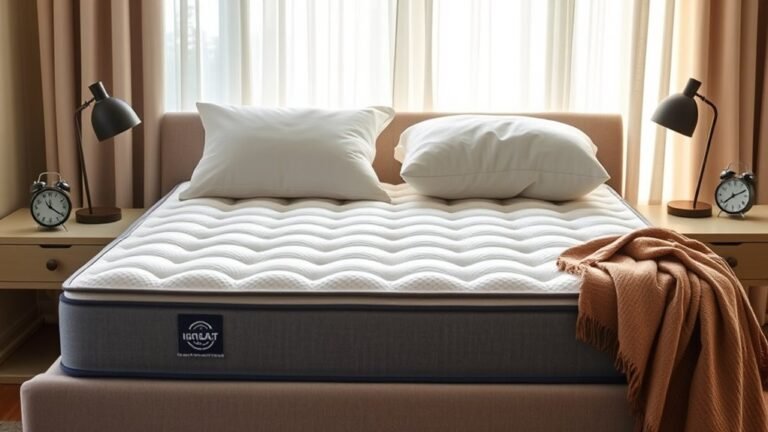
How to Choose a Hybrid Mattress for Side Sleepers: Key Factors
You shift onto your side at night, and you can feel your shoulder sinking while your hips hover just a bit too high—exactly the imbalance a hybrid mattress should solve. You can choose the right one in about 15–20 minutes by matching comfort layers, support feel, and pressure relief to your body and sleep habits. You will need to pay attention to mattress height, firmness range, coil type, and how the top layer handles your shoulder and hip, then test for alignment before you commit.



A hybrid mattress for side sleepers should relieve pressure at the shoulder and hip while still supporting your mid-body so your spine stays aligned through the night. The best choice comes down to comfort-layer contouring (so you don’t feel braced) plus responsive, independent coil support (so you don’t sink too far or trap excess heat).
If you’re comparing hybrid mattresses (foam/comfort layers over pocket springs or coil systems) because you wake with shoulder or hip pain, feel pressure buildup, or struggle to find a bed that stays supportive without feeling overly firm, this guide is for you.
Start with the feel: pressure relief vs. sinking

Side sleepers usually need a comfort layer that cushions the shoulder and hip while preventing deep “sink” that bends your lumbar spine. In practice, that means choosing a hybrid with contouring where you need it—shoulders and hips—paired with supportive lift through the core.
– Look for a comfort layer thickness that cushions the shoulder and hip so you don’t feel “braced” against the mattress. A comfort layer that’s too thin may fail to distribute weight; too thick may allow your pelvis to drop, changing your spinal curve.
– Aim for a balance: side sleepers generally want “contoured support,” not a mattress that lets the hips drop below the torso. If your hips fall lower than your ribs, many people feel back tightness or numbness the next morning.
– If you’re between firmness levels, lean toward the option designed for more contouring (often slightly softer, with support still provided by coils). The coil system’s job is to hold your body up; the comfort layer’s job is to reduce focal pressure.
A useful way to think about this is through the lens of pressure injury prevention research. While a mattress isn’t a clinical medical device for everyone, the same pressure mechanics apply.
Pressure-Relief Benchmarks for Mattress Support Decisions (Clinical Guidance)
| # | Clinical pressure/safety benchmark | Numeric value / action | Why it matters for a hybrid mattress for side sleepers | Impact (practical) |
|---|---|---|---|---|
| 1 | Capillary closing pressure (CPP) | ≈ 32 mmHg | Comfort layers should reduce sustained focal pressure under shoulder/hip contact | ★★★★☆ |
| 2 | Repositioning interval (bed-based prevention) | At least every 2 hours | A mattress can’t replace movement—if pressure stays high, you feel it by morning | ★★★★☆ |
| 3 | Repositioning interval (wheelchair seating) | About every 15 minutes | Hybrid mattresses that keep you stable still help reduce how long contact points bear maximum load | ★★★☆☆ |
| 4 | Head-of-bed elevation guidance to reduce shear | Avoid sustained elevation > 30° | Side sleepers benefit from minimizing slide-related strain—construction should reduce “bottoming out” and shifting | ★★★☆☆ |
| 5 | Shear and friction risk | Recognized as increasing risk | If your hybrid mattress allows excessive “grab,” pressure can rise during micro-movements | ★★★☆☆ |
| 6 | Moisture management (skin integrity) | Moisture increases breakdown risk | Breathable hybrid designs can help reduce heat/moisture that aggravates night discomfort | ★★☆☆☆ |
| 7 | General prevention premise | Reduce sustained pressure and improve redistribution | This is the core “feel” you’re buying with a hybrid mattress for side sleepers: cushion + responsive support | ★★★★☆ |
For anchoring: According to the National Pressure Injury Advisory Panel clinical guidance, capillary closing pressure is about 32 mmHg (2019). That’s not a mattress target you can measure at home, but it explains why “too much sink” or “too little cushion” can feel so different in the shoulder/hip area. Also, the same guidance emphasizes repositioning strategies for reducing sustained pressure—at least every 2 hours in bed-based prevention contexts (2019).
Check coil support and motion control
A hybrid mattress for side sleepers should use independent coils to stabilize your body while letting you move without feeling stuck. Coil support is what prevents a comfort layer from turning into a hammock.
– Prioritize pocketed coils (or other independent coil designs) for better pressure distribution and easier repositioning. Pocketed coils are designed to move more independently than interconnected springs, which can reduce the “all-over wobble” you feel when you shift.
– Stronger edge support can matter if you sit on the edge or frequently shift positions during the night. Better edge structure often means the mattress doesn’t collapse when you’re partially on/off the sleep surface.
– For couples or shared sleeping, choose features that minimize motion transfer (the most important factor depends on your sensitivity to partner movement). If your partner changes positions and you wake up, the issue is often spring-to-foam coupling—materials and coil independence both matter.
If you’re deciding between two hybrid builds and one has noticeably more motion control, it’s usually worth prioritizing that feature—sleep fragmentation can amplify pain perception even when pressure relief feels “adequate.”
For an at-a-glance comparison, here’s a simple contrast many shoppers find useful:
| Feature choice | What you’re likely to feel | Who it tends to fit |
|---|---|---|
| Pocketed/independent coils | More targeted support under hips and less “platform bounce” | Side sleepers who share a bed |
| Interconnected coil feel | Slightly more motion transfer, more uniform spring response | Solo sleepers who prefer a more “lively” response |
| Stronger edge reinforcement | Less sink when you’re near the perimeter | People who frequently sit on the bed |
Choose the right top layers for side-sleeping alignment
A hybrid mattress for side sleepers works best when the comfort layer matches how you want to feel pressure-relief: contouring, buoyancy, or a mix. On a side sleeper, shoulder and hip contact happen at different moments and pressures, so material “feel” is as important as firmness ratings.
– Comfort materials (memory foam, latex, or other foams) can feel different on the shoulder/hip—select based on whether you need more conforming or more buoyancy. If you feel “pressure buildup,” you may need more conforming at the shoulder/upper hip. If you feel “stuck” or sink too far, you may need more buoyancy.
– Consider whether you prefer a “slow sink” feel (often memory foam) or a “more responsive” feel (often latex/other foams). A responsive top can make repositioning easier during the night, which can indirectly support spinal alignment.
– If temperature regulation is a concern, prioritize designs that promote airflow through the mattress (coil systems and breathable top constructions are common paths, but verify with the brand/specs). Heat retention often shows up as tossing and turning, which changes pressure distribution.
One practical note: marketing terms like “cooling gel” aren’t the same thing as meaningful temperature control. Look for construction details that relate to airflow and breathability—such as ventilated foam, cover fabric breathability, and whether the brand clearly explains what they tested.
If you’re shopping in person, take time to test shoulder and hip contact separately. That small routine helps you distinguish “pressure relief” from “unwanted sink,” which are often confused.
Match firmness to your body and sleeping habits
A hybrid mattress for side sleepers should keep your hips supported enough to maintain spinal alignment, not just “feel soft.” Firmness selection works best when you match your body mass and your most common pain point.
– Heavier sleepers typically need more support to prevent hips from sinking; lighter sleepers often need less firmness to avoid pressure points. The key isn’t the number alone—it’s how the comfort layer interacts with your weight and body shape.
– If you switch between side and back, choose a firmness that keeps spinal alignment in both positions (a single setting rarely fits every body perfectly). Many side/back sleepers do best with medium options that allow slight contouring without collapsing through the midsection.
– Use your worst pain point as the guide: shoulder pressure usually points to comfort-layer needs, while lumbar alignment issues can signal insufficient overall support. If your shoulder hurts but your back feels okay, focus on top-layer contouring. If your lower back aches, the comfort layer may be too yielding for your hips.
A helpful measurement concept (without needing special tools): when you lie on your side, your ribcage should feel supported, and your pelvis should feel “held” rather than “dropped.” If you notice your stomach tilting forward or your lower back arching more than usual, your hybrid mattress may be letting your hips travel too far.
Also remember that sleep length affects how you perceive soreness. According to the American Academy of Sleep Medicine guidance, adults should aim for at least 7 hours of sleep regularly (2015). Even the best hybrid mattress may not fully offset poor sleep duration if you’re already chronically under-sleeping.
What can go wrong (and how to avoid it)
A hybrid mattress for side sleepers can fail if the comfort/support balance is wrong or if the rest of your setup (pillows, foundation) undermines alignment. Most “this mattress is awful” returns come from predictable mismatches rather than random defects.
– Too soft comfort + weak support: hips sink, which can worsen back pain—verify that the mattress maintains support through the core/coil area. If your lower back feels worse within days, don’t assume it’s “just getting used to it”; alignment problems tend to get clearer, not better.
– Too firm at the top: side sleepers may get pressure buildup at the shoulder or hip even if the center feels supported. If one spot hurts quickly (often the shoulder), the comfort layer is likely not distributing load enough.
– Ignoring motion/heat tradeoffs: some mattresses feel great but transfer too much motion or retain warmth—check material and construction details before deciding. A hybrid that sleeps cool for one person can feel warm to another depending on cover fabric, foam blend, and room temperature.
– Trying to “fix it” with the wrong pillow/position: a mattress can’t fully compensate for an unsuitable pillow height; neck alignment affects overall comfort. Side sleeping often requires a pillow that fills the gap between shoulder and neck so the head doesn’t tilt.
If you’re prone to persistent pain, be cautious about relying only on firmness experiments. Spine or nerve symptoms may have causes that a mattress can’t solve, and a clinician may recommend assessment before you keep swapping bedding.
Verdict / tip: a practical way to choose without overthinking
A hybrid mattress for side sleepers is often a strong fit because coils can add supportive lift while comfort layers relieve pressure. That said, hybrids aren’t ideal for everyone: if you strongly prefer very plush all-foam contouring, or if you’re very sensitive to coil feel, you may want to compare with an all-foam option. If you’re dealing with persistent pain, start by testing firmness/support balance and consider exchanging within the brand’s trial window—confirm warranty and return terms first (details vary by manufacturer).
Quick checklist (save this)
– Comfort layer: does it cushion shoulder/hip without letting hips drop?
– Coil system: does it provide responsive support and easy repositioning?
– Temperature feel: does airflow/breathability look designed for cooler sleep?
– Firmness: does it match your weight range and your most painful pressure point?
– Motion transfer: is partner movement reduced enough for your tolerance?
– Trial/warranty: can you exchange if the first comfort/support balance isn’t right?
Sources
– National Pressure Injury Advisory Panel (NPIAP). Clinical Practice Guideline for the Prevention and Treatment of Pressure Ulcers/Injuries (2019 update).
– American Academy of Sleep Medicine. Sleep Duration Recommendations (updated/consensus guidance published 2015).
If you share the hybrid mattress models you’re comparing (memory foam vs latex comfort layer, coil type, and your approximate weight), I can help you turn these key factors into a tighter decision flow for your body and sleeping habits.
Frequently Asked Questions
What firmness level is best for a hybrid mattress for side sleepers?
Side sleepers usually do best with medium to medium-firm hybrid mattresses because they balance pressure relief with spinal support. If your hips and shoulders feel “stuck” or you wake up with soreness, choose a slightly softer comfort layer. If you’re a heavier side sleeper or tend to sleep with your legs curled, a medium-firm option can help prevent bottoming out and keep your hips aligned.
How do I choose the right comfort layer for a hybrid mattress when I sleep on my side?
Focus on materials that cushion your shoulders and hips without allowing your torso to sink too far. Look for hybrid designs that combine responsive pocketed coils with comfort layers like memory foam, gel foam, latex, or adaptive foam to reduce pressure points. If you run hot, prioritize cooling features such as gel-infused foam, breathable covers, or latex for more airflow.
Why are pocketed coils important for side sleepers on a hybrid mattress?
Pocketed coil systems move independently, which improves support and helps your weight distribution stay even when you lie on your side. This reduces motion transfer—useful if you share the bed—and provides targeted support around the hips while still allowing the mattress to contour to shoulders. When paired with a quality comfort layer, pocketed coils can help maintain spinal alignment and reduce pressure buildup.
Which hybrid mattress features help side sleepers avoid back and hip pain?
Prioritize a mattress that delivers both pressure relief and alignment, often achieved with a supportive coil base plus a responsive top layer. Look for a zoned or reinforced base (stronger in the lumbar/hip area) to prevent sagging where side sleepers need stability most. A breathable, supportive edge can also help you stay properly positioned through the night.
Best hybrid mattress type for side sleepers: memory foam, latex, or gel foam?
Memory foam is great for strong pressure relief and contouring, making it a solid choice if shoulder pain is your main issue. Latex tends to be more responsive and breathable, which can benefit side sleepers who want less “sink” and better temperature regulation. Gel foam is often used to enhance cooling and comfort, but the overall support system (especially the coil core) still matters most for spinal alignment.
📅 Last Updated: November 02, 2026 | Topic: How to Choose a Hybrid Mattress for Side Sleepers | Content verified for accuracy and freshness.
References
- https://www.mayoclinic.org/healthy-lifestyle/adult-health/in-depth/mattress/art-20045514
- https://en.wikipedia.org/wiki/Side_sleeping
- Memory foam
- Mattress
- mattress firmness pressure distribution – Search Results – PubMed
- side sleeping pressure distribution mattress – Search Results – PubMed
- pressure injury prevention support surface mattress – Search Results – PubMed
- https://scholar.google.com/scholar?q=how+to+choose+a+hybrid+mattress+for+side+sleepers Google Scholar
- https://scholar.google.com/scholar?q=mattress+firmness+pressure+distribution+side+sleeping Google Scholar
- https://scholar.google.com/scholar?q=hybrid+mattress+innerspring+foam+pressure+relief+study Google Scholar