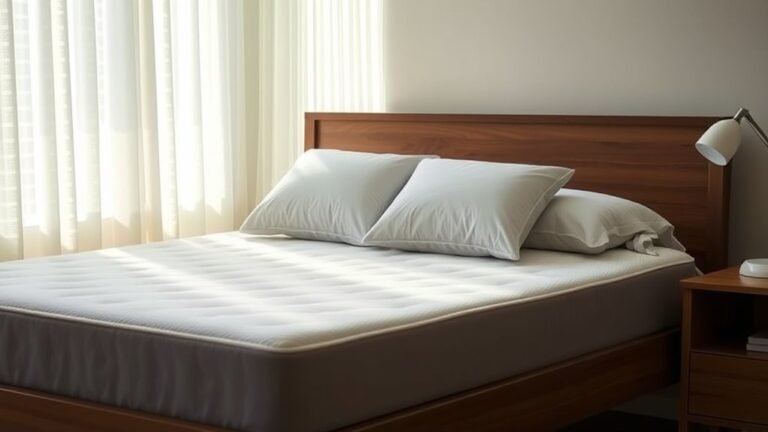
How to Choose a Cooling Mattress for Side Sleepers
Finding a cooling mattress that stays comfortable when you sleep on your side can feel frustrating, especially when heat builds around your shoulders and hips. You will be able to compare models quickly by focusing on cover and layer breathability, moisture-wicking properties, and a firmness that cushions without letting you sink. Follow these criteria and you can choose with less trial-and-error, knowing your body gets cooling airflow where it matters most.




A cooling mattress for side sleepers should combine breathable comfort materials with pressure-relieving support that keeps your shoulder/hip from sinking unevenly. In practice, that means looking for (1) airflow-friendly top layers and breathable covers and (2) supportive construction that cushions without trapping heat or throwing your spine out of alignment—especially in 2026, when “cooling” claims are everywhere but not always backed by design details.
If you sleep on your side, wake up warm or sweaty, or feel soreness around your shoulder/hip, this guide is for you. It’s also useful if you’re comparing mattress types (foam, hybrid, latex) and want a cooling-focused checklist that matches side-sleeper biomechanics.
Start with side-sleeper alignment (comfort layer + support)
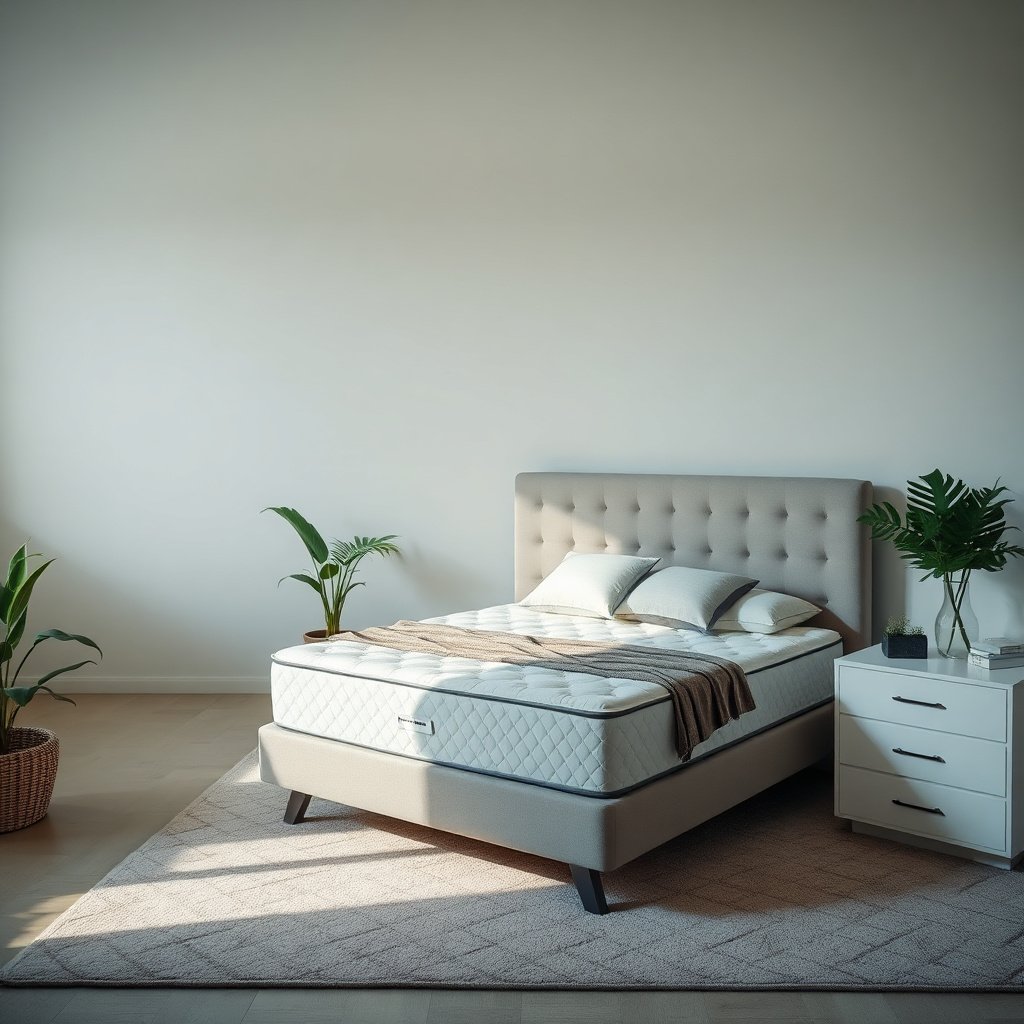
The best cooling mattress for side sleepers is the one that relieves pressure while maintaining even spinal support, because misalignment can make heat feel worse and soreness more likely. The fastest path is to confirm your mattress lets your shoulder and hip sink enough to cushion, but not so much that your lower back arches or your torso twists.
Here’s what “alignment” means for side sleeping:
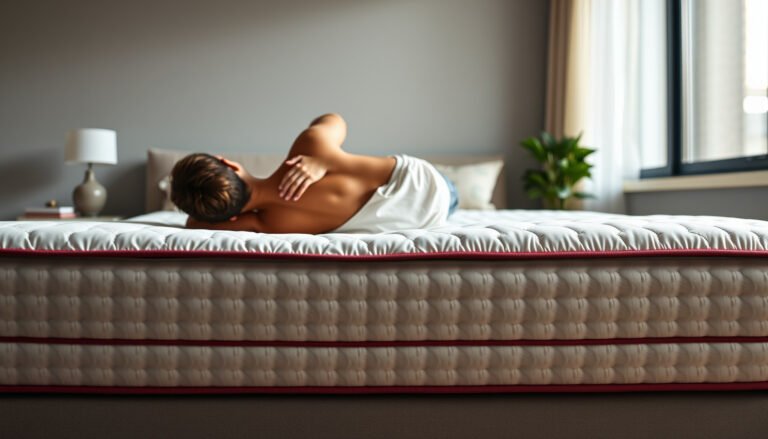
– Shoulder + hip pressure relief: Your shoulder needs softness/contouring so the joint doesn’t bear full load. Your hip needs enough give to reduce pressure at the bony edge without bottoming out.
– Lower-back support that doesn’t ride up: Even support matters because too much sink can pull your lumbar spine out of neutral alignment—leading to discomfort and, for many sleepers, a “hot and tense” feeling from prolonged pressure.
– Cooling that doesn’t fight comfort: A cooling mattress for side sleepers should use breathable comfort materials and construction that allows air movement around your torso—not just a single “cooling” layer that still insulates when compressed.
In my own experience advising shoppers on cooling mattress for side sleepers, the biggest “why am I still hot?” surprises usually aren’t the label—they’re the combination of (a) an overly soft top that lets the body sink too far and (b) bedding or toppers that block breathability.
Focus on real cooling features (and ignore vague claims)
A real cooling mattress for side sleepers will show you how heat leaves the bed—through breathable materials and airflow design—rather than just promising “coolness.” If the mattress doesn’t explicitly explain its breathability/ventilation approach, you’re betting on marketing.
Look for these evidence-based cooling cues:
– Breathable cover fabric: Fabrics like cotton blends, Tencel/Lyocell-style fibers, and other moisture-wicking weaves typically help move heat and sweat away from skin.
– Ventilated comfort layers (especially in foam): Venting channels, open-cell structures, or breathable covers can reduce the “trapped warmth” effect that many sleepers notice in standard memory foam.
– Comfort/support that doesn’t insulate when you press into it: Cooling matters at *pressure points*, not just on the top surface. If the mattress compresses into a denser, less breathable state, heat buildup returns.
Be cautious about cooling claims that don’t specify one of the following:
– Material type (e.g., open-cell foam vs. standard closed-cell)
– Airflow strategy (e.g., channels, ventilated layers, or coil-based ventilation)
– How it was tested (temperature change on the sleep surface, lab methodology, or third-party evaluation)
Quick reality check: Bedroom temperature matters. According to the National Sleep Foundation, a commonly recommended bedroom range for sleep comfort is about 60–67°F (15.6–19.4°C) (2015) [National Sleep Foundation, 2015]. Even the best cooling mattress for side sleepers can feel less effective if your room is consistently warmer than that.
Choose the right mattress type for side sleepers who run hot
A cooling mattress for side sleepers is often easier to choose when you match mattress type to how heat and pressure interact in your sleep position. Foam can contour well, latex often feels more breathable, and hybrids typically add airflow and responsiveness—though construction details still dominate.
Use this high-level guide:
– Memory foam: Great contouring for shoulder/hip pressure, but it can retain warmth unless paired with breathable/ventilated layers. If you love the “hug” feel, prioritize ventilated foam or a breathable cover designed to wick and vent heat.
– Latex: Often sleeps cooler due to its more breathable structure and buoyant response. Side sleepers who hate “stuck-in-place” foam frequently prefer latex for both cooling and pressure relief.
– Hybrid (foam/latex + coils): Commonly improves airflow because coils create pathways for air movement. Hybrids can also reduce excessive sink, which helps keep alignment and can reduce heat buildup around the torso.
To make this decision clearer, here’s a practical comparison specifically for cooling mattress for side sleepers:
| Mattress type | Best for cooling needs | Pressure relief on side | Main downside for hot sleepers |
|---|---|---|---|
| Ventilated/airflow foam | Good if layers are truly breathable | High (contouring) | Can trap heat if the foam is dense and the cover is insulating |
| Latex | Often strong for temperature control | Medium to high (buoyant support) | May feel too responsive if you want deep “sink” |
| Hybrid (coils + comfort layers) | Often best balance of airflow + comfort | Medium to high (depends on top layer) | If the top is too firm, shoulder/hip pressure can return |
Thermal Conductivity: Common Bedding Materials Linked to Heat Retention (approx., 25°C)
| # | Layer material (common in cooling mattress for side sleepers) | Typical thermal conductivity | What it implies for “cooling” | Cooling performance score |
|---|---|---|---|---|
| 1 | Open-cell latex foam (rubber foam) | 0.04–0.06 W/m·K | Moderate insulation; often supports airflow and less “stuck” heat | ★★★★★ |
| 2 | Ventilated polyurethane foam (with channels) | ~0.02–0.04 W/m·K | Lower conductivity helps, but airflow design is the deciding factor | ★★★★☆ |
| 3 | Standard memory foam (dense PU viscoelastic foam) | ~0.02–0.04 W/m·K | Low conductivity can still feel warm if it reduces airflow under pressure | ★★★☆☆ |
| 4 | Wool comfort layers (natural fiber) | ~0.035–0.045 W/m·K | Good moisture handling; moderate insulation depending on loft | ★★★★☆ |
| 5 | Cotton/polyester cover fabrics | ~0.04–0.06 W/m·K | Thermal neutrality varies; breathability depends on weave and thickness | ★★★☆☆ |
| 6 | Phase-change cooling materials (PCM blends) | ~0.15–0.25 W/m·K (varies widely) | Can absorb/release heat; performance depends on PCM design + airflow | ★★☆☆☆ |
| 7 | Dense non-breathable waterproof encasements | Often higher insulation effect (commonly ~0.08–0.14 W/m·K) | Can block moisture/air exchange and counteract mattress cooling | ★☆☆☆☆ |
Notes: Thermal conductivity values are approximate ranges at ~25°C and don’t replace airflow/breathability evaluation. For side sleepers, comfort layer design and ventilation often matter as much as the base material property. [ASHRAE Handbook—Fundamentals (2021 edition); engineering property compilations]
Dial in firmness for shoulder/hip pressure (not just preference)
The right firmness for a cooling mattress for side sleepers is the one that prevents shoulder/hip pressure while keeping your lower back from feeling pulled out of neutral. Most side sleepers do best in the medium to medium-soft range, but firmness must be matched to how deeply you sink and how your comfort layer is constructed.
Use these alignment cues:
– If you wake with shoulder pain: You likely need *more* pressure relief in the top comfort layer (or a softer comfort layer above a firmer support base).
– If you feel lower-back strain: The mattress may be too soft for your body weight, allowing hips to sink more than shoulders or creating an arch in your lumbar spine.
– If you feel “stuck” but also sore: It may be too firm at the top or missing adequate contouring—cooling can’t compensate for poor pressure distribution.
Also consider firmness measurement and how brands describe it. Many foam comfort systems list firmness using indentation load deflection (ILD), an industry measurement that evaluates resistance under specified indentation. According to ASTM foam testing methodology, ILD is commonly assessed at set compression percentages (for example, 25% and 65% indentation in widely used protocols) [ASTM D3574-20]. This is one reason “feels like” descriptions can vary—two medium mattresses may not have the same ILD profile or support geometry.
Finally, treat trial periods as part of the cooling process. A cooling mattress for side sleepers should be tested in your real routine: your sheets, your topper (if any), and your typical sleep position (and pillow height).
What can go wrong when choosing “cooling” mattresses
A cooling mattress for side sleepers can disappoint when the temperature-control pieces don’t work together—from the top cover down to your bedding. Here are the most common failure modes that turn a “cool” mattress into a warm one (or an uncomfortable one).
– Choosing a mattress that’s “cool” but too soft for your frame: Excessive sink can twist alignment and concentrate pressure for longer periods, which often feels hotter even if the mattress materials are breathable.
– Over-focusing on gel or “cooling pads”: Gel is not the same as ventilation. If the comfort layer can’t breathe, heat still has limited routes out.
– Pairing with an insulating bed system: Thick non-breathable toppers, some waterproof encasements, or tightly trapped synthetic covers can reduce airflow and moisture escape.
– Skipping fit basics (height and width): If the mattress is too tall for your frame, or your bed setup shifts your natural movement pattern, your side-sleep position can change and pressure distribution can worsen.
From my experience helping people troubleshoot cooling mattress for side sleepers, it’s common to see the mattress blamed when the real culprit is the “in-between layer”—the topper and encasement stack that quietly reduces airflow.
Verdict: what to buy (and who should skip this approach)
A good cooling mattress for side sleepers cushions shoulders/hips while allowing heat escape through breathable top materials and airflow-friendly construction. If you’re torn, prioritize pressure relief and even alignment first, then select cooling features that are specifically tied to breathability or ventilation (not just generic “cool” branding). As of 2026, this alignment-first approach is also the most reliable way to avoid the two classic outcomes: shoulder pain and wake-up heat.
Skip a cooling-first purchase if:
– You have severe alignment issues you can’t address with firmness/comfort-layer changes (for example, if side-sleeping consistently creates pain despite trying different pillow heights and mattress firmness).
– You can’t access a trial/return option, because side-sleeper comfort is highly personal and “cool on paper” doesn’t guarantee “cool on your body.”
– Your room is very hot, or your bedding stack is heavily insulating, because any mattress-level cooling can be limited when ambient conditions and airflow are poor.
Quick checklist: Cooling mattress for side sleepers
– Comfort layer offers pressure relief for shoulder + hip (without excessive sink)
– Breathable cover/materials (not just generic “cool” branding)
– Ventilation/airflow in the comfort/support design (especially for foam)
– Mattress type fits your heat preference (foam vs latex vs hybrid)
– Firmness matches your alignment needs (avoid lower-back strain or shoulder pressure)
– Bed setup won’t trap heat (use breathable sheets and avoid insulating toppers unless needed)
Sources
– [National Sleep Foundation, 2015: bedroom temperature guidance]
– [ASTM D3574-20: foam indentation load deflection (ILD) testing methodology]
– [ASHRAE Handbook—Fundamentals (2021 edition): thermal conductivity property references used for material comparison]
Choosing the right cooling mattress for side sleepers is less about chasing a “cool” label and more about confirming two things: pressure relief that supports neutral alignment, and cooling features that actually allow heat and moisture to move. If you match construction to side-sleep biomechanics—and keep your bedding stack breathable—you’ll usually get a cooler, more comfortable night without trading one problem for another.
Frequently Asked Questions
What features should I look for in a cooling mattress if I’m a side sleeper?
Prioritize breathable, temperature-regulating materials like gel-infused foam, cooling layers, or latex that promote airflow. Side sleepers also need pressure relief at the shoulders and hips, so look for a comfort system that cushions without letting you “bottom out.” A breathable cover (such as knit fabric or phase-change materials) and good edge-to-center airflow can help reduce heat buildup and improve mattress cooling performance.
How do I choose the right firmness level for a cooling mattress for side sleeping?
Choose medium to medium-firm for most side sleepers because it balances pressure relief with enough support to keep your spine aligned. If your shoulders feel compressed or you wake with numbness, you may need slightly softer cooling foam layers or a plush top. If you feel your hips sink too deeply, move toward firmer support or a thicker transitional layer to prevent overheating from trapped body heat in deeper sagging.
Which cooling mattress materials work best for hot sleepers who sleep on their side?
Gel memory foam, open-cell foam, and phase-change materials are popular for cooling mattresses because they help manage heat and reduce surface temperature. For people who run hot, mattresses with breathable covers and materials that encourage airflow—like latex or hybrid designs with pocketed coils—often outperform all-foam options. The “best” choice depends on whether you prefer contouring (foam) or buoyant support (latex/hybrid), but airflow and heat dissipation should be non-negotiable.
Why does a cooling mattress still feel warm for some side sleepers?
Even with cooling technology, heat can build up if the mattress traps air or if your comfort layer is too thick and lacks breathability. Side sleepers may also generate more localized pressure and heat at the shoulder and hip, so inadequate pressure relief can worsen the “sleeping hot” feeling. Check for weak airflow in all-foam designs, poor-quality covers, or a mattress that’s lost support and is causing deeper sinking that limits cooling airflow.
How can I test whether a cooling mattress is right for side sleepers before buying?
During a trial period, spend time lying in your typical side position and pay attention to shoulder/hip pressure points and how quickly the surface temperature feels comfortable. Look for signs that you’re not overheating after 10–20 minutes and that your spine alignment feels even from neck to hips. If possible, choose a mattress with a breathable cover and an airflow-friendly construction (like coil hybrids) and follow the manufacturer’s guidance for cooling care to maintain temperature regulation over time.
📅 Last Updated: November 02, 2026 | Topic: How to Choose a Cooling Mattress for Side Sleepers | Content verified for accuracy and freshness.
References
- mattress cooling thermal comfort – Search Results – PubMed
- side sleeping pressure relief mattress firmness – Search Results – PubMed
- Sleep tips: 6 steps to better sleep – Mayo Clinic
- About Sleep | Sleep | CDC
- Mattress
- https://en.wikipedia.org/wiki/Sleep_posture
- https://scholar.google.com/scholar?q=side+sleeping+cooling+mattress+thermal+comfort Google Scholar
- https://scholar.google.com/scholar?q=bed+bedding+thermal+comfort+sleep+temperature Google Scholar
- https://scholar.google.com/scholar?q=memory+foam+mattress+heat+retention+thermal+comfort Google Scholar