How to Choose a Twin Mattress for Back Sleepers
You roll onto your back after a long day, trying to find that calm, aligned feeling, and a twin bed suddenly feels like a choice you cannot get wrong. Within minutes, you can narrow options by matching firmness, support, and spinal alignment: choose a medium-firm feel, sufficient lumbar support, and materials that avoid sagging at the hips. We’ll walk you through what to check on any twin model so you can shop with confidence and shorten the trial-and-return cycle.




Back sleepers usually do best on a twin mattress that feels medium-firm and keeps your spine in neutral alignment—supporting your lower back without letting your hips sink too far. Focus on pressure relief at the shoulders and a stable “push-back” under your midsection, then confirm comfort with the mattress’s return/warranty details. This guide will walk you through what to look for and what to avoid.
If you’re buying for a child, teen, guest room, or a smaller bedroom where a twin is the right fit, these selection points matter even more—because you’ll want the mattress to be supportive across the full body length. The same principles apply whether you’re choosing foam, latex, hybrid, or innerspring, but the firmness feel can vary a lot by construction.
If you want one clear plan for selecting a twin mattress for back sleepers, use this order: (1) verify alignment support, (2) choose a medium-firm feel, (3) confirm comfort layer thickness won’t pull your hips down, and (4) protect your investment with foundation compatibility plus a trial window. As of 2026, this step-by-step approach is still the most reliable way to avoid the “great on day one, uncomfortable by week three” problem.
Start with spinal alignment (the real goal)
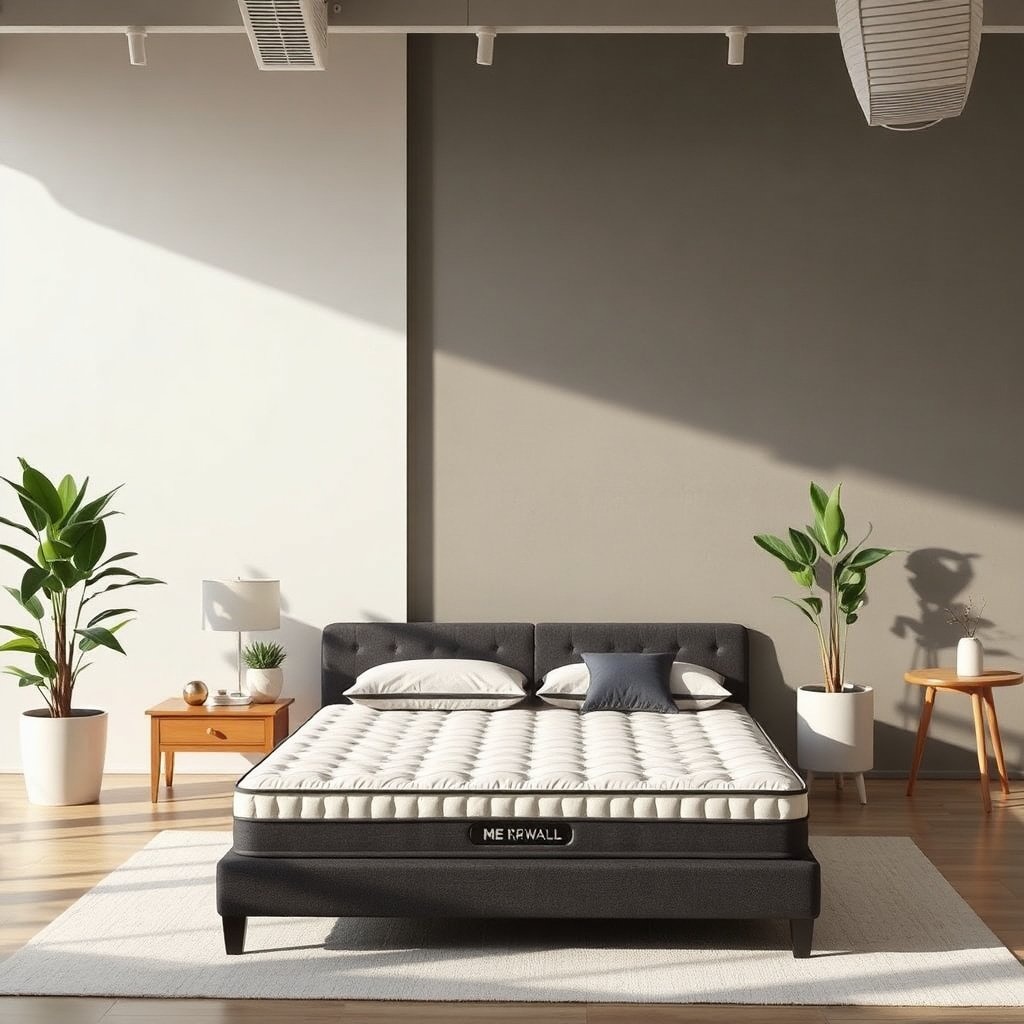
Back-sleeping comfort starts with alignment, not cushioning. When your spine stays neutral, your body can relax instead of bracing against pressure or sagging.
– Look for support that prevents your lower back from either arching hard or flattening out. A mattress that’s too firm can push your lumbar area into an increased arch, while a mattress that’s too soft can flatten the natural curve by letting the hips sink.
– Use a simple test posture: when lying on your back, your hips shouldn’t drop noticeably below your waist. In practice, you’re checking whether the “hinge” between torso and legs stays level—especially through the pelvis.
– Prioritize “stable comfort” over just soft cushioning, since back sleepers need support across the midsection—not only at pressure points. Shoulder pressure relief matters, but back sleepers also need consistent support under the ribcage and pelvis so your back doesn’t rotate to find relief.
What “neutral alignment” looks like on a twin
A twin mattress has less width than larger sizes, which can make alignment issues feel more obvious because your shoulders and hips interact with the surface more directly. Your goal is not to feel “stuck,” but to feel evenly supported: shoulders should be cushioned enough to reduce pressure, while hips should be supported enough to prevent sink.
From a biomechanical perspective, a stable support core helps maintain pelvic position; in mattress testing and clinical discussions of low back pain, researchers commonly focus on keeping the lumbar region from being forced into either extreme posture. For example, a randomized trial comparing mattress firmness found that bed firmness alone did not universally solve low back pain, reinforcing the need to prioritize alignment and comfort together rather than chasing a single “firmness number.”
Also, if you’re comparing any twin mattress to your current one, remember that a mattress can feel “comfortable” while still being misaligned—especially if it has a very plush top layer.
Pick the right firmness level for back sleeping
The best starting point for a back sleeper’s twin mattress is usually medium-firm. You’re looking for enough push-back to stop hip sink while still allowing gentle shoulder pressure relief.
– Aim for medium-firm as a starting point; it’s often the best balance of support + pressure relief for back sleepers. Many brands label firmness on a 1–10 scale, but ratings vary by manufacturer and construction, so your “feel” should guide you more than any numeric label.
– If you’re heavier or your hips tend to sink, you’ll usually need firmer support. That doesn’t always mean “hard”—it often means a firmer support core or a comfort layer that’s not overly thick/soft.
– If you feel pressure in your shoulders or lower back “digging,” go slightly softer (or add an appropriate topper)—but don’t go so soft that alignment breaks. “Slightly softer” is key: too much softness can shift your lumbar curve and reintroduce discomfort.
A quick way to translate firmness into alignment risk
When choosing a twin mattress, think in terms of two competing risks:
1) Hip sink risk (often from too-soft comfort layers or weak support cores)
2) Lumbar arch/digging risk (often from overly firm surfaces)
A twin is a smaller footprint, and that can amplify both risks because your torso doesn’t have as much “space” to redistribute pressure.
Expected Alignment-Fit by Twin Mattress Construction (Back Sleepers)
| # | Construction style (twin mattress) | What it usually does for shoulders | What it usually does for hip support | Back-sleeper alignment fit |
|---|---|---|---|---|
| 1 | Zoned latex (medium-firm) | Conforms to reduce shoulder pressure | Resists hip sink while staying responsive | ★★★★☆ |
| 2 | Hybrid with medium-firm coil core + latex/foam comfort | Balances contouring and lift | Structured support keeps pelvis level | ★★★★★ |
| 3 | All-foam with medium-firm support core | Reduces shoulder pressure with contouring | Often supports hips well if layers aren’t plush | ★★★★☆ |
| 4 | All-foam with very soft (plush) comfort top | Strong initial cushioning | Higher chance of hip sink and lumbar flattening | ★★☆☆☆ |
| 5 | Innerspring (coil-first) with minimal comfort quilting | May feel less contouring at shoulders | Usually stable under hips, but can feel firm | ★★★☆☆ |
| 6 | Pillow-top feel over soft foam (thick surface comfort) | Very plush on the surface | Higher chance of hips sinking too far | ★☆☆☆☆ |
| 7 | Adjustable air mattress set to medium-firm (with stable top) | Can be tuned for shoulder comfort | Tends to hold pelvis level when correctly tuned | ★★★★☆ |
Match thickness and comfort layers to how you feel
Medium-firm only works if the comfort layers “hand off” pressure relief without pulling your pelvis out of position. On a twin mattress, layer balance matters because your torso and hips sit closer to each other along the shorter length.
– Check the mattress height and comfort-layer setup (foam comfort layer, latex layer, quilted cover, or hybrid top): thinner toppers can change feel quickly. A thin comfort layer may leave you feeling pressure at the shoulders, while a thick, plush top can increase hip sink.
– Thicker comfort layers can improve cushioning, but too much give can pull your hips out of alignment. If you prefer a cradled feel, you generally want the cradling to happen at the shoulders—not through the lumbar zone.
– If you like a “cradled” feel, consider materials known for pressure relief (e.g., comfort foams or latex), but still confirm the support base is firm enough to hold your torso and hips level. In other words, you want contouring above and stability below.
Layering “handoff” is the real technical detail
A useful way to evaluate a twin mattress is to imagine three zones:
– Shoulder zone: needs pressure relief and gentle contouring
– Midsection zone: needs stable support that resists sagging
– Hip/pelvis zone: needs push-back to keep your spine neutral
If your shoulders feel great but your lower back feels tight after 15–20 minutes, the twin mattress may be contouring too much above the lumbar area.
Don’t skip support details: edge, motion, and cover comfort
Even a well-aligned twin mattress can underperform if the edges are weak or the surface feels unpleasant. These details matter more than people expect, especially on twins where you’re more likely to use the edge for getting in/out of bed.
– Edge support matters if you sit on the mattress’s edge or share the bed; weak edges can make it feel unstable. For back sleepers, instability can also lead to more frequent position changes, which increases micro-adjustments that disrupt rest.
– If you move during sleep, look for lower motion transfer (often relevant for shared spaces, even with a twin). Coil-heavy mattresses typically have different motion characteristics than all-foam, but what matters is how much your torso feels “bumped” when the partner shifts.
– Pay attention to the cover and surface feel (smooth vs. grippy, cooling fabrics vs. warmer covers), especially if you’re sensitive to heat. Heat buildup can change comfort perception, making a medium-firm mattress feel softer later in the night.
Quick comparison: what to watch for in edge + motion
If you’re deciding between two twin mattress constructions, compare them using this framework:
Definition list (pros/cons)
– Hybrid (coils + comfort layer)
– Pros: usually keeps hips supported better for back sleeping; often handles temperature better
– Cons: may transfer more motion than slow-response foams (depends on model and foam thickness)
– All-foam (including memory foam)
– Pros: often reduces motion transfer; can deliver strong shoulder pressure relief
– Cons: if the top layer is too plush, hips may sink and lumbar alignment can suffer
– Innerspring (coil-first with minimal comfort)
– Pros: stable base feel; can work well if you need firmness under your midsection
– Cons: may create shoulder pressure if quilting/padding is too thin
Temperature, materials, and maintenance (practical factors)
A twin mattress for back sleepers should sleep cool enough that you don’t “fight” the surface. As of 2026, many brands improve cooling with cover fabrics, airflow designs, and coil airflow paths—but you still need to confirm how yours performs.
– If you tend to sleep hot, prioritize airflow-friendly designs (commonly found in hybrid/coil constructions) and breathable cover materials. Even a supportive twin mattress can become uncomfortable if the surface holds heat and makes you shift more.
– Confirm whether the mattress needs rotating or flipping; many modern twins are designed for a consistent top orientation. Rotating can help even out wear, but only if the manufacturer allows it.
– Plan for ongoing comfort: even a great twin mattress can feel wrong over time if it’s worn unevenly or lacks proper foundation support. Uneven wear often shows up first as shoulder pressure returning or hip support disappearing.
Practical baseline dimensions (so you compare correctly)
A “twin” typically refers to a size of about 38 in × 75 in (≈97 cm × 191 cm) in the U.S. market. Because twin mattress options vary in thickness (especially for plush pillow-top models), verify total height and comfort-layer thickness so you’re comparing like with like.
Also, foundation compatibility is not optional: slat spacing and platform type directly affect how your twin mattress holds your spine over time. Many warranties explicitly require certain foundation characteristics, so treat the foundation as part of the sleep system.
What can go wrong (common twin mistakes)
Most back-sleeper twin mattress issues come from choosing comfort first, or skipping foundation support. These mistakes are predictable—and they’re usually fixable before you fully commit.
– Choosing “soft” for comfort and accidentally losing lumbar support, causing lower-back discomfort. If your hips sink below your waist line, you’re trading immediate softness for long-term alignment problems.
– Ignoring foundation compatibility (slats spacing, platform type, or box-spring requirements), which can lead to sagging. A twin mattress may feel medium-firm on a showroom bed but soften rapidly on an unsupported foundation.
– Overcorrecting with toppers: a topper that’s too plush can undo the support you bought in the mattress. If you add a topper, aim for a minor comfort adjustment—not a full firmness change.
When to reconsider (edge cases)
If you have significant mobility constraints or you regularly sleep in a different position than “purely on your back,” a twin mattress that’s perfect for alignment might not be perfect for your real night. In those cases, the best twin mattress for back sleepers is the one that stays supportive across the positions you actually use most.
Verdict / tip: choose support first, then fine-tune
A twin mattress for back sleepers should feel supportive enough to keep your hips level while still cushioning pressure near shoulders and upper back. If you’re unsure, start with medium-firm and use the return policy or trial window to dial in your comfort—especially because “firmness” can vary by brand and construction. Skip this approach if you can’t use (or don’t have access to) a trial period, because a twin size can make it harder to live with an alignment mismatch.
One honest downside: even a great twin mattress may feel different depending on your foundation, body weight distribution, and how much you shift during sleep. That’s why the best plan is to validate both mattress feel and foundation support—ideally with a trial period.
Quick Twin Mattress Checklist (scan/save)
| What to check | What “good” looks like for back sleepers |
|---|---|
| Firmness feel | Medium-firm starting point; stable support under hips/lower back |
| Hip alignment | No obvious sinking or flattening when lying on your back |
| Comfort layer thickness | Cushions shoulders/upper back without pulling hips down |
| Support base | Firm enough to keep torso and hips level |
| Foundation compatibility | Slats/platform match manufacturer requirements |
| Temperature comfort | Breathable cover/materials or airflow-friendly build if you sleep hot |
| Return/warranty | Clear trial window and warranty terms before committing |
Sources
Back sleepers choosing a twin mattress in 2026 should treat alignment as the primary success metric: medium-firm support, stable hip/pelvis positioning, and targeted shoulder pressure relief. If you verify comfort-layer thickness and foundation compatibility—and you can use a trial window—you dramatically reduce the odds of ending up with a mattress that feels good at first but creates back discomfort later.
Frequently Asked Questions
What firmness level is best for a twin mattress for back sleepers?
Back sleepers usually do best with a medium-firm twin mattress because it supports the natural curve of your spine without letting your hips sink. If you feel pressure in your lower back or hips, you may need slightly more support or a firmer feel. If you feel stiff or achy, try a medium option or look for comfort layers that cushion while still keeping lumbar support.
How do I choose a twin mattress thickness for back sleeping?
A good starting point is around 10–12 inches for a twin mattress, since it provides enough support for proper spinal alignment. Thinner mattresses can be less supportive for back sleepers, especially if you’re heavier or have an older mattress base. Taller options often include more comfort padding and zoning, which can help relieve pressure while maintaining support.
Which mattress type is most supportive for back sleepers in a twin size—memory foam, innerspring, or hybrid?
Memory foam and hybrid mattresses are popular for back sleepers because they contour to the body and help maintain lumbar alignment. Innerspring mattresses can work well if they offer strong coil support and minimal sink, especially with a supportive comfort layer. A hybrid is often a safe choice because it combines responsive coils for support with foam or comfort layers for pressure relief.
Why is lumbar support important when choosing a twin mattress for back sleepers?
Proper lumbar support helps keep your spine in a neutral position, reducing strain on the lower back during the night. Look for features like zoned support, reinforced center support, or targeted foam that supports the midsection without pushing your hips out of alignment. If you wake up with lower-back pain, a lack of lumbar support is often a key reason.
Best practices: How do I compare twin mattress brands and specs for back sleeping?
Focus on core support materials (like coil gauge or foam density), mattress firmness ratings, and how the comfort layer affects hip and lower-back alignment. Check for return and warranty policies so you can test it at home, since feel can differ by body type and sleeping position. If you sleep hot, prioritize breathability features like cooling covers, gel foam, or breathable coil designs—comfort can affect back-sleeper posture and pressure buildup.
📅 Last Updated: November 02, 2026 | Topic: How to Choose a Twin Mattress for Back Sleepers | Content verified for accuracy and freshness.
References
- Mattress
- Sleep position
- https://www.mayoclinic.org/healthy-lifestyle/adult-health/in-depth/mattresses/art-20048364
- Back Pain
- Back pain – NHS
- mattress firmness low back pain – Search Results – PubMed
- https://www.ncbi.nlm.nih.gov/pmc/?term=mattress+firmness+low+back+pain
- https://scholar.google.com/scholar?q=how+to+choose+a+mattress+for+back+sleepers Google Scholar
- https://scholar.google.com/scholar?q=mattress+firmness+back+sleeping+lumbar+support+randomized+trial Google Scholar
- https://scholar.google.com/scholar?q=twin+mattress+dimensions+sleep+position+spinal+alignment Google Scholar