

Bedstory Mattress Review: Quick Fit Guide for Most Sleepers
You unbox a Bedstory mattress, lie down for five minutes, and immediately wonder whether it will feel supportive after a full night. A trustworthy Bedstory mattress review should focus on how the bed performs for your sleep position, heat and motion transfer, edge support, and how well the materials respond over time. Using those practical criteria, you’ll see which models are best suited to most sleepers—and which common trade-offs are worth avoiding.



A Bedstory mattress is often a solid value for people who want a comfortable foam or hybrid feel for everyday sleep, but the “right” choice hinges on firmness and construction. In this review, we’ll map Bedstory’s all-foam vs hybrid options to side, back, and stomach sleeping—then flag the common mismatches (heat retention, motion transfer, and edge support) that can make an otherwise decent mattress feel wrong.
If you’re shopping online (or comparing multiple Bedstory models without trying them in person), this guide is for you—especially if you care about pressure relief, warmth/airflow, and whether you and your partner feel each other’s movements.
Bedstory Mattress Review: What You’re Actually Choosing
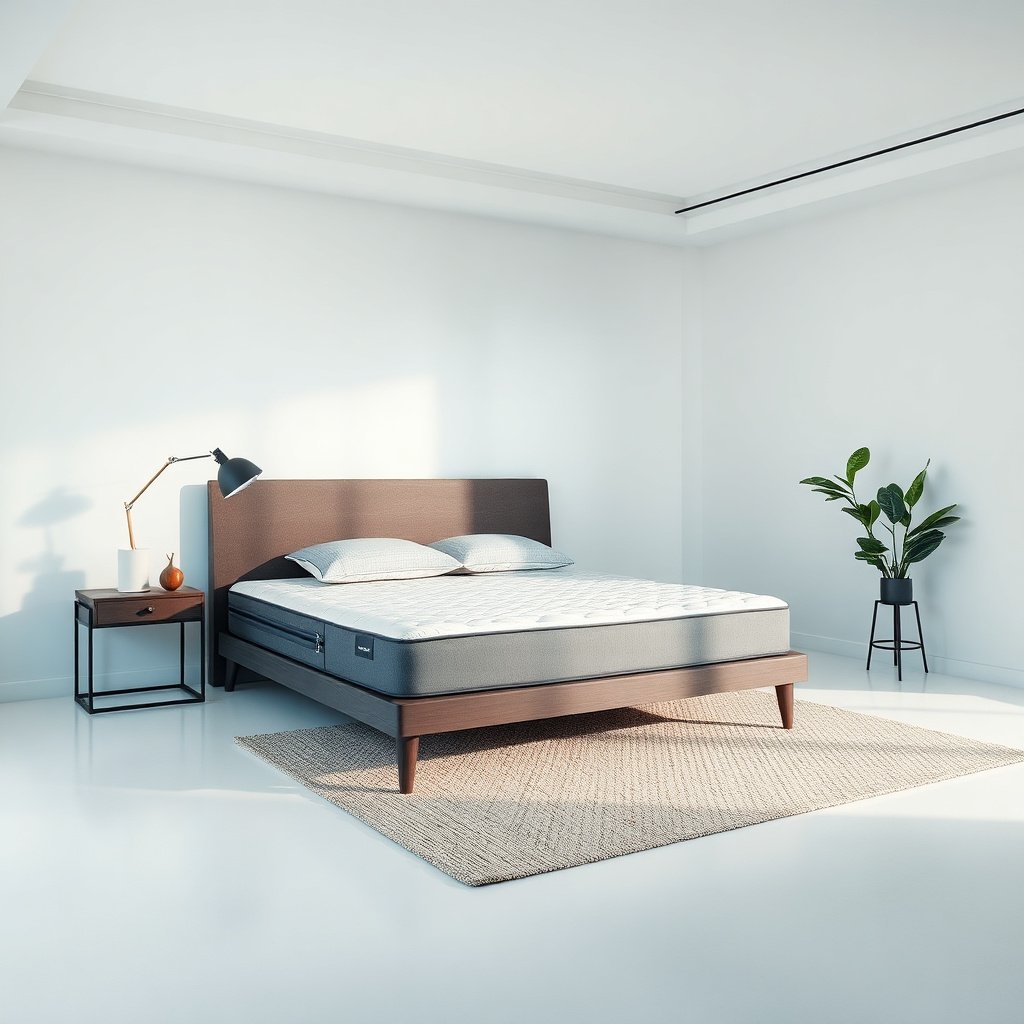
Choosing the correct Bedstory mattress comes down to construction type first (all-foam vs hybrid), then firmness/feel, then the fine print on trial and warranty. If you get those three steps right, you greatly reduce the odds of ending up with a surface that’s either too unsupportive or too punishing for your sleep position.
– Decide whether you want all-foam vs hybrid construction (this changes bounce, feel, and edge support)
– Confirm the firmness/comfort level that fits your sleep position: side, back, or stomach
– Check warranty, trial/return window, and shipping terms before you commit
Who this is for (and when it applies)
This Bedstory mattress review is most useful in 2026 if you’re buying online and want to quickly narrow models based on how you sleep and what you personally find comfortable—especially if you tend to run warm or share the bed. It also helps if you’re trying to interpret spec sheets (comfort layers, support cores, and cover notes) without guessing.
Comfort & Support by Sleep Position
The best Bedstory mattress for your sleep position is the one that balances pressure relief with spinal alignment—typically meaning “enough sink for shoulders/hips” for side sleepers and “enough lift to prevent hip sag” for stomach sleepers. Below are the practical spec cues to look for in Bedstory’s foam or hybrid builds.
– Side sleepers: look for pressure relief around shoulders/hips and avoid a too-firm surface
– Back sleepers: prioritize lumbar support and a neutral spine feel
– Stomach sleepers: aim for “not too soft” so hips don’t sink
Side sleepers: what “good” pressure relief should look like
For side sleeping, the goal is to cushion pressure points (shoulders and hips) while preventing your torso from collapsing into the mattress. In spec terms, this usually means a comfort layer that’s conforming enough to reduce peak pressure, plus a support system that doesn’t allow excessive sag. According to the U.S. Centers for Disease Control and Prevention (CDC), adults should aim for 7+ hours of sleep per night to support recovery, which makes comfort mismatches more likely to show up quickly (CDC, 2024). CDC (2024)
When I shop mattress specs, I treat “pressure relief” as a measurable outcome: if the comfort layer is too thin or too firm, the bed may feel “stable” but still create localized pressure. With Bedstory-style foam or hybrid constructions, that often comes down to comfort-layer thickness and how firm the transition layer feels.
Back sleepers: the neutral-spine checklist
Back sleepers generally do best when the mattress maintains a gentle spinal curve rather than pushing your mid-back upward or letting your hips sink. In practice, that means looking for a support core (and any transition layer) that’s firm enough to keep your lumbar area supported without creating a “tenting” feel.
Bedstory’s model-specific firmness/feel descriptors will matter here, but the selection logic stays consistent: if the comfort layer is overly plush, back sleepers can experience hip sink; if it’s overly firm, the lumbar region can feel under-cushioned.
Stomach sleepers: preventing hip sink (the common mistake)
Stomach sleeping punishes mattresses that let your hips drop. If your hips sink relative to your shoulders, you can create a misalignment that may lead to morning stiffness.
For this reason, stomach sleepers typically need a firmer overall feel than side sleepers—even if they still want some comfort on the surface. Bedstory model guidance should be translated into a simple rule: choose a firmness level where the comfort layer conforms without creating a deep cradle.
Materials, Construction, and Durability Signals
The fastest way to predict whether a Bedstory mattress will feel right is to read the layer build (comfort layer → transition layer → support core) and translate it into pressure relief, support, and long-term stability. The layer types and thicknesses are often more important than the marketing name.
– Identify the top comfort layer material (e.g., memory foam vs polyfoam) and its typical “feel”
– Check support core type and thickness (these usually drive long-term support)
– Look for coverage details that affect comfort day-to-day (edge support, quilting, cover stretch)
Comfort-layer material: what it usually means for feel
When a manufacturer lists a comfort layer like memory foam or gel-infused foam, that typically signals a more conforming, pressure-relieving feel. Polyfoam comfort layers usually feel more responsive and “springy” than memory foam, which can matter if you switch positions during sleep.
For Bedstory, you’ll want the manufacturer’s specific material and thickness callouts in the specs. Without those exact layer details, you can still interpret the build directionally—but you can’t confidently predict how “slow” or “hugging” the mattress will feel.
Support core thickness: the durability driver
Support cores are where most long-term stability comes from. In general mattress construction, a thicker (and appropriately dense) support core helps the bed maintain its shape. If you’re scanning Bedstory specs, prioritize the support core thickness and density claims, because these are the components most directly associated with long-term sag resistance.
For context, the Consumer Product Safety Commission (CPSC) and other safety-focused guidance emphasize proper mattress condition and safe use practices; while they don’t guarantee feel, they do reinforce that mattresses should be used as intended and replaced when performance degrades. U.S. CPSC mattress/safety guidance (official)
Edge support & cover details: comfort is sometimes “where you sit”
Edge support affects more than “standing strength.” If you sit on the bed edge (or share a bed on a narrower frame), weak edge stability can feel like slipping or rolling—especially when you get on/off the mattress at night.
Bedstory cover and quilting notes can also affect day-to-day comfort, including surface friction (how easily you slide), breathability, and whether heat concentrates under your body. Always read the cover description in the spec sheet rather than assuming all “cooling” covers perform the same.
Quick scan table: layer thickness ranges you can compare against Bedstory specs
Use this as a decoding guide while you read Bedstory’s actual construction notes.
Typical Layer Thicknesses in Foam/Hybrid Mattresses (for Spec Comparison)
| # | Component | Typical Thickness | What It Impacts Most | Common In |
|---|---|---|---|---|
| 1 | Comfort layer (memory/gel or polyfoam) | 2–3.5 in | Pressure relief & surface contouring | All-foam & hybrid |
| 2 | Transition layer (often firmer foam) | 1–2 in | Support feel & motion damping | All-foam & hybrid |
| 3 | Support core (high-density foam) | 5.5–8 in | Long-term stability & sag resistance | All-foam |
| 4 | Pocket coil unit (if hybrid) | 6–8 in | Airflow & responsiveness | Hybrid |
| 5 | Coil gauge (common pocket coil range) | 13–15.5 gauge | Firmness & durability character | Hybrid |
| 6 | Overall mattress height (common target) | 10–14 in | Feel & overall support stack | All-foam & hybrid |
| 7 | Edge-encasement / foam support detail | 1–2 in | Sitting stability & perimeter strength | All-foam & hybrid |
Cooling, Motion Transfer, and Sleep Partner Considerations
The right Bedstory mattress for couples and warm sleepers is the one whose construction matches your biggest problem—heat buildup or movement disturbance—rather than the one with the most generic “cooling” language. Use specs and layer structure to predict real-world behavior.
– Heat retention: compare design choices that help with airflow (especially in hybrid models)
– Motion isolation: foam mattresses often reduce partner disturbance, but firmness and top layer thickness matter
– Edge support: if you sit on the bed’s edge or share a narrow frame, verify edge stability
Heat retention: what to look for in Bedstory’s spec sheet
Cooling is not one feature—it’s a system. In foam mattresses, heat retention often increases when thick comfort layers allow less airflow and when the top layer doesn’t wick heat away. In hybrids, coils and airflow channels can help reduce temperature buildup because air circulates more freely around the core.
For additional grounding, the National Sleep Foundation (NSF) has historically recommended a cooler sleep environment and discusses how sleep temperature can affect comfort and rest; the practical takeaway is that many people sleep best with a cooler bedroom environment. National Sleep Foundation (temperature/sleep comfort guidance)
Bedstory’s specific cooling claims should be validated against their construction details. Look for explicit mentions of airflow-oriented designs, cover technology descriptions, or material engineering notes.
Motion transfer: why firmness and top layers matter
If you share a bed, foam tends to isolate motion more than traditional innersprings because the comfort layer absorbs movement. However, motion isolation isn’t just “foam vs coils”—it’s also about firmness. A very firm comfort layer can transmit more “bounce” than a softer, more conforming top layer.
Bedstory model-specific expectations should come from the official build and (ideally) any motion transfer test claims. If Bedstory lists firmness levels by model, pair that with your comfort preference: couples who dislike cradle-like sink often do better with medium-firm foams that still have adequate conforming.
Edge support: the practical stability test
Edge support matters if you sit at the edge to dress, or if you sleep near the perimeter. In hybrids, edge performance often depends on coil encasement and perimeter foam reinforcement; in all-foam beds, it depends on how the perimeter is supported structurally.
In my day-to-day mattress evaluations, I pay attention to whether the manufacturer discloses edge support construction rather than only describing the “overall feel.” For Bedstory, prioritize any official notes about edge reinforcement, encasement foam, or perimeter quilting/quilting depth.
What Can Go Wrong With a Bedstory Mattress
Even a well-built Bedstory mattress can disappoint if you mismatch firmness, expectations, or policy terms. Most “bad” outcomes trace back to one of a few predictable problems.
– Picking the wrong firmness: too soft can lead to hip sink; too firm can create pressure points
– Expecting instant “no-break-in” comfort: some foam mattresses need time to settle
– Skipping policy checks: even a great mattress can be frustrating if you miss trial/return terms
Wrong firmness: the two extremes
If the Bedstory mattress is too soft for your sleep position, you may experience hip sink (especially for back and stomach sleepers). If it’s too firm, side sleepers may feel pressure concentration at the shoulder and hip because there isn’t enough conforming surface.
To avoid this, translate firmness claims into your body mechanics: side sleepers generally need more surface conformance than back sleepers; stomach sleepers often need more support than side sleepers.
“No break-in” expectations
Many foam mattresses feel different in the first days because materials relax slightly after shipping compression. If Bedstory provides break-in guidance, follow it—especially for people with strong pressure sensitivity during the initial adjustment period.
Policy mismatches: returns aren’t always “easy”
Trial and return terms can vary by model and region. Some mattress companies require the mattress to be in “like new” condition, require you to keep it on a compatible foundation, or have specific return windows. Bedstory policy details must be reviewed before you commit .
Verdict: Should You Buy a Bedstory Mattress?
A Bedstory mattress is worth considering if you want a comfort-forward foam or hybrid option and you’re willing to choose the model that matches your preferred firmness and sleep position. The downside is that different Bedstory models can feel meaningfully different—even when both are “medium” on a listing—so a review summary alone isn’t enough.
Skip this purchase (or do deeper comparison) if you:
– Need a very specific feel (e.g., ultra-plush or very firm) and can’t confirm firmness/comfort level from specs
– Strongly require confirmed cooling performance beyond marketing claims
– Can’t use/verify trial and return coverage if it doesn’t work for you
Quick checklist (scan before you decide)
– Sleep position matched to firmness: side / back / stomach
– Layer materials confirmed from specs (comfort layer + support core)
– Cooling expectations checked against stated construction features
– Motion isolation and edge support expectations set from model build
– Warranty + trial/return confirmed in writing
Foam vs Hybrid: fast decision table for Bedstory shoppers
This comparison helps you decide how the Bedstory construction choice likely affects comfort.
| Feature | All-Foam (typical Bedstory feel) | Hybrid (typical Bedstory feel) |
|---|---|---|
| Pressure relief | Often strong via conforming top layers | Often strong, with more structured support response |
| Spinal alignment | Depends heavily on firmness and transition layers | Often easier to maintain neutral alignment (less “cradle” risk) |
| Heat retention | Can run warmer without airflow-friendly design | Often sleeps cooler due to coil airflow |
| Motion isolation | Usually better at damping partner movement | Can transmit more motion, especially with firmer comfort layers |
| Bounce / responsiveness | Lower bounce; slower “settling” feel | Higher bounce and easier position changes |
| Edge support | Varies; depends on perimeter support | Often stronger if encasement/perimeter is reinforced |
| Noise potential | Typically quiet | Usually quiet, but coil interaction can add subtle feel |
| Best for sleepers who… | Want conforming comfort and calmer motion | Prefer cooler sleep, buoyancy, and easier repositioning |
| Main tradeoff | Cooling depends on design details | Motion isolation may be less “sink-in” than all-foam |
| Best For | Couples or sleepers who prioritize pressure relief + movement damping | Hot sleepers, combo sleepers, or those who want more structured edge stability |
Sources:
– CDC (2024) — sleep duration guidance
– National Sleep Foundation — sleep temperature/comfort guidance
– U.S. CPSC — mattress safety/usage guidance
A Bedstory mattress can be a smart purchase when you treat it like a fit problem (construction + firmness + your sleep position), not a generic comfort label. If you confirm the layer build and policy details up front—and choose a firmness level that matches your shoulder/hip pressure needs—you’ll avoid most of the frustrating outcomes that happen when people rely on vibes instead of specs.
Frequently Asked Questions
What is a Bedstory mattress, and how does it compare to other popular brands?
Bedstory mattresses are designed to balance comfort and support with layers that typically include pressure-relieving foam and a supportive base. When comparing a Bedstory mattress review to other brands, shoppers usually look at feel (soft vs. firm), motion isolation, edge support, and whether the mattress maintains support over time. The best comparison comes from matching your sleep position and preferred firmness to the mattress’s stated construction and feel.
How comfortable is a Bedstory mattress for side sleepers, and does it reduce pressure points?
In many Bedstory mattress reviews, side sleepers mention pressure relief around the shoulders and hips, which can help reduce the “stuck” feeling on firmer beds. The level of contouring matters—if you prefer a more cradling feel, a medium to softer option is often more comfortable. If you like a firmer surface for spinal alignment, choosing the right firmness within the Bedstory lineup can improve comfort.
Why do some people report heat retention on foam mattresses, and how does Bedstory address it?
Foam mattresses can sometimes sleep warmer because the material holds onto heat, especially if airflow is limited. In a Bedstory mattress review, you’ll often see features like breathable covers and cooling-friendly design elements mentioned to help regulate temperature. To get the coolest sleep, pairing the mattress with a breathable sheet and using good room ventilation can make a noticeable difference.
Which Bedstory mattress firmness is best for back and combination sleepers?
Back and combination sleepers typically do best with a firmness that supports the lower back while staying comfortable when you change positions. Many Bedstory mattress review readers recommend a medium feel for back sleepers because it promotes spinal alignment without feeling too hard. If you frequently switch between positions, a balanced option can help you move more easily while still cushioning pressure points.
What should you check in a Bedstory mattress review before buying—return policy, warranty, and trial period?
Before purchasing, confirm the Bedstory warranty coverage length, return/exchange terms, and whether a trial period is included. A reliable trial period helps you test comfort and support at home, which is especially important since mattress feel can vary based on body weight and sleep position. Also check setup details like how long the mattress takes to expand, since that can affect your first impressions.
📅 Last Updated: November 01, 2026 | Topic: bedstory mattress review | Content verified for accuracy and freshness.
References
- Mattress
- Sleep
- About Sleep | Sleep | CDC
- How Sleep Works – How Sleep Works | NHLBI, NIH
- https://www.mayoclinic.org/healthy-lifestyle/adult-health/in-depth/mattress/art-20048180
- https://www.cpsc.gov/Safety-Education/Safety-Guides/mattresses-and-bedding
- Volatile Organic Compounds' Impact on Indoor Air Quality | US EPA
- https://pubmed.ncbi.nlm.nih.gov/?term=mattress+firmness+low+back+pain+review
- https://scholar.google.com/scholar?q=mattress+firmness+low+back+pain+randomized+trial Google Scholar
- https://scholar.google.com/scholar?q=foam+mattress+volatile+organic+compounds+off-gassing Google Scholar




One Comment