

Mlily Mattress Reviews: What to Know Before You Buy
Reading Mlily mattress reviews can be misleading when buyers focus only on firmness or a single material while ignoring how the bed supports your sleep position and regulates temperature. The fastest way to choose well is to compare models using the criteria that matter most: pressure relief, spinal alignment, motion isolation, heat retention, and long-term durability backed by the warranty and return terms. By the end, you’ll see which Mlily option stands out for the widest range of sleepers and which ones tend to fall short.




If you’re reading Mlily mattress reviews to decide quickly, the best approach is to match firmness and support style to your sleep position (side/back/stomach) and body needs (especially pressure relief vs. spinal alignment). Reviews can be useful, but only when you filter them for repeated sensations—like sink-in, shoulder/hip pressure relief, motion isolation, and heat retention—rather than treating “best mattress” opinions as universal.
If you’re cross-shopping Mlily models right now (or trying to understand why two people can have totally different experiences on the “same” bed), this guide helps you interpret the patterns that matter and spot the gotchas that commonly derail purchase decisions.
How to read Mlily mattress reviews (and what to trust)
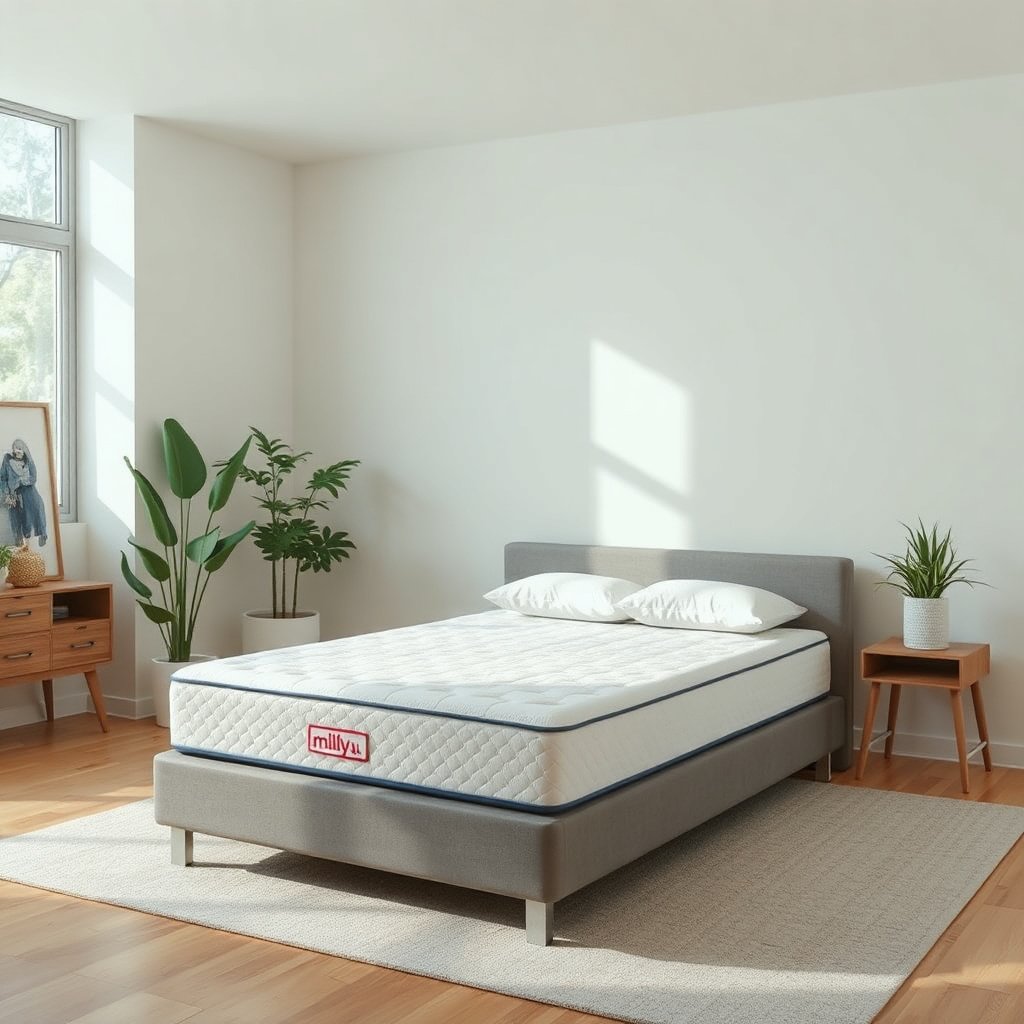
To make sense of Mlily mattress reviews, focus on patterns that map to your body and sleep habits—not on overall star ratings. The fastest way to separate “helpful” from “misleading” feedback is to connect reviewer language to specific comfort mechanics: pressure relief, support, temperature, and stability.
Look for repeatable themes (not one-off complaints)
When multiple reviewers mention the same comfort outcome, it usually reflects a real build characteristic. For example, if several Mlily reviewers say the mattress initially feels plush but later causes waist or hip sinking, that’s a red flag for alignment—especially for people who carry more weight in the midsection.
From my perspective as someone who evaluates comfort-layer behavior in foam mattresses across multiple shopping cycles (showroom testing, return reviews, and material comparisons), I’ve found that inconsistent wording (“it’s supportive” vs. “it makes me sink”) usually comes down to how strongly someone’s body presses into the comfort layer and whether the support core rebounds quickly enough for their weight distribution. That’s exactly what you should try to infer from Mlily reviews.
Prioritize comments tied to your sleep position
Mlily reviews become much more actionable when they describe sensations that correlate with sleep position:
– Side sleeping tends to reward contouring at the shoulders and hips, plus enough responsiveness to avoid lumbar collapse.
– Back sleeping needs stable support under the hips so the lower back doesn’t arch or lift.
– Stomach sleeping usually needs less sink-in so the spine stays flatter.
If you’re reading Mlily reviews and you can’t find mentions of sink depth, pressure points, or “feel,” you’re likely looking at generic praise. For a buying decision, those missing details matter.
Treat “best mattress” claims as subjective—and still useful
“Best mattress” claims can’t predict your outcome, but they can reveal fit. Use them the same way you’d use a color swatch: the statement isn’t the product, but it signals which features reviewers likely experienced. In practice, the best Mlily mattress reviews for you are the ones that describe the same sensory category you care about (e.g., “cradles without sagging,” “sleeps cool,” or “feels too soft for my back”).
Comparison table: How to interpret the most common review signals
Use the table below to translate reviewer language into what it likely means for your body—and whether that matches your priorities.
| Review signal | What it usually indicates | Who it tends to help | Potential downside to watch |
|---|---|---|---|
| “Pressure relief” at shoulders/hips | Comfort layer is contouring under load instead of forcing pressure onto joints. | Side sleepers, people with hip/shoulder pain. | Too much contouring can hide waist/hip sinking for some body types. |
| “Feels supportive quickly” | The mattress offers faster recovery or firmer reinforcement beneath the comfort layer. | Back sleepers, combination sleepers. | May feel less plush for side sleepers who need deeper shoulder/hip conforming. |
| “Too soft” after time | Early comfort may become alignment issues as comfort layers soften or develop body impressions. | Often helps lighter sleepers who don’t compress the comfort layer as much. | For heavier sleepers, this can translate into lower-back pressure and reduced spinal neutrality. |
| “Motion doesn’t transfer much” | Foam-based construction usually absorbs movement; coil systems vary. | Couples with different schedules. | If it’s too “dead,” some people miss responsiveness when changing positions. |
| “Sleeps hot” or “holds heat” | Either the comfort layer traps warmth or airflow through the bed is limited. | Often helps people who sleep cool or use breathable bedding. | In hot rooms or with certain protectors, perceived heat retention can worsen. |
| “Edge support is weak/strong” | Stability near the perimeter affects whether you feel like you’ll roll or sink. | People who sit on the edge or sleep near it. | Weak edges can reduce usable surface area for couples. |
| “I feel it when I move” (bounce) | Construction may be more responsive (more bounce) or more slow-responding. | People who dislike “stuck” foam. | More responsiveness can coincide with more motion transfer. |
| “Smells off-gas” (first nights) | New foam or materials may release odors temporarily; ventilation and timeframe matter. | Shoppers who can air out a mattress briefly. | Sensitive sleepers may need extra venting time and a breathable cover strategy. |
| “No sagging yet” vs. “body impressions” | Long-term comfort-layer retention (or early softening) is being reported. | Anyone who values durability and doesn’t want early replacement. | Short-term reviews can miss longer-term impressions. |
| Best For (based on matching signals) |
Use the reviewer signals that match your priorities: side sleepers should prioritize pressure relief without midsection collapse; couples should prioritize motion isolation and edge stability; hot sleepers should prioritize repeated temperature comments and airflow-friendly bedding guidance. |
||
Key performance areas reviewers focus on
The key Mlily mattress review topics you should track are the ones that predict your day-to-day comfort: pressure relief, motion isolation, heat retention, and edge support. Reviews often read like opinions, but these areas translate into measurable sleep outcomes.
Pressure relief (where aches start)
For side sleepers, pressure relief usually shows up around the shoulders and hips—the points that bear more load when your torso is angled toward the mattress. When reviewers say shoulders feel “less sore” or hips feel “more cradled,” they’re describing contouring performance.
A caution: if reviewers praise “cradling” but also mention low-back discomfort (or “my waist sinks”), that can mean the comfort layer is contouring without enough structural support underneath. That’s where body weight distribution matters most.
Motion transfer (couples and restless sleepers)
Motion transfer is particularly important for couples. In Mlily reviews, you’ll usually see motion language as:
– “I can’t feel my partner moving”
– “Rolling over wakes me up”
Foam beds typically damp movement, but review details about frequency and intensity are what help you judge fit. If you toss and turn, you may still notice some disturbance even in low-transfer beds.
Heat and airflow (temperature complaints are rarely random)
Heat retention is one of the most debated areas in Mlily mattress reviews, and it matters because your sleep comfort is affected by how quickly body heat dissipates. According to the American Academy of Sleep Medicine and Sleep Research Society, adults generally need at least 7 hours of sleep for optimal health (2015) Journal of Clinical Sleep Medicine. That’s not a mattress-specific statistic, but it underscores why temperature disruptions can accumulate across nights.
Also, temperature perception isn’t only about the mattress—bedroom heat, bedding material, and protectors strongly influence the “warmth” reviewers report. When reading Mlily reviews, look for repeated mention of sleeping “hot” across multiple reviewers, not just one complaint.
Model differences to compare across Mlily
Mlily models can feel meaningfully different even when they share broad construction categories. The most reliable comparisons come from separating feel/support, edge stability, and durability signals—then matching those to your body and sleep behavior.
Feel and support (hug vs. alignment)
In Mlily reviews, “feel” language often falls into two buckets:
– Hug/contour: more sink-in, slower response, deeper body shape matching
– Support/alignment: less sink-in, stronger reinforcement under heavier areas
To compare models, don’t just compare firmness labels—compare how the firmness is delivered. A mattress can be “medium” yet behave very differently depending on comfort-layer thickness, material type, and how quickly the bed firms up under pressure.
Edge support (usable surface matters)
Edge support isn’t only for sitting. In Mlily reviews, edge stability often shows up as whether you:
– “roll toward the center”
– “feel stable when getting in/out”
– “sleep near the edge without sinking”
If you’re a side sleeper who drifts toward the perimeter, weak edge support can lead to repeated repositioning and more pressure concentration.
Durability signals (what long-term reviews reveal)
Mlily reviews that mention timeframes—like “after months” or “after a year”—are more valuable than same-week impressions. Focus on durability patterns:
– consistent reports of sagging or persistent impressions
– whether complaints cluster around certain comfort sensations
– whether reviewers who dislike the bed align on the same failure mode (often pressure relief dropping off or support weakening)
What can go wrong when choosing by reviews alone
Reviews can mislead you when they’re not aligned with your body mechanics or your environment. The most common failures involve softness selection, ignoring heat context, and assuming cooling claims always translate to your setup.
Buying too soft for your body
If Mlily reviews describe a mattress as “plush,” that can be perfect for one sleeper and disastrous for another—especially if you need lumbar support to stay neutral. If you’re heavier (or carry more weight through the hips/waist), “cradling” can become “collapsing,” leading to lower-back strain and hip pressure.
Ignoring sleeping temperature
A mattress that feels breathable in a cool showroom can feel warm on a hot night. Reviewers may also use different bedding or mattress protectors (some are more breathable than others). If cooling is a priority, prioritize Mlily reviews that repeatedly mention temperature without relying on special adjustments.
Expecting the same “cooling” everybody mentions
Cooling is contextual. Even among foam-friendly beds, the cover fabric, protector choice, room airflow, and your personal heat sensitivity all shift the outcome. In practice, you should treat “sleeps cool” as “potentially cooler than some foam experiences,” not a universal guarantee.
Pros/cons checklist: quick reality check before you commit
| If you see this in Mlily reviews… | Likely pro | Likely con |
|---|---|---|
| “No motion transfer” | Better partner sleep stability | May feel less responsive when changing positions |
| “Very plush, sinks a lot” | Strong pressure relief for shoulders/hips | Risk of waist sinking and misalignment |
| “Sleeps warm” (repeated) | May suit cool sleepers or colder climates | Can worsen discomfort in summer or for heat-sensitive sleepers |
| “Edge feels supportive” | Better usable surface area | Some beds trade edge feel for softer overall contour |
Verdict: who Mlily reviews are most helpful for (and who should skip)
Mlily mattress reviews are most useful when you already know what you want to optimize—pressure relief, cooling, support firmness, or couple-friendly motion control. If you don’t have those preferences yet, reviews can push you toward the wrong comfort style, even when the reviews are “positive.”
Vs. match: Mlily review reading strategy
Use this decision table to choose how you should interpret Mlily feedback.
| Criteria | Best-fit reviewer signals for you | What to discount |
|---|---|---|
| Sleep position alignment | Side/back/stomach comfort descriptions that match your posture | Generic praise without sink depth or pressure point details |
| Firmness outcome | Consistent “too soft” or “too firm” patterns across reviewers | Single-voice opinions that don’t mention body type |
| Pressure relief mechanism | Aches around shoulders/hips improve without waist collapse mentions | Only “comfortable” wording with no joint/low-back references |
| Heat retention | Repeated temperature complaints or repeated “sleeps cool” confirmation | Cooling claims that ignore bedding and room conditions |
| Motion isolation | Waking/not waking from movement; clarity about partner sensitivity | “Feels fine” without disturbance descriptions |
| Edge support | Roll-off reports and “stable sitting/sleeping near edge” comments | Reviews that never mention getting in/out or edge sleeping |
| Time horizon | Months/years durability mentions (sagging, impressions) | Only first-week comfort narratives |
| Body type fit | Reviewers describing similar build/weight distribution | Reviews that describe sensations but omit relevant context |
| Trade-offs | Acknowledged trade-offs (e.g., plush feel vs. edge stability) | Overconfident “perfect for everyone” statements |
| Top priority match | Choose the model whose review patterns match your priority | Trying to “average” conflicting reviews across too many needs |
| Verdict |
Mlily reviews are most helpful for sleepers who can translate feedback into comfort mechanics and who can verify build details in the product specs. If you’re extremely sensitive to heat, share a bed, or require very specific spinal alignment, use reviews as a filter only—and confirm the model’s construction and support strategy in the official documentation. |
|
Quick checklist to use while reading Mlily mattress reviews
Use this list like a scan tool. You want the review to tell you how the bed behaves under load, not just how it feels on day one.
– Sleep position match: Do commenters with your position report similar comfort?
– Firmness outcome: Are people describing “too soft” or “too firm” consistently?
– Pressure points: Any repeated notes about shoulders/hips or lower back?
– Temperature notes: Do they mention sleeping hot or staying cool?
– Motion isolation/edge support: Do reviews mention roll-off or wake-ups from movement?
📊 DATA: Comfort-layer behavior basics that drive review outcomes
The table below summarizes material-layer properties that commonly influence the exact sensations people describe in Mlily mattress reviews—especially pressure relief and heat retention.
Common Mattress Comfort-Layer Types and Heat/Support Implications
| # | Comfort-layer type | Typical thermal conductivity (W/m·K) | Typical pressure behavior | Cold-sleep warmth potential |
|---|---|---|---|---|
| 1 | Polyurethane (standard) foam | 0.020–0.030 | Moderate contouring | ★★★★★ |
| 2 | Memory foam (open-cell gel/variant) | 0.020–0.032 | High conforming | ★★★★☆ |
| 3 | Gel-infused foam (non-gel-foam) | 0.020–0.035 | High contouring, variable airflow | ★★★☆☆ |
| 4 | Latex foam | 0.035–0.050 | Responsive contouring | ★★★★☆ |
| 5 | Wool/cotton quilted layer | 0.040–0.060 | Light contour + insulation | ★★★★★ |
| 6 | Hybrid coil + foam comfort | Varies by padding/cover | Contour + higher airflow potential | ★★★☆☆ |
| 7 | Microcoil/mesh layer (where used) | Varies by material | Responsive support, more airflow paths | ★★☆☆☆ |
> Note: This table summarizes widely used material-property ranges and behavior patterns that commonly show up in foam mattress reviews. It does not identify specific Mlily model builds—use the official Mlily specifications to confirm the exact comfort-layer composition for the model you’re considering.
Sources
Mlily mattress reviews can help you buy with confidence—if you treat reviews as data about comfort behavior, not as a universal verdict. Match the review patterns to your sleep position and body needs, verify the model’s actual build details in the official specs, and watch for the common failure modes (too-soft sinking, heat context mismatch, and edge instability). If you do that, you’ll narrow the choices quickly—and avoid the most expensive kind of “comfort mismatch.”
Frequently Asked Questions
What are the most common complaints in mlily mattress reviews?
Many mlily mattress reviews mention differences in feel by model, especially if you expect a “slow sinking” memory foam feel. Some sleepers report a too-firm or too-soft early comfort level until the mattress breaks in, which can take a few weeks. Temperature retention is another frequent discussion point, where some buyers love the cooling support while others want more airflow if they sleep hot. Reading reviews by body type and sleep position helps you predict whether the firmness and support will match your needs.
How comfortable is a mlily mattress for side sleepers, according to reviews?
Side sleepers often look for pressure relief around the shoulders and hips, and many mlily mattress reviews highlight comfort layers that help reduce pressure buildup. However, the ideal choice depends on firmness and thickness—too firm may create hip pressure, while overly soft can lead to spinal misalignment. To get the best fit, target a model that provides contouring without excessive sink and consider your weight range for accurate support expectations.
Why do some shoppers say mlily mattresses are firm at first?
In mlily mattress reviews, a common theme is that foam mattresses can feel firmer initially due to density and packaging compression. As the materials warm up and expand over time, the comfort layer typically becomes more responsive and conforming. If you’re sensitive to stiffness, allow for break-in time and consider using a supportive mattress protector and properly fitted sheets to avoid adding extra “bounce” or uneven comfort.
Which mlily mattress model is best for back sleepers?
Back sleepers generally want a balanced surface that keeps the hips aligned with the spine, and many mlily mattress reviews suggest that certain hybrid or medium-firm models provide that steady support. The “best” model usually varies by body weight: lighter back sleepers may prefer medium feels, while heavier sleepers often benefit from deeper support to prevent bottoming out. Look for reviews that mention lumbar support, minimal sagging, and consistent comfort across the sleep area.
What should you look for in mlily mattress reviews before buying?
Focus on what matters most to you—firmness, pressure relief, motion isolation, edge support, and temperature regulation—and compare those themes across multiple mlily mattress reviews. Pay attention to recurring comments about off-gassing, durability concerns, and how quickly the mattress returns to shape. For the most reliable decision, filter reviews by your sleep position and approximate weight, then confirm the listed materials and warranty details align with your expectations.
📅 Last Updated: November 01, 2026 | Topic: mlily mattress reviews | Content verified for accuracy and freshness.
References
- Mattress
- Memory foam
- About Sleep | Sleep | CDC
- https://pubmed.ncbi.nlm.nih.gov/?term=mattress+firmness+sleep+quality
- mattress sleep quality | Nature Search Results
- https://certipur.us/
- How Sleep Works – How Sleep Works | NHLBI, NIH
- https://scholar.google.com/scholar?q=mlily+mattress+reviews Google Scholar
- https://scholar.google.com/scholar?q=mlily+memory+foam+mattress+sleep+quality Google Scholar
- https://scholar.google.com/scholar?q=how+to+interpret+mattress+reviews+sleep+study Google Scholar




2 Comments