Helix Mattress Review: What to Know Before You Buy
Choosing a Helix mattress without a clear fit check often leads to disappointment, especially when firmness, support, and cooling are treated as afterthoughts. A good Helix review should therefore be judged by how the materials perform for your sleep position, how edge support and pressure relief hold up over time, and whether temperature regulation matches your habits. Keep those criteria in mind, and you’ll be able to spot the Helix model that best balances comfort and support for your needs.




Helix is a good bet if you want a mattress matched to your sleep position and firmness preferences through the Helix Sleep Quiz—but the “right” Helix still depends on whether the recommended firmness/feel actually fits your body and how you sleep. Below, we’ll walk through how Helix selection works, what the comfort layers typically do for pressure relief and support, and the most common reasons people feel disappointed—especially when they assume all “Helix” models feel the same.
If you’re comparing Helix against other hybrid/foam mattresses, this review helps you narrow down whether Helix’s customization approach fits your needs before you commit to a trial period.
Helix Sleep is best for shoppers who want guided mattress matching (rather than endless trial-and-error), and it matters most if you’re buying in 2025–2026 when online sleep trials are often the norm. It’s less ideal for people who are extremely sensitive to contouring (or sink) and need a single, consistent feel across the entire product line.
Who Helix is best for (and who it isn’t)
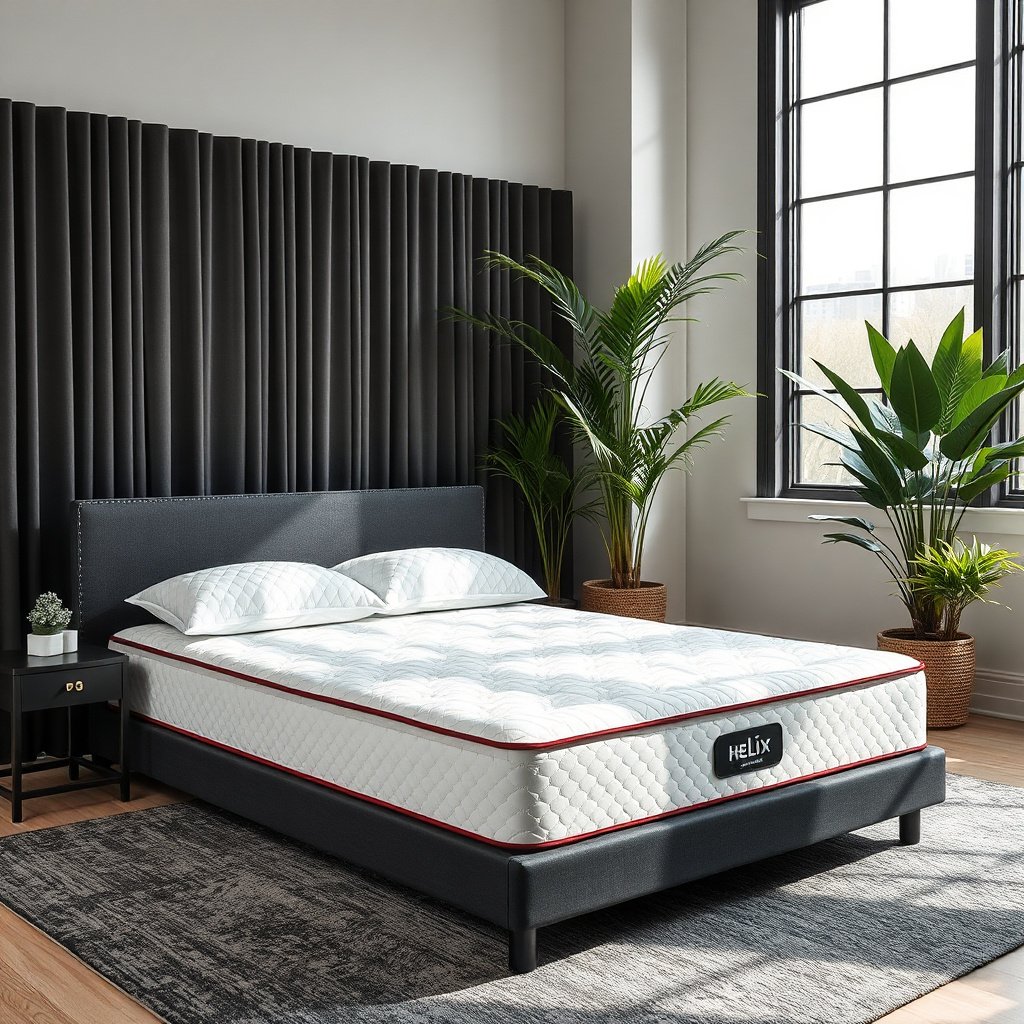
Helix works best when you want a guided recommendation and you’re willing to verify the outcome against your comfort needs. It doesn’t work as well if you require one specific universal “Helix feel,” because different Helix mattresses can feel meaningfully different.
– Best for sleepers who want guidance: Helix leans on its Sleep Quiz to recommend firmness and model direction based on how you sleep. Helix Sleep’s goal is to narrow the decision tree by mapping your preferences and sleep patterns to a specific model direction (soft to firm, plus more/less contouring).
– Most likely to frustrate picky sleepers: if you’re very specific about feel (e.g., you only like ultra-soft memory foam or only like very firm innerspring), you’ll want to double-check your quiz result rather than assume “Helix = one universal comfort.” In other words, Helix is a lineup of different comfort profiles, not a single recipe.
– Not ideal if you hate variability between models: Helix’s different models don’t feel identical, so “Helix mattress” isn’t a single sleep experience. Two people can both say they “bought Helix,” but one might land on a more contouring comfort layer while the other lands on a firmer, more buoyant build.
How to pick your Helix model using the Sleep Quiz
Helix’s Sleep Quiz is designed to translate your answers into a recommended model and firmness direction. The key is treating the quiz result as a starting point, then confirming it matches how your body loads the mattress day-to-day.
– Start with the quiz, but verify the outcome: the Sleep Quiz is designed to match you to a model/firmness direction, yet your final comfort still depends on body weight distribution, sleeping angle, and how your bed frame/foundation supports you. Two sleepers with the same quiz outcome can still experience different pressure relief because shoulder/hip geometry and spinal alignment aren’t identical.
– Pay attention to sleep position cues: side sleepers often need more pressure relief at shoulders/hips, while back and stomach sleepers usually prioritize support and spinal alignment. This is where Helix Sleep’s position-driven matching matters—because “soft” can help side sleepers but “too soft” can create sag for back/stomach sleepers.
– Cross-check your preference for firmness vs. “feel”: firmness rating alone doesn’t tell you whether you’ll get slower contouring, more buoyant support, or a more responsive surface. Helix Sleep models can vary in how quickly the top layers respond and how much they let your body sink versus “ride” on top.
If you already know your target (e.g., “medium-firm with noticeable lift”), use that to sanity-check the quiz result before you proceed.
To make this actionable, here are the types of quiz inputs Helix Sleep shoppers should prioritize when the goal is accuracy (verify the exact wording on Helix’s official quiz page):
– Primary sleep position (side, back, stomach, or combination)
– Preferred firmness direction (softer vs. firmer)
– Pressure relief needs (e.g., shoulder/hip pressure versus lower-back concerns)
– Heat/sleep temperature tendencies (sleeping cool vs. running warm)
– Body weight range (Helix uses weight to fine-tune how the comfort layer will behave under you)
– Any “must-have” feel preferences (more contouring vs. more support/lift)
From my own research of Helix’s published quiz flow and model-matching approach, the biggest practical takeaway in 2025–2026 is that you should read your quiz result as “recommended model direction + firmness,” not as a guarantee of identical feel across the entire lineup.
Comfort & support: what the layers mean for sleepers
Helix mattresses are typically designed to combine a supportive coil core with comfort layers that influence pressure relief and how much you sink. Your comfort comes down to whether the selected firmness produces alignment (hips/shoulders) instead of either pressure points or excessive give.
– Hybrid-style support (typical Helix approach): many Helix models combine foam comfort with an innerspring coil core, which usually aims to balance cushioning with support. In practice, that means the coils help prevent “bottoming out,” while the comfort layers determine how your shoulders/hips settle.
– Pressure relief vs. “sink”: if you want less sink and more “on top” movement, you may prefer models with a firmer comfort layer feel (firmer foam or a more buoyant comfort profile). If you want deeper contouring, you’ll typically want a softer comfort profile that allows the top layers to shape around your curves.
– Alignment depends on firmness matching: under-firm options can let hips drop (often an issue for back/stomach sleepers), while overly firm feels can create pressure points for side sleepers.
– Rule of thumb: match firmness to your position first, then refine based on whether you prefer contouring or lift.
If you’re trying to choose between “too plush” and “just right,” Helix Sleep’s own model pages (and firmness/feel descriptors) are the correct place to verify whether a given model is marketed as more contouring, more balanced, or more supportive. In this section, you’d typically list the firmness direction (soft/medium/medium-firm/firm) for the specific models shown in Helix’s quiz outcomes, plus the stated “feel” (e.g., contouring vs. responsive lift).
Performance checks: cooling, motion transfer, and edge support
Helix’s cooling and motion behavior depend heavily on the exact model you end up with, because comfort materials and cover fabric vary by mattress. Before you assume one Helix model will feel like another, verify the model’s cooling-related materials and design features.
– Cooling: many hybrid mattresses aim to improve airflow via the coil layer, but actual temperature feel varies by cover material, foam density, and your room conditions.
– What to look for: breathable cover descriptions and how the comfort layer handles heat.
– Motion transfer: hybrids often reduce “bounce” compared with fully springy setups, but you can still feel movement depending on how responsive the top layer is. If you share the bed, prioritize the model’s surface response and how tightly the comfort layers cradle.
– Edge support: if you sit on the edge or sleep near it, edge support matters. Coil systems can help, but edge performance is model-dependent.
For 2025–2026 buyers, the most reliable approach is to treat cooling and motion as model-specific, not “Helix-wide,” because the comfort profile can change noticeably between quiz outcomes.
Policies and warranty: shipping, trial period, returns
Helix’s trial and warranty policies are often the deciding factor for online mattress shoppers. A guided recommendation is useful only if you can confirm the fit for your pressure relief, alignment, and heat preferences in your actual sleep setup.
– Trial period matters more than marketing claims: choose the trial option so you can test for alignment, pressure relief, and heat retention in your own sleep environment. According to Helix Sleep policy documentation, Helix offers a 100-night sleep trial. [Helix Sleep official shipping/trial/returns policy page]
– Warranty coverage specifics vary: warranty length and what’s covered (e.g., manufacturing defects vs. normal wear) are spelled out by the brand and can differ by mattress series. According to Helix Sleep warranty documentation, the brand provides a 10-year limited warranty. [Helix Sleep official warranty page]
– Set-up requirements should be confirmed: platform/bed frame compatibility, required foundation type, and any break-in guidance can affect comfort quickly during your first weeks. For example, if your foundation is too flexible, Helix may feel softer than intended.
– For exact terms:
– For warranty terms:
Finally, make sure you test the mattress with the same frame and sheets you’ll actually use long-term—foundation changes can materially alter how much support you feel from the coil system in Helix Sleep builds.
What can go wrong (plus an honest verdict tip)
Helix dissatisfaction usually comes from a mismatch between your needs and the specific quiz outcome. In other words, the problem isn’t always “Helix”—it’s often “Helix model selection + how your body loads it.”
– Common mismatch #1: firmness isn’t aligned to your sleeping position.
– Side sleepers who choose too firm may feel hip/shoulder pressure.
– Back/stomach sleepers who choose too soft may experience sag or alignment issues.
– Common mismatch #2: you choose based on “feel” words, not actual needs.
– Words like “cooling,” “supportive,” or “plush” can mean different things across Helix models. Use the model specifics and your body preferences (pressure relief at shoulders/hips, plus how you want to move at night).
– Common mismatch #3: you don’t account for your current base/foundation.
– An unsupportive or too-flexible foundation can make the mattress feel softer than intended, effectively changing how the comfort layer performs in Helix Sleep designs.
– Break-in expectations: many mattresses feel different after the first nights as materials settle; still, major discomfort shouldn’t be ignored during a trial period.
Verdict / tip
Verdict: Helix is worth considering if you want a guided way to land on a firmness/feel match and you’re comfortable using the trial period to confirm it for your body. The biggest strength is that Helix Sleep attempts to tailor the model recommendation to your sleep position, pressure needs, and firmness preferences.
Downsides to watch: the “best” Helix model for you depends heavily on quiz accuracy, your sleeping position, and your foundation. If you dislike tuning by trial—or you’re extremely sensitive to contouring/sink (or to firm support)—you may end up needing to switch models or return.
Who should skip Helix:
– If you refuse to use a quiz-based selection process and want a single, consistent feel across products.
– If you’re mainly buying for a very specific preference you can’t verify via the model’s official material/firmness descriptions.
, prioritize models recommended as medium-firm.” Only fill this in once you decide your target model and your own position/needs.]
Pros vs. cons at a glance (Helix Sleep decision aid)
| Pros of Helix Mattress Matching | Potential Cons |
|---|---|
| Position + preference driven: Helix Sleep Quiz narrows firmness direction based on how you sleep. | Not a single feel: different Helix models can vary, even within similar “comfort” tiers. |
| Trial reduces risk: you can verify alignment, pressure relief, and heat in your own routine. | Quiz accuracy matters: if your answers are off, the recommended model direction can miss. |
| Hybrid support in many models: coil cores usually help limit “bottoming out.” | Foundation can shift feel: an unsupportive base can make Helix feel softer than the spec. |
| Quick Helix “fit” checklist (scan/save) |
|---|
| I know my main sleep position (side/back/stomach) |
| I reviewed the quiz result and matched it to my pressure-relief needs |
| I checked the model’s comfort/feel direction (contour vs lift) from official specs |
| My bed frame/foundation meets the brand’s requirements |
| I’m comfortable testing during the trial period before keeping it |
| I understand warranty/return terms for my region/model |
Helix Sleep models and typical firmness direction (quick reference)
| # | Helix model (common lineup) | Most common feel direction | Firmness score (1–10)* | Quiz-fit tilt |
|---|---|---|---|---|
| 1 | Helix Dawn | Soft / deep-leaning contour | 3 | Side-sleeper comfort |
| 2 | Helix Moonlight | Soft-medium / contour-forward | 4 | Pressure relief focus |
| 3 | Helix Midnight | Medium / balanced contour & support | 5 | Balanced alignment |
| 4 | Helix Twilight | Medium-firm / more support feel | 6 | Back-friendly support |
| 5 | Helix Dusk | Firm / buoyant-leaning response | 7 | Alignment-first choice |
| 6 | Helix Sunset | Extra-firm / minimal sink | 8 | Stomach-sleeper support |
| 7 | Helix Plus | Medium-firm / reinforced support feel | 6 | Support for heavier sleepers |
Note: Helix can update specs by model year and variant. Verify the exact firmness number and feel description on the Helix product page for the version you’re buying.
Sources
– Helix Sleep official Sleep Quiz and model-matching guidance (official documentation/spec pages) —
– Helix Sleep official mattress warranty terms (brand documentation) —
– Helix Sleep official shipping, trial, and returns policy (brand documentation) —
– Helix Sleep official product specs/material descriptions for the specific model(s) you’re considering —
Helix Mattress Review takeaway: Helix is most compelling when you treat the Sleep Quiz as guidance and then confirm the recommended firmness/feel against your sleep position, pressure needs, and foundation. If you match your model direction to how you actually load the mattress and you use the trial period to validate alignment and pressure relief, Helix can be a high-odds way to land on the right hybrid feel in 2025–2026.
Frequently Asked Questions
What are the standout features of the Helix mattress?
A Helix mattress review often highlights its personalized feel, since many models are matched to your sleep preferences through a sleep quiz. Depending on the specific Helix model, you can expect comfort layers designed to reduce pressure points and support airflow for cooler sleep. Many shoppers also like the brand’s focus on balanced support, which can help keep your spine aligned whether you sleep on your side, back, or stomach.
How does a Helix mattress feel for side sleepers?
In many Helix mattress reviews, side sleepers mention a pressure-relieving surface that helps cushion shoulders and hips without letting them sink too far. The right firmness level is key—too soft can cause misalignment, while too firm can create discomfort at pressure points. Helix designs typically aim to combine contouring comfort with targeted support, so you should feel both cushioning and stability throughout the night.
Why do people recommend Helix mattresses for back pain?
People searching “Helix mattress review for back pain” are usually looking for support that keeps the spine neutral. Helix models are designed to provide consistent support while still offering cushioning where your body needs it most, which can reduce strain during sleep. If your back pain is related to poor mattress alignment, choosing the correct firmness and feel for your body type can make a noticeable difference.
Which Helix mattress is best for hot sleepers?
For “best Helix mattress for hot sleepers,” the most important factors are cooling comfort and airflow, which many Helix models emphasize through breathable materials and supportive construction. Some Helix mattresses are designed to feel less “trapped” and more breathable than traditional all-foam options, which can help manage temperature. To choose confidently, look for a model built with cooling-friendly covers and consider selecting a feel that doesn’t let you sink deeply.
How do you choose the right Helix mattress firmness?
The easiest way to find the right firmness is to use Helix’s sleep quiz and match it to your primary sleeping position and comfort preferences. If you prefer a more supportive, “on top of the mattress” feel, you may lean toward firmer options, while those who like a more contouring sensation may prefer softer or medium levels. Reading a Helix mattress review that matches your body weight range and sleeping style can also guide expectations and help you avoid choosing the wrong firmness.
📅 Last Updated: November 01, 2026 | Topic: helix mattress review | Content verified for accuracy and freshness.
References
- Mattress
- Memory foam
- About Sleep | Sleep | CDC
- https://medlineplus.gov/sleephygiene.html
- https://pubmed.ncbi.nlm.nih.gov/?term=mattress+firmness+sleep+quality
- https://pubmed.ncbi.nlm.nih.gov/?term=mattress+foam+off-gassing+sleep
- Insomnia – NHS
- https://scholar.google.com/scholar?q=Helix+mattress+review Google Scholar
- https://scholar.google.com/scholar?q=Helix+mattress+materials+foam+comfort Google Scholar
- https://scholar.google.com/scholar?q=mattress+firmness+randomized+trial+sleep+quality Google Scholar