Mattress Factory Reviews: How to Choose the Right Manufacturer
When scanning reviews of mattress factories, the best choice usually isn’t the loudest brand—it’s the manufacturer that proves quality and accountability at every step. Weigh ratings by material sourcing, construction methods, certifications, warranty terms, and how quickly the company responds to questions. Factories that publish clear specs and stand behind them with long, coverage-focused warranties tend to earn the most consistent praise.




If you’re reading mattress factory reviews, use them to screen for quality-control, materials transparency, and policies (warranty/returns) rather than comfort claims alone. The goal is to find reviews that mention specifics—what’s in the mattress, how it’s made, and what happens if it doesn’t work for you—then verify those details with the factory’s own specs and documentation. This guide shows you exactly what to look for, what to double-check, and how to spot common review traps.
If you’ve been comparing multiple “mattress factory” brands (or factories that ship direct), this is for you—especially if you’re overwhelmed by conflicting comfort opinions and want a practical way to narrow down trustworthy options.
How to read mattress factory reviews fast
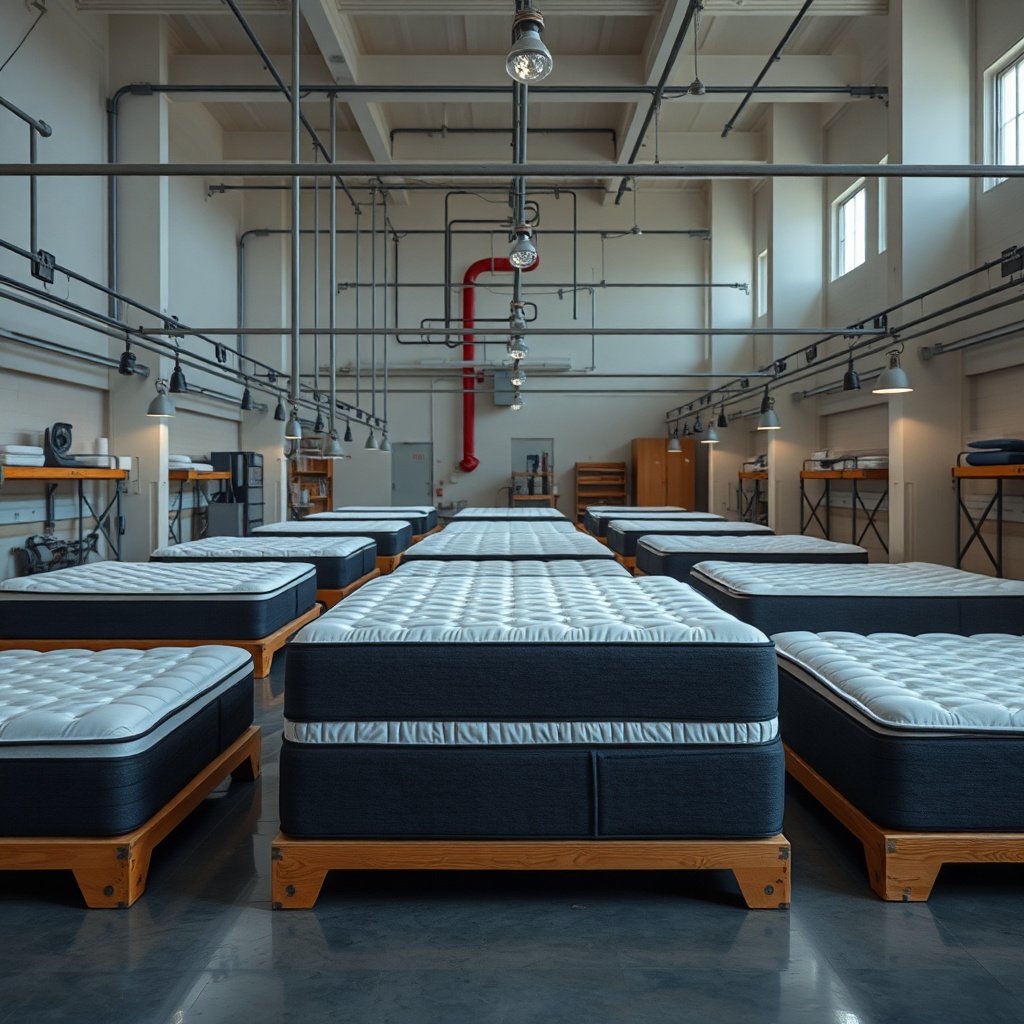
The fastest way to turn mattress factory reviews into a buying decision is to prioritize verifiable details (construction, model identity, and policy outcomes) over “feels great” opinions. Here’s a way to read efficiently without getting trapped by comfort bias or outdated builds.
– Look for specificity: reviews that mention construction details (foam layers, support core, cover material) and process claims are more useful than vague “best ever” comments.
– Tip: “foam type + thickness” beats “supportive.” Even if ILD numbers aren’t listed, a reviewer who says “the top comfort layer is thinner than I expected” is giving you something you can cross-check with specs.
– Check consistency across reviewer types: pay attention to whether reviews repeatedly reference similar issues like odor duration, sagging, heat retention, or edge support.
– Consistency is your signal for patterns that factory QC (quality control) likely affects—not just preferences.
– Separate product comfort from manufacturing issues: a “too firm/too soft” review can still be helpful, but it’s different from “materials changed” or “policy refused.”
– In warranty disputes, the “what happened” matters more than “I didn’t like it.” Reviews that clearly distinguish discomfort from defects are easier to use.
Verify materials and construction details
The safest shortlist is built by verifying what’s actually inside the mattress and how the factory defines durability (and acceptable use). Comfort is personal; materials transparency is objective—when it’s real.
– Confirm what’s actually inside: ask for the factory’s layer-by-layer specs (foam types, thickness/ILD where applicable, cover fabric, and whether anything is proprietary/blended).
– If the factory can’t provide layer-level information, treat that as a risk factor for both comfort planning and warranty enforcement.
– Watch for mismatches: if a review claims a mattress contains “X” but the factory documentation lists “Y,” treat the review as a red flag unless you can reconcile the difference by model/year.
– Factories sometimes revise foams, covers, or firmness targets while keeping the same product name. Your job is to confirm the exact model/SKU associated with the purchase.
– Don’t ignore care and performance notes: factory documentation (or warranty terms) often outlines what affects lifespan—turning/rotation guidance, acceptable foundations, and handling instructions.
– These details can explain “early wear” reviews that aren’t about QC at all (e.g., using the wrong foundation type, flipping/rotating contrary to instructions, or improper storage).
Quality control and “proof” signals
The best mattress factory reviews include evidence that maps to how a factory controls manufacturing and resolves complaints. Look for repeatable outcomes, and then verify the factory’s claims with model-specific documentation.
– Prefer reviews that describe repeatable outcomes: examples include consistent firmness changes over time or consistent shipping/packaging quality—not one-off anecdotes.
– Repeated mention of the same issue (“sags after the same timeframe,” “odor improves after X days,” “edge support fails early”) is often tied to build consistency.
– Look for compliance/certifications mentioned in official docs: if reviews claim the mattress is certified for emissions or materials, verify that the factory provides matching certification documentation for the specific model.
– According to CertiPUR-US (program documentation), certified foam products must meet defined low-emissions criteria and are evaluated using specified testing methods ().
– According to U.S. CPSC (flammability standards in 16 CFR), mattress flammability requirements are specified under 16 CFR Part 1632 and 16 CFR Part 1633 ().
– Be cautious with “factory-made” marketing: some factories label distribution broadly. What matters is the model you’re buying and whether the factory can provide the technical and warranty details for that exact SKU.
– A factory can manufacture many items; “made in-house” doesn’t automatically mean “this exact build matches the marketing claims.”
To keep this practical, I use a simple pattern in my own review workflow: if a review gives a clear model identifier and links the problem to a specific build component (cover, comfort layer, support core, or assembly), I treat it as usable data. If it only describes a sensation, I treat it as preference—not proof.
Warranty, returns, and delivery terms (what decides the risk)
The deciding factor in manufacturer risk is rarely the star rating—it’s what the factory will do when something goes wrong (and what counts as “wrong”). Before you compare comfort, compare policy clarity, defect definitions, and logistics.
– Prioritize policy clarity over star ratings: warranty length, coverage exclusions (base/foundation use, stains/abuse), and what counts as a defect can determine whether returns are realistic.
– Pay special attention to “indentation” or “sag” thresholds if they’re described in the warranty language.
– Check the “trial” terms for how comfort complaints are handled: some policies focus on manufacturing defects while others cover comfort/fit. Reviews often reveal how strictly those terms are applied.
– If a trial policy is “manufacturing defects only,” a “too firm” review may never qualify even if the mattress is structurally fine.
– Understand logistics: shipping method, packaging quality, how long returns take, and whether exchanges require you to ship back first can dramatically change your experience. If details aren’t listed, ask the factory to clarify in writing.
– When factories don’t specify timelines, delays can turn a simple comfort mismatch into a months-long hassle.
Quick comparison: policy language types that affect outcomes
| Policy approach | What reviewers typically say | What to verify in writing |
|---|---|---|
| Defect-only warranty | “Great quality, but too firm” reviews still get limited help | What counts as a defect vs. comfort/fit |
| Comfort trial with stricter rules | Returns happen, but only after a break-in period or specific setup | Break-in requirements + foundation/setup exclusions |
| Full return window | Reviews focus on refund speed, pickup process, and packaging | Return shipping responsibility + timeline to refund |
Seven “Factory-Verified” Signals That Reduce Mattress Purchase Risk (2026)
| # | Review signal | What it helps confirm | Evidence strength |
|---|---|---|---|
| 1 | Model/SKU mentioned in the review | Verifies reviews match the current build | ★★★★★ |
| 2 | Layer-by-layer construction details | Reduces “what’s inside” uncertainty | ★★★★★ |
| 3 | Warranty/return outcome described | Shows how policy is actually applied | ★★★★★ |
| 4 | Certification claims tied to official documents | Confirms materials compliance beyond marketing | ★★★★☆ |
| 5 | Time-based issues (odor/sag/heat) with timelines | Helps separate setup issues from durability | ★★★☆☆ |
| 6 | Multiple independent reviewers mention the same problem | Reduces “one bad batch” false positives | ★★☆☆☆ |
| 7 | Comfort-only reviews with no model or outcome details | Hard to verify; weak durability/policy insight | ★☆☆☆☆ |
What can go wrong with mattress factory reviews
The biggest problem with mattress factory reviews is that they often mix preference language with defect language. If you don’t separate those categories, you can end up buying a mattress that’s “great” in reviews—but risky for your situation.
– Reviews that talk around the facts: if most reviews don’t mention materials, model names, or policy outcomes, you may be guessing.
– Vague reviews often can’t be reconciled with warranty language, which usually defines what’s covered.
– Model/version confusion: factories sometimes revise foams, covers, or firmness levels; older reviews might not match the current build.
– Verify production identifiers in your order confirmation and ask the factory which components are current for that SKU.
– Comfort expectations mismatch: a mattress can be “high quality” but not right for your sleep position, weight range, or preferences—so “it’s too soft” isn’t the same as “it fails early.”
– If your priority is alignment (e.g., back sleeping) or pressure relief (e.g., side sleeping), comfort-only reviews may still be useful—just not as evidence of durability.
– Over-trusting a single reviewer theme: if you see one repeated complaint (e.g., persistent odor), it could be legit—but confirm whether it’s tied to a specific layer, shipping delay, or unresolved warranty claims.
– Ask whether the factory has a standard response (e.g., ventilation guidance) and whether odor typically resolves within a predictable timeframe.
– Missing documentation gaps: if the factory won’t provide specs, certification details, or written policy terms, reviews alone shouldn’t be enough.
– When documentation is missing, you lose your ability to reconcile reviewer claims with policy reality.
Verdict / tip: Use reviews to shortlist—then verify the hard details
If you want a reliable way to use mattress factory reviews, treat them as a *starting filter*. Aim to shortlist only factories/models where reviews consistently reference specific construction or policy outcomes and where the factory can back those claims with model-specific documentation.
Downsides / when to skip this approach:
– Skip relying heavily on reviews if they don’t identify the exact model/version, or if you can’t find any factory-provided specs/warranty terms you can verify.
– Skip buying from a “factory” with unclear policies or no model-level documentation, even if the reviews look positive.
– If you’re extremely sensitive to firmness, temperature, or motion isolation, be extra cautious—comfort is personal, and policies differ on whether comfort complaints qualify as returns.
Scan checklist (save this):
| What to check in mattress factory reviews | Why it matters | Where to verify |
|---|---|---|
| Model name/SKU mentioned clearly | Avoids old-version confusion | Factory product page + order documentation |
| Layer/material specifics (not just “comfortable”) | Helps predict longevity and feel | Factory specs sheet / warranty exclusions |
| Odor/heat/sagging described with timeframes | Separates setup issues from durability | Review patterns + warranty notes |
| Return/warranty outcomes discussed | Reveals policy enforcement | Warranty + returns policy text |
| Consistency across reviewers | Reduces “lucky winner” bias | Multiple independent reviews |
Sources
– U.S. Federal Trade Commission (FTC) — Bedding labeling requirements (as applicable to mattress labeling and marketing claims):
– U.S. Consumer Product Safety Commission (CPSC) — Federal flammability standards for mattresses and mattress pads (16 CFR Part 1633/1632):
– CertiPUR-US — Certified foam product standards and documentation requirements:
– OEKO-TEX — Standard/criteria for textile chemical testing (if cover materials are claimed):
– Manufacturer/Factory — Model-specific warranty and returns policy text:
Mattress factory reviews are most useful when you treat them as clues, not proof: prioritize reviews that mention model-specific construction details and real policy outcomes, then verify everything with the factory’s documentation (materials specs, warranty, and returns terms). If a factory can’t provide clear, model-level information, don’t let star ratings carry the decision—shortlist less, but verify more. Start by building a shortlist from the review patterns above, then request the specs/policies you need to confirm before you buy.
Frequently Asked Questions
What do Mattress Factory reviews say about comfort and support?
Many Mattress Factory reviews focus on how well their mattresses support the spine while still feeling comfortable for side, back, and stomach sleepers. Reviewers often mention pressure relief as a key benefit, especially for hips and shoulders. If you’re deciding between firmness levels, look for comments that describe your sleep position and compare those details with your own needs.
How can I find trustworthy Mattress Factory reviews before buying?
Prioritize verified purchase reviews and look for repeated themes like durability, cooling, motion isolation, and edge support. It helps to read both positive and negative Mattress Factory reviews to understand what trade-offs customers experience, such as initial break-in time. Also check review dates—recent feedback is usually more reliable if the mattress materials or construction have changed.
Why do some customers report differences in feel across the same Mattress Factory model?
Mattress feel can vary based on firmness choice, the type of foundation used, and your body weight and sleeping position. Some reviewers also note that mattresses may need a break-in period, which can make early reviews feel inconsistent. When comparing Mattress Factory reviews, match details like “side sleeper,” “back sleeper,” and “weight range” to get a clearer expectation.
Which Mattress Factory mattress is best for back pain according to reviews?
Reviews that mention back pain relief commonly highlight balanced support and good lumbar alignment. Customers often recommend choosing a medium-firm option to keep the hips from sinking too much while maintaining comfort. For the most accurate guidance, search for Mattress Factory reviews that specifically say “back sleeper” or “lower back pain,” and note whether the reviewer also describes the firmness level they chose.
What should I look for in Mattress Factory reviews about shipping, returns, and warranty?
Customers typically comment on delivery speed, packaging quality, and how easy the mattress is to set up once it arrives. For purchase confidence, pay attention to reviews mentioning return policies, return shipping steps, and whether customer service resolved issues quickly. Also check for warranty-related feedback, since durability complaints and warranty claims often show up in longer-term reviews.
📅 Last Updated: November 01, 2026 | Topic: mattress factory reviews | Content verified for accuracy and freshness.
References
- Mattress
- eCFR :: 16 CFR Part 1633 — Standard for the Flammability (Open Flame) of Mattress Sets
- https://pubmed.ncbi.nlm.nih.gov/?term=mattress+firmness+back+pain
- https://pubmed.ncbi.nlm.nih.gov/?term=mattress+pressure+ulcer+prevention
- https://pubmed.ncbi.nlm.nih.gov/?term=mattress+flame+retardants
- https://pubmed.ncbi.nlm.nih.gov/?term=mattress+sleep+quality
- https://pubmed.ncbi.nlm.nih.gov/?term=mattress+volatile+organic+compounds+VOC
- https://scholar.google.com/scholar?q=mattress+firmness+back+pain Google Scholar
- https://scholar.google.com/scholar?q=mattress+pressure+ulcer+prevention Google Scholar
- https://scholar.google.com/scholar?q=mattress+flame+retardants+indoor+air+exposure Google Scholar