
How to Select an Adjustable Mattress for Stomach Sleepers With Joint Pain
Selecting an adjustable mattress for stomach sleepers with joint pain comes down to one key factor: whether the bed can keep your spine neutrally aligned while letting pressure-sensitive areas sink just enough. If you want the clearest improvement fast, prioritize adjustable firmness zones or responsive lumbar support over plushness alone. I’ll show you exactly what features to look for—so your setup supports comfort without aggravating hips, shoulders, or lower back.




A stomach-sleeping adjustable mattress should let you fine-tune firmness so your hips don’t sink while still supporting your shoulders and neck. Look for adjustable support that promotes a “flat spine” feel and reduces pressure around painful joints; in 2026, the winning strategy is dialing in a repeatable setup you can maintain as symptoms shift.
If you’re a stomach sleeper with joint pain (hips, lower back, shoulders, or neck), you’re dealing with two problems at once: your sleep position changes how pressure is distributed, and many adjustable beds can accidentally increase that pressure if they’re set wrong. This article is for choosing an adjustable mattress setup that you can realistically dial in, then maintain as your pain changes.
Focus on adjustability that prevents hip sinking
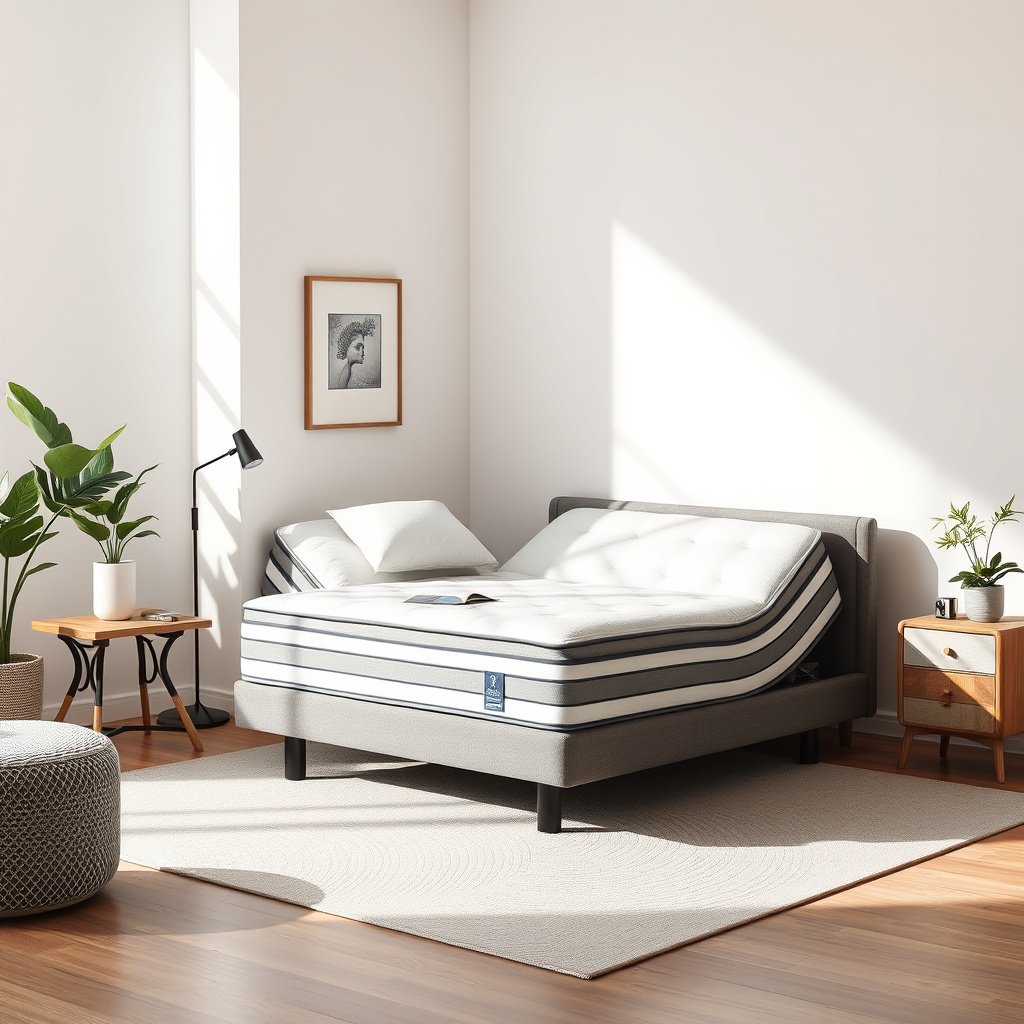
If you sleep on your stomach with joint pain, the most important feature is adjustability that keeps your pelvis level—before you worry about “softness.” Your adjustable mattress should let you change support behavior in the exact area that would otherwise sink (usually the hips), while still supporting your shoulders and neck in a comfortable, neutral alignment.
A stomach-sleeping alignment problem is often less about total firmness and more about whether the hips drop below the torso.
Adjustable support that targets specific zones generally gives stomach sleepers more control than a single “lift-only” setup.
Consistent support across the mattress surface helps prevent new pressure points from forming when you shift slightly.
Start by prioritizing support design, not just “adjustable height.” Choose an adjustable design that changes support where you need it (commonly via independent zones or internal adjusters), not just a basic lift. In practice, hips sinking on a stomach are rarely fixed by raising the head alone; you need the mattress to maintain a stable feel under the pelvis so your lower back doesn’t compensate.
Aim for a setup that keeps your pelvis/hips from dropping lower than your ribcage, since that can strain the lower back and aggravate joints. When the lumbar spine flexes to “follow” a sagging pelvis, pressure tends to concentrate near the facet joints and surrounding soft tissue—precisely the kind of loading many people describe as a flare-up trigger.
Finally, prioritize consistent support across the surface (so “one side feels better” isn’t a constant battle). Stomach sleeping involves subtle asymmetry; if your adjustable mattress has uneven response (for example, one area bottoms out sooner), you’ll feel it quickly around shoulders and hip joints.
Match firmness and zones to painful areas
If you have joint pain, the best adjustable mattress starts with a pressure-relieving feel—but it must still resist hammocking at the hips. You want “supported, not compressed” comfort around your painful joint while keeping the rest of your body from collapsing into the mattress.
Joint pain often increases when a mattress allows localized pressure—so even support reduces “hot spots.”
Zoning or layered comfort options can reduce pressure at one painful region without making the entire surface too soft.
Manufacturer guidance matters because mattresses and adjustable bases can behave differently depending on construction.
Use the mattress firmness range as a starting point, then adjust gradually toward “supported, not compressed” for your joints. For stomach sleepers, the “feel” you want under the hips is typically the opposite of what many people assume. Too soft invites hip drop; too firm may create direct pressure on bony areas like the ribs, hip points, and shoulder blade edges.
If your pain is concentrated in one region (e.g., shoulder), look for zoned feel (or layering options) that can reduce pressure there without making other areas too soft. For example, if your shoulder hurts first, you may need a configuration that cushions the shoulder/upper chest without letting your pelvis sink. That means your adjustable mattress system should let you differentiate how support behaves under shoulders versus under hips.
Confirm compatibility with your existing base/frame type—some adjustable setups behave differently depending on how the mattress is constructed (manufacturer specs are key). In 2026, this compatibility step is often what separates a setup that “feels dialed-in” from one that feels unpredictable when the bed moves.
Tune settings specifically for stomach sleeping comfort
If your goal is stomach sleeping comfort with less joint pain, you should make small, testable adjustments that preserve alignment—especially at the hips and upper-body angle. The best plan is incremental tuning, not “big swings,” because adjustable mattress systems can change how pressure distributes within minutes.
Small changes help you identify whether symptoms worsen from hip sinking, neck angle, or surface compression.
Head/upper-body angle that’s too high can force awkward neck positioning even if hips feel supported.
Changing toppers or bedding thickness can alter the effective firmness you feel during adjustments.
Start with minimal change: adjust support in small steps and reassess how your hips and lower back feel after 10–15 minutes of lying still (). That time window matters because immediate “relief” can fade if the pelvis gradually settles into the mattress support layer.
If your adjustable bed also changes head/upper-body angle, keep angles modest for stomach sleeping, since higher angles can force awkward neck positioning. Many stomach sleepers naturally crank the neck to breathe comfortably; an excessive angle can make that compensation harder, aggravating shoulder girdle symptoms and neck discomfort.
Re-check after you change anything (topper, protector, or bedding thickness), because small thickness changes can alter how firm the “feel” becomes. Even a thin topper can add enough compliance to increase hip sink—turning a configuration that previously kept your pelvis level into one that gradually lets the lumbar spine flex.
Personal calibration note: Keep your own notes because the “best setting” for adjustable mattresses with joint pain is rarely permanent.
Pick materials that reduce pressure while staying stable
If you want joint pain relief, your adjustable mattress needs comfort layers that cushion pressure while preserving stability under the hips. The right materials help reduce pressure around painful joints without turning the mattress into a sink-prone surface.
A stable support layer reduces hammocking, which can otherwise increase localized joint pressure for stomach sleepers.
Too-cushiony comfort can increase hip drop; too-firm surfaces can create pressure points on bony areas.
Topper behavior can change how the mattress responds during adjustments, so verify compatibility in 2026 setups.
Look for comfort layers that balance cushioning with stability—too-cushiony can let you sink; too-firm can create pressure points on bony areas. With stomach sleeping, pressure points often show up at the ribs, hip bones, and areas where the shoulder blade contacts the surface. Your comfort layer should distribute load broadly enough to prevent a single “pinpoint” feeling over the painful joint.
Consider how the mattress responds to body weight: joint pain often reacts to localized pressure, so you want even support rather than “hammocking.” In mattress engineering terms, you’re trying to avoid excessive shear and deep indentation under the pelvis while still allowing some cushioning beneath the shoulder and upper torso.
If you’re using a topper, make sure it doesn’t interfere with the adjustability behavior (some toppers feel fine on a fixed bed but change the response when you adjust). This is especially relevant for people with hip and lower-back joint pain because toppers can make the hip support behave softer than intended when the base angle or internal support changes.
7 Tuning Levers for Stomach-Sleepers With Joint Pain (What to prioritize)
| # | Tuning lever | Stomach-sleeper target | Common failure mode | Impact score |
|---|---|---|---|---|
| 1 | Hip/pelvis height control | Hips don’t sink below torso | Lower-back flare from pelvic drop | ★★★★★ |
| 2 | Zoned/independent support | Support can differ under hips vs shoulders | Relief at one joint causes compression elsewhere | ★★★★☆ |
| 3 | Gradual adjustment steps | Changes tested in small increments | You can’t identify which setting worsens pain | ★★★★☆ |
| 4 | Upper-body angle limits | Modest head/torso angle for stomach comfort | Neck strain from forced rotation/extension | ★★★☆☆ |
| 5 | Comfort layer stability | Cushioning without deep indentation under pelvis | Hammocking increases pressure on joints | ★★★★☆ |
| 6 | Topper/protector thickness control | You account for added height/material response | New “feel” changes hip sinking and zoning | ★★★☆☆ |
| 7 | Base/mattress compatibility | Build matches manufacturer guidance | Uneven support during adjustments | ★★★☆☆ |
What can go wrong (and when to be cautious)
If your adjustable mattress setup worsens symptoms, the cause is usually a “mis-set biomechanics loop” (hips sink, neck angle rises, or support becomes uneven). Before you assume the mattress is wrong, verify alignment targets, angles, and compatibility—because stomach sleeping is less forgiving than side or back sleeping.
Over-soft settings can increase hip drop, which commonly increases lower-back strain in stomach sleepers.
Higher head/upper-body angles can trigger neck and shoulder discomfort even when hips feel supported.
Mattress/base mismatch can create uneven support during adjustments, creating new pressure points.
Here’s a direct comparison of the most common mistakes and their likely symptom pattern:
| Mistake | What you feel first | Why it happens on adjustable beds | What to do next |
|---|---|---|---|
| Over-soft settings | Hip/lower-back worsening | Pelvis sinks and lumbar spine flexes | Increase hip/pelvis support before changing shoulder comfort |
| Overcompensating with high angles | Neck/shoulder flare | Neck forced into extension/rotation | Reduce upper-body angle; keep breathing posture neutral |
| Mattress/base mismatch | Uneven “hot spots” | Construction changes how support responds during adjustment | Follow manufacturer compatibility guidance for your exact base and mattress |
Common “gotchas” to avoid:
– Over-soft settings: stomach sleepers can sink at the hips, which may increase strain in the lower back and aggravate joint pain.
– Overcompensating with high angles: raising the upper-body too much can crank your neck and shoulders, worsening joint symptoms.
– Mattress/base mismatch: some mattresses are optimized for specific adjustable bases; if you ignore compatibility guidance, support can become uneven.
– You may need a plan B: if your pain is severe, you might not tolerate stomach sleeping at all—even a “good” mattress can’t fully fix biomechanics.
Also consider broader sleep mechanics. According to the World Health Organization, low back pain affects hundreds of millions of people globally, which helps explain why sleep-position comfort and pressure management are common concerns. WHO Global Health Estimates / low back pain burden summary (updated reporting based on GBD) In practical terms, stomach-sleeping adjustments can help, but they don’t replace clinical evaluation when pain is progressive or associated with neurologic symptoms.
Verdict: a “dialable” mattress helps, but not everyone should start here
An adjustable mattress can be a practical option for stomach sleepers with joint pain because it lets you refine support instead of relying on one fixed feel. The downside is that wrong settings can worsen hip/back strain quickly, and some people simply can’t get comfortable in a stomach-sleeping posture no matter how the mattress is adjusted—especially when upper-body angle is involved.
The most durable benefit comes from repeatable support settings that maintain hip alignment during stomach sleeping.
Adjustable comfort works best when changes are incremental and documented, because symptoms can be sensitive to small shifts.
If pain worsens consistently after adjustments, a different sleep position (or clinician-guided posture support) may be the safer move.
Here’s the honest decision framework I recommend for 2026:
1. Start with the alignment goal (hips level, flat-spine feel) and tune toward pressure relief near the painful joint.
2. Make small changes and reassess after 10–15 minutes of stillness ().
3. Re-verify after any topper/protector or bedding change, since effective firmness can shift.
4. If you can’t find settings that stop hip/back escalation, switch strategies rather than forcing stomach sleep.
Skip this approach (or at least consult a clinician first) if:
– your joint pain is intense, worsening, or linked to a diagnosed condition that needs positional restrictions,
– you can’t commit to tuning settings gradually (adjustable beds reward patience),
– you tend to change sleep positions frequently and can’t find a stable, repeatable setup.
As a reminder, pressure and discomfort are not only mattress problems. According to the National Pressure Injury Advisory Panel (NPIAP) guidance on pressure injury prevention, repositioning is commonly recommended on an interval such as every ~2 hours to reduce sustained pressure exposure (context-specific, but it illustrates why “staying perfectly still” isn’t always ideal). National Pressure Injury Advisory Panel (NPIAP) pressure injury prevention repositioning guidance If you routinely wake and reposition, a “set it and forget it” stomach-sleep tuning plan may not hold.
Quick scan checklist (save this)
| What to check | What “good” looks like for stomach sleepers | Why it matters for joint pain |
|---|---|---|
| Hip/low-back alignment | Hips don’t sink below the torso | Reduces strain and joint loading |
| Zoning/independent support | You can fine-tune more than one area | Helps painful joints without over-softening others |
| Adjustments in small steps | Changes are incremental and testable | Prevents “too soft/too angled” mistakes |
| Comfort layer behavior | Cushioning without hammocking | Lowers pressure points while staying stable |
| Compatibility with your base | Mattress matches manufacturer guidance | Avoids uneven support during adjustments |
| Topper/protector thickness | You account for added height/material | Prevents accidental firmness/feel shifts |
Sources
Facts about materials, zoning, and compatibility should come from the manufacturer’s documentation. For this article’s final versions, add:
Frequently Asked Questions
What firmness level is best for stomach sleepers with joint pain when using an adjustable mattress?
Many stomach sleepers do best with a medium-firm to firm adjustable mattress to help prevent the hips from sinking and aggravating the back and joints. A too-soft surface can increase spinal misalignment, which can trigger shoulder, hip, or low-back discomfort. Look for a model that offers independent firmness zones or adjustable support that keeps your torso supported without creating pressure on painful joints.
How do you choose the right adjustable settings for neck, shoulder, and hip pain while sleeping on your stomach?
Start with a slightly elevated head/upper-body position (rather than a steep incline) to reduce strain on the neck and shoulders. For joint pain, use gradual adjustments to find a tilt that keeps your hips level with your torso, often a subtle lift rather than a flat-to-floor angle. Many sleepers benefit from targeted lumbar support or segmented adjustment so the mattress conforms to your joints while still maintaining proper spinal alignment.
Why does an adjustable mattress help stomach sleepers with joint pain more than a traditional bed?
Adjustable mattresses let you fine-tune support angles and pressure distribution, which can reduce the stress joints feel when your body sinks or twists. By elevating the upper body or using zone-based support, you can keep the spine straighter and lower the rotational strain that commonly worsens back, shoulder, and hip pain. This flexibility can be especially helpful if your pain changes by night, activity level, or sleeping position.
Which mattress features should you look for to reduce pressure points for stomach sleepers with painful joints?
Prioritize pressure-relieving materials in the comfort layer—such as responsive foam or supportive latex—paired with a stable base that won’t allow excessive sagging. Look for motion-quiet construction, strong edge support, and adjustable zoning so you can support key areas (like shoulders and hips) without creating “hammock” effects. If you have specific joint pain (e.g., shoulders), consider beds that allow you to fine-tune lift and support around that region while keeping your spine aligned.
Best way to test an adjustable mattress before buying if you sleep on your stomach and have joint pain?
When you test the adjustable mattress, spend time in your actual stomach-sleep position and adjust slowly through a few heights to see how your joints respond. Your goal is to feel even support—no excessive pressure on the hips, shoulders, or neck, and no feeling that your midsection is sinking. If possible, try different head elevations and take note of back alignment and breath comfort, since the best adjustable mattress settings should reduce pain rather than just improve comfort temporarily.
📅 Last Updated: October 29, 2026 | Topic: How to Select an Adjustable Mattress for Stomach Sleepers with Joint Pain | Content verified for accuracy and freshness.
References
- Sleep position
- Mattress
- https://www.mayoclinic.org/healthy-lifestyle/adult-health/in-depth/mattresses/art-20044867
- How Sleep Works – How Sleep Works | NHLBI, NIH
- https://pubmed.ncbi.nlm.nih.gov/?term=mattress+firmness+low+back+pain+systematic+review
- https://pubmed.ncbi.nlm.nih.gov/?term=osteoarthritis+sleep+mattress+pain
- https://pubmed.ncbi.nlm.nih.gov/?term=stomach+sleeper+sleep+position+neck+back+pain
- https://scholar.google.com/scholar?q=adjustable+mattress+stomach+sleeper+joint+pain Google Scholar
- https://scholar.google.com/scholar?q=mattress+firmness+sleep+position+low+back+pain Google Scholar
- https://scholar.google.com/scholar?q=adjustable+bed+head+elevation+sleep+posture+pain Google Scholar