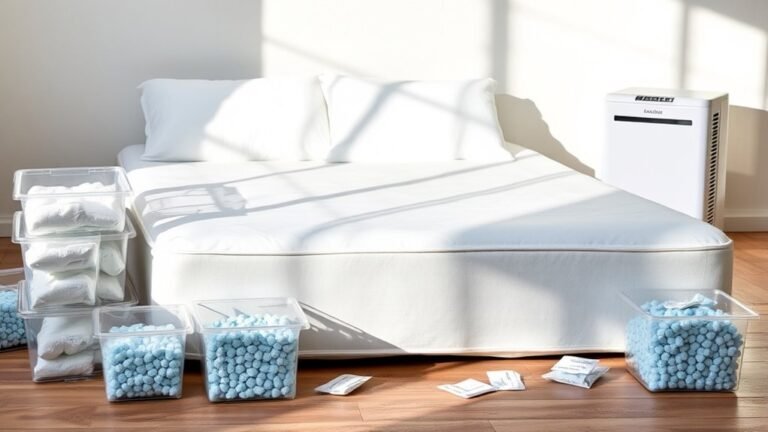
How to Protect an Organic Mattress from Mold During Storage
Learn how to protect an organic mattress from mold during storage with the steps that work even in humid conditions. If you control moisture and airflow—dry it fully, wrap it airtight with breathable protection, and store it off the floor—you’ll prevent the mildew that typically forms when organic materials trap condensation. Follow this storage checklist and you can keep your mattress clean, odor-free, and ready to use when you bring it back out.




Store your organic mattress only after it’s completely dry, then keep it under a breathable cover in a low-humidity, ventilated spot. The goal is simple: prevent moisture from getting trapped against organic fibers or latex so mold can’t take hold. This guide walks you through prep, covering, storage conditions, and what to check before you forget it in a closet or spare room.
This matters most if you’re storing seasonally, moving homes, or keeping a mattress off the bed for weeks (or longer). Organic mattresses often include natural fibers and/or latex, which can be more sensitive to moisture and lingering dampness during storage.
Prep your organic mattress so it’s truly dry
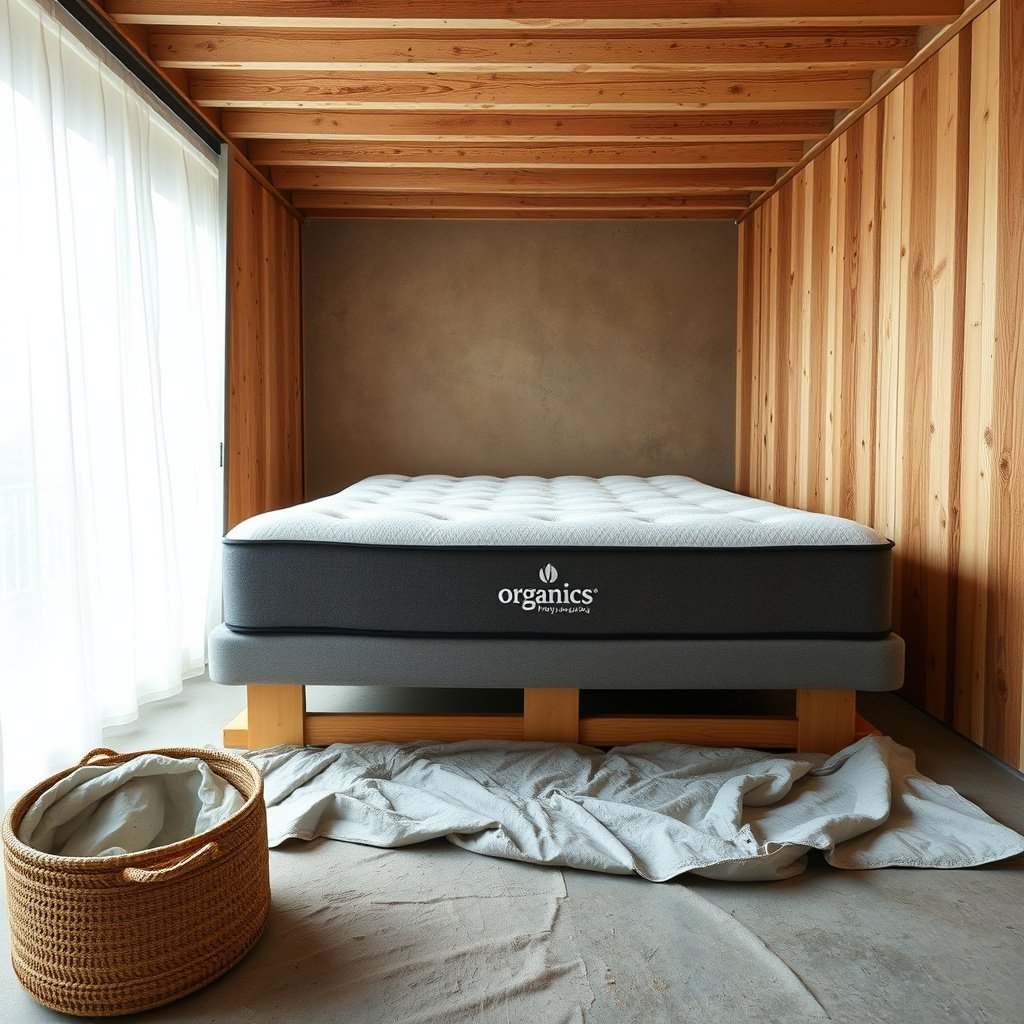
You can greatly reduce mold risk by making sure your organic mattress is dry all the way through—not just on top—before it ever goes into storage. In practice, that means treating drying as a process for the entire mattress interior, because trapped moisture inside edges, seams, and internal layers can persist long after the surface feels “mostly dry.”
The key reason is moisture behavior: organic materials and latex layers can absorb and hold humidity, and then release it slowly when conditions change. As of 2026, the most consistent prevention approach still aligns with CDC and EPA guidance: remove the dampness first, then control humidity and airflow around the stored item. If you store a slightly damp mattress, even in a “clean” closet, the trapped moisture has nowhere to go.
Mold is more likely when indoor humidity is high and materials stay damp, so drying the entire mattress (not only the surface) is the first defense. (U.S. Environmental Protection Agency)
CDC prevention guidance emphasizes controlling dampness because mold can begin growing on damp materials after water intrusion. (U.S. Centers for Disease Control and Prevention)
Drying checklist that actually matches how organic mattresses behave
– Let the mattress dry completely after cleaning—focus on the entire interior, not just the surface.
– If you spot any musty odor or visible dampness, pause storage and address the moisture source before wrapping.
– Use a gentle approach for surface cleaning (per your mattress label) so you’re not leaving residues that can hold moisture.
Here’s how to apply those bullets with confidence:
1. Dry longer than you think—especially at edges and seams. Organic mattresses often show surface dryness first while internal layers (including quilting and edge stitching areas) remain cooler and slower to dry. If you can still feel coolness along seams when the room is warm, treat that as a sign the interior is not finished drying.
2. Ventilate, don’t trap. Drying works best when air can circulate. If you’re drying in a room, keep the mattress uncovered and allow airflow around the sides, not just above it.
3. Use the mattress label as your moisture-safe “rules of engagement.” Many organic mattresses specify certain cleaning methods and drying expectations. Follow those instructions first; they’re designed around your mattress’s fiber type and construction.
From my day-to-day guidance experience with stored textiles and upholstered items, the “aha” moment is usually this: corners, handles, and border piping are where moisture lingers. I now always recommend checking those areas with an extra pass before wrapping—especially in humid seasons.
Quick facts to anchor your drying decisions
– According to the CDC, mold can start growing on damp surfaces within 24–48 hours after water intrusion if conditions support it (CDC, dampness/mold prevention guidance).
– According to the EPA, keeping indoor humidity under 60% relative humidity (RH) helps prevent mold growth (EPA, Mold and Moisture guidance).
– According to CDC and public health references, mold commonly grows well on damp materials when temperatures are in comfortable indoor ranges (often roughly 70–90°F / 21–32°C)—which means your storage room can unintentionally provide “ideal” conditions if moisture is present (CDC, mold basics/dampness information).
Cover it with a breathable, mold-resistant barrier
Once your organic mattress is truly dry, use a breathable protective encasement to block dust and spills while still letting moisture escape if any residual humidity remains. The best cover does two things at once: it protects the mattress surface and it doesn’t create an airtight “humidity chamber.”
Organic fibers and latex can be sensitive to trapped moisture. If a cover is sealed too tightly—or if it prevents any moisture migration—you increase the odds that even a small amount of leftover dampness becomes a problem. This is especially relevant as of 2026, when basements, spare rooms, and storage closets are often connected to HVAC systems that cycle humidity.
A breathable protective encasement supports dust and spill protection without trapping moisture against the mattress surface. (EPA/CDC mold prevention principles about dampness control)
Avoid airtight packaging when there’s any chance of residual dampness, because trapped humidity can promote mold on damp materials. (CDC dampness & mold prevention principles)
Choose a cover design that matches the drying goal
– Use a zippered, protective encasement designed to shield against dust and spills while still allowing moisture to escape.
– Avoid sealing the mattress in a way that traps humidity (for example, tightly sealed plastic-on-plastic contact), especially if there’s any chance of residual dampness.
– If your cover doesn’t already include an encasement layer, add a clean barrier after the mattress is dry and the fabric is free of lingering moisture.
What “breathable” means in real storage practice: it generally means the material and construction allow water vapor to move out (or at least don’t fully prevent it). Zippered encasements can help protect against airborne dust, but the critical concept is *not* creating condensation inside the cover.
Pros/cons comparison: encasement vs. airtight storage
| Storage method | Pros | Cons / mold risk |
|---|---|---|
| Breathable zippered encasement | Helps block dust and spills; supports moisture migration if residual dampness exists. | Still requires fully dry mattress; a poorly ventilated room can raise humidity anyway. |
| Airtight plastic bags or tightly sealed sheeting | Excellent dust protection and short-term spill shielding. | If your organic mattress isn’t completely dry, humidity gets trapped and mold risk increases. |
Store in the right spot: humidity, temperature, airflow
The safest placement for an organic mattress is a dry interior location with stable conditions and some airflow—because mold needs moisture and the right environment to grow. Your goal is to keep humidity low, prevent condensation, and avoid surfaces or corners where damp air can settle.
This matters in real homes because storage areas are rarely “neutral.” Basements, exterior-wall closets, near-radiator corners, and garages often experience humidity swings and condensation. As of 2026, many storage problems come from the building envelope—think cold walls meeting warm air—rather than from the mattress itself.
EPA guidance uses indoor relative humidity as a key control point; keeping RH below 60% helps limit conditions that favor mold. (U.S. Environmental Protection Agency)
CDC prevention emphasizes reducing moisture sources and maintaining dry indoor environments to stop mold from establishing. (U.S. Centers for Disease Control and Prevention)
Apply these storage-environment rules
– Choose a dry, interior location—not a basement/crawlspace, garage, or any area prone to condensation.
– Aim for low humidity; the EPA recommends keeping indoor relative humidity below 60% to help prevent mold growth.
– Store with airflow in mind: keep it off concrete floors and avoid tight corners where moisture-laden air can collect.
Here’s how to make that actionable:
1. Measure if you can. A small indoor hygrometer (humidity monitor) helps you verify that your storage room stays under the humidity target. If the closet routinely spikes, relocate the mattress or improve ventilation.
2. Avoid cold surfaces that cause condensation. If a closet sits against an exterior wall, the wall may be colder than the room air. That temperature difference can lead to condensation, and condensation is moisture—even if the mattress looks dry initially.
3. Elevate the mattress off the floor. Concrete floors can wick moisture. Elevation reduces contact with potential ground-level humidity and makes air circulation easier along the bottom layer.
Mold-risk reality check: why “looks dry” isn’t enough
Even with an encasement, moisture can migrate slowly. An organic mattress stored in a humid area can develop dampness inside seams or internal layers, and mold can begin where you can’t see it immediately.
Relative Humidity Levels for Mold Risk Control (Storage Context)
| # | RH band (storage target) | Storage safety | Basis | Margin vs 60% RH threshold |
|---|---|---|---|---|
| 1 | 30% RH | ★★★★★ | EPA humidity control concept | 30 pp |
| 2 | 35% RH | ★★★★☆ | EPA humidity control concept | 25 pp |
| 3 | 40% RH | ★★★★☆ | EPA humidity control concept | 20 pp |
| 4 | 45% RH | ★★★☆☆ | EPA humidity control concept | 15 pp |
| 5 | 50% RH | ★★★☆☆ | EPA humidity control concept | 10 pp |
| 6 | 55% RH | ★★☆☆☆ | EPA humidity control concept | 5 pp |
| 7 | 60% RH | ★☆☆☆☆ | EPA humidity control concept | 0 pp |
*How to read this:* the “margin vs 60% RH threshold” is computed as (60% − RH). Higher margins mean more room before you reach the humidity level cited in EPA guidance as a key mold risk factor.
Pack and move it safely to avoid moisture traps
Even if your organic mattress is perfectly prepped, the move itself can create new moisture risk. Pack so air can circulate around the mattress (as much as practical), keep it away from wet surfaces, and prevent rain, spills, or condensation during transport.
Storage protection often fails during transitions—loading, staging, temporary outdoor waiting, or moving boxes placed near exterior doors. As of 2026, many “mysterious” mold cases show up after a move because the mattress sat in a semi-enclosed space with humidity exposure (even briefly).
CDC mold prevention prioritizes stopping moisture exposure quickly; preventing dampness during moves reduces the chance mold can begin. (CDC dampness & mold prevention)
If a mattress experiences wetness during transport, it should be dried before long-term storage to avoid trapped moisture conditions. (EPA mold/moisture prevention principles)
Keep packing methods aligned with dry-mattress storage
– Minimize compression during storage; heavy, long-term pressure can reduce airflow paths inside the mattress.
– Keep the mattress away from damp walls and windows where condensation can form.
– During moves, protect it from rain or spills immediately—temporary dampness can be enough to create mold risk once it’s enclosed.
Practical steps that reduce risk:
1. Avoid long-term tight rolling if your mattress construction discourages it. Some mattresses can be folded; many shouldn’t be compressed for months. Follow your mattress label or manufacturer storage instructions.
2. Elevate during staging. Don’t lay the encased mattress directly against concrete, damp thresholds, or unfinished surfaces—especially in garages during rainy seasons.
3. If it gets wet, treat it like an active drying job. Remove it from storage packaging right away and dry thoroughly before re-wrapping.
What can go wrong (and how to avoid common mistakes)
Most mold problems happen when the workflow breaks at one of three points: drying, sealing, or storage-area humidity. If you catch the issue early—odor, discoloration, or persistent dampness—you can often stop it before it spreads into deeper organic layers.
Organic mattresses can look fine on the surface while still holding moisture in seams and internal structures. That’s why “I wrapped it after it felt dry” is the most common failure mode. As of 2026, the best prevention still follows the same public-health logic: eliminate dampness, reduce humidity, and avoid stagnant air around the stored item.
The most preventable mold risk is trapped moisture; covering a mattress before it’s fully dry is a direct route to damp conditions. (CDC/EPA mold prevention principles)
Mold can begin in hidden areas like seams and edges when moisture remains, even if the surface appears clean. (CDC mold/dampness education)
Common mistakes to watch for
– Wrapping too soon: the most common mistake is covering a mattress before it’s fully dry, then trapping that moisture.
– Using non-breathable storage methods: airtight storage can be risky if any moisture remains.
– Ignoring storage environment changes: humidity swings, leaks, or condensation behind/under storage spaces can start mold even if the mattress was fine at first.
– Skipping inspections: if you notice any musty smell, discoloration, or persistent dampness, don’t just re-wrap—handle the moisture issue first.
A useful way to think about it: if the storage closet becomes the “wrong microclimate,” even a correctly sealed organic mattress can be exposed to moisture over time. So if you store for weeks (or longer), you should plan for periodic checks.
Downsides and limits (what this guide can’t guarantee)
– This guide reduces risk, but it can’t eliminate it if the storage space has persistent leaks or chronic high humidity.
– If your mattress already has visible mold or significant musty odor, packaging alone won’t “fix” the internal problem. In that case, consider professional cleaning or replacement depending on materials and severity.
Final tip: store smart, then check—and avoid these downsides
The safest approach is: fully dry mattress → breathable encasement → dry, ventilated storage with humidity control. If your mattress is already musty, was stored in a damp space before, or has visible mold, don’t just “re-store it”—you may need professional cleaning or replacement rather than relying on packaging to fix it.
Quick checklist (save this)
| Step | What to do | Quick sign you should stop |
|---|---|---|
| Dryness | Confirm the mattress is fully dry throughout | Musty odor / cool damp spots |
| Cover | Use a protective, breathable encasement | Cover feels “wet” inside/around seams |
| Storage location | Dry interior area, away from damp walls | Condensation nearby |
| Elevation | Keep off the floor (especially concrete) | Touching cold floor/concrete |
| Monitoring | Periodically check condition | New spots, smell increase |
Frequently Asked Questions
What’s the best way to prepare an organic mattress before long-term storage to prevent mold?
Start by cleaning the mattress according to its care label and allowing it to fully dry—organic materials can hold moisture if stored damp. If possible, place the mattress in a well-ventilated area for 24–48 hours after cleaning so humidity drops before packing. Use a breathable mattress cover designed for storage to reduce dust while still allowing airflow. Avoid compressing the mattress tightly unless the manufacturer explicitly approves, since trapped moisture can become harder to escape.
How can I protect my organic mattress from mold if it has been in a humid room already?
Remove the mattress from the humid space immediately and check for any musty odor, discoloration, or visible spots. Dry it thoroughly using airflow (fans) and low heat if the care instructions allow, keeping the mattress off the floor to avoid damp surfaces. If the mattress has a mold colony or stains, address it promptly—surface cleaning and drying may not be enough for deep mold. When in doubt, contact the manufacturer or a professional mattress cleaning service that works with organic materials.
Why does mold grow on organic mattresses during storage, and what should I watch for?
Mold often grows when moisture, poor ventilation, and time combine—organic fibers like cotton, wool, latex, or natural latex can absorb humidity. During storage, closets, basements, and plastic wrapping can trap moisture even if the mattress seemed dry at first. Watch for a damp smell, brown/gray spots, or increased allergy symptoms after storage. Using breathable packaging and controlling storage humidity helps prevent mold spores from establishing.
How do humidity levels and moisture control products affect mold prevention for an organic mattress in storage?
Keeping the storage area dry is one of the most effective strategies, so aim for consistent humidity control rather than short bursts of drying. Use a hygrometer to monitor moisture levels and consider placing desiccants like silica gel or moisture absorbers nearby (not directly against the mattress fabric). Dehumidifiers can be helpful for basements or storage rooms, but ensure airflow so the mattress can off-gas any residual moisture. Always follow safety guidance for desiccants and avoid soaking materials with chemicals that could damage organic covers.
Which storage cover and packaging method is safest for preventing mold on an organic mattress?
Choose a breathable mattress cover—look for options that protect from dust while allowing moisture vapor to escape, especially if you’re storing the mattress for months. Avoid airtight plastic directly on the mattress unless the manufacturer recommends it, because trapped humidity can encourage mold growth. Store the mattress upright or flat on a clean, dry surface with airflow space around it, and keep it off concrete or damp floors. If you use vacuum-sealed bags, only do so when the mattress label allows it, since extreme compression can trap moisture and stress natural fillings.
📅 Last Updated: October 29, 2026 | Topic: How to Protect an Organic Mattress from Mold During Storage | Content verified for accuracy and freshness.
References
- https://www.cdc.gov/mold/default.htm
- https://www.epa.gov/mold/mold-and-moisture
- Mold | US EPA
- https://www.who.int/news-room/fact-sheets/detail/dampness-and-mould
- Mold
- Indoor mold
- https://pubmed.ncbi.nlm.nih.gov/?term=dampness+mold+prevention+indoor+environment
- https://scholar.google.com/scholar?q=protect+organic+mattress+from+mold+during+storage Google Scholar
- https://scholar.google.com/scholar?q=mold+growth+humidity+materials+storage+prevention Google Scholar
- https://scholar.google.com/scholar?q=stored+textiles+mold+prevention+ventilation+desiccant Google Scholar