How to Protect a Wool Mattress from Allergens During Renovation
Protecting a wool mattress from allergens during renovation is possible—if you use the right containment and cleaning steps. This guide tells you exactly how to seal the mattress, reduce dust exposure from demolition and sanding, and prevent common triggers like drywall particles, mold spores, and pet dander from settling into wool. Follow these moves and you’ll keep allergy risk low without ruining the mattress.




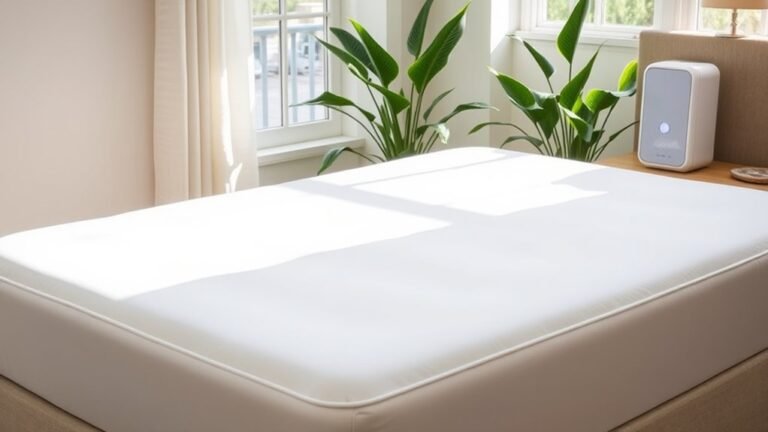
Fully protect a wool mattress by fully containing it in an allergen-proof, zippered encasement and keeping it sealed anywhere dust is present. If you can’t move it out of the work zone, pair airtight covering with strong dust control—sealed barriers, sealed doors, and HEPA-filtered air cleaning—so particles don’t settle into wool fibers.
If you (or a family member) has dust-mite, pollen, or general indoor-dust sensitivities, this guide helps you reduce what settles on (and gets into) a wool mattress during construction, sanding, painting, or demolition. It’s also useful if you can’t easily cover the mattress the “right” way because wool is more absorbent than many synthetic fillings.
Plan the protection before work starts
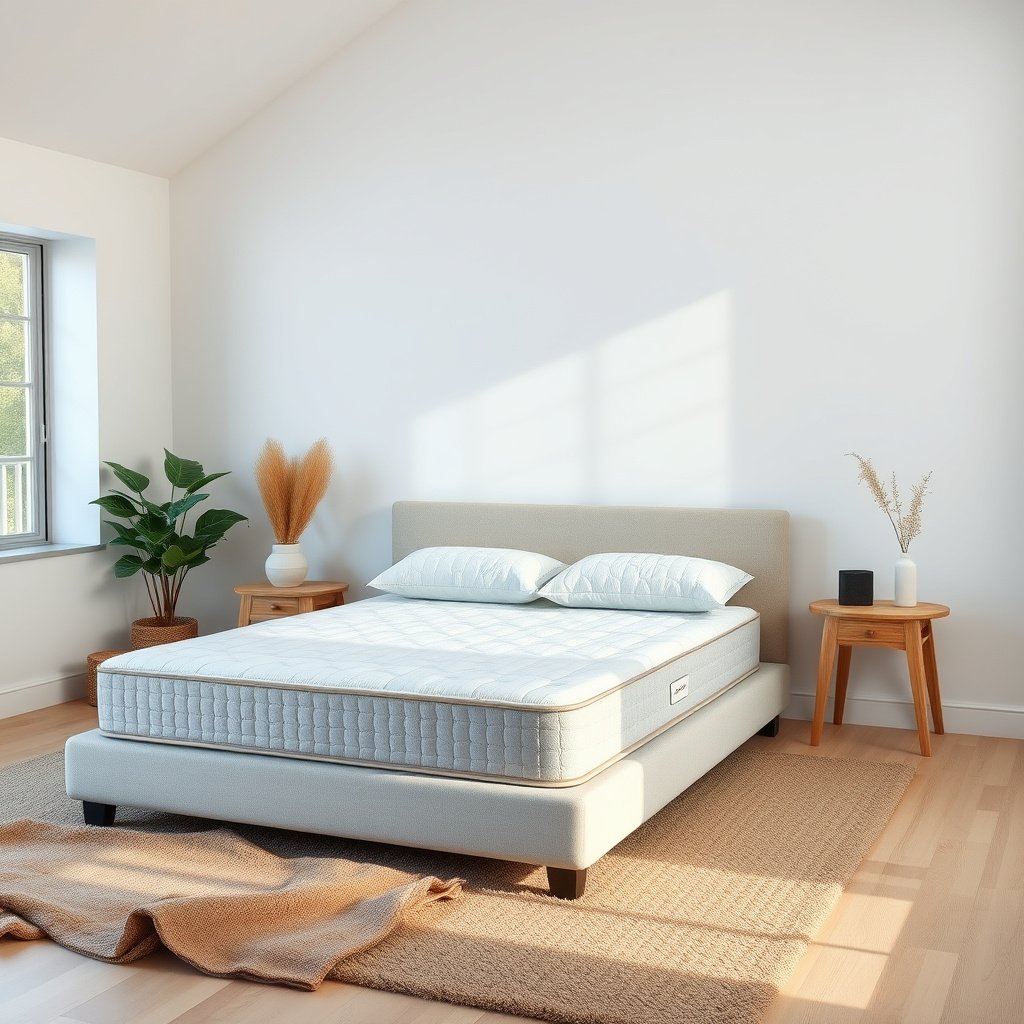
The cleanest allergen plan starts before the first cut, sand, or drill—because once dust becomes airborne, wool can act like a filter. Your goal is to either remove the mattress from exposure entirely, or create a consistently sealed “no-settling” zone around it during the dusty phase.
– Choose whether the mattress will be moved out of the area or kept in place—moving it is usually the simplest way to minimize exposure.
– Decide your “protection window”: cover/seal before any sanding, cutting, or heavy dust-generating work begins.
– Confirm you’ll keep the mattress area off-limits to foot traffic and debris handling.
If you can move the mattress, you eliminate both airborne exposure and settled-dust contamination rather than just reducing it.
Sealing before sanding matters because airborne particles settle continuously, and wool’s structure can retain what lands.
As of 2026, the most defensible approach combines physical containment with HEPA filtration instead of relying on “regular cleaning later.”
According to the U.S. Department of Energy’s description of HEPA performance, a true HEPA filter removes 99.97% of particles at 0.3 microns (a commonly used test point for “most penetrating particle size”) . That matters during renovation because fine dust from cutting and sanding can linger in the air long enough to settle.
Seal the wool mattress with allergen-safe barriers
A sealed, zippered allergen-proof encasement is the main barrier that stops renovation dust from reaching wool. Think of it as “negative pressure containment,” but passive: if the fabric is tightly woven and the zipper path is sealed, fewer particles land inside the mattress cover system.
– Use an allergen-proof mattress encasement (zippered, with tightly woven fabric) designed to block dust and allergens.
– Place the encasement correctly so there are no gaps at the seams, corners, or zipper track—that’s where dust sneaks in.
– If you add a temporary outer wrap, keep it separate from the encasement and remove it once the dusty phase is over (so you don’t trap moisture).
A zippered encasement is only as effective as its closure—gaps at the zipper track and corners are common failure points.
Because wool can absorb particulates, you want a primary barrier that stays sealed through the entire dust-generating period.
As of 2026, renovation best practice in allergy control typically treats the mattress encasement as the “final barrier,” not something you remove during active work.
What to look for in “allergen-proof”
When you evaluate an encasement, prioritize construction details that reduce leakage paths:
– Zipper quality and track coverage: a zipper that lies flat and seals tightly matters as much as the fabric.
– Tight weave / dust-blocking fabric: the goal is particle retention, not just waterproofing.
– Corner/seam finish: dust leakage often happens where fabric panels meet and where tension pulls material apart.
Also, be careful with layers. If you add a temporary plastic wrap, treat it as a secondary layer used only for the heavy dust phase. Removing the outer wrap after sanding/demolition helps prevent trapped humidity and odors that can linger in dense mattress materials.
Control renovation dust where the mattress sits
When you can’t fully relocate the mattress, you reduce allergen exposure by controlling both airborne dust and dust migration through the room. This is where sealed barriers and HEPA air cleaning work together: one prevents travel, the other reduces what stays in the air.
– Create a dust boundary: close doors, seal vents where appropriate, and use plastic sheeting to keep dust from migrating to the sleeping area.
– Run a HEPA air cleaner near (not under) the mattress zone to capture airborne particles while work is happening.
– Avoid dry sweeping; use HEPA vacuuming for cleanup so fine particles don’t get kicked back into the air.
Physical dust barriers (plastic sheeting, sealed doors, vent control) stop migration; HEPA air cleaning captures what’s already airborne.
Avoid dry sweeping because it can re-aerosolize fine dust that later settles back onto covered wool surfaces.
In many renovation workflows, HEPA filtration is most effective when it runs continuously during dusty work—not only after.
Filtration performance matters (and HEPA has a benchmark)
According to the U.S. Environmental Protection Agency’s general HEPA discussion of performance, HEPA standards are based on exceptional particle removal at a test particle size around 0.3 microns . That benchmark is why “HEPA-filtered” air cleaning is the go-to approach during construction for particulate reduction.
Below is a quick reference to filtration performance categories that relate directly to dust control decisions.
Filtration Performance Benchmarks Relevant to Renovation Dust (Particle Removal at MPPS)
| # | Filtration category | Typical MPPS test particle size | Nominal removal efficiency | Overall rating |
|---|---|---|---|---|
| 1 | HEPA (air filtration benchmark) | 0.3 μm | 99.97% | ★★★★★ |
| 2 | ULPA (extra-fine benchmark) | 0.12 μm | 99.9995% | ★★★★★ |
| 3 | N100 / P100 respirator class | 0.3 μm | 99.97% | ★★★★★ |
| 4 | N99 respirator class | 0.3 μm | 99% | ★★★★☆ |
| 5 | N95 respirator class | 0.3 μm | 95% | ★★★☆☆ |
| 6 | FFP3 (EU class benchmark) | 0.3 μm* | 99% | ★★★★☆ |
| 7 | FFP2 (EU class benchmark) | 0.3 μm* | 94% | ★★★☆☆ |
EU fit/filtration testing uses standardized challenge aerosols; the “0.3 μm” reference is commonly used as a comparable micron-scale benchmark, but actual test protocols differ by standard.
Keep wool protected from moisture and lingering particles
Containment isn’t only about dust—it’s also about preventing moisture problems that can amplify odor and make cleanup more complicated. Wool is especially sensitive to “secondary exposure,” where settled dust plus humidity creates conditions that feel worse (and can be harder to fully clear).
– Don’t let wet debris, paint oversprays, or wash water contact the wool—moisture can increase odor and complicate drying in mattress materials.
– Prevent “secondary exposure” by bagging or covering surrounding items (pillows, linens, nearby upholstery) during the dusty phase.
– After renovation dust settles, give the room time to clear before you open anything—opening a sealed encasement too early can release settled dust.
Moisture management is part of allergen control: wet contamination increases odor risk and can complicate drying in wool-based mattresses.
Secondary exposure happens when dust migrates after the main work stops; keeping surrounding textiles covered reduces re-contamination.
In practice, opening a sealed mattress encasement before airborne particles decline can create a localized dust plume.
Practical moisture rules during renovation
– Treat paint overspray and wash water as “do not contact” materials for wool.
– If contractors must run wet methods nearby, enforce a physical separation plan (barriers + distance), not just signage.
– Use time and airflow to your advantage after the dusty work ends—keep the HEPA unit running until visible dust is gone and airflow has stabilized.
Dust-mite and pollen-specific considerations
Allergen triggers differ (dust mites vs. pollen), but the contamination pathways overlap: particles settle into fibers or onto fabric surfaces, then are disturbed during routine handling. As of 2026, the most consistent reduction strategy is controlling settling and resuspension during the renovation window, regardless of whether your sensitivity is dust mite, pollen, or general indoor dust.
After renovation: clean, air out, and reintroduce safely
Once demolition, sanding, and painting stop, you still have a “release window” where dust can remain suspended or re-settle. The correct order is: clean the room with HEPA tools, keep the mattress sealed while dust clears, then reintroduce textiles slowly.
– First remove the dust source: HEPA vacuum the room surfaces and floor around the bed (don’t forget baseboards and corners).
– Only then remove the outer protection (if used) and wait for air to clear before unsealing fully.
– Consider washing removable covers/linens you used during renovation; for the mattress itself, rely on encasement containment rather than aggressive spot-cleaning unless the manufacturer advises it.
HEPA vacuuming around baseboards and corners targets dust that naturally collects away from the center of the room.
Wait to unseal until after surface and floor cleaning so you’re not trapping dust inside the encasement and then releasing it.
According to EPA guidance on dust-mite control, washing bedding in hot water at 130°F (54°C) can help reduce dust mites . While this doesn’t “clean the mattress core” during renovation, it does reinforce the logic: wash what you can remove, and contain what you can’t.
What can go wrong (and how to avoid it)
Even good plans fail when tiny gaps, rushed cleanup, or moisture issues create alternate routes for allergens. The good news: most failures are predictable, so you can design around them.
– Gaps in coverage: Even a small opening at the zipper or corner can allow dust to settle on wool; re-check seam alignment before work starts.
– Trapping moisture: If you wrap too tightly with non-breathable material, you may hold moisture and odors—use encasement as the primary barrier.
– “Cleanup” that stirs dust: Dry sweeping, shaking rugs, or vacuuming without HEPA filtration can re-aerosolize particles you’re trying to remove.
When an encasement isn’t aligned and sealed at seams/corners, dust has direct access to wool—this is more harmful than simply “extra dust in the room.”
Non-breathable wraps can create a moisture pocket, which can worsen odor even if dust exposure is reduced.
Cleanup methods that re-aerosolize fine dust can undermine your protection plan, even if the mattress was initially sealed correctly.
Common mistakes vs. fixes (quick parse)
| Problem | Why it happens | Fix that keeps the wool safe |
|---|---|---|
| Encasement zipper isn’t fully closed | Zipper track tension lifts slightly | Re-check closure before sanding starts; don’t “half seal” |
| Plastic barrier touches the wool wrap | Moisture transfer and edge-dust contact | Keep temporary outer wrap separate; remove after dusty phase |
| Renovation dust is “cleaned” with dry sweeping | Dust becomes airborne again | Use HEPA vacuuming; wipe with appropriate damp methods only on safe surfaces |
| Mattress area gets foot traffic | People carry settled dust into the zone | Block access and route debris handling away from the mattress |
Verdict / tip
The most protective default is an allergen-proof, zippered mattress encasement as the main defense, combined with dust migration controls (sealed barriers + HEPA filtration + HEPA cleaning). The tradeoff is discipline: you must keep the mattress area sealed during the dusty phase, and you need a cleanup process that doesn’t reintroduce dust.
If your renovation involves heavy demolition, prolonged sanding in the same airflow path, or you simply can’t control dust movement, consider moving the mattress out entirely. Skip the “encase-and-stay” approach if your mattress manufacturer specifically warns against certain coverings, or if you can’t keep the room dust-light throughout the project.
Encasement is the “last line of defense,” but dust control determines what arrives at that last line during renovation.
As of 2026, the strongest allergy-prevention workflow treats HEPA filtration and physical barriers as a combined system—not alternatives.
If you can relocate the mattress, you reduce both exposure and disturbance risk, especially during large-dust phases.
Move mattress out vs. keep it in place (feature comparison)
| Feature | Move out of the work zone | Keep in place + encase/seal |
|---|---|---|
| Airborne exposure | Lowest (no dust path) | Reduced but still possible via gaps/migration |
| Settling dust on wool | Minimal if stored in a dust-controlled space | Depends on zipper/seam integrity |
| Moisture/overspray risk | Lowest | Manageable with strict barrier rules |
| Setup time | Higher upfront (moving logistics) | Lower upfront, higher discipline during work |
| Risk of accidental opening | Lower if stored and left untouched | Higher—people must respect the sealed zone |
| Best for heavy demolition | Yes (often the safest option) | Only if dust can be fully contained |
| Best for limited painting | Optional | Often workable with barriers + HEPA |
| Cleanup complexity | Simpler around the bed once removed | Requires careful HEPA vacuuming around the zone |
| Cost | Depends on moving help/storage | Primarily encasement + air cleaning |
| Likelihood of “small failure” | Lower | Higher unless you verify seams/zipper discipline |
| Best For | Major dust/demolition projects or when dust control can’t be guaranteed | Projects with manageable dust migration and a team that can keep the sealed zone intact |
Quick checklist (scan or save)
– [ ] Move mattress out of the work zone (if possible)
– [ ] Install allergen-proof, zippered encasement before dust-generating work starts
– [ ] Seal doors/vents and set up plastic dust barriers
– [ ] Run a HEPA air cleaner in the renovation area near the mattress zone
– [ ] Use HEPA vacuuming for cleanup (avoid dry sweeping)
– [ ] Wait for air to clear before fully unsealing
– [ ] Wash/replace any removable linens used during renovation
Sources
– EPA (U.S. Environmental Protection Agency) — dust-mite and allergen reduction guidance (primary guidance for bedding/allergen control):
– CDC (Centers for Disease Control and Prevention) — indoor air and particulate/dust health considerations:
– OSHA (Occupational Safety and Health Administration) — construction dust control principles (general requirements and guidance for controlling dust exposure during work):
– Mattress manufacturer care instructions for wool/all fillings (primary source for what coverings and cleaning methods are allowed):
During renovation, the safest path is simple but strict: encase the wool mattress with an allergen-proof, zippered barrier before dust starts, keep it sealed while work is underway, and control migration using sealed barriers plus HEPA air cleaning and HEPA vacuuming. If you can move the mattress out of the work zone, do it—because it’s the most reliable way to prevent both airborne exposure and settled dust from ever reaching the wool.
Frequently Asked Questions
How can I protect my wool mattress from allergens during home renovation?
Start by fully encasing the wool mattress in an allergen-rated, zippered mattress cover and then add a protective dust cover (or plastic sheeting) to block drywall dust and debris. Seal the room with plastic barriers and keep windows closed while using a HEPA air purifier to capture airborne particles. Avoid placing the mattress directly in the renovation zone; if possible, move it to a clean, sealed area until work is complete.
What is the best way to prevent dust mites and construction dust from settling on a wool mattress?
Use a tightly sealed mattress protector that is specifically designed for allergens, since wool can hold onto airborne particles if exposed. Vacuum the area around the mattress (not the mattress surface) with a HEPA vacuum and keep foot traffic low to reduce dust disturbance. During renovations, keep the mattress covered at all times and change/clean the cover only after the area is fully dust-free.
Which covers and materials work best for allergen protection when renovating?
Look for a breathable, tightly woven or allergen-proof mattress encasement with a zipper closure to prevent allergen exposure while still supporting moisture management for wool. If renovation dust is heavy, use an additional temporary dust barrier over the encasement to enhance protection. Avoid loose plastic that can trap moisture against wool for long periods—use barriers temporarily and ensure the mattress area stays dry.
Why does renovation increase allergy risk for wool bedding, and how can I reduce it?
Renovation often releases fine dust particles and triggers airborne allergens that can settle into fabrics, including wool mattress covers and surrounding textiles. These particles can aggravate allergy symptoms even if the mattress itself isn’t being cleaned. Reduce risk by controlling airflow (use HEPA filtration, minimize fans that spread dust, and seal vents where possible) and keeping the mattress covered and isolated from work zones.
How do I clean the area and the wool mattress after renovation without spreading allergens?
First, let the renovation dust settle, then clean the room with a HEPA vacuum and damp-wipe hard surfaces to avoid re-aerosolizing dust. Keep the mattress covered while cleaning nearby, and only uncover it in a clean, filtered environment. If the mattress needs attention, use manufacturer-recommended methods for wool (often spot cleaning with appropriate wool-safe products) and allow complete drying before it’s exposed again.
📅 Last Updated: October 29, 2026 | Topic: How to Protect a Wool Mattress from Allergens During Renovation | Content verified for accuracy and freshness.
References
- https://pubmed.ncbi.nlm.nih.gov/?term=dust+mite+allergen+avoidance+HEPA+encasements
- https://pubmed.ncbi.nlm.nih.gov/?term=construction+dust+home+renovation+asthma
- https://www.cdc.gov/parasites/dustmites/
- Mold | US EPA
- Mold | Mold | CDC
- The page you’re looking for isn’t available | NIAID: National Institute of Allergy and Infectious…
- House dust mite
- https://scholar.google.com/scholar?q=dust+mite+allergen+avoidance+HEPA+encasements+bed Google Scholar
- https://scholar.google.com/scholar?q=home+renovation+construction+dust+asthma+allergy Google Scholar
- https://scholar.google.com/scholar?q=wool+textiles+dust+mites+allergens Google Scholar