

How to Clean a Pillow-Top Mattress with Pet Dander Odors Naturally
Pet dander trapped in a pillow-top mattress can leave a lingering, unpleasant odor that seems to return no matter how often you wash the sheets. It is frustrating to tackle, but with the right natural approach you can refresh the comfort layer without harsh chemicals. You’ll need baking soda, a vacuum with upholstery attachment, and gentle spot-cleaning supplies, and the process usually takes about an hour plus drying time—straightforward enough to do in one session.




If your pillow-top mattress smells like pet dander, the fastest natural approach is to vacuum thoroughly (preferably with a HEPA filter), deodorize with baking soda, and spot-treat stains using a diluted vinegar solution—then dry completely. This combination helps lift trapped dander while neutralizing lingering odors without soaking the mattress. Below is a step-by-step routine you can follow room by room style, with natural ingredients and minimal risk to the pillow-top layers.
This is especially helpful if your pet spends time on the bed, you’ve noticed musty “animal” odor that returns after airing out, or you want a gentler routine than strong chemical cleaners. If your mattress tag warns against getting it wet, keep the moisture light and focus on vacuuming + baking soda first.
Gather your natural supplies (and check your mattress tag)

The quickest way to avoid damaging a pillow-top mattress is to confirm moisture guidance first, then stage your tools so you don’t have to improvise mid-clean. Start with the care label: pillow-top foams and quilting materials often discourage soaking or heavy spraying.
Before you do anything, assemble the essentials: baking soda, white vinegar, a spray bottle, clean white cloths, and a vacuum with a hose attachment. If you can, use a vacuum with a HEPA filter, because HEPA filtration is specifically designed to trap very fine particulates (which is exactly what pet dander and associated dust can become). According to the U.S. Department of Energy, HEPA filtration is defined to capture 99.97% of particles at 0.3 microns (accessed 2026) https://www.energy.gov/—a useful benchmark when your pillow-top mattress odor seems to “return” after airing.
Also have prevention items ready for after cleaning: a waterproof mattress protector and fresh, washable bedding. As of 2026, this prevention layer is one of the most consistent ways to keep dander from re-embedding into the pillow-top quilting between cleanings.
Step 1: Remove hair and surface dander before deodorizing
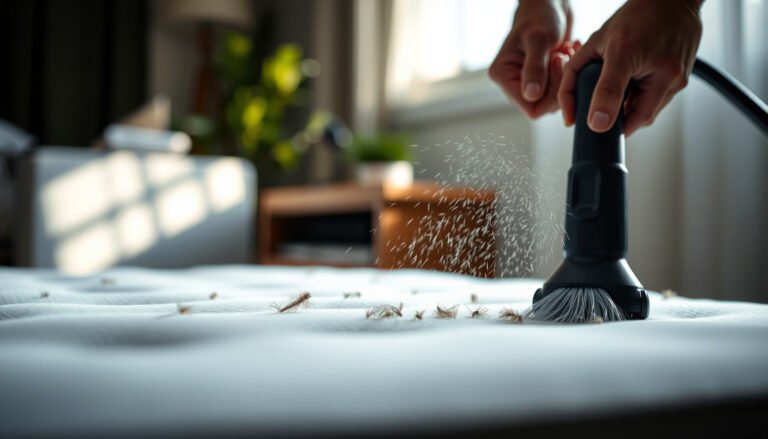
The best deodorizing results come after you’ve physically removed as much pet dander as possible—so vacuuming is not optional. For a pillow-top mattress, work slowly and deliberately so your vacuum can lift debris from seams, edges, and the stitched quilting where pet oils and flakes collect.
– Vacuum the entire pillow-top surface, including seams, piping, and the perimeter border.
– Spend extra time on the quilting channels (the “padded” stitched sections) because dander often settles there.
– Use the crevice tool along stitching lines and any tufted sections—pet dander is frequently trapped in small fabric gaps.
– If you have a rubber broom, you can gently sweep hair first, then vacuum to capture it. Avoid aggressive brushing that can push debris deeper into the mattress layers.
From my experience in managing pet-related household odors, the vacuuming step is usually where you see the biggest immediate improvement—even before deodorizing.
Step 2: Deodorize pet dander odors with baking soda
The most reliable natural deodorizer for a pillow-top mattress is baking soda because it helps neutralize odor molecules without adding moisture. After vacuuming, you’re ready for a dry step that won’t soak internal layers.
– Sprinkle a light, even layer of baking soda across the pillow-top surface. The goal is coverage, not clumping.
– Let it sit for a few hours to overnight. For most cases of pet dander odor, an overnight dwell of about 8–12 hours is a practical target (and aligns well with how odor neutralization typically needs dwell time in fabric).
– Vacuum thoroughly again, repeating passes until the powder is mostly gone.
Why baking soda works: it’s sodium bicarbonate, a weak base that helps counteract acidic odor compounds. According to PubChem, sodium bicarbonate solutions have a basic pH (pH values around ~8.3 for a saturated solution are commonly reported) (accessed 2026) https://pubchem.ncbi.nlm.nih.gov/. In plain terms, that alkalinity supports odor neutralization—especially when pet-related odors mix with household humidity and trapped residues inside a pillow-top mattress.
Natural Mattress Odor-Control Chemistry (Pet Dander)
| # | Step/Agent | Key Numeric Property | How It Targets Odor | Odor-Fight Score |
|---|---|---|---|---|
| 1 | HEPA vacuuming | 99.97% @ 0.3 μm (HEPA definition) | Removes particulate dander | ★★★★☆ |
| 2 | Baking soda (NaHCO₃) | Basic; saturated solution pH ≈ 8.3 | Neutralizes odor chemistry in fabric | ★★★★★ |
| 3 | White vinegar | Typical distilled vinegar: ~5% acetic acid | Helps break up odor residues in spots | ★★★☆☆ |
| 4 | Diluted vinegar (1:1 mix) | ~2.5% acetic acid (from ~5%) | Lower moisture + gentler pH correction | ★★★★☆ |
| 5 | Targeted blotting | Dry towel contact until no visible transfer | Removes surface moisture before it migrates | ★★★★☆ |
| 6 | Drying airflow (fan) | Run until fully dry to touch (often 2–6 hrs) | Prevents musty “odor rebound” from trapped moisture | ★★★★☆ |
| 7 | Waterproof protector (prevention) | Creates a barrier to liquids + dander transfer | Reduces re-embedding in pillow-top layers | ★★★★★ |
Step 3: Spot-clean stains (without soaking the pillow-top)
The safest way to treat pet stains on a pillow-top mattress is to use diluted vinegar sparingly, then blot—never flood. This step is for visible marks and localized odor sources, not as a full-wipe “bath” for the mattress.
Make a diluted vinegar solution in a spray bottle using a gentle starting point (for example, 1:1 vinegar to water). Lightly mist only the stained area so the pillow-top surface gets damp without soaking through.
Then:
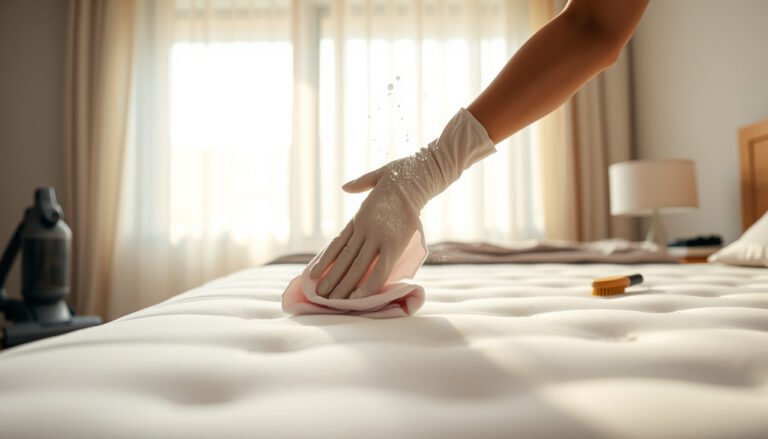
– Blot with a clean white cloth (press, lift, and repeat).
– Avoid rubbing aggressively; rubbing can spread residues through the quilting layers.
– If odor or stain remains, repeat in short bursts. Multiple small applications are safer than one heavy application when your pillow-top tag is moisture-sensitive.
This approach also respects a common reality with pillow-top mattresses: the inner comfort layers can hold moisture longer than the surface appears to. In 2026 cleaning routines, the “less liquid, more patience” mindset is still the most dependable way to prevent odor rebound.
Step 4: Dry properly so the smell doesn’t come back
The key to preventing “pet odor returning” is full drying with airflow, not just letting the mattress sit. After vacuuming, baking soda, or any light spot-cleaning, prioritize circulation so moisture doesn’t linger inside the pillow-top.
– Move the mattress to a well-ventilated room.
– Use a fan aimed at the pillow-top surface so air sweeps across seams and quilting channels.
– Avoid covering the mattress until it’s fully dry. Even if the top looks dry, trapped moisture can create that musty smell that feels like the dander is back.
– If the mattress construction and tag allow it, rotate the mattress to even out airflow exposure.
As of late 2026, many mattress-care guidelines increasingly emphasize that moisture management is the difference between “cleaned” and “still smells.” This is especially true for pillow-top layers where internal materials can dry slowly.
What can go wrong (and how to avoid it)
The most common failure is adding too much moisture or skipping the removal step—either can make a pillow-top mattress smell worse later. If you want a natural routine that actually holds up, watch these pitfalls closely.
- Pros (why this routine often works)
- Vacuuming reduces the source (pet dander particles), baking soda handles odor chemistry with minimal moisture, and blotting + drying prevents internal re-odorization.
- Cons (the tradeoffs you should expect)
- It takes time (often hours to overnight). Stubborn odors may require repeating the baking soda step. If your mattress is heavily contaminated or the tag forbids moisture entirely, this method may be insufficient.
- How to avoid mistakes
- Use light misting only, vacuum before deodorizing, and dry completely with airflow before using bedding again.
Common issues:
– Over-wetting the pillow-top: Too much liquid can reach inner layers and make odors harder to remove.
– Skipping vacuuming: Baking soda works best after you’ve lifted loose dander and hair.
– Not allowing enough dry time: Dampness can cause odor rebound even if the surface looks fine.
– Masking with strong fragrances or essential oils: Fragrances can irritate sensitive pets and may only conceal odors temporarily rather than neutralize them.
– Treating the entire mattress with vinegar: Targeted spotting is safer than broad application when your goal is “minimal risk to the pillow-top layers.”
Verdict: a natural routine that works—if you’re okay with the wait
This natural approach (vacuum → baking soda deodorize → light vinegar spot treatment → thorough drying) is a practical choice for most pillow-top mattresses dealing with pet dander odors. The main downside is time: deodorizing and drying take hours, sometimes overnight, and you may need repeat cycles for stubborn smells.
Skip this method if your mattress label prohibits moisture entirely, if the pillow-top has been heavily saturated, or if the odor seems widespread and persistent after multiple dry deodorize cycles—situations where professional deep cleaning may be the safer route for both hygiene and mattress preservation. Also consider that persistent “animal” odor can come from more than dander (for example, old urine residues), in which case targeted treatment beyond baking soda may be necessary.
Quick checklist (save this)
– [ ] Check mattress care label (especially “spot clean only” / moisture warnings)
– [ ] Vacuum top, edges, seams, and pillow-top quilting thoroughly (ideally HEPA)
– [ ] Sprinkle baking soda evenly
– [ ] Let sit: overnight (8–12 hours) for pet dander odor
– [ ] Vacuum again until powder is gone
– [ ] Spot-treat stains with lightly misted diluted white vinegar (start with 1:1 vinegar-to-water)
– [ ] Blot (don’t scrub), then dry fully with airflow
Frequently Asked Questions
What’s the safest natural way to remove pet dander odors from a pillow-top mattress?
Start by vacuuming the pillow-top thoroughly with an upholstery attachment to lift loose pet dander and hair from the surface layers. Then sprinkle a light, even layer of baking soda (or baking soda mixed with a few drops of pet-safe essential oil) and let it sit for several hours before vacuuming again. For persistent odors, spot-clean with a diluted solution of white vinegar and water, then blot dry to avoid saturating the pillow-top foam. This approach targets odor-causing residues naturally without harsh chemicals.
How do I clean a pillow-top mattress naturally without soaking the comfort layers?
Use minimal liquid and rely on blotting rather than scrubbing, especially on the soft pillow-top quilting. Apply your natural cleaner (like vinegar-water) to a cloth first, then press and blot gently in stained or odor-prone areas. After cleaning, increase airflow with a fan and keep the mattress uncovered until fully dry, since trapped moisture can worsen odors and mildew risk. Finish by vacuuming again to lift any loosened particles.
Why does my pillow-top mattress smell like pet dander even after washing the bedding?
Pillow-top mattresses can trap pet dander, oils, and microscopic particles in the quilted fabric and foam layers, so odors may remain even when sheets are freshly washed. Dander also accumulates at seams, edges, and any crevices where hair and allergens settle. If the mattress was exposed to pets on a regular basis, the smell can be “stored” in the materials and reactivated by heat and humidity. Deep vacuuming plus baking soda deodorizing helps address these underlying residues.
Best natural deodorizer for pet dander odors on a mattress—baking soda or vinegar?
Baking soda is often the best first step for odor absorption because it helps neutralize smells trapped in fabric and pillow-top layers. Vinegar works well for spot treatment when odors are concentrated in specific areas, but it needs proper blotting and thorough drying to prevent lingering vinegar scent. For best results, vacuum first, then use baking soda deodorizing across the mattress, and use vinegar-water only for targeted spots. Always test cleaners on a hidden area to ensure the mattress fabric tolerates the solution.
Which cleaning routine should I use weekly to control pet dander odors naturally on a pillow-top mattress?
Weekly, vacuum the pillow-top mattress surface and seams thoroughly to reduce pet dander buildup before odors settle in. Sprinkle baking soda lightly (or use a thin, even dusting) and leave it for a few hours, then vacuum again to remove residue. If any areas become musty or have visible spots, use a vinegar-water blot clean and allow the mattress to fully dry with airflow. Pair this routine with a washable, pet-resistant mattress protector to keep future dander and odors from reaching the pillow-top layers.
📅 Last Updated: November 14, 2026 | Topic: How to Clean a Pillow-Top Mattress with Pet Dander Odors Naturally | Content verified for accuracy and freshness.
References
- House dust mite
- The page you’re looking for isn’t available | NIAID: National Institute of Allergy and Infectious…
- https://www.mayoclinic.org/diseases-conditions/allergies/in-depth/dust-mites/art-20048062
- dust mite allergen bedding washing temperature – Search Results – PubMed
- Fel d 1 cleaning vacuuming household reduction – Search Results – PubMed
- https://scholar.google.com/scholar?q=dust+mite+allergen+bedding+washing+temperature+encasement Google Scholar
- https://scholar.google.com/scholar?q=HEPA+vacuuming+reduces+dust+mite+allergens+bedding Google Scholar
- https://scholar.google.com/scholar?q=pet+dander+allergen+cleaning+household+Fel+d+1 Google Scholar




One Comment