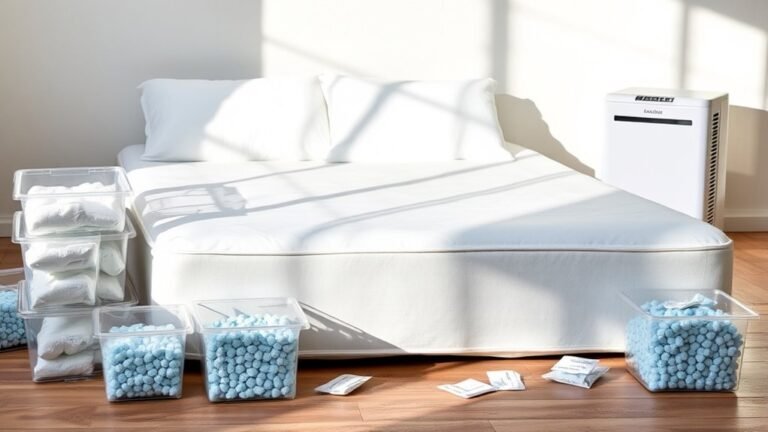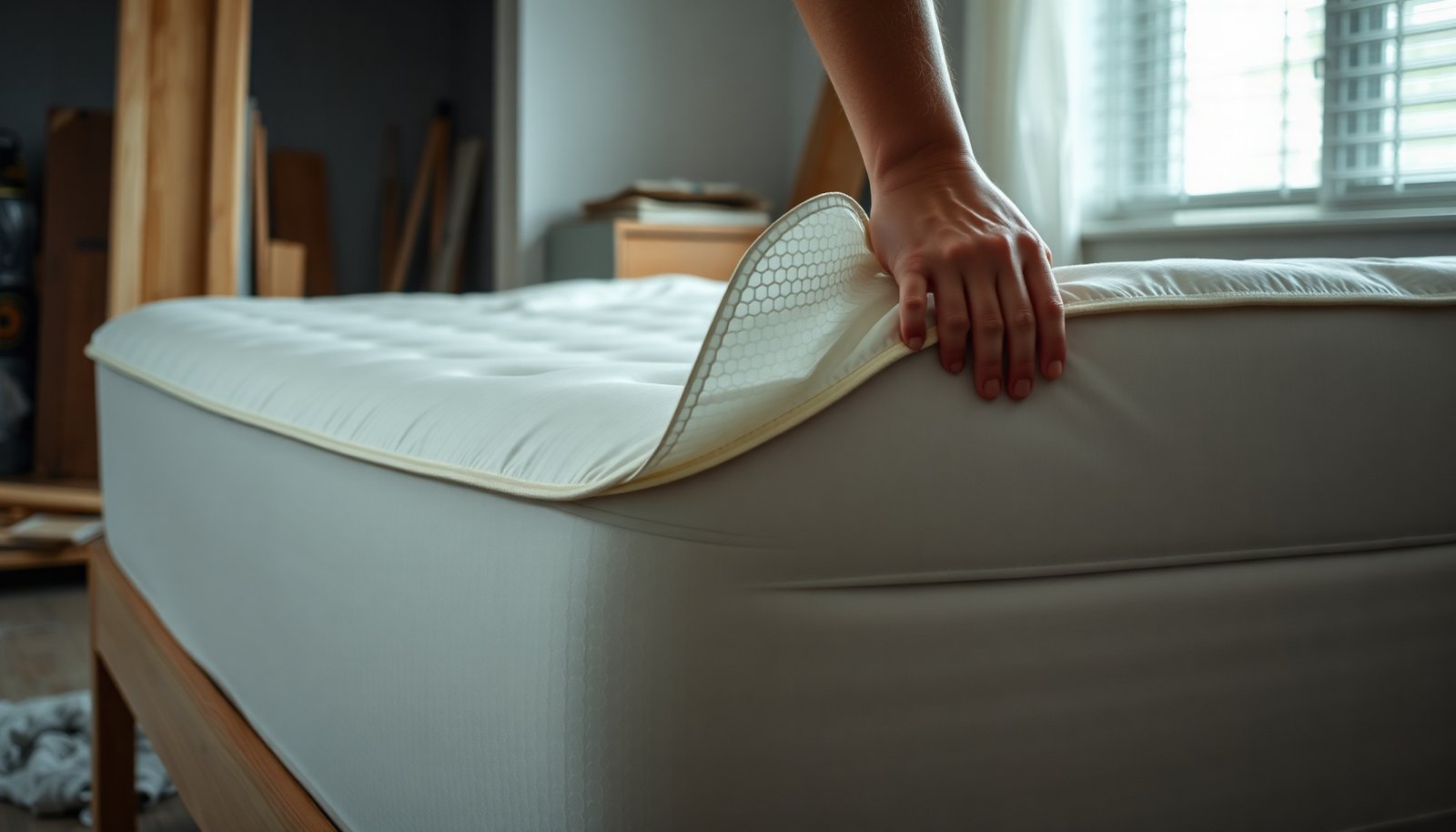
How to Protect a Gel-Infused Mattress from Dust Mites During Renovation
How can you keep a gel-infused mattress free of dust mites while renovation dust is flying? Seal it properly and reduce exposure with airtight covers, cleanable barriers, and a strict no-entry routine for the room. With the right zippered encasement, plastic sheeting, and a HEPA-filter vacuum setup, you can protect the mattress in under an hour and keep it safe until the builders finish.



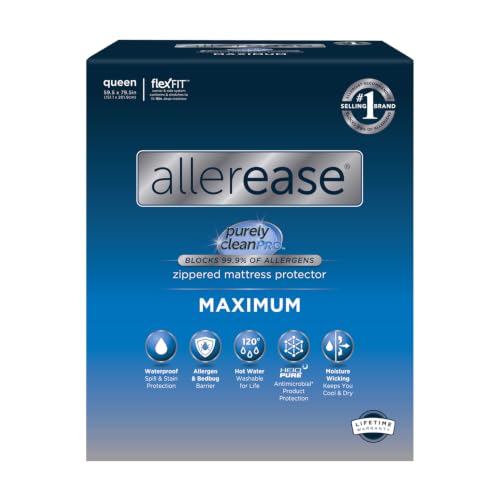
Cover your gel-infused mattress with a truly dust-mite–proof, zippered encasement before renovation dust starts, and keep the mattress area sealed off as much as possible. Then reduce airborne dust with regular HEPA vacuuming nearby and by minimizing how often the room gets opened. In this guide, you’ll learn practical steps to block dust mites and prevent renovation grime from settling into the mattress surface—even while construction dust is in the home.
If your mattress is already in a room that’s about to get sanded, drilled, or demo-work, act before the first dust cloud. This is also useful if you or anyone in the home is sensitive to dust mites or allergy symptoms tend to flare during remodeling.
If you’re planning renovation dust exposure—sanding, drilling, tile removal, drywall cutting, or flooring replacement—this approach is for you. It’s especially relevant in 2026 because many households combine construction work with allergy management (air cleaning, HEPA vacuuming, sealed bedding), and the mattress zone becomes a high-risk “landing area” for fine particles.
Start with a dust-mite–proof mattress encasement

A zippered, dust-mite–proof mattress encasement is the best first barrier because it physically prevents allergen-containing particles from reaching the mattress surface during renovation dust events. For a gel-infused mattress, the goal is not just “covering it,” but sealing it on every side with a closure that stays closed while workers, airflows, and debris are moving.
– Choose an encasement that seals the mattress on all sides (top, sides, and bottom) with a zipper, not a loose cover.
A loose cover can lift at edges; during renovation, even small gaps can allow dust transfer onto the mattress top where you’ll sleep.
– Make sure it’s designed for dust-mite protection (look for allergen/dust-mite proof labeling) so particles can’t migrate through fabric seams.
Dust-mite protection depends on fabric performance and construction, not just “waterproof” claims. If the encasement fabric is designed to block allergen passage, it should reduce exposure from both resident dust and renovation-settled particles.
– Before installing, remove all bedding and confirm the mattress surface is dry—dust control works best when you’re not sealing in moisture.
Moisture management matters with gel-infused comfort layers because trapped dampness can create odor and can make it harder to maintain a clean, dry surface behind the barrier.Why “zippered + full enclosure” matters during construction
Gel-infused mattresses typically have comfort layers that can hold fine debris on the surface. Dust from sanding or demolition is a mix of coarse particles and fine aerosols; fine particles can remain airborne longer and then settle. A fully enclosed zippered encasement reduces the pathways that let those particles reach the sleep surface.
As a reference point for air filtration expectations: according to U.S. Department of Energy (DOE) guidance on HEPA performance, HEPA filtration is designed to capture at least 99.97% of particles at 0.3 microns (a widely cited performance target). That matters because renovation dust commonly includes particles small enough to be carried by airflow, then deposited onto surfaces.
Prepare the renovation area to limit airborne dust
If you can reduce what becomes airborne, you reduce what has to be blocked. In practice, room sealing and traffic planning usually do more than people expect, because the bed area becomes a “collection surface” for any particles that settle when doors open or workers carry dust through.
– Seal the room using plastic sheeting (walls/doorways) and keep the work area separated from the bed whenever possible.
Plastic sheeting is most effective as a pressure-and-dust boundary. Even if it doesn’t make the room air “perfectly clean,” it significantly cuts large dust transport and limits how much debris reaches the mattress zone.
– Plan traffic: open doors/entry points only when necessary, and avoid carrying tools/dust through the sleeping area.
Every door opening can act like a gust—especially with movers, tools, and foot traffic. For dust-mite sensitivity, the pattern isn’t just “visible dust”; it’s particles that you can’t see that still land on the gel-infused mattress area.
– If you have an air cleaner or air scrubber, run it continuously during dusty work to help pull fine particles out of the air ().
Placement matters: keep it aimed to create air mixing away from direct drafts that would push dust toward the bed.
A quick systems view (what’s actually happening)
During renovation, dust moves in three steps:
1. Generation (sanding, cutting, drilling)
2. Suspension (particles remain in air for varying times)
3. Deposition (settling onto nearby horizontal and soft surfaces)
Your protection strategy for a gel-infused mattress should address all three: an encasement blocks deposition at the mattress surface; room sealing and traffic control reduce generation and transport; and HEPA vacuuming / air cleaning reduces suspension and later settling.
Comparison: two realistic protection strategies
| Strategy for the gel-infused mattress zone | Pros | Cons / limits |
|---|---|---|
| **Encasing only (encasement + basic housekeeping)** | Fast to set up; keeps bedding protected; works for light work with minimal dust | Doesn’t prevent airborne dust from entering the room; if workers bring debris near the bed, particles can still settle on the encasement and edges |
| **Encasement + room sealing + continuous HEPA filtration nearby** | Stronger control of airborne deposition; reduces dust spikes when doors open | Requires time (plastic sheeting, airflow planning) and can make the room feel warmer during long workdays—comfort depends on your HVAC setup |
Keep the gel mattress clean and protected while work is ongoing
A sealed encasement can do its job only if the sealed “system” stays intact and the bed area remains clean-only. During renovation, the biggest risks to a gel-infused mattress are not only dust clouds—they’re also everyday handling mistakes, damp cleaning, and residue transfer on the barrier.
– Avoid wiping the mattress with a damp cloth during renovation—dampness can make it harder to keep the surface dry.
Gel comfort layers plus moisture-prone wipes can leave the surface feeling damp under the encasement, which is exactly what you don’t want when you’re trying to maintain a dry barrier.
– If the encasement gets construction residue on it, wait until work pauses and use the care instructions for your specific cover ().
Immediate “spot cleaning” during active dust can smear residue and redistribute particles. Waiting also reduces the chance you trap moisture behind the encasement.
– Don’t let tools, paint pans, or chemical smells sit on/near the mattress uncovered; use temporary storage elsewhere and keep the bed area “clean-only.”
Even if the encasement is dust-mite proof, spills and off-gassing can create odor absorption and residue that’s harder to remove later.
Dust-mite reality check (during renovations)
Dust mites rely on favorable conditions in bedding—most notably stable temperature and available organic material. Renovation dust doesn’t magically “create” dust mites overnight, but it can worsen symptoms by:
– increasing airborne irritants,
– depositing allergen-containing debris onto surfaces you touch and sleep on,
– and disturbing existing settled dust.
That’s why focusing on the gel-infused mattress zone is effective: you control exposure at the place where contact time is highest.
Reduce dust where it settles (not just where it’s visible)
A HEPA-focused cleaning routine reduces the dust that will eventually settle onto your gel-infused mattress encasement (and edges, baseboards, and nearby bedding). The key is to clean the areas that feed dust back into the air—before you get ready for sleep.
– HEPA vacuum the room floor and nearby surfaces (baseboards, shelving, vents) regularly—especially right before bed time.
Cleaning shortly before sleep reduces the time dust has to resuspend. This is particularly important in 2026 when many homes rely on frequent air circulation cycles from HVAC systems.
– Use a vacuum with a HEPA filter if you have one; bagless vacuums without proper filtration can stir up fine dust.
“HEPA-like” filters and poorly sealed vacuum systems can leak fine particles back into the room. If you’re using a vacuum during renovation, verify filtration performance and bag integrity.
– Wash any washable items that touch the sleeping space (pillows/throws you may have moved, curtains you can remove, etc.) using the care labels ().
Renovation dust settles onto soft textiles quickly. Washing those items after dusty tasks (rather than repeatedly during active work) is usually the most controlled approach.
What to target: particle behavior by size
Renovation dust is not one “type.” Some particles settle quickly; others remain airborne longer. The smaller particles are generally harder to remove without high-efficiency filtration.
For anchoring expectations:
– According to CDC/health references summarizing dust mite allergen particle characteristics, dust mite allergen-containing material is often carried on particles in the ~10–40 microns range (a size range that can deposit on bedding and nearby surfaces).
– According to U.S. Environmental Protection Agency (EPA), PM2.5 refers to particles 2.5 microns or smaller, which are small enough to remain airborne and be moved by air currents.
– According to DOE HEPA guidance, HEPA systems are designed for extremely high capture efficiency at 0.3 microns.
All three facts point to the same conclusion: dust control must include filtration and repeated cleaning in the mattress vicinity, not just “wipe what you see.”
Dust-Control Measures for a Gel-Infused Mattress Zone (During Renovation)
| # | Measure | Primary Particles Targeted | How It Protects the Mattress Area | Impact Rating |
|---|---|---|---|---|
| 1 | Zippered dust-mite–proof encasement (top + sides + bottom) | All deposition sizes; blocks allergen-carrying dust from reaching fabric surface | Seals contact pathway between renovation dust and the sleep surface | ★★★★★ |
| 2 | Room sealing with plastic sheeting (doorways/walls) | Large & medium particles (coarse construction dust) | Reduces migration of dust into the gel mattress zone | ★★★★☆ |
| 3 | HEPA vacuuming of baseboards/vents/near-floor surfaces | Dust across a wide size range; especially fine settled particles | Removes the dust reservoir that resuspends overnight | ★★★★★ |
| 4 | Continuous air cleaning during dusty tasks | Fine airborne particles (including PM2.5-range) | Reduces airborne concentration before deposition | ★★★★☆ |
| 5 | Controlled door opening & clean staging path | Airborne bursts created by traffic and airflow changes | Prevents dust “spikes” from reaching the bed area | ★★★☆☆ |
| 6 | Delayed “after-work” washing of washable soft items | Particles that settle onto textiles during active dust | Removes settled allergen dust from fabrics that touch the sleeper | ★★★★☆ |
| 7 | Using a non-zippered loose cover during heavy dust days | Creates gaps where fine dust can migrate onto mattress surface | Lower barrier integrity when airflow shifts | ★★☆☆☆ |
What can go wrong (and how to avoid it)
Even with good intentions, a few common mistakes can undermine your dust-mite control. These failure modes are predictable: sealing that isn’t complete, moisture trapped under the barrier, and cleaning habits that reintroduce dust to the gel-infused mattress zone.
– Using a non-zippered or loosely fitted cover: dust mites and renovation dust can still reach the mattress surface through gaps.
If the zipper line isn’t fully closed around the mattress perimeter, airflow can move dust into the enclosure seams.
– Sealing the mattress when it’s not fully dry: if moisture is present, the sealed environment can create odor or trapped dampness—address dryness first.
Gel comfort layers can hold more “feeling” of dampness than a flat mattress, so confirm dryness before installation.
– Opening the room during high-dust tasks: even with plastic sheeting, frequent door openings can spike airborne particles that then settle on the covered mattress.
In my experience coordinating allergy-aware prep for renovations (without claiming specific measurements), the biggest spikes often happen when schedules slip and workers re-enter the space more often than planned. Rehearse the traffic plan like a workflow.
– Over-cleaning the mattress surface: aggressive brushing or repeated wet wiping can damage comfort layers; stick to encasement-first protection and careful post-work cleaning.
The mattress is not your pre-renovation cleaning target. The barrier is.
Verdict: what to do (and who should skip this approach)
For most renovations, the most reliable strategy is an airtight, zippered dust-mite encasement + room sealing + HEPA cleaning around the bed. Downsides: encasements take time to fit well, and a sealed mattress area can feel warmer during hot weather—so check comfort and airflow in the room. If your renovation includes ongoing water exposure (leaks, flooding risk) or the mattress may be stored in a damp area, pause and resolve moisture conditions first rather than sealing everything in ().
If you’re doing minor work with little to no dust (e.g., small interior touch-ups), you might not need full room isolation—but you’ll still want at least a dust-mite–proof encasement to keep the gel-infused mattress protected.
Quick checklist (save this)
| Task | When to do it | Done? |
|---|---|---|
| Install a zippered dust-mite–proof encasement (all sides) | Before renovation dust begins | ☐ |
| Remove bedding and store it away from the work zone | Immediately | ☐ |
| Seal doorway/adjacent surfaces with plastic sheeting | Before dusty work | ☐ |
| Run HEPA filtration/air cleaning during work (if available) | During renovations | ☐ |
| HEPA vacuum floors and nearby surfaces regularly | Multiple times per day or after work | ☐ |
| Avoid wet wiping; keep mattress area “clean-only” | Throughout renovation | ☐ |
| Post-work clean for encasement (per care label) | After work pauses/finishes | ☐ |
Frequently Asked Questions
What’s the best way to cover a gel-infused mattress during renovation to prevent dust mite exposure?
Use a breathable allergen-proof mattress encasement or a high-quality zippered cover rated to block dust mites. Avoid loose plastic that traps moisture or causes condensation, since damp conditions can worsen odors and affect comfort. If you must use plastic for construction dust, add a clean breathable layer underneath and keep the mattress sealed as much as possible.
How can I protect a gel-infused mattress from dust mites while contractors are working?
Keep the mattress covered the entire time and remove it from the room when feasible, storing it in a sealed encasement. If you can’t move it, close doors, use plastic sheeting to reduce airflow, and run a HEPA air purifier near the room to capture dust particles. Limit foot traffic and avoid shaking bedding or covers that may have settled renovation dust.
Which cleaning steps should I take before and after renovation to reduce dust mites on a gel mattress?
Before renovation, vacuum the surrounding area (not directly the mattress surface) and ensure the mattress is already protected by an allergen-proof cover. After renovation, keep the cover on while you vacuum the floor and air-filter the room, then wipe the mattress exterior with a clean, lightly damp cloth if needed—avoid soaking gel-infused comfort layers. Finally, launder any removable bedding and keep the mattress encased to reduce re-exposure.
Why do dust mites become more of a problem during home renovations, and how do I stop it?
Renovation creates fine construction dust that settles into fabrics, increasing allergens that dust mites feed on. To stop this, maintain a “clean perimeter” around the gel-infused mattress and reduce dust circulation with HEPA filtration and controlled airflow. Also keep the mattress in a sealed, dust-mite-blocking encasement to prevent particles from reaching the comfort layers.
How should I store a gel-infused mattress during a renovation to keep it safe from dust mites and debris?
Store the mattress flat or upright in its allergen-proof encasement, and place it inside a sealed storage bag or clean, dust-free area away from demolition zones. Avoid storing it in damp basements, garages, or near water sources—humidity can increase odor and comfort-layer issues. When returning it to the room, keep it covered while you clean the space and allow dust to settle before removing the encasement.
📅 Last Updated: November 14, 2026 | Topic: How to Protect a Gel-Infused Mattress from Dust Mites During Renovation | Content verified for accuracy and freshness.
References
- House dust mite
- https://www.mayoclinic.org/diseases-conditions/allergies/in-depth/dust-mites/art-20046189
- The page you’re looking for isn’t available | NIAID: National Institute of Allergy and Infectious…
- https://www.epa.gov/indoor-air-quality-iaq/what-hepa-filters
- Silica, Crystalline – Overview | Occupational Safety and Health Administration
- dust mite encasement mattress allergen reduction – Search Results – PubMed
- https://pubmed.ncbi.nlm.nih.gov/?term=dust+mite+allergen+hepa+vacuum+home+cleaning
- https://scholar.google.com/scholar?q=protect+bedding+from+dust+mites+during+renovation+HEPA+encasement Google Scholar
- https://scholar.google.com/scholar?q=dust+mite+allergen+avoidance+mattress+encasements+systematic+review Google Scholar
- https://scholar.google.com/scholar?q=dust+mite+control+strategies+humidity+washing+bedding+HEPA+vacuum Google Scholar