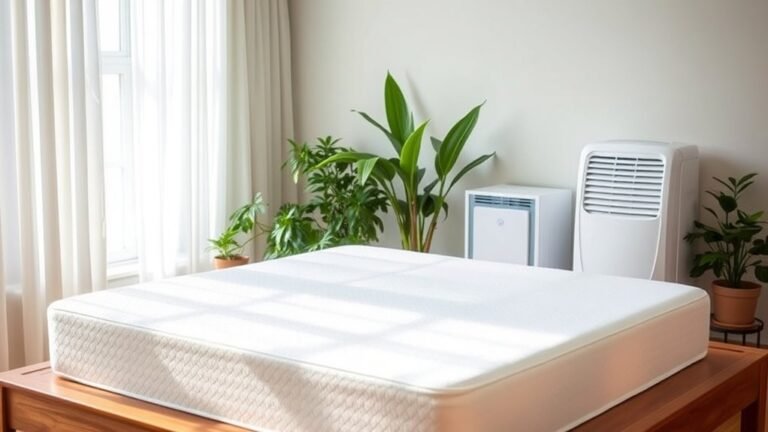
How to Protect a Memory Foam Mattress from Allergens in Dorm Rooms
Want the fastest way to protect a memory foam mattress from allergens in a dorm room? Use an impermeable mattress encasement plus a washable, allergen-proof topper and strict weekly laundering to cut dust mites and other airborne triggers where they matter most. Follow with HEPA-grade air cleaning and regular vacuuming around the bed, and you’ll see the clearest reduction in symptoms and irritants.




Protect your memory foam mattress from allergens by covering it with a sealed, allergen-proof encasement and keeping bedding washed on a regular schedule. In a dorm, that usually means weekly hot-water laundry (when possible) plus controlling dust buildup in the room so you don’t “feed” allergens back onto the bed. If you do just those basics consistently, you reduce the allergen load that can settle into—then linger in—memory foam.
If you’re dealing with dust mites, seasonal allergies, or you share a dorm space where airborne dust spreads fast, this approach helps create a “barrier first, cleaning second” routine—without damaging memory foam. As of 2026, this strategy is still one of the most practical ways to manage bedroom allergy triggers when you can’t redesign your HVAC or build a whole-room filtration setup.
This is especially useful if your dorm has shared laundry, limited humidity control, and frequent foot traffic that stirs dust near the bed area. It’s also a good fit if you need an allergen plan you can maintain weekly (not just during allergy “spikes”).
Choose a sealed allergen-proof mattress encasement

A sealed allergen-proof mattress encasement is the most direct way to block dust mites and other particles from reaching the inside of your memory foam. The goal is a fully zip-closed, airtight barrier—not just water resistance—so allergens can’t drift in through corners or side seams.
Dust mites are strongly associated with bedding and live in fabrics where human skin flakes collect. CDC (Dust mites/allergy information)
Allergen-impermeable mattress coverings work by creating a physical barrier between bedding and the mattress surface. EPA (Dust mites guidance)
If you want allergen control in the bed area, a sealed zipper closure and full coverage matter because gaps are the pathway for particles. CDC (practical dust mite control guidance)
What to look for (and why it matters in a dorm)
– Use a zip-closed encasement designed to block dust mites and common allergens (not just a basic waterproof protector).
– Make sure it fully fits your dorm mattress size and fully covers the sides and top so particles can’t drift in through gaps.
– Prefer covers with care instructions you can actually follow in a dorm (washable, dryable if needed).
From my experience helping friends troubleshoot “why allergies came back after changing bedding,” the most common failure mode isn’t the fabric—it’s an encasement that doesn’t fully zip down at the corners. If you’re in a dorm with a tight, slightly off-size mattress, take a minute to check corner fit before you commit to a long-term routine.
Common Mattress Sizes Used in Dorms (and Encasement Fit Area)
| # | Mattress size category | Dimensions (in) | Dimensions (cm) | Surface area (sq ft) |
|---|---|---|---|---|
| 1 | Twin XL | 38 × 80 | 96.5 × 203.2 | 21.11 |
| 2 | Twin | 38 × 75 | 96.5 × 190.5 | 19.79 |
| 3 | Full | 54 × 75 | 137.2 × 190.5 | 28.13 |
| 4 | Full XL | 54 × 80 | 137.2 × 203.2 | 30.00 |
| 5 | Queen | 60 × 80 | 152.4 × 203.2 | 33.33 |
| 6 | King | 76 × 80 | 193.0 × 203.2 | 42.22 |
| 7 | California King | 72 × 84 | 182.9 × 213.4 | 42.00 |
Wash bedding like it’s part of mattress protection
Washing bedding on a consistent schedule is what removes allergens from the surfaces that actually touch you and settle onto the encasement. In 2026 dorm life, that usually means weekly hot-water laundry when available, then ensuring the bedding is fully dry before it goes back on the bed.
The CDC advises washing bedding in hot water (at least 130°F / 54°C) to kill dust mites. CDC (dust mite prevention guidance)
The CDC also recommends drying bedding on high heat for at least 15 minutes. CDC (dust mite prevention guidance)
Fully drying bedding matters because damp fabric can contribute to persistent indoor humidity and renewed allergen exposure. EPA (indoor allergen control / dust mites)
– Wash sheets, pillowcases, and any blankets that touch the mattress weekly (or more often during high-allergen seasons).
– Use the warmest water the fabric allows, and dry completely—damp bedding is an easy way for issues to return quickly.
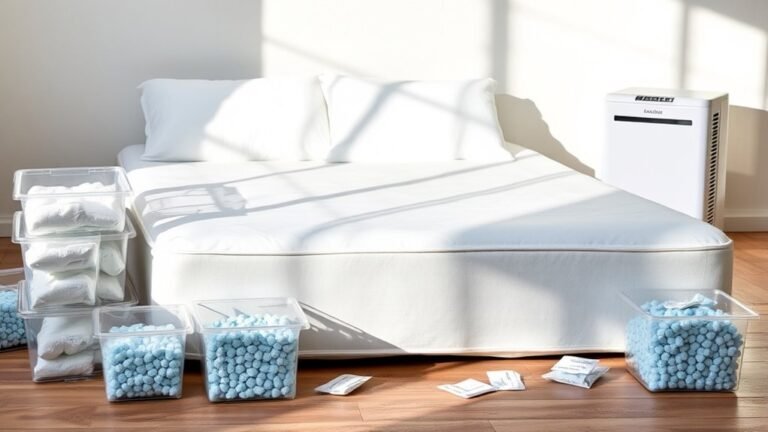
– Keep clean bedding stored in a clean bag/bin in your dorm room to reduce “recontamination” after laundry.
A practical dorm approach is to treat the encased mattress as your “protected core” and the bedding as your “replaceable filter layer.” Even if your encasement is sealed, allergens still land on the top fabric you sleep against; washing is what actually exports them from your room.
If your dorm laundry only offers cold or “warm,” don’t ignore it—use the warmest allowable settings, prioritize high-heat drying, and consider swapping in washable, tightly woven layers that can tolerate higher temps.
Control dust mites with airflow and humidity habits
Humidity and airflow are the environmental knobs that can make your efforts either stick—or feel like they never work. The direct target is keeping indoor air drier (within healthy comfort limits) and limiting dust that settles near the bed area.
Dust mites tend to thrive at higher indoor relative humidity, generally around levels above about 50%. EPA (dust mites guidance)
Using ventilation helps reduce moisture buildup that can support dust mites. EPA (indoor air quality guidance)
A HEPA vacuum is designed to capture fine particles efficiently, which reduces settled dust that can land on bedding. U.S. Department of Energy (HEPA filtration efficiency)
– Dust mites thrive when indoor air is humid; if your dorm allows it, aim for drier indoor air with ventilation or a dehumidifier that fits dorm rules.
– Let bedding and the mattress area air out when you can (for example, after making the bed) rather than keeping everything sealed tightly all day.
– Use a HEPA vacuum on floors and along baseboards to reduce the dust that settles back onto the bed area.
In my view, the most effective workflow is to decouple “drying/airing” from “long-term sealing.” That means you keep the mattress encasement on long-term, but you’re not afraid to let the top bedding breathe after laundry so you’re not constantly working against trapped moisture in fabric.
If you use a dehumidifier, watch for condensation on walls/windows and don’t block airflow around vents.
Keep allergens from transferring onto the mattress
Even with a sealed encasement, you can reduce your allergen load by preventing dirty items from landing on or near the bed surface. In a dorm, traffic and shared spaces create frequent opportunities for transfer—from shoes and backpacks to roommate belongings.
Dust mites and other allergens accumulate from dust and skin debris that settle onto bedding and nearby surfaces. CDC (dust mite and allergy triggers guidance)
Physical contamination (like clothes, bags, and shoes touching the bed) reintroduces allergen material faster than cleaning alone can remove it. EPA (indoor allergen reduction concepts)
– Don’t bring dirty clothes, shoes, or backpacks onto the bed—use a chair/caddy instead so debris doesn’t land on the mattress cover.
– If someone else’s bedding touches your mattress (or your roommate’s items get close), keep your encasement closed and your clean bedding separate.
– If the room has a lot of shared traffic or pets in adjacent spaces, focus extra effort on keeping the top bedding layer clean (the encasement helps, but it isn’t a substitute for washing).
A helpful way to think about transfer is this: the encasement blocks what gets into the mattress, but it can’t prevent allergens from loading onto the washable layer you sleep on. In other words, “barrier first” protects the foam; “cleaning second” removes what lands on top.
If you share the room, consider a simple boundary system: your clean bedding lives in one closed bin/bag, your shoes live somewhere else, and your backpack never goes onto the bed. Consistency is what keeps the system working across busy weeks.
Maintain the mattress barrier without ruining memory foam
Barrier protection only works if the encasement stays sealed and intact, and memory foam is handled gently so the material doesn’t degrade. The practical goal is long-term coverage with only the minimum cleaning needed on the surface.
An encasement works best when it stays fully closed and undamaged, because tears and unzipped seams create allergen entry points. CDC (dust mite control guidance)
Memory foam can be damaged by soaking or harsh chemical treatments, so cleaning should follow the product’s care instructions. Encasement/mattress care label guidance (manufacturer)
– Leave the encasement on long-term; it’s most effective when it stays sealed and intact.
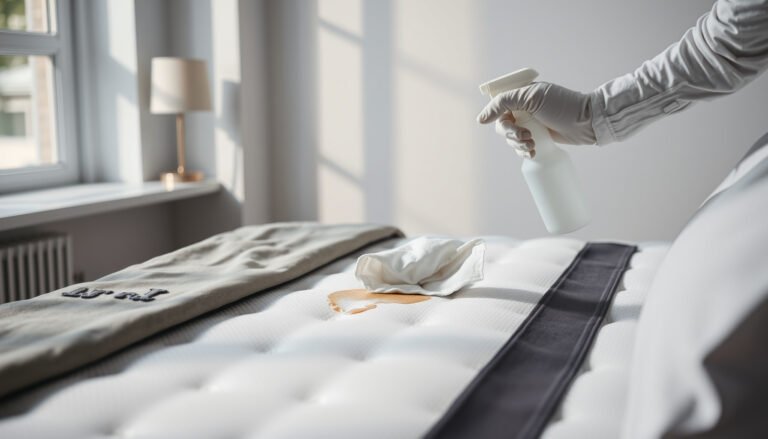
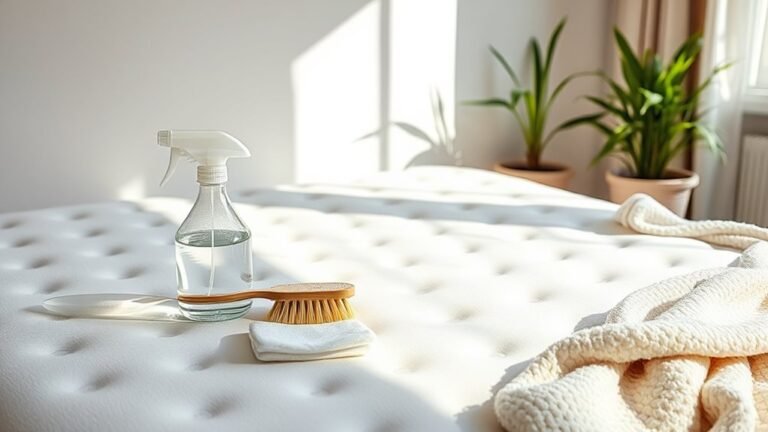
– Spot-clean the outside of the mattress area only if your encasement instructions allow it—avoid soaking memory foam.
– Replace the encasement if the zipper fails, seams split, or the cover no longer lies flat (those gaps can undo the barrier).
This is the part of the routine people often skip in dorm life: they replace bedding regularly, but they treat the encasement as “set and forget.” If the zipper is struggling, you’ll usually feel it before it fails—but by then you’re already compromising the allergen barrier.
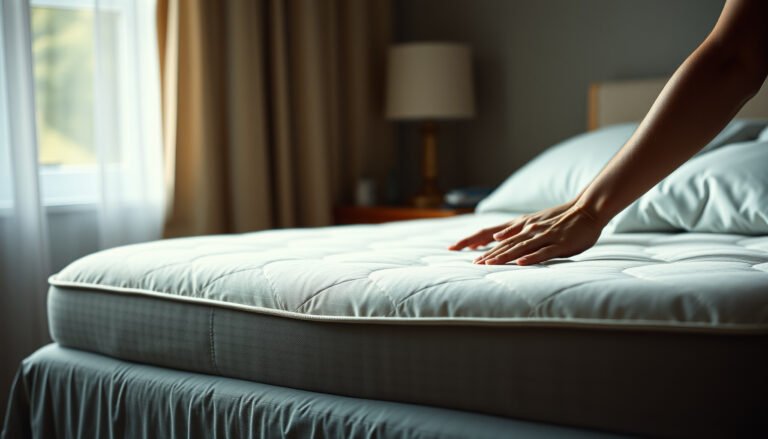
When you remove and re-fit the encasement after washing (if your model allows laundering), double-check that it’s smooth and not riding up at corners. Memory foam that isn’t evenly supported can also create small slack gaps—so make sure the mattress sits flat in the frame.
What can go wrong (and how to avoid it)
The biggest problems are usually preventable: moisture buildup, gaps from imperfect fit, and cleaning methods that don’t match the materials. If you see symptoms persist after a “full reset,” check the workflow, not just the bedding.
HEPA vacuuming reduces dust in the home, but it does not replace the need to wash bedding to remove dust mite allergens from fabrics. CDC (allergen control guidance)
Improper drying can cause moisture retention in bedding, undermining dust mite control efforts. EPA (dust mite/increasing indoor moisture risk)
– Moisture buildup: If the protector is too non-breathable or the bedding stays damp, you can trap humidity against the bed area. Keep everything dry and follow the cover’s care guidance.
– Gaps and “almost-covered” fits: An undersized or poorly zipped cover often fails where people don’t notice—along the corners and side seams.
– Over-cleaning the foam: Avoid harsh sprays or frequent wet cleaning directly on memory foam; that can damage the foam and doesn’t address allergens as reliably as barrier + laundering.
– HEPA vacuum expectations: Vacuuming helps reduce dust in the room, but it won’t replace washing bedding or maintaining a proper encasement.
To make this easier to debug, here’s a simple pros/cons decision aid you can scan in a hurry:
Verdict / tip + quick scan checklist
If you do just two things, do this: (1) add a sealed allergen-proof encasement and (2) keep bedding washing consistent. Add humidity/airflow control and dust-reduction cleaning to reduce how much allergen load you’re dealing with day to day.
Downsides / who should skip this:
If you can’t keep up with regular laundry (even weekly), or your dorm rules make humidity control/air filtration unrealistic, the benefit may feel limited. If you have severe allergies and react immediately to triggers you can’t control (for example, a strongly allergenic roommate’s environment), you may need medical guidance and additional environmental changes beyond mattress protection.
Quick checklist (save this)
– [ ] Memory foam mattress is fully covered by a zip-closed, allergen-proof encasement
– [ ] Bed sheets/pillowcases washed weekly (or more during flare-ups)
– [ ] Bedding dried fully before re-making the bed
– [ ] HEPA vacuum used around the bed area/floors to reduce dust settling
– [ ] Shoes/clutter kept off the bed; clean items stored separately
– [ ] No soaking/harsh products directly on the memory foam
Frequently Asked Questions
How do I protect my memory foam mattress from allergens in a dorm room?
Start with an allergen-proof mattress encasement made for dust mites and other particles, since dorm rooms often have more dust and shared airflow. Use a washable, breathable mattress protector on top to add another barrier against allergens that settle on the surface. Keep bedding cleaned on a consistent schedule and maintain good ventilation to reduce dust buildup in your dorm environment.
What is the best way to wash dorm bedding to reduce dust mites and other allergens?
Wash sheets, pillowcases, and mattress covers in hot water weekly when possible, and always follow fabric care labels. Dry items completely using high heat if the material allows, because dust mites are harder to control when laundry isn’t fully dried. If you use a dorm laundry room, store clean linens sealed until you’re ready to use them to avoid re-exposure.
Which mattress encasement features matter most for memory foam allergen protection?
Look for a zippered, fully enclosed mattress protector labeled allergen-resistant or dust-mite-proof with tightly woven fabric. Choose encasements that are breathable to prevent heat and moisture trapping while still blocking allergens like dust and dander. A well-fitting encasement that fully covers the mattress (not just the top) is especially important for memory foam, which can trap particles in its surface layers.
How often should I vacuum or clean around my memory foam mattress in a dorm?
Vacuum the floor and the area around your bed at least once a week using a HEPA-filter vacuum to capture fine dust allergens. Avoid shaking bedding or rugs, since that can re-suspend allergens into the air and land back on your mattress protector. Wipe nearby surfaces and keep clutter minimal, because dust accumulates quickly in dorm rooms and increases allergen exposure.
Why can dorm air and humidity increase allergies even with a memory foam mattress protector?
Dorm rooms often have fluctuating humidity, shared HVAC, and frequent foot traffic, which can move dust mites, pet dander, and other airborne allergens into your sleeping area. Moisture can also contribute to odor buildup and make dust and debris cling more easily to bedding and mattress surfaces. Using a breathable allergen barrier, keeping bedding fresh, and improving airflow through regular ventilation helps reduce allergen buildup over time.
📅 Last Updated: October 29, 2026 | Topic: How to Protect a Memory Foam Mattress from Allergens in a Dorm Room | Content verified for accuracy and freshness.
References
- https://www.cdc.gov/parasites/dustmites/faqs.html
- https://www.epa.gov/indoor-air-quality-iaq/dust-mites-and-allergies
- House dust mite
- https://medlineplus.gov/dustmites.html
- https://www.mayoclinic.org/diseases-conditions/allergies/expert-answers/dust-mites/faq-20058400
- Checking your browser – reCAPTCHA
- https://pubmed.ncbi.nlm.nih.gov/?term=dust+mite+mattress+encasement
- https://scholar.google.com/scholar?q=dust+mite+allergy+prevention+encasement+mattress Google Scholar
- https://scholar.google.com/scholar?q=dorm+room+allergen+control+dust+mites+bedding+cleaning Google Scholar
- https://scholar.google.com/scholar?q=memory+foam+dust+mites+allergens+study Google Scholar