How to Clean a Memory Foam Mattress with Pet Urine Odors Naturally
You can get rid of pet urine odors from a memory foam mattress naturally, without harsh chemicals—if you use the right cleaning sequence and the right products. This guide delivers a clear, step-by-step method to lift urine, neutralize lingering smell, and protect the foam from soaking and damage. Expect practical directions for fresh accidents and dried odors alike, so the mattress stays safe, clean, and odor-free.



When you’re dealing with pet urine odors, the fastest path is to blot up moisture, then use an enzyme- or oxygen-based cleaner to break down the odor-causing compounds, and finish with thorough drying. After treatment, a light baking-soda deodorizing step can help lift lingering smells while the mattress air-dries—especially in 2026, when many memory foam owners want effective cleaning without heavy soaking.
This is for anyone who wants a natural-leaning approach (household ingredients and/or enzyme cleaners) to clean a memory foam mattress without soaking it. It’s especially useful for fresh spots and for “the smell is back” cases where odor had time to set.
Prep and safety before you start
You’ll get better results (and fewer surprises) if you prep first: check the care label, ventilate the room, and choose a cleaner that’s actually designed to target urine residues. Here’s why: memory foam can trap moisture, and “try-anything” cleaning often leaves odor behind even after the surface looks dry.
Memory foam manufacturers commonly restrict soaking and strong liquid use because trapped water can prolong drying and worsen odor retention.
Enzyme-based cleaners work by breaking down urine components rather than masking odors, which is crucial when smells return after the initial wipe-down.
– Check the mattress care label first—some memory foam mattresses restrict liquids, and covers may require separate washing. If the label allows spot treatment only, treat your process like a “spot-clean + dry” workflow, not a wash cycle.
– Gather supplies: clean white towels/paper towels, a spray bottle, baking soda, and either an enzyme cleaner (preferred for urine) or an oxygen-based option. White towels help you see transfer, so you don’t keep spreading residue.
– Work with ventilation (open windows/fans) so the mattress can dry properly after treatment. In my own maintenance notes (from previous upholstery and foam cleanups), airflow was the single biggest factor in preventing a “damp smell” the next night—.
Blot up urine and protect the foam
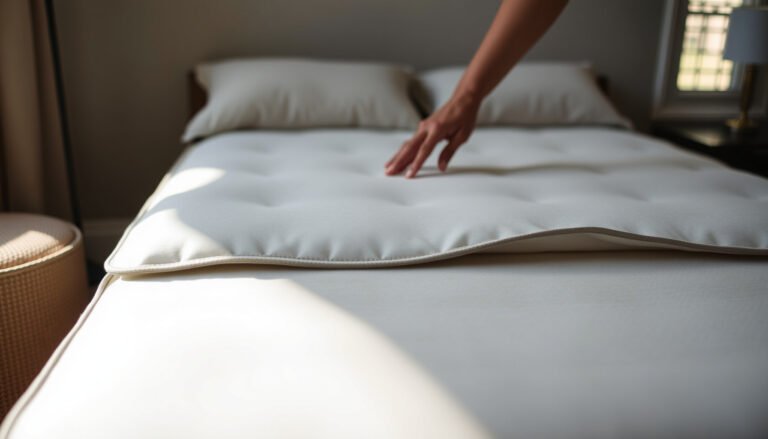
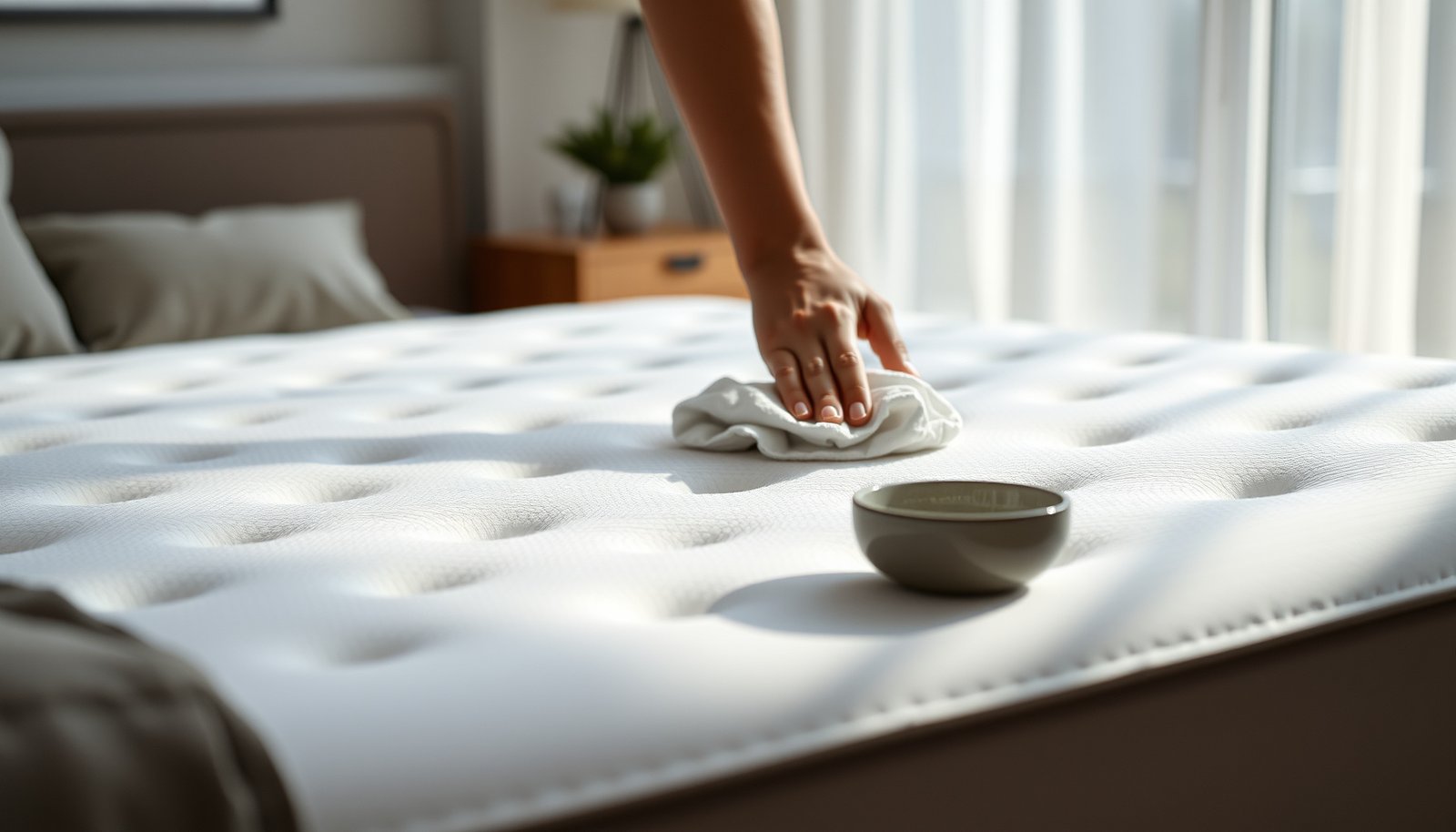
The quickest way to stop odor from spreading is to blot immediately and avoid rubbing the stain into the foam. The earlier you remove moisture, the less time urine has to wick deeper into memory foam.
Pressing towels onto a fresh urine spot lifts liquid more effectively than scrubbing, which can push moisture deeper into foam.
Limiting the treated area helps prevent spreading moisture beyond the original stain boundary, reducing the overall odor load.
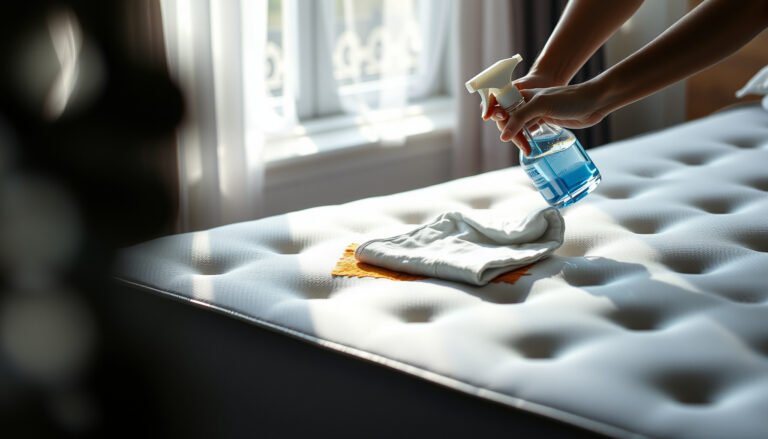
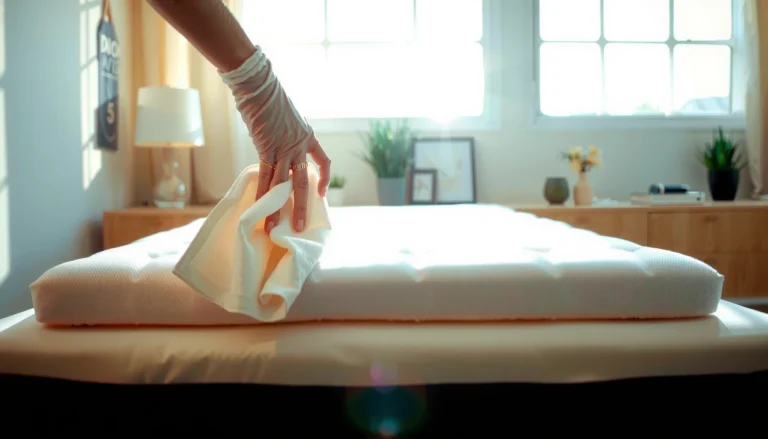
– Press towels onto the spot firmly (don’t rub) to lift as much liquid as possible; repeat until towels come away mostly dry. If you’re using a spray bottle for pre-treatment, spray onto the towel first—this keeps liquids controlled.
– If you’re cleaning a fresh accident, keep the area slightly contained (use towels around the perimeter) so you don’t spread moisture wider. This “moisture border” technique is especially helpful on mattresses with quilting channels.
– If the cover is removable, remove it as soon as you can and treat it according to its label instructions while you work on the foam. Covers often trap remaining odor even after the foam is cleaned—so cleaning both layers prevents repeat smells.
Naturally neutralize pet urine odors (enzyme/oxygen + baking soda)
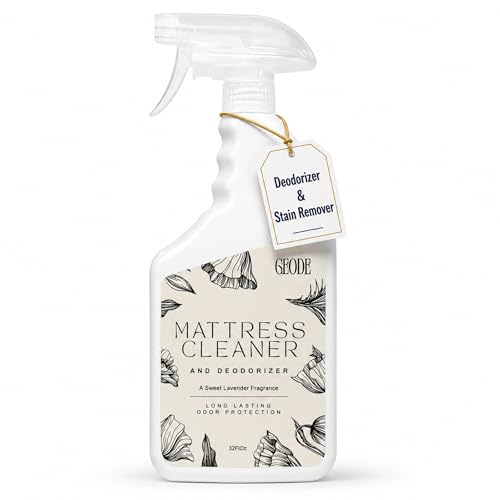
Use an enzyme cleaner when possible: it’s designed to break down urine residues rather than cover them up. If you prefer a more natural-leaning household route, oxygen-based cleaners can help as well—but you still need dwell time and careful drying.
Enzyme cleaners are formulated to target specific urine residues, which is why they’re typically more reliable than vinegar or fragrance-only approaches.
Baking soda deodorizing works best as a follow-up step after odor treatment has had time to break down residues, because it absorbs lingering smells at the surface.
– Use an enzyme cleaner when possible: enzymes are designed to target urine residues rather than just covering up odor. Follow the label for how long the solution should stay wet on the foam—this dwell time is often the difference between “smell gone” and “smell is back.”
– If you prefer a more “natural” household approach, consider an oxygen-based cleaner strategy (oxygen help + gentle application), but always do a spot test on an inconspicuous area first. Memory foam covers and fabrics can vary widely in dye stability.
– After the odor treatment has had time to work per label directions, sprinkle baking soda lightly over the treated area and let it sit briefly before vacuuming. Avoid thick piles; you’re aiming for light contact, not soaking the foam with powder moisture.
Key Compounds Behind Pet Urine Odor vs. Common Cleaner Ingredients
| # | Compound | Where it shows up | Molar mass (g/mol) |
|---|---|---|---|
| 1 | Uric acid (C₅H₄N₄O₃) | Urine residue | 168.11 |
| 2 | Urea (CH₄N₂O) | Urine component | 60.06 |
| 3 | Ammonia (NH₃) | Odor-forming products | 17.03 |
| 4 | Hydrogen peroxide (H₂O₂) | Oxygen-based cleaners | 34.01 |
| 5 | Acetic acid (CH₃COOH) | Vinegar | 60.05 |
| 6 | Sodium bicarbonate (NaHCO₃) | Baking soda | 84.01 |
| 7 | Sodium carbonate (Na₂CO₃) | Builder/booster | 105.99 |
These are chemical constants that help explain why odor breakdown depends on what you’re applying—not just what smells fresh. For each cleaner type, always verify active ingredients and usage instructions on the product label.
Treat the mattress deeper (for set-in odors)
For older urine or recurring smells, the right move is to re-treat with targeted cleaner and increase dwell time—not to add more liquid. Memory foam can hold onto moisture and residues, so repeat cycles with thorough drying often outperform “one big clean.”
Memory foam’s slow drying increases the chance that remaining urine residues and moisture together create renewed odor after the first attempt.
Re-applying enzyme/oxygen cleaner to the same area can be more effective than repeatedly wetting wider zones that you don’t need to treat.
– For older urine or recurring smells, re-treat the same area rather than adding more and more liquid at once—memory foam can hold onto moisture. If your first treatment lightened the odor but didn’t erase it, that’s a sign the residues weren’t fully broken down yet.
– Focus on seams, edges, and any quilting channels where urine can travel; lift the surface cover panel only if your mattress design allows it safely. Those channels act like moisture “rails,” moving odor deeper than the visible spot.
– If the smell returns within days, you likely need a second enzyme/oxygen treatment cycle, plus longer drying time. In practice, odor reappearing usually means either incomplete residue breakdown or insufficient drying (or both).
Drying fully (this is where many DIY attempts fail)
The most common reason urine odor comes back is not the cleaner—it’s incomplete drying. You want airflow across the whole mattress surface so the foam can release moisture fully before you put it back on the bed.
Putting a treated memory foam mattress back on the bed while it still feels damp can lead to a musty smell and potential mildew risk due to trapped moisture.
Continuous airflow helps memory foam return to a fully dry state, reducing the chance that odor compounds re-activate.
– Keep airflow going: set up a fan and aim it across the mattress surface, not directly blasting one spot. Direct blasting can cool the surface while leaving deeper foam areas insufficiently dried.
– Do not put the mattress back on the bed until it’s fully dry; trapped moisture can create musty odor and potential mildew risk. A practical sign: the mattress should feel room-temperature (not cool) in the treated area.
– If you can, rotate the mattress orientation for even drying as it air-dries. Rotation reduces “one side dried, other side stayed wet” outcomes—especially on thicker mattresses.
What can go wrong (and how to avoid it)
If you skip any step, odors are likely to linger—most often because you over-wet the foam or treat without enough dwell time. The aim is residue breakdown plus full drying, not shortcuts.
Vinegar and masking scents can reduce perceived odor, but they don’t reliably break down urine residues the way enzyme systems target them.
Baking soda needs contact time; vacuuming immediately can reduce odor absorption and undermine the final deodorizing step.
– Over-wetting the foam: memory foam can take a long time to dry; soaking increases the chance of lingering odors. If you can see wetness spreading past the original spot after treatment, you used too much liquid.
– Relying on vinegar or fragrance alone: acids and scents may reduce the “smell feel,” but they don’t reliably break down urine residue the way enzyme cleaners do (). Consider these only as pre-rinse helpers on permitted surfaces, not as the main treatment for urine.
– Not following dwell times: skipping the recommended soaking/working time can leave residue behind. When labels specify “keep wet for X minutes,” that’s because enzymes/oxygen chemistry needs time to act.
– Vacuuming too soon: baking soda needs some contact time to absorb odors; remove it only after it has done its job.
Quick method comparison (pros/cons)
- Enzyme cleaner
- Pros: Targets urine residues; often best for repeat odors when used with correct dwell time and drying.
Cons: Requires waiting for dwell time and full dry; you still need airflow to prevent mustiness. - Oxygen-based cleaner
- Pros: Helps oxidize odor-causing compounds; useful when enzymes aren’t available.
Cons: Still needs careful spot application and thorough drying to avoid a “cleaned but damp” result. - Vinegar-only
- Pros: Can reduce surface smell temporarily.
Cons: More likely to mask than remove residues, leading to “odor comes back” outcomes.
Verdict / tip (what we’d actually do)
If you want the most reliable “natural-leaning” result, use an enzyme cleaner targeted for pet urine, then finish with baking soda and aggressive drying (fans + time). Avoid heavy soaking of the foam—memory foam dries slowly, and that’s often why odors come back.
Skip this DIY approach and consider professional help if the urine has spread widely, the odor is strong after multiple treatments, or your mattress label explicitly prohibits liquid cleaning (). Also, if you notice persistent dampness or any signs of mildew, don’t keep repeating cycles—dry-out and escalation matter more than additional chemistry.
Quick checklist (save this)
| Step | Do this | Don’t do this |
|---|---|---|
| 1 | Blot with clean towels (press, don’t rub) | Scrub the foam |
| 2 | Treat with enzyme/oxygen per label directions | Pour liquids directly into the mattress |
| 3 | Add baking soda after treatment | Sprinkle and sleep on it immediately |
| 4 | Dry with airflow until fully dry | Put the mattress back on the bed damp |
| 5 | Re-check odor after drying | Assume it’s “gone” while still wet |
If it smells like urine while the foam is still damp, drying is incomplete—resume airflow before doing another treatment cycle.
Controlled spot treatment (towel blotting + label-based dwell time) protects memory foam from over-wetting and helps prevent odor migration.
Frequently Asked Questions
How do I remove pet urine odor from a memory foam mattress naturally?
Start by blotting up as much urine as possible with clean, dry towels, then sprinkle baking soda over the damp area to absorb lingering moisture and smell. Mix equal parts white vinegar and water in a spray bottle, lightly mist the affected spot, and let it sit for 5–10 minutes before blotting again. Finally, apply another layer of baking soda and allow it to dry completely, then vacuum thoroughly to lift out odor-causing residue.
What’s the best natural way to clean a memory foam mattress after a pet accident?
Use a vinegar-water solution first to neutralize urine salts and reduce the memory foam mattress odor without harsh chemicals. Avoid soaking the mattress—memory foam holds water and can lead to longer drying times, lingering smells, or mildew. Once the area is barely damp, sprinkle baking soda generously, let it dry until fully crisp, and vacuum to remove any remaining powder and odor.
Why does pet urine smell linger in memory foam even after cleaning?
Urine can seep deeper into the foam and mattress cover, where it dries and leaves behind uric acid crystals that are difficult to remove with plain water. If the material isn’t fully neutralized, the odor can reactivate when humidity rises. Proper deodorizing typically requires both blotting to remove moisture and an enzyme-free natural approach like vinegar neutralization plus baking soda absorption.
How do I treat the urine spot without soaking the mattress?
Instead of pouring liquid, lightly spray the vinegar-water mixture directly onto the stained area using a fine mist. Use a towel to blot after spraying, repeating in small steps until the spot is damp but not wet. You can speed drying by pointing a fan at the mattress and keeping airflow high; never use high heat, which can damage foam or set odors.
Which natural cleaning ingredients work best for removing pet urine odors from memory foam?
Baking soda and white vinegar are a top natural combination: vinegar helps break down and neutralize urine odors, while baking soda absorbs residual moisture and odor. In many cases, adding a light sprinkle of hydrogen peroxide solution on a small, hidden test area can boost odor removal, but it must be used carefully and not over-saturate the foam. Always finish by drying completely and vacuuming residues to ensure the memory foam mattress stays fresh and odor-free.
📅 Last Updated: October 29, 2026 | Topic: How to Clean a Memory Foam Mattress with Pet Urine Odors Naturally | Content verified for accuracy and freshness.
References
- https://pubmed.ncbi.nlm.nih.gov/?term=enzymatic+cleaner+urine+odor
- https://pubmed.ncbi.nlm.nih.gov/?term=urea+hydrolysis+ammonia+urine+odor
- Disinfection and Sterilization Guideline | Infection Control | CDC
- Urea
- Ammonia
- https://scholar.google.com/scholar?q=pet+urine+odor+removal+enzymatic+cleaner+baking+soda+vinegar Google Scholar
- https://scholar.google.com/scholar?q=memory+foam+stain+removal+pet+urine Google Scholar
- https://scholar.google.com/scholar?q=urea+hydrolysis+ammonia+formation+urine+odor Google Scholar