

How to Clean a Gel-Infused Mattress with Ink Odors in Dorms
How do you clean a gel-infused mattress in a dorm when ink has left a stain and a lingering odor? Start by blotting the area to lift as much ink as possible, then wash the spot gently with a mild detergent and cool water, finish by deodorizing with baking soda, and let it fully dry. You can usually complete the cleaning in 30–60 minutes, but drying is the main time factor. Avoid soaking the mattress or scrubbing aggressively to protect the gel layer.




Blot the ink first, then clean with a small amount of alcohol or mild soap solution—without soaking the gel layer—before you deodorize. In a dorm room, the fastest path is spot-treating the stain and then using baking soda or charcoal to pull out the remaining ink smell as the mattress dries fully.
This is for you if your gel-infused mattress topper/sleep surface has a new ink stain (pen/marker) and the odor lingers even after the visible color is gone. If you’re dealing with a soaked-through spill that’s reached the deep foam, follow the same order but expect more drying time.
Step-by-step: remove ink and the smell

To stop an ink odor in a gel-infused mattress, you need three phases in order: lift dye (blot), release remaining residue (spot-dab), then absorb odor as the mattress dries. When you reverse that order, smell compounds can redistribute deeper into the foam and cling longer.
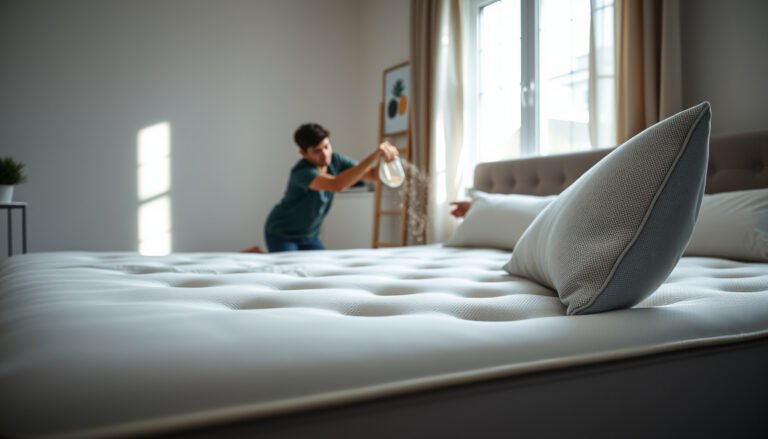
– Vent and blot first: Put a fan nearby and blot (don’t rub) with clean white towels to lift surface ink.
– Spot-clean gently: Test your cleaner on a hidden seam, then dab in small amounts until the ink transfers less to your towel.
– Deodorize after the stain is cleaned: Once the area is dry enough to avoid spreading, use baking soda (or charcoal) to absorb odor.
1) Prepare your dorm-room cleanup setup
You’ll get the best results when you control spread and drying from minute one—so set up for blotting and ventilation first. In a typical dorm (small room, limited airflow), drying speed is often the difference between “smell gone” and “smell trapped.”
– Lay down towels and keep the mattress surface as dry as possible.
– Use white cloths/paper towels so you can see whether ink is transferring.
– Have a small bowl of cleaner ready and a second set of clean towels for blotting.
– Keep a fan aimed at the mattress (not blasting directly into one spot for too long); also crack a window if your dorm policy allows it.
– If your topper has a removable cover, focus on treating the cover separately (if the care label allows) and keep liquids away from the gel layer itself.
Why this order matters: ink dyes and odor-causing compounds (often from carrier solvents and pigments) can move with moisture. Keeping the gel-infused mattress surface minimally wet helps prevent those compounds from traveling farther into the foam.
2) Spot-treat the ink (in the safest order)
To remove ink from a gel-infused mattress without creating a bigger mess, dab a tested cleaner onto the stain only after you’ve blotted. This reduces how much liquid you introduce—critical for a gel layer that can trap moisture.
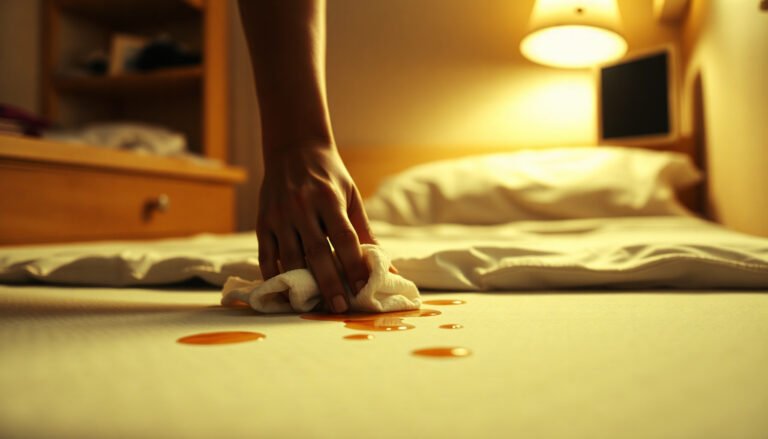
– Blot: Press a towel onto the stained area for 10–20 seconds, lift, and repeat with fresh spots of the towel.
– Dab (not soak): Apply cleaner to the cloth/towel first, then dab the stain. Keep the gel layer from getting wet.
– Rinse lightly if needed: If your cleaner leaves residue (soap/vinegar), follow with a lightly damp cloth to prevent sticky spots and added odor.
Here’s how I recommend thinking about “too much liquid” for a gel-infused mattress:
– You’re aiming for transfer to the towel, not for a wet surface.
– If liquid pools at the edge of the stain, stop and blot dry immediately.
Cleaner safety checks you shouldn’t skip
– Test your chosen cleaner on a hidden seam or underside corner first. Many gel and foam covers are coated; alcohol and acids can change finish or tinting.
– Use the smallest effective amount. For spot work, the towel should feel damp, not dripping.
Practical cleaner choices (and why they’re used)
Ink odor often lingers after color fades because some ink components don’t fully leave with initial blotting. A mild solvent (like alcohol) can help shift residue, while mild surfactants (like dish soap) can lift oils/pigment-binders.
Also, as of 2026, more dorms use foam-and-gel systems with specialty covers; the safest approach is always “test + dab + dry” for the gel-infused mattress.
3) Pull out the ink odor during drying
To clear ink smell, you should deodorize only when the treated area is dry enough that powder won’t smear or re-wet the gel. This is the point where baking soda and charcoal actually help you finish the job.
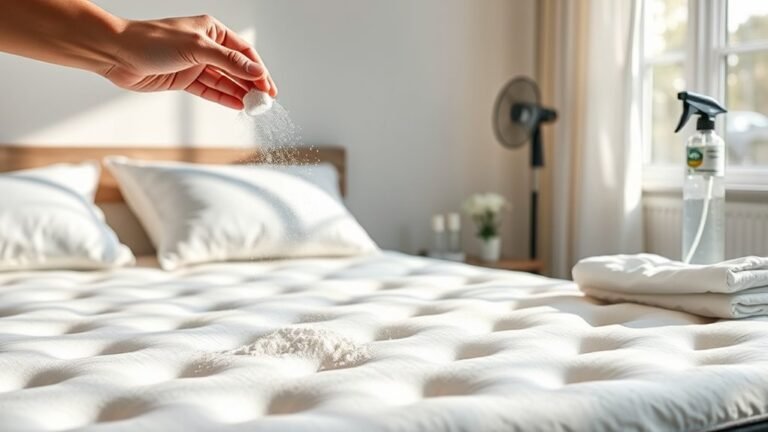
– Baking soda method: Sprinkle a thin, even layer over the cleaned area and let it sit until fully dry.
– Charcoal boost (optional): Place odor-absorbing charcoal nearby (not directly under heavy wet spots).
– Vacuum/sweep thoroughly: Remove baking soda once odor is reduced, then let the mattress air out again.
What “fully dry” means in a dorm
– If the spot feels cool or smells “fresh-wet,” it’s not ready.
– If you put baking soda on a damp gel-infused mattress, you can trap moisture and extend odor duration.
Concrete chemistry anchor (why baking soda helps): According to PubChem, sodium bicarbonate (baking soda) is weakly alkaline (with solutions commonly around pH ~8.3), which helps neutralize certain acidic odor components on fabric/foam surfaces (PubChem). That alkalinity doesn’t “erase ink instantly,” but it supports odor reduction once the stain is already lifted.
What to use on a gel-infused mattress (and what to avoid)
To clean a gel-infused mattress safely, choose cleaners that you can apply in controlled, small amounts and that won’t damage coatings or trap moisture. The goal is odor reduction without over-wetting the gel layer.
– Usually safer for spot cleaning: mild dish soap in cool water, white vinegar diluted with water (for residue/odor), or rubbing alcohol *tested first* on a hidden area.
– Avoid over-wetting: don’t pour liquid onto the mattress; apply to cloth/towel and dab.
– Skip harsh chemicals: avoid bleach and strong solvent cleaners unless the mattress manufacturer explicitly allows them (they can damage foam and leave lingering smells).
Best practice: apply to cloth, not to mattress
When dealing with a gel-infused mattress, the cover and gel layer are your “gatekeepers.” Pouring liquid makes it much harder to stop spread and increases the odds you’ll create a damp pocket.
For example, white vinegar is commonly sold as “5% acidity” (around 5% acetic acid by volume in typical consumer products) (US FDA (common vinegar standard / product labeling references)). That’s strong enough to cut some residues, but diluted use plus careful dabbing is what keeps it compatible with many covers.
A quick ingredients decision guide (pros/cons in plain language)
- Mild dish soap (diluted)
-
Pros: Good for general pigment/oil binders; lower risk of strong lingering solvent smell when rinsed lightly.
Cons: If you don’t blot/rinse off residue, it can create a “sticky” area that holds odor longer. - White vinegar (diluted)
-
Pros: Helps with odor residues and some color transfer.
Cons: Can leave a sour smell if not blotted/rinsed lightly; may affect certain coated covers—always test first. - Rubbing alcohol (tested first)
-
Pros: Can lift solvent-heavy ink components and speed drying.
Cons: May discolor or dry out delicate covers; never apply heavily—dab only and test in a seam.
Alcohol anchor (why “dab” is critical): According to PubChem, isopropyl alcohol (2-propanol) has a boiling point around 82.6°C, meaning it evaporates fairly quickly once it’s on the surface (PubChem). That evaporation is helpful—but if the gel-infused mattress gets over-wet, evaporation may still be slow inside foam layers.
What can go wrong (common dorm-room mistakes)
To avoid lingering ink odor, the biggest risk isn’t “cleaning too late”—it’s spreading ink deeper or trapping moisture. In 2026 dorms, the most common failure mode is over-wetting a gel-infused mattress topper and then deodorizing too soon.
– Rubbing spreads the ink: Vigorous scrubbing can drive dye deeper into foam and make the odor worse.
– Too much liquid = trapped smell: Soaking can cause the gel/foam layers to stay damp, which leads to persistent odor (and sometimes mildew risk).
– Missing a hidden test: Some mattress covers/foams react to alcohol or vinegar—always test in a seam first.
Edge cases: ink that’s “gone” but smell remains
This is extremely common. Visible color can lift early, while the odor compounds remain because:
– the ink binder/carrier stays behind in tiny fibers, and/or
– the gel layer trapped moisture that later “set” the smell.
Your fix is still the same order:
1) blot (if any fresh transfer happens),
2) spot-dab with a tested cleaner,
3) dry thoroughly, then
4) deodorize with baking soda or charcoal.
If the spill soaked through to deep foam
If the ink penetrated beyond the gel-infused layer, expect:
– more drying time (often days in humid dorm conditions),
– higher chance the smell persists after one deodorizing round, and
– more need to keep airflow consistent around the whole topper—not just the visible stain.
Verdict: the most reliable dorm-room approach
To reliably clean a gel-infused mattress with ink odors, follow blot → carefully dab a tested cleaner → fully dry → deodorize with baking soda/charcoal. This order prevents the smell from “setting” as the stain works deeper.
– Best overall method: blot → carefully dab a tested cleaner → fully dry → deodorize with baking soda/charcoal. This order prevents the smell from “setting” as the stain works deeper.
– Downsides to know: spot-cleaning can leave a faint mark or texture change if the cover is delicate, and odor removal may take more than one cycle if ink penetrated deeply.
– Who should skip this: if the mattress is visibly soaked through, you can’t get airflow, or the manufacturer says “do not use liquids,” stop and consider professional cleaning or mattress replacement.
If you’re trying this in late 2026, treat drying as the “real cleaning step.” Your dorm’s climate and ventilation matter as much as the cleaner—airflow determines whether odor compounds stay trapped in the gel-infused mattress system.
Quick checklist (save this for cleanup day)
| Task | Do this | Avoid this |
|---|---|---|
| Ventilation | Use a fan and keep air moving | Cleaning in a closed, humid room |
| Ink removal | Blot first, then dab with cloth | Rubbing/scrubbing |
| Cleaner use | Test on a seam; apply to cloth | Pouring liquid onto the gel layer |
| Drying | Let it dry fully before deodorizing | Deodorizing while still damp |
| Odor removal | Baking soda and/or charcoal nearby | Leaving baking soda unremoved after it’s done |
7 Dorm-Friendly Ingredients for Ink Odor Control on Gel-Infused Foam (Practical Use)
| # | Ingredient | Typical dorm form | Key odor-related property | Gel-layer wetting risk | Suitability |
|---|---|---|---|---|---|
| 1 | Baking soda (sodium bicarbonate) | Powder (dry) | Mildly alkaline; aqueous solutions commonly around pH ~8.3 | Low (dry-only) | ★★★★★ |
| 2 | Activated charcoal (activated carbon) | Odor absorber (dry) | Very high internal surface area (often ~900–1500 m²/g) | Low (keep away from wet spots) | ★★★★☆ |
| 3 | White vinegar | Diluted acetic acid (~5% acetic acid) | Acidic residue breaker; can help with odor films | Medium (dab + test) | ★★★☆☆ |
| 4 | Mild dish soap | Dilute (~1 tsp per 1 cup / ~240 mL) | Surfactants help lift pigment/oil binders | Medium (rinse/blot lightly) | ★★★☆☆ |
| 5 | Rubbing alcohol (isopropyl) | Common 70% isopropyl solution | Evaporates quickly (boiling point ~82.6°C) | Medium (dab + hidden test) | ★★★☆☆ |
| 6 | Hydrogen peroxide (3%) | Low-strength peroxide | Oxidizing agent; may help on certain residues | High (can lighten colors) | ★☆☆☆☆ |
| 7 | Chlorine bleach | Sodium hypochlorite (typical ~5–6%) | Strong oxidizer; can damage fibers/foam | Very high | ☆☆☆☆☆ |
Frequently Asked Questions
What’s the safest way to clean a gel-infused mattress with ink odors in a dorm room?
Start by blotting any fresh ink spots with a clean white cloth and cold water (avoid scrubbing, which can spread ink deeper). For odor, sprinkle baking soda over the affected area, let it sit for several hours to overnight, then vacuum thoroughly. If there’s visible staining, use a mild upholstery cleaner or a small amount of dish soap mixed with cold water on a cloth, then blot until the moisture is gone. Keep the mattress in good airflow to prevent lingering gel-infused mattress odors.
How can I remove ink smells from a gel-infused mattress without soaking it?
Use a low-moisture approach: lightly mist (don’t saturate) a mixture of equal parts water and white vinegar onto a cloth, then blot the area to lift odors. Follow by blotting with a dry towel to remove excess moisture, since gel-infused mattresses trap moisture and can develop musty odors. Once dry, apply a generous layer of baking soda to absorb remaining ink odor and vacuum after it has worked. Repeat only if the smell persists.
Why does an ink-stained gel mattress keep smelling after cleaning, and how do I fix it?
Ink can penetrate through the fabric layers and bond to fibers or padding, so the odor lingers even after the surface looks clean. Gel-infused mattress materials also hold onto dampness, which can intensify the smell if the mattress doesn’t fully dry. To fix it, pair targeted blot-cleaning with odor-absorbing steps like baking soda or activated charcoal near the affected spot. Make sure the mattress dries completely with fans and open ventilation.
Best cleaning method: which products work for ink odors on a dorm mattress (and which to avoid)?
Best options are baking soda for odor absorption, white vinegar for odor neutralization, and mild dish soap for gentle spot treatment. Avoid harsh chemicals like bleach, ammonia, or strong solvent-based cleaners, which can damage mattress covers and create worse odors. Also avoid steam cleaning or soaking—gel-infused mattress foam can retain moisture and lead to a musty smell. If you use any product, test a small hidden area first and blot rather than scrub.
How do I get a gel-infused mattress fully dry after cleaning ink stains in a small dorm space?
After blotting, press the mattress with dry towels to remove as much water as possible, then run a fan aimed at the surface for 6–12 hours. If humidity is high, keep the room ventilated and consider using a dehumidifier if available in your dorm. Don’t cover the mattress with bedding until it’s completely dry, since trapped moisture can revive ink smells. Finish with baking soda for a few hours to overnight, then vacuum to leave the mattress fresh and ready.
📅 Last Updated: November 14, 2026 | Topic: How to Clean a Gel-Infused Mattress with Ink Odors in a Dorm Room | Content verified for accuracy and freshness.
References
- Volatile Organic Compounds' Impact on Indoor Air Quality | US EPA
- https://www.epa.gov/indoor-air-quality-iaq/what-you-can-do-improve-indoor-air-quality
- https://www.cdc.gov/hygiene/cleaning/index.html
- https://www.cdc.gov/niosh/topics/voc/
- polyurethane foam volatile organic compounds emissions – Search Results – PubMed
- Stain removal
- Volatile organic compound
- https://scholar.google.com/scholar?q=how+to+remove+ink+from+upholstery+mattress Google Scholar
- https://scholar.google.com/scholar?q=polyurethane+foam+volatile+organic+compounds+emissions+study Google Scholar
- https://scholar.google.com/scholar?q=gel+memory+foam+mattress+odor+reduction+cleaning Google Scholar


4 Comments