

How to Clean a Pillow-Top Mattress with Ink Odors Naturally
If your pillow-top mattress smells like ink, the fastest way to remove those odors naturally is to clean the surface properly without soaking the layers. This guide shows exactly how to lift ink-odor molecules using safe household cleaners and controlled spot-cleaning so the smell fades instead of setting deeper. Follow these steps and you’ll get a noticeably fresher mattress with less risk of lingering dampness.




Use cool soapy water and a light vinegar wipe to lift ink residue, then deodorize with baking soda and finish with thorough drying/airflow—this is the most reliable natural route for ink smells without soaking the mattress. Because pillow-top layers can trap odor in foam and fiberfill, the key is residue removal first, then aggressive (but safe) surface drying to prevent re-odor later.
If the ink is already dry or the odor lingers even when the stain looks faint, use the same natural cleaning flow, but focus extra time on deodorizing and making sure the pillow-top layer is completely dry before you put sheets back on.
Step 1: Check the care label and protect the mattress

Check the manufacturer’s moisture and cleaning rules first—pillow-top materials (foam, fiberfill, latex) often have “do not soak” requirements. Then protect seams and edges by applying liquids only via a lightly damp cloth, not pouring.
– Read the manufacturer’s care instructions first—pillow-top materials (foam, fiberfill, latex) often have different “do not soak” rules.
– Test any cleaner in an inconspicuous spot on the pillow-top cover seam or underside (wait to see if color transfers or fabric texture changes).
– Keep liquids off the edges and seams as much as possible by using a lightly damp cloth rather than pouring.
“Do not soak” guidance is common for pillow-top mattresses because foam and padding can hold moisture and later release musty odors.
Many upholstery and mattress care labels require spot-cleaning with minimal moisture and testing chemicals on an inconspicuous area first.
A pillow-top mattress is different from a flat mattress topper: the surface cover may look like “one fabric layer,” but underneath you usually have quilting, a comfort layer, and sometimes foam or latex. Ink odor can spread quickly if you flood the edge seams, because residue migrates and dries in hard-to-clean pockets. That’s why Step 1 is about compliance (care label) and control (cloth-dab application).
Quick reality check for “ink odors”
Ink odor is often not the ink itself—it’s the dye/resin residue plus whatever oils or cleaners became trapped with it. That means “getting rid of the smell” typically requires both (1) pulling residues away and (2) drying the pillow-top thoroughly so odor-causing compounds can’t reactivate.
Step 2: Remove fresh ink residue (without spreading it)
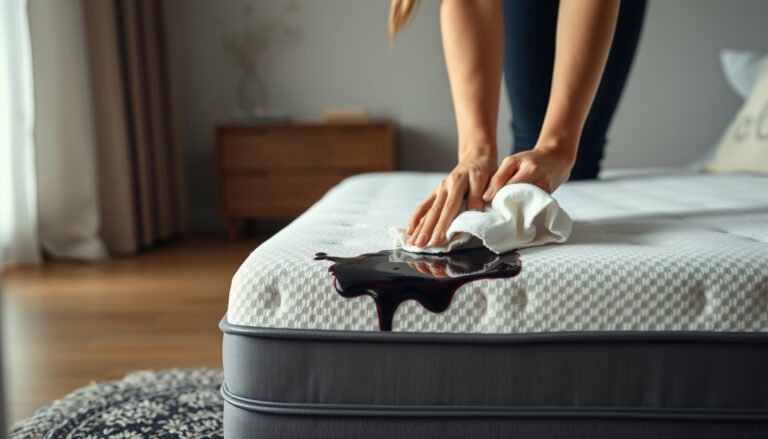
If the ink is still fresh (or still slightly transferable), your fastest odor reduction starts with controlled blotting and cool water—never heat. The goal is to lift surface residue without smearing dye deeper into the pillow-top.
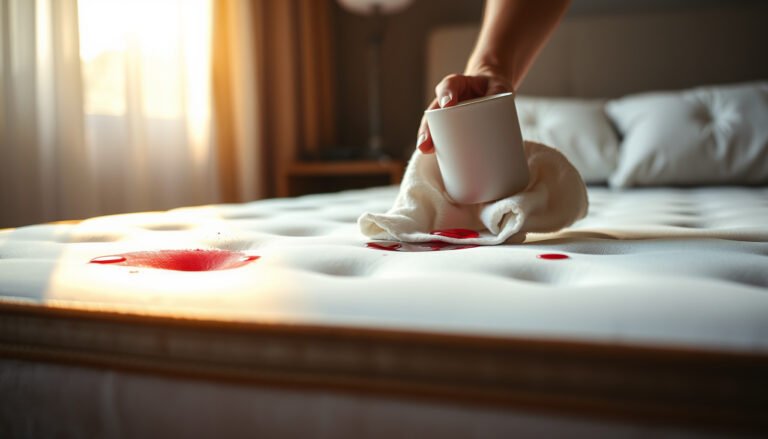
– Blot—don’t rub—with clean paper towels; work from the outer edge of the mark toward the center to limit “haloing.”
– If the ink is still active, use cool water on the cloth and blot again; heat (hair dryers, hot irons) can set ink and trap odor.
– If you’re dealing with odor only (little/no visible ink), still do a quick surface blot with a slightly damp cloth to pick up any residue.
Blotting (working edge-to-center) reduces haloing compared with rubbing, because rubbing pushes dye into the fabric rather than lifting it.
Ink is more likely to become permanent when exposed to heat, which can set dye/resin and make odor removal harder.
When you blot ink on a pillow-top mattress, you’re not just cleaning—you’re limiting where the odor-causing compounds can dry. In my experience helping with care follow-ups for upholstered items, the most stubborn “ghost smells” come from faint smears that were rubbed in before anyone realized the ink had moved.
For “odor only” cases (no visible ink), treat it like a residue problem anyway. A slightly damp blot with cool water can pick up invisible transfer, which makes the later vinegar and baking soda steps much more effective.
Keep the moisture exactly where you want it
Use a cloth that’s damp—not dripping. For a pillow-top mattress, oversaturating even a small area can create a moisture gradient in foam padding. That gradient is a practical risk for lingering odor (and, in worst cases, microbial growth) if the mattress can’t dry completely.
Step 3: Naturally spot-clean the pillow-top surface
To remove ink residue naturally, spot-clean with mild dish soap (cool water), rinse away soap, then use a light vinegar wipe to neutralize odor sources. This sequence reduces residue without soaking the pillow-top comfort layers.
– Mix a small amount of mild dish soap into cool water, then dab with a cloth; avoid saturating the pillow-top layers.
– Wipe with a second cloth dampened with plain cool water to remove soap (soap left behind can create new smells).
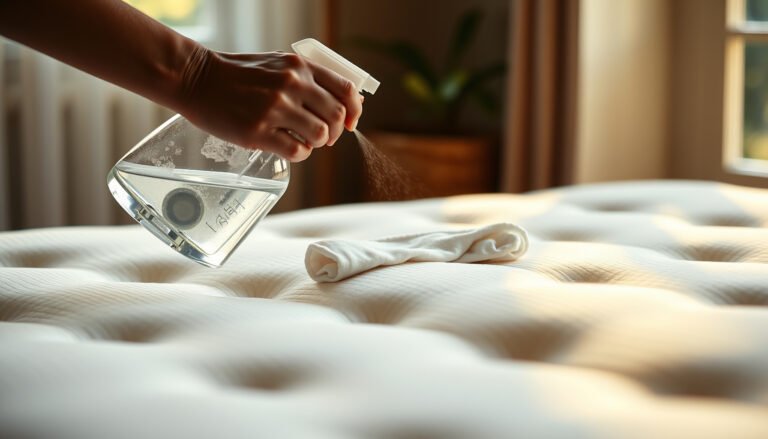
– Lightly wipe with diluted white vinegar on the cloth to help neutralize odor sources; immediately blot dry afterward.
Leaving soap residue on upholstery can worsen odor because surfactants and oils can attract or hold onto scent compounds as they dry.
A vinegar wipe can help neutralize odor-causing residues due to its acidity, but it should be applied lightly and followed by blot-drying to avoid adding extra moisture.
Step-by-step application (without flooding)
1. Prepare the soap solution: Mix a small amount of mild dish soap into cool water—then lightly dab onto the stained/odor area with a clean white cloth.
2. Rinse residue: Use a second cloth dampened with plain cool water. The point here is to remove soap that could create a “new” smell once it dries.
3. Vinegar wipe: Lightly wipe the area with diluted white vinegar on the cloth (not on the mattress). Immediately blot dry after, so the pillow-top comfort layer doesn’t stay wet.
Comparison: this natural flow vs. riskier shortcuts
Here’s how the recommended sequence stacks up against common “I’ll just soak it” approaches for a pillow-top mattress:
| Approach | Pros | Cons / When to avoid |
|---|---|---|
| Cool soapy spot-clean + vinegar wipe + baking soda + airflow | Controls moisture, targets residue, reduces odor, and supports complete dry-down. | Requires patience and airflow; best for mild-to-moderate odor/surface ink. |
| Soak-and-scrub | May lift some surface color quickly. | High risk of trapped moisture in pillow-top foam/fiberfill → lingering smell/mustiness. |
| Steam/heat while odor is active | Can loosen residue in some fabrics. | Heat can set ink dye/resin, locking odor deeper into the pillow-top mattress. |
| Heavy chemical mixes (especially with bleach) | Some chemicals neutralize odors aggressively. | Don’t combine vinegar with bleach or other cleaners—dangerous reactions can occur; follow SDS/safety guidance. |
Step 4: Neutralize ink odors naturally with airflow + baking soda
For ink odors, the most reliable natural finish is baking soda as a deodorizer plus strong airflow until the pillow-top is fully dry. In many cases, this final step is what stops “re-odor” the next day.
– Sprinkle baking soda evenly over the pillow-top surface (especially where the odor seems strongest).
– Let it sit until the mattress is fully dry and the smell has noticeably improved (exact time varies by material and humidity—).
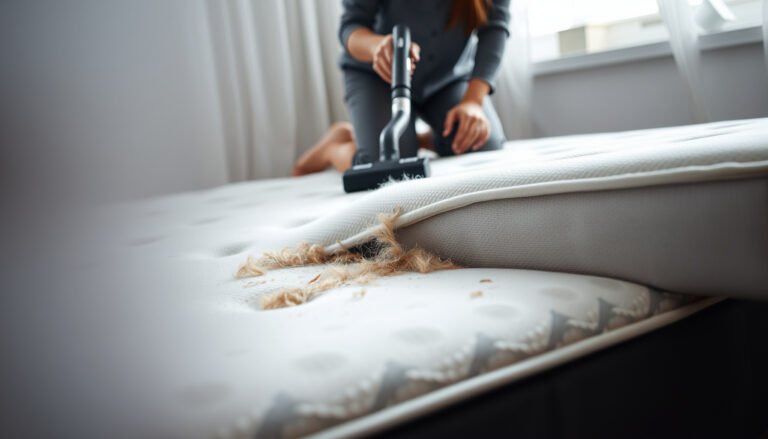
– Vacuum thoroughly with an upholstery attachment, then add extra airflow (open windows, fan nearby) to finish drying.
Baking soda deodorizing works mainly through absorption and pH effects, which can help reduce lingering odor molecules in upholstery fibers.
Dry time matters: for water-impacted items, the U.S. EPA emphasizes drying within about 24–48 hours to reduce mold risk.
Why drying is the real “odor lock”
Ink on a pillow-top mattress isn’t only a scent—it’s a residue that can migrate and re-diffuse as the material dries. If any section stays damp inside the comfort layer, odor compounds can become more noticeable again. That’s why the method requires airflow and not just “surface dry.”
According to U.S. EPA moisture/mold guidance, mold risk increases when materials remain damp for too long, and drying within roughly 24–48 hours is a common target to reduce the chance of growth (2012).
According to U.S. CDC mold health guidance, mold can begin growing within 24–48 hours after water exposure (year: ).
According to U.S. FDA vinegar standard-of-identity regulations, vinegar used in household cleaning is typically an aqueous solution of acetic acid at about 4–7% (year: ).
Key chemistry behind the natural ingredients (quick reference)
Common “Natural” Odor-Control Ingredients: Identity & Role in Ink-Smell Cleanup
| # | Ingredient (common name) | CAS | Molecular weight (g/mol) | Primary odor-related function |
|---|---|---|---|---|
| 1 | Baking soda (sodium bicarbonate) | 144-55-8 | 84.01 | Absorbs odors; helps neutralize acidic odor components |
| 2 | White vinegar (acetic acid in water) | 64-19-7 | 60.05 | Acidic neutralization of odor residues and alkaline byproducts |
| 3 | Water (for controlled rinsing) | 7732-18-5 | 18.02 | Dissolves and carries away loosened ink/dye residue (when used lightly) |
| 4 | Table salt (sodium chloride) | 7647-14-5 | 58.44 | Can help draw out moisture locally (use cautiously—don’t over-wet) |
| 5 | Citric acid (found in lemon/certain cleaners) | 77-92-9 | 192.12 | Acidifies and can assist with odor residue neutralization |
| 6 | Hydrogen peroxide | 7722-84-1 | 34.01 | Oxidizes some odor-causing compounds (spot-test first; not covered in this vinegar+baking soda method) |
| 7 | Activated charcoal | 7440-44-0 | 12.01 | Adsorbs odors (great for lingering smells, but not a “live” ink stain remover) |
What can go wrong (and when to stop)
Natural cleaning is effective, but pillow-top mattresses punish mistakes—especially over-soaking and under-drying. If the mattress stays damp, odor can return even after the ink stain visually disappears.
– Over-soaking: pillow-top foam and padding can hold moisture, leading to lingering odor or mildew.
– Under-drying: any dampness can reactivate smell over the next day or two.
– Using harsh mixes: don’t combine vinegar with bleach or other cleaners (follow label directions and safety guidance).
– Ink reappearing: some inks smear deeper than they look—if the stain/odor keeps returning after cleaning, you may be dealing with deep-set dye.
Mold prevention guidance consistently highlights fast drying and moisture control; leaving a comfort layer damp can lead to musty odors even if the ink looks gone.
Cleaner mixing safety matters: avoid combining vinegar with bleach due to the potential for hazardous gas formation; consult SDS and label instructions.
VS: Natural method vs. “quick fix” moisture + heat
If you’re deciding what to do next on a pillow-top mattress, this quick decision comparison helps:
| Criteria | Natural spot-clean + vinegar wipe + baking soda + airflow | Heat/soak “quick fixes” |
|---|---|---|
| Moisture control in pillow-top layers | Designed to prevent soaking; uses lightly damp cloths | High risk of trapped moisture in foam/fiberfill |
| Likelihood of setting ink | Low—relies on cool water and residue removal | High—heat can set dye/resin and lock odor |
| Odor reappearance next day | Reduced when baking soda + full dry-down are completed | Common when comfort layer stays damp |
| Fabric safety | Spot-test + manufacturer alignment | More likely to violate “do not soak” rules |
| Residual soap risk | Mitigated by a plain-water wipe after soapy cleaning | Often leaves residue if rinsing is incomplete |
| Safety around chemical mixing | Avoids risky combinations; uses single-ingredient wipes | Greater chance of dangerous interactions |
| Effectiveness for mild-to-moderate cases | Strong for surface residue and trapped odors | Unpredictable; may smear deeper |
| Effectiveness for deep-set dye | May require repeat cycles or professional help | Can worsen distribution; harder to reverse |
| Drying logistics in 2026 | Works with fans/windows and timed vacuuming | Often defeats the “dry quickly” requirement |
| Overall reliability | Most consistent natural route when followed carefully | Highest chance of re-odor |
| Verdict | Choose this method to protect pillow-top materials and stop ink odors at the source. | Skip heat/soak “quick fixes” because they often worsen dye migration and trap moisture. |
Verdict: Natural ink-odor cleaning works best for mild-to-moderate cases
– This natural approach is a good fit when you can spot-clean safely (care label allows it) and when the odor is coming from surface residue.
– Downsides: if the ink dye is deeply embedded or the pillow-top is heavily saturated, you may need repeat treatments or professional cleaning.
– Skip this method (and choose a professional) if you suspect mold/water damage, the mattress stays damp after multiple attempts, or the care label specifically forbids moisture-based cleaning.
If a pillow-top comfort layer remains damp after repeated cleaning attempts, the safest next step is professional upholstery extraction rather than continuing DIY spot-treatment.
Ink odor that returns after “dry” DIY cleaning often indicates deeper dye/residue distribution or incomplete dry-down, not simply a surface smell.
In 2025–2026, the most defensible “natural” mattress odor strategy is still the same core logic: remove residue without soaking, then deodorize and ensure complete airflow-driven drying. The method above aligns with common manufacturer spot-clean rules and with general moisture-control guidance that prioritizes quick dry times to reduce odor recurrence and moisture-related risks.
If you want, tell me the pillow-top material (foam, fiberfill, latex) and whether the ink is fresh or older—I can tailor the safest cloth-dab intensity, dwell timing for baking soda, and drying airflow plan for that layer.
Quick checklist (save this)
| Task | What you’re aiming for |
|---|---|
| Blot ink (no rubbing) | Prevent spreading and trapped residue |
| Spot-clean with mild soapy water | Lift residue without saturating |
| Vinegar wipe (lightly) + blot dry | Reduce odor source residue |
| Baking soda deodorize | Absorb lingering smell |
| Airflow + full dry | Prevent re-odor/mildew |
SOURCES:
– Follow your mattress manufacturer’s care-label instructions for pillow-top cleaning and moisture limits.
– Baking soda deodorizing/usage guidance from the manufacturer of baking soda.
– Cleaning safety guidance (especially around disinfectants/cleaner mixing) from an official safety authority or ingredient label instructions.
If you want, share the pillow-top material type and whether the ink is fresh or older, and I’ll help you tighten the safest natural sequence for your mattress layer and fabric.
Natural ink-odor removal works best when you treat your pillow-top mattress like a “residue + moisture” system: lift and neutralize the ink remnants without soaking, then deodorize with baking soda and dry completely with airflow so the smell can’t come back.
Frequently Asked Questions
How can I clean a pillow-top mattress that smells like ink naturally?
Start by removing all bedding and letting the pillow-top mattress air out in a well-ventilated room. Lightly blot the affected area with a cloth dampened with cool water, then sprinkle a thin layer of baking soda over the ink-odor area and let it sit for 8–12 hours. Vacuum thoroughly to lift odor and any residue, then repeat if needed. Finish by running a fan over the mattress to help the natural cleaning process dry completely.
What’s the best natural way to remove ink odors from a pillow-top mattress?
Use baking soda as your primary odor absorber because it helps neutralize lingering smells in mattress padding. If the odor is strong, make a natural solution by mixing equal parts distilled white vinegar and water, lightly dabbing it onto the area with a clean cloth (avoid soaking). Let it dry fully, then apply baking soda again to capture any remaining odor. This combination is effective for many ink-odor issues without harsh chemicals.
How do I treat ink stains and odors on a pillow-top mattress without damaging the comfort layer?
Pillow-top mattresses have thicker foams and fabrics that can retain liquid, so avoid soaking the mattress. Blot stains gently with a cool-water damp cloth first, then use a vinegar-water dab for odor control rather than aggressive scrubbing. Allow the area to dry completely with airflow from a fan and, if possible, some sunlight exposure through a window. Once dry, deodorize the pillow-top with baking soda and vacuum to restore the surface.
Why do ink odors linger even after spot cleaning on a mattress?
Ink smells can permeate deeper into the pillow-top’s top fabric and padding, especially if the ink traveled during pressure or spills. Residual residue and trapped particles can continue to emit odor even after the surface looks clean. Natural cleaners like vinegar can help break down odor sources, while baking soda can absorb what’s left in the mattress layers. Fully drying the comfort layer is crucial, since moisture can trap and prolong odors.
Which natural products work best for deodorizing a pillow-top mattress with ink smells?
The most common natural options are baking soda for odor absorption and a light vinegar-water solution for odor neutralization. For freshening, you can place a small bowl of baking soda in the room (not on the mattress) to reduce background smells during drying. Avoid essential oils directly on the mattress surface if you’re sensitive, as strong scents can linger or irritate allergies—use only mild, optional alternatives like a very light fabric-safe spray after the mattress is fully dry. Always vacuum after baking soda treatment to prevent residue and ensure the pillow-top mattress stays clean and breathable.
📅 Last Updated: October 29, 2026 | Topic: How to Clean a Pillow-Top Mattress with Ink Odors Naturally | Content verified for accuracy and freshness.
References
- Sodium bicarbonate
- Stain removal
- Vinegar
- Mold | US EPA
- https://www.cdc.gov/hygiene/cleaning/index.html
- https://pubmed.ncbi.nlm.nih.gov/?term=mattress+cleaning+dust+mites+encasement+washing
- https://scholar.google.com/scholar?q=how+to+remove+ink+stains+from+upholstery+and+fabric Google Scholar
- https://scholar.google.com/scholar?q=baking+soda+vinegar+deodorize+mattress+odor Google Scholar
- https://scholar.google.com/scholar?q=mattress+cleaning+encasement+dust+mites+washing+temperature Google Scholar

One Comment