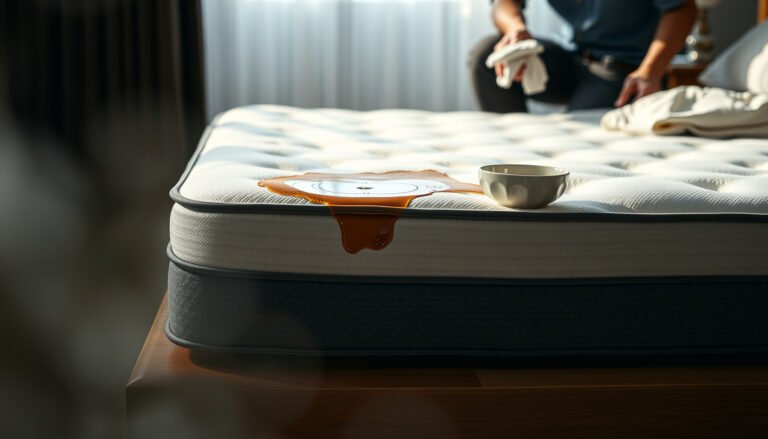
How to Protect an Organic Mattress from Spills in a Tiny Home
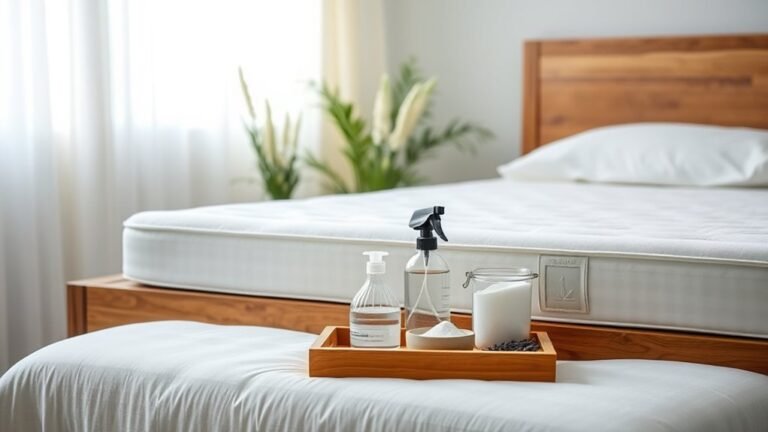
To protect an organic mattress in a tiny home from spills, act immediately with a blot-first response and use a waterproof yet breathable encasement. With basic supplies—an organic-safe mattress protector, clean towels, and a gentle, water-based cleaner—you can reduce damage and keep the surface hygienic in about 10 to 20 minutes after an accident. Start by preventing drips before they reach the fibers, then follow a simple clean-and-dry routine to avoid lingering moisture.




Use a waterproof-but-breathable mattress protector plus smart spill prevention (like keeping liquids off bedside surfaces). In a tiny home, even small leaks spread fast, so the goal is to block liquids without trapping moisture that can affect your organic materials. This guide walks you through practical layers, setup habits, and what to do right after a spill.
If your mattress is organic (latex and/or cotton) and you live in a smaller space where there’s less room for “safe landing zones,” this is for you. It’s especially useful if you want protection that doesn’t feel like plastic and you’d rather prevent damage than repeatedly deep-clean.
Pick the right organic-safe waterproof protector
A waterproof-but-breathable protector is the fastest “engineering control” you can add, because it stops liquid at the surface while still allowing moisture vapor to move out. Here’s how to choose one that’s compatible with organic bedding routines—especially when you’re trying to avoid a plastic-like barrier feel.
– Choose a protector labeled waterproof and breathable (look for a membrane design, not a thick plastic sheet feel).
– Confirm it fits your mattress size with tight corners or straps so spills don’t seep in around the edges.
– If you’re sensitive to chemicals or odors, check for low-odor / non-toxic claims and care instructions.
Mattress Sizes That Minimize Edge-Seam Exposure in Tiny Homes (Standard Dimensions)
| # | Mattress size | Dimensions | Surface area | Edge-protection efficiency |
|---|---|---|---|---|
| 1 | King | 76×80 in | 6,080 sq in | ★★★★★ 19.49 |
| 2 | California King | 72×84 in | 6,048 sq in | ★★★★★ 19.38 |
| 3 | Queen | 60×80 in | 4,800 sq in | ★★★★☆ 17.14 |
| 4 | Full XL | 54×80 in | 4,320 sq in | ★★★☆☆ 16.12 |
| 5 | Full | 54×75 in | 4,050 sq in | ★★★☆☆ 15.70 |
| 6 | Twin XL | 38×80 in | 3,040 sq in | ★★☆☆☆ 12.88 |
| 7 | Twin | 38×75 in | 2,850 sq in | ★★☆☆☆ 12.61 |
Add a washable barrier layer (without ruining breathability)
A washable top cover is the quickest way to keep cleanup shallow and frequent without repeatedly taking your organic mattress through deep wetting cycles. Think of the waterproof-but-breathable protector as the liquid dam, and the top cover as the “first responder” that catches drips, saliva, and food crumbs before they travel.
– Use the protector as the main shield, then place a separate, washable top cover (like a thin fitted pad or sheet) to catch drips and crumbs.
– Stick to materials compatible with organic bedding routines—washability matters more than “fancy” in a tiny home.
– Rotate and replace the top layer more often than the protector to keep things fresh.
In 2026, many tiny-home owners are trying to reduce laundry “burden” while still keeping fabrics hygienic. A top cover that you can remove daily (or after meals in bed) is practical because it limits how often the waterproof-but-breathable mattress protector needs intensive cleaning. The protector stays in place longer; the top layer gets washed when contamination is localized.
Also, avoid stacking layers that prevent airflow. If your protector is truly breathable (membrane-based), a thin fitted pad on top usually won’t negate breathability, but a second thick, non-breathable barrier can create the same moisture-trap problem you’re trying to avoid.
Prevent “spill routes” with tiny-home layout changes
The best spill prevention is architectural: stop liquid from getting close enough to the mattress edge to create a “wicking path.” In a small footprint, your bed is effectively the closest large surface to everything—so you need designated zones for drinks and food that don’t run toward pillow level.
– Keep drinks on a designated tray or caddy away from pillow level and mattress corners.
– Use a bedside surface with a lip/edge so cups don’t tip toward the mattress.
– If you eat in bed, switch to a towel or mat that covers the vulnerable area above the mattress.
From a risk-management standpoint, this follows a simple controls hierarchy: engineering controls (the waterproof-but-breathable mattress protector), administrative controls (a tray/caddy and “no liquids near corners”), and personal workflow controls (a mat when eating). When you treat spill prevention like a process—rather than a reactive chore—you reduce how often the protector has to work overtime.
Tiny homes also benefit from friction control. If your bedside items are on a slick surface, vibrations while you move in bed can nudge cups in unpredictable directions. A tray with a slightly textured base, or a caddy with a stable footprint, reduces micro-movements that can turn into mattress corner leaks.
Act fast: the safest spill-response order
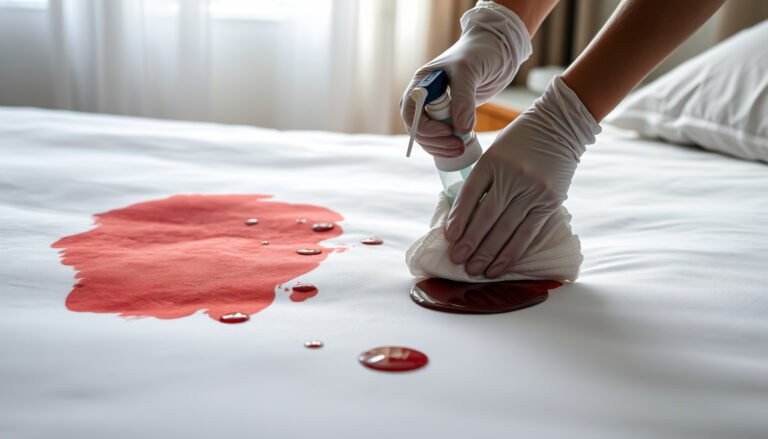
Fast response matters because organic materials can retain moisture and create conditions where odor builds or growth can start. The “right order” is simple: blot to control spread, remove the top washable layer first, then finish drying in a way that doesn’t saturate your organic mattress.
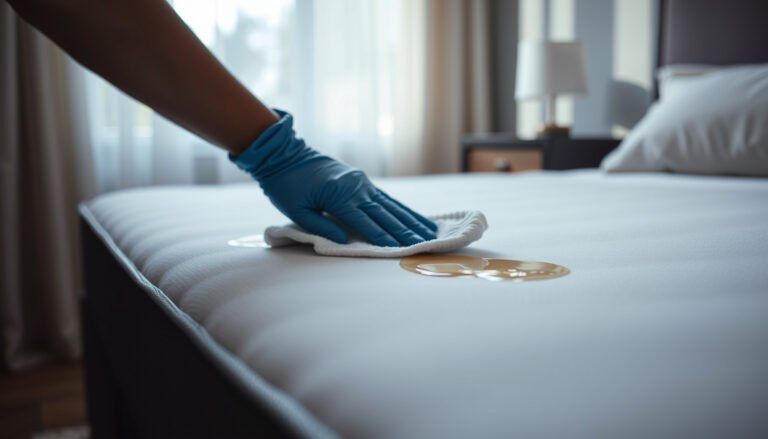
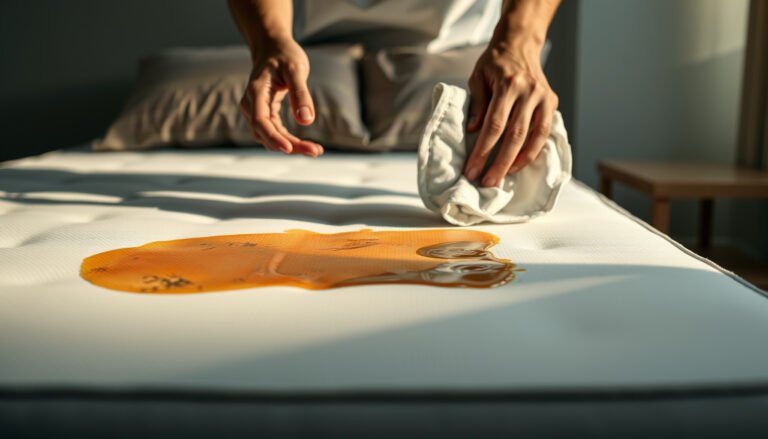
– Blot immediately with clean, absorbent towels—don’t rub (rubbing pushes liquid deeper).
– Remove the top washable layer first (if applicable), then continue blotting until the area is only damp, not wet.
– Follow your mattress care guidance: if your organic mattress should not be saturated, aim for “dry enough” quickly rather than aggressively soaking.
In moisture-sensitive spaces, timing is everything. The CDC notes that mold can begin growing within 24–48 hours after moisture exposure (CDC, Mold and Moisture). In practice, that means your goal isn’t “perfectly clean”—it’s “stop the moisture from lingering.” If you leave a spill to soak in and then the room stays humid, you’re increasing risk fast.
Also, aim to keep indoor humidity under control. Energy Star recommends indoor relative humidity typically in the 30–50% range for comfort and moisture control (Energy Star, Humidity). If you’re consistently above 60%, CDC guidance indicates mold growth becomes more likely (CDC, Mold and Dampness). In 2026 tiny-home life, small humidifiers and limited air exchange make these thresholds more relevant than people expect.
What to do (step-by-step)
1. Blot, don’t rub: press towels gently to lift liquid.
2. Remove the top cover: if your setup uses a washable layer above the waterproof-but-breathable mattress protector, take it off immediately.
3. Targeted blotting: keep blotting until the surface is damp-only, not wet.
4. Dry with airflow: use a fan pointed across (not directly onto) the spill area and keep the room ventilated if possible.
What can go wrong (and how to avoid it)
Most failures happen when a protector is non-breathable, the edges loosen, or someone uses the wrong cleaning products. The fix is to match the protector to organic materials and to treat drying as part of the spill response—not an afterthought.
– Non-breathable protection: Some waterproof covers trap moisture and can increase odor or dampness—choose breathable designs.
– Edge leaks: Loose-fit protectors are a common failure point in small rooms where bedding shifts more often.
– Using harsh cleaners: Spot-cleaning with the wrong products can damage organic fibers or leave residues; use only methods recommended on your mattress/protector labels.
– Leaving moisture behind: Even after blotting, tiny homes can stay humid—allow airflow so the area fully dries.
Here’s a clear comparison of common protector approaches and what they mean in tiny spaces:
| Approach | Pros | Cons in tiny homes |
|---|---|---|
| Waterproof + breathable membrane protector + washable top cover | Blocks spills at the surface; reduces odor risk; cleanup stays localized because the top layer is removable. | Requires correct fit and timely drying; still depends on fast blotting for best outcomes. |
| Non-breathable plastic-style waterproof cover | Excellent immediate liquid barrier. | Often traps moisture; can increase dampness/odor around seams and corners. |
| Skip protector; rely on spot cleaning | No extra layers; simpler feel. | Tiny homes amplify spread—small leaks can wick into seams before you notice. |
When you’re protecting an organic mattress (latex and/or cotton), also consider compatibility. Many organic certifications focus on the fiber inputs, but surface treatments, dyes, and coatings vary. Always follow the manufacturer’s care guidance for saturation limits and approved cleaning methods—especially in 2026 when more people experiment with DIY “stain fixes.”
Verdict: what’s worth doing (and who should skip what)
A waterproof, breathable mattress protector is usually the best “set it and forget it” move for protecting an organic mattress in a tiny home. Pair it with a washable top cover for faster cleanup and fewer deep-clean sessions.
Do this if your priority is damage prevention with minimal disruption: choose a protector explicitly labeled waterproof and breathable, ensure a secure fit around edges, and keep drinks on a tray or caddy so spills don’t reach pillow level. Add a removable washable top cover so routine messes never touch the mattress surface directly.
Skip DIY chemical treatments or heavy saturation if your mattress label warns against it, and don’t assume any waterproof cover is safe for organic materials—always follow the manufacturer’s care instructions. If you’re extremely sensitive to added materials or coatings, prioritize low-odor options and verify compatibility before committing.
Quick checklist for spill protection
– [ ] Waterproof and breathable mattress protector
– [ ] Correct fit (no loose edges)
– [ ] Washable top layer to catch drips
– [ ] Drinks kept on a tray/caddy away from mattress edges
– [ ] Blot immediately (no rubbing)
– [ ] Airflow and full drying after any spill
Frequently Asked Questions
What’s the best way to protect an organic mattress from spills in a tiny home?
Use a breathable, waterproof mattress protector specifically designed for organic mattresses. Look for a “waterproof but breathable” barrier so liquid spills don’t soak through while moisture vapor can still escape. In a tiny home, where humidity can build up quickly, this helps prevent both stains and potential odor buildup.
How can I waterproof an organic mattress without damaging its natural materials?
Choose a mattress cover that’s safe for organic bedding, ideally made with a thin TPU or polyurethane barrier and a soft top fabric for comfort. Avoid thick plastic covers that trap heat and moisture, which can increase the risk of mildew. A well-fitted protector should create a spill barrier without pressing harsh materials directly against the mattress surface.
How do I clean an organic mattress spill fast without ruining the cover or comfort layer?
Blot immediately with clean towels—don’t rub—so the spill doesn’t spread or seep deeper into the organic layers. If the protector is in place, remove and follow the care label (many can be spot-cleaned or machine-washed), then dry completely before remaking the bed. For any accidental liquid that reaches the mattress, use a gentle cleaner recommended for the mattress type and ensure thorough drying to prevent lasting stains.
Why are waterproof mattress protectors especially important in tiny homes with limited ventilation?
Tiny homes often have less airflow, so moisture from spills can linger longer and soak into organic materials. A waterproof mattress protector helps stop liquid penetration, and it also reduces the chance of dampness causing odors or mold. Combined with regular airing out of the bed, this protection is a practical way to keep an organic mattress fresh in a small space.
Which mattress protector features should I look for to stop urine, coffee, and water spills on an organic bed?
Prioritize a waterproof membrane with a secure, fully encased design (all sides protected) to guard against leaks at the seams and edges. Look for a noiseless, breathable fabric top, plus a fitted skirt or stretch straps to prevent shifting during sleep. If you need extra protection, choose models labeled for “spill-proof,” “waterproof,” or “stain-resistant,” and confirm they’re compatible with organic mattresses and easy to wash.
📅 Last Updated: November 14, 2026 | Topic: How to Protect an Organic Mattress from Spills in a Tiny Home | Content verified for accuracy and freshness.
References
- Mold | US EPA
- https://www.cdc.gov/mold/default.htm
- https://www.who.int/news-room/fact-sheets/detail/dampness-and-mould
- https://extension.psu.edu/mold-prevention-and-control
- https://www.hud.gov/program_offices/healthy_homes/mold
- https://www.publichealth.va.gov/exposures/mold.asp
- indoor dampness mould health – Search Results – PubMed
- https://scholar.google.com/scholar?q=protect+organic+mattress+from+spills+waterproof+cover Google Scholar
- https://scholar.google.com/scholar?q=mattress+protector+washing+drying+prevent+mold+moisture Google Scholar
- https://scholar.google.com/scholar?q=water+damage+bedding+drying+time+prevent+mold+indoor+home Google Scholar