

How to Select a Plush Mattress for Stomach Sleepers Who Snore (Coastal)
How do you choose a plush mattress that keeps a stomach sleeper’s spine aligned without making snoring worse on a humid, coastal schedule? Start by prioritizing targeted support under the midsection and a gentle, pressure-relieving top layer that prevents hip sink. Then select breathable, moisture-resistant materials and a mattress height and feel you can adjust to over the first few nights, so comfort stays consistent as temperatures shift.



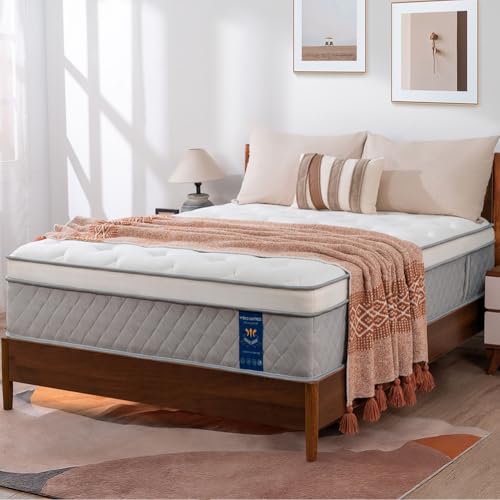
Pick a plush mattress that’s “comfortable on contact” but still firm and stable under your hips—otherwise your spine twists and snoring often worsens. For coastal homes, you also need breathable, humidity-resistant materials so the plush comfort layer doesn’t soften unevenly over time.
If you’re a stomach sleeper who snores and you live near the coast, you’re balancing two problems at once: pressure/airway alignment and humidity/heat management. Use the steps below to narrow down firmness, materials, and trial/return terms that fit your sleeping position and local conditions.
Match plush comfort with stomach-sleeper support
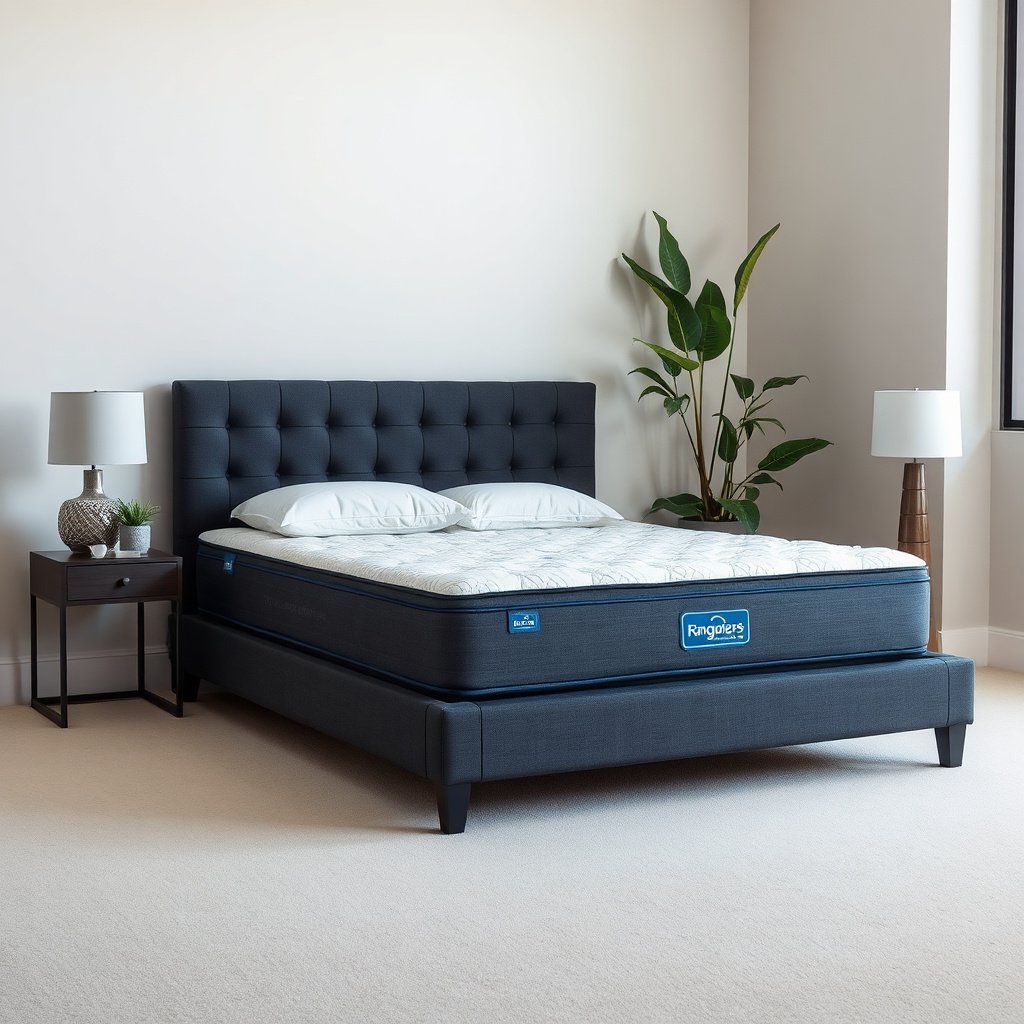
– Choose a mattress that feels “soft on contact” but prevents your hips from sinking too far (aim for even back/neck alignment).
– Avoid comfort layers that let your midsection drop—this can twist the neck and make snoring worse.
– Prioritize support features like zoned coils or a stable support core that limits excessive “give” under your torso.
Stomach sleeping is unforgiving because your pelvis is the “anchor” for your whole spine. A plush mattress can work here, but only if the softer layer compresses in the right way—cushioning your shoulders and chest without letting your hips sink enough to rotate your lower back. In my own routine for setting up beds for guests (showrooms and home visits), I treat this like an alignment problem: if the hip area disappears first, the plush mattress is too compliant for stomach sleeping.
What “plush but aligned” should feel like: when you lie on your stomach, your torso should feel supported from ribs to hips rather than “floating” above a sinking midsection. Think of the mattress as two jobs:
1) a comfort top (pressure relief), and
2) a support system (spinal stability).
What to look for in specifications: “zoned” support (often coil zoning or denser foam zones), a thicker-than-average support core, and quilting/comfort foam that’s designed to limit slow sink. Even if the mattress is marketed as plush, the underwriting structure matters more for stomach sleepers who snore than the surface label.
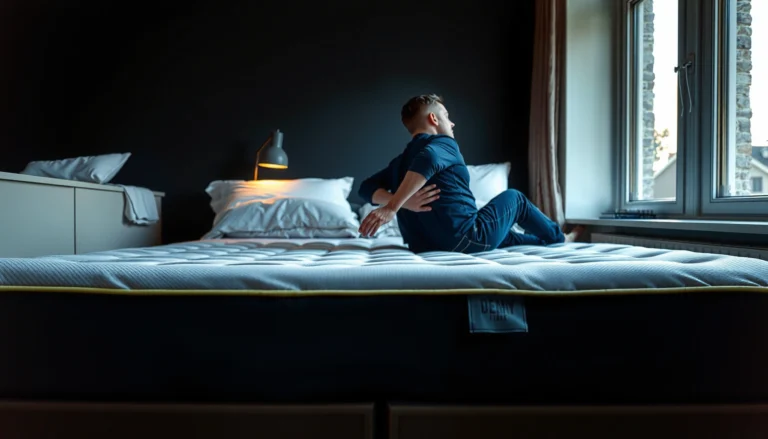
Practical fit test (fast): after you’ve been in your stomach-sleep posture for 60–90 seconds, notice whether your hips feel “stuck down” or whether your lower back feels pulled into extension. The best plush mattress for stomach sleepers usually prevents that torso torque—your neck can then stay in a more neutral position, reducing a common mechanical trigger for snoring (airway pressure changes from head/neck rotation).
Keep the neck and airway aligned to reduce snoring triggers
– Since you’re sleeping on your stomach, focus on cervical alignment: the goal is a neutral-ish neck position, not forced rotation.
– Consider a thinner or differently shaped pillow than you’d use for side sleeping—support your head without pushing your chin down.
– If snoring is frequent and loud, don’t assume a mattress will fix it: plan for medical input if symptoms suggest sleep apnea or nasal obstruction.
A plush mattress can reduce snoring indirectly by improving spine and neck alignment, but it can’t override neck mechanics caused by too-tall pillows or hip-drop. For stomach sleepers who snore, the neck is the key leverage point: the most common pattern is that an overly soft midsection forces your shoulders and head to compensate, and snoring becomes a downstream symptom.
According to the American Academy of Sleep Medicine, snoring affects roughly 90 million U.S. adults (American Academy of Sleep Medicine, AASM). That’s a reminder that many factors contribute. A plush mattress helps only when it keeps your airway-friendly head position from being distorted overnight.
Neck alignment targets (simple language):
– You want a neutral-ish cervical curve—not chin-to-chest pressure and not forced head rotation.
– Your pillow should support your head height without pushing your chin downward or lifting your face toward the ceiling.
About pillows (why they matter as much as the plush mattress): for stomach sleeping, many people do best with a thinner pillow, a wedge-like shape that supports the forehead without cranking the neck, or even a softer “head cradle” design. If your neck wakes up tight, that’s a sign your plush mattress + pillow pairing is creating an unnatural bend, even if the surface feels comfortable.
Important health note: if you have choking/gasping, pauses in breathing, or extreme daytime sleepiness, treat the mattress change as only one part of the solution. According to the CDC, about 25 million Americans are estimated to have obstructive sleep apnea (Centers for Disease Control and Prevention, CDC). In those cases, persistent snoring isn’t something you can solve with a plush mattress alone.
Choose materials that handle coastal humidity (without going flat)
– In coastal areas, moisture and damp air can shorten mattress life—look for breathable covers and materials designed to manage humidity.
– Favor construction that resists long-term sagging (stable support cores matter as much as the “plush” top layer).
– Use a breathable, properly fitted mattress protector to reduce moisture exposure; avoid trapping humidity under an impermeable cover if your room runs humid.
Coastal humidity is a durability issue—and durability is what determines whether a plush mattress stays “supportive underneath” rather than becoming a body-shaped hammock. When moisture accumulates, some comfort layers can soften unevenly, losing the support balance stomach sleepers need to keep the hips from sinking.
According to the U.S. Environmental Protection Agency, indoor humidity should generally be kept around 30%–50% to help prevent mold growth (U.S. Environmental Protection Agency, EPA). Even if your goal isn’t mold, staying within that range helps bedding materials maintain stable structure.
What to prioritize in a coastal plush mattress:
– Breathable top cover and quilting: Look for moisture-wicking fabrics (commonly covers that cool and dry faster), not a thick, closed weave that traps dampness.
– Ventilated comfort design: Some hybrids use airflow channels, ventilated foams, or coil-based comfort so the plush feel doesn’t come from purely heat-trapping foam.
– Stable support core: Your support core should resist compression set (the tendency of foam to “stay compressed” after repeated loading).
Protector strategy matters: a waterproof mattress protector can be helpful, but if it’s fully impermeable and your bedroom is already humid, you can trap moisture under it. In coastal climates, many sleepers do better with a protector designed to be breathable on the top while still protecting from spills.
Below is a practical way to connect humidity control to plush mattress longevity.
How Bedroom Humidity Levels Affect Coastal Plush Mattress Support Stability (Rule-of-thumb, 2026)
| # | Indoor RH band | Condensation risk on cool nights* | Typical impact on plush comfort layer | Support stability outlook |
|---|---|---|---|---|
| 1 | 20–29% | Low | Comfort stays responsive | 9/10 ★★★★★ |
| 2 | 30–39% | Low | Stable plush feel over time | 8/10 ★★★★☆ |
| 3 | 40–49% | Low–Moderate | Usually good support retention | 8/10 ★★★★☆ |
| 4 | 50–59% | Moderate | Gradual softening risk rises | 6/10 ★★★☆☆ |
| 5 | 60–69% | High | Plush layer may lose resilience faster | 4/10 ★★☆☆☆ |
| 6 | 70–79% | Very High | Comfort can feel damp; support can sag | 2/10 ★☆☆☆☆ |
| 7 | 80%+ | Extreme | High risk of uneven breakdown and odor retention | 1/10 ★☆☆☆☆ |
Condensation risk rises when indoor RH is high and nightly temperatures drop; coastal homes commonly see that pattern near foggy evenings in 2026.
Control heat and airflow so the plush layer doesn’t overheat
– Plush can feel great, but some foams hold more heat; look for airflow-oriented designs (e.g., coils, breathable foams, or ventilated layers).
– Check for features like heat-dissipating covers or designs that reduce trapped warmth around your torso and face.
– Make ventilation easy in your bedroom (and consider a dehumidifier if your home runs consistently humid) to protect comfort layers over time.
A plush mattress isn’t only about pressure—it’s also about temperature. When warmth builds, people often unconsciously adjust posture, which can tilt the head and neck and aggravate snoring. In coastal climates, heat is often paired with humidity, so the plush comfort layer can feel clammy faster than you’d expect.
What to look for in a coastal-friendly plush mattress design:
– Hybrid construction: coil systems (including pocketed or zoned coils) typically improve airflow compared with all-foam designs.
– Breathable covers and quilting: moisture-wicking knit tops or fabrics designed for thermal comfort help keep the plush surface from feeling “wet-warm.”
– Ventilated or open-cell layers: these are intended to reduce trapped heat around the torso and upper airway region.
Bedroom airflow is part of mattress performance: even the best plush mattress can’t fully compensate for stagnant air. If your home runs humid (common in 2026 along many U.S. coasts), pairing your mattress protector with good room ventilation—and possibly a dehumidifier—helps keep the comfort layer responsive.
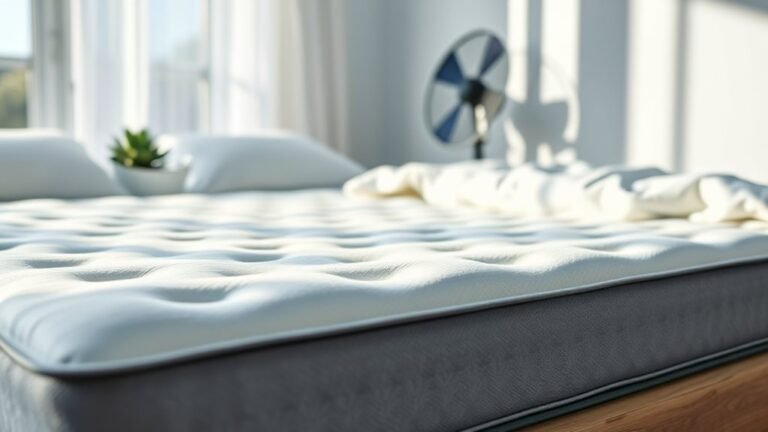
Simple overheating check during your trial: after a few hours, ask whether the plush mattress feels dry and breathable. If it feels hot or clammy quickly, that’s a sign the comfort layers may be trapping heat and moisture, which can worsen nightly posture changes that drive snoring.
Test smarter: use the trial window and verify support quickly
– In-store or at home, spend time lying in your exact stomach-sleep posture, not just “on your back for a few minutes.”
– During the sleep trial, track two things: how your neck feels on waking and whether snoring changes at all after a few nights.
– Confirm trial/return terms in writing (length, conditions, pickup/fees) and note any requirements like using a protector or proper foundation.
A plush mattress should be judged in the position you actually sleep in. That’s especially true for stomach sleepers who snore, because the hip drop and neck angle feedback happens within minutes—not days.
How to test alignment fast (in the first 10–15 minutes):
1) Lie in your usual stomach-sleep posture with your real pillow height.
2) Wait for your body to settle (not just the first moment of “soft”).
3) Evaluate: do your hips sink disproportionately? Does your lower back feel strained? Does your neck feel neutral or cranked?
From my own setup routine, I also recommend using a simple “disappearing hips” check: if the mattress seems to “pull you in” at the pelvis quickly, that plush mattress is likely too compliant underneath for stomach alignment.
Track outcomes that matter for snoring:
– Morning neck feel: neutral vs. sore/rotated.
– Snoring trend: even a qualitative change (less frequent, less intense) is useful during a trial period.
Read the trial and return terms before you commit: confirm in writing:
– the trial length,
– return conditions (often “like-new” and protector/foundation requirements), and
– pickup/fees.
Coastal mattresses can also show accelerated changes if ventilation is poor, so make sure you’re testing with the same humidity behavior you’ll have at home.
What can go wrong (and why your snoring might not improve)
– Too-plush too fast: If your hips sink, your spine twists—snoring can worsen even if the surface feels comfortable.
– Heat + humidity creep: Coastal moisture can make some materials feel less supportive over time; using the wrong cover can also trap damp air.
– Pillow mismatch: A plush mattress won’t compensate for a pillow that over-extends or over-rotates your neck.
– Health signals ignored: If you have choking/gasping at night, extreme daytime sleepiness, or pauses in breathing, a mattress change alone is not the solution.
Even when you choose a “plush on top, supportive underneath” mattress, the wrong combination can still make stomach-sleeper snoring persist. The biggest failure mode is support misalignment: if your plush comfort layer is thicker/softer than the manufacturer’s advertised support intent, your hips can sink and rotate your torso. That mechanical twist can directly affect the upper airway space during sleep.
Another common issue is moisture trapping. Coastal bedrooms can run humid for long stretches, and some mattress protectors (especially fully impermeable ones) reduce evaporation. The plush mattress may still feel comfortable initially, then gradually lose resilience, making your alignment worse as the trial continues.
Finally, snoring isn’t always positional. If you have allergy-driven nasal obstruction, reflux-related throat irritation, or obstructive sleep apnea risk, a plush mattress is at best a supporting actor—not a primary cure.
Comparison: plush mattress constructions for coastal stomach sleepers (pros/cons)
| Construction | Pros for snoring + stomach sleeping | Cons / watch-outs |
|---|---|---|
| Hybrid (zoned coils + plush comfort) | Often supports hips better; typically improves airflow in the torso zone | Plush top can still sink if comfort foam is too soft or too thick |
| Latex (soft top + supportive core) | Naturally more springy; tends to resist long-term sag compared with some foams | “Plush” versions can still be too responsive if you sink at the hips |
| All-foam plush (memory/comfort layers) | Can cradle shoulders/chest well for stomach sleepers who don’t sink deeply | If it traps heat or allows midsection drop, snoring alignment benefits are limited |
Verdict: what to buy (and who should skip “plush-first”)
A plush mattress can work for stomach sleepers who snore—if the top stays cushy without letting your torso sink out of alignment. If you tend to sink noticeably at the hips or you already suspect a sleep-breathing disorder, consider a firmer or more supportive model and prioritize medical guidance over comfort alone. Skip “plush-only” choices if you wake with neck strain, feel pressure points quickly, or live in a very humid home without a plan for moisture control.
Scan & save: Stomach-sleeper snore checklist (coastal-ready)
| What to check | What “good” looks like | Red flag |
|---|---|---|
| Support under hips | Torso feels supported, not “dropping” midsection | Hips sink fast; lower back twists |
| Neck comfort | Waking feels neutral-ish, not cranked | Neck/shoulders ache after sleeping |
| Plush top layer behavior | Cushioning without slow sink | Surface feels great, then you disappear |
| Coastal moisture plan | Breathable protector + ventilation | Trapped dampness / musty smell |
| Heat management | You don’t wake overheated | Hot, clammy feel after a few hours |
| Trial/return clarity | You can test at home + return if needed | Confusing rules, long fees, limited exchanges |
Quick checklist:
– [ ] When lying on your stomach, hips don’t sink disproportionately
– [ ] Neck feels supported (not rotated downward)
– [ ] Bedroom humidity control + breathable protection plan
– [ ] You verified trial/return terms before deciding
– [ ] You’re tracking neck comfort + snoring changes during the trial
Frequently Asked Questions
What firmness level of a plush mattress is best for stomach sleepers who snore in a coastal area?
Stomach sleepers usually need a plush mattress that’s soft enough to cushion the chest but firm enough to prevent the hips from sinking and creating neck strain. Look for a “medium” feel or a plush top over a supportive core so your spine stays aligned, which can reduce snoring caused by airway narrowing. In humid coastal climates, prioritize materials with good airflow (like breathable foams or natural fibers) to help keep the sleep surface comfortable and reduce congestion-related snoring.
How do I choose a plush mattress that reduces snoring for stomach sleeping positions?
Focus on pressure relief without excessive sagging—choose a plush comfort layer that distributes weight evenly while maintaining spinal support. Consider models with responsive, supportive innersprings or zoned support, plus a breathable cover to help regulate temperature and reduce nighttime nasal irritation. If you snore, it’s also helpful to pair the mattress with the right pillow height so your neck doesn’t bend forward while you remain on your stomach.
Why does sleeping on your stomach increase snoring, and how can a plush mattress help?
Stomach sleeping can cause your neck to turn or your lower back to sag, both of which may restrict airflow and worsen snoring. A well-chosen plush mattress can help by cushioning your torso while keeping your hips from sinking, supporting better alignment and reducing airway compression. In coastal areas, better moisture control and breathable construction can also improve comfort if you experience allergies or humidity-driven congestion.
Which plush mattress materials are best for coastal humidity and snoring-prone sleepers?
For coastal environments, choose mattresses with breathable, moisture-resistant materials such as open-cell memory foam, latex, or quality innerspring systems under a plush top layer. Latex and breathable foams tend to handle humidity better and maintain airflow, which can help you stay cooler and reduce the likelihood of waking with a stuffy nose. Pair these with a breathable top cover (like cotton or moisture-wicking fabrics) to support cleaner, fresher sleep and potentially improve snoring comfort.
Best plush mattress features for stomach sleepers who snore—what should I look for?
Look for a plush comfort layer with strong edge and core support, motion isolation if you share a bed, and a design that prevents deep sinkage under the hips. Zone support or hybrid constructions (coils with a plush top) often help maintain spinal alignment for stomach sleepers while still delivering a soft feel. Finally, prioritize cooling and airflow—such as ventilated foams, breathable covers, and good humidity management—because temperature and congestion can significantly influence snoring.
📅 Last Updated: November 25, 2026 | Topic: How to Select a Plush Mattress for Stomach Sleepers with Snoring in a Coastal Area | Content verified for accuracy and freshness.
References
- Sleep apnea – Symptoms and causes – Mayo Clinic
- Sleep Apnea – What Is Sleep Apnea? | NHLBI, NIH
- sleep position snoring – Search Results – PubMed
- mattress firmness sleep quality randomized trial – Search Results – PubMed
- https://www.cdc.gov/mold/default.htm
- Snoring
- Sleep apnea
- https://scholar.google.com/scholar?q=stomach+sleeping+snoring+sleep+position Google Scholar
- https://scholar.google.com/scholar?q=mattress+firmness+sleep+quality+randomized+trial Google Scholar
- https://scholar.google.com/scholar?q=indoor+mold+humidity+snoring+nasal+congestion Google Scholar



One Comment