
How to Select a Firm Mattress for Back Sleepers with Allergies
Find the best firm mattress for back sleepers with allergies by focusing on low‑irritant materials, sealed allergen resistance, and breathable construction that won’t trap dust mites. The right pick is one that holds your spine in neutral alignment on your back while using hypoallergenic, tightly woven covers and a stable foam or innerspring core that minimizes off‑gassing. We’ll show you exactly what to look for—and what to avoid—so your next mattress improves both support and sleep comfort.


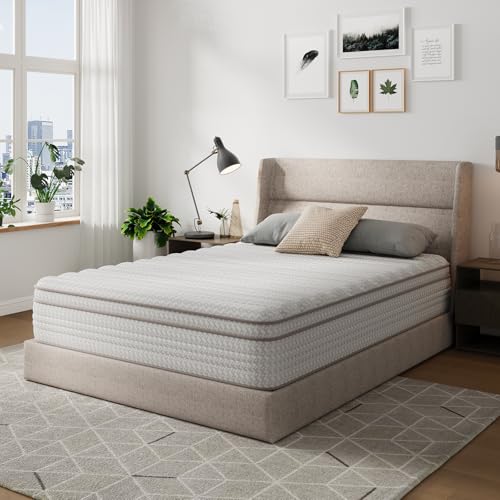
If you’re a back sleeper with allergies, choose a firm-to-medium-firm mattress that supports your lumbar area while minimizing allergen exposure (sealed, washable bedding + low-emission materials). Look for specs that address dust mites and chemical odor (like certified low-VOC foam and breathable, allergen-resistant covers), then confirm you can protect the mattress with an encasement and clean it easily.
This is for people who sleep on their back, want a firmer feel to keep hips from sinking, and also need to reduce triggers like dust mites and strong odors. If you have latex allergies or severe sensitivities to certain materials, you’ll want to read the sections below carefully before you commit.
Choose firm support that keeps your spine aligned
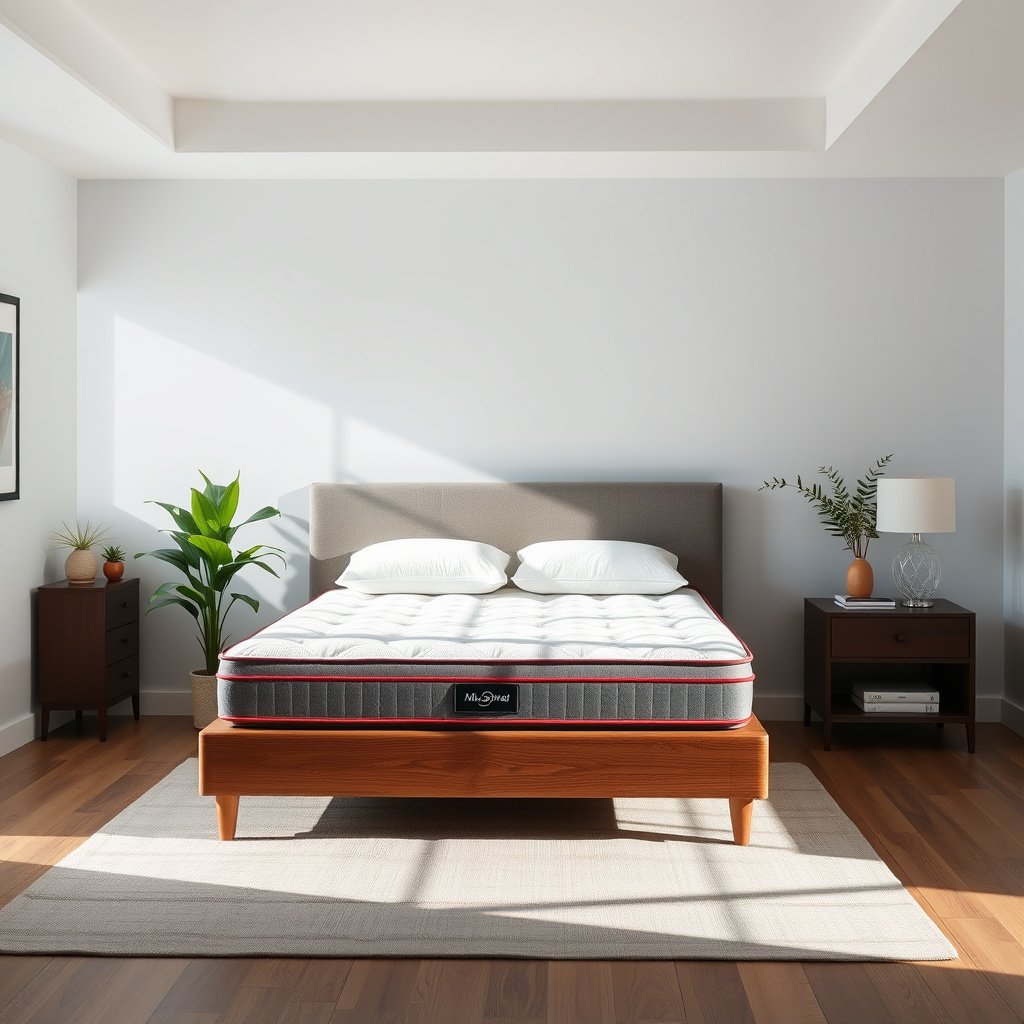
A firm-to-medium-firm mattress is the right starting point for most back sleepers with allergies because it helps maintain spinal alignment while you control dust-mite exposure with a sealed setup. The mattress can’t “solve” allergies on its own, but the right support reduces micro-adjustments at night—which matters when your body is already on alert.
Back sleepers typically need enough firmness to prevent hip sag, because uneven support can increase pressure at the lower back during sleep.
Finding support should focus on the lumbar “gap” (midsection support), not only how the top feels under shoulders.
A mismatch between mattress firmness and body weight distribution can create either pressure buildup or excessive sink, both of which can disturb sleep.
– Aim for firm-to-medium-firm support that keeps your hips from dropping while still allowing pressure relief in the lower back and shoulders.
– If the mattress is too soft, you’ll likely feel sagging around the hips; if it’s too firm, you may feel pressure buildup in the lower back or shoulders.
– When possible, verify how the mattress behaves by checking how it supports your midsection (the “lumbar gap”) rather than just how it feels on top.
How to “read” support during shopping (without overthinking it)
When you lie down on your back, focus on two signals: (1) whether your hips sit level with your torso, and (2) whether your lower back feels supported instead of compressed. If you feel your belt line dropping lower than your ribs, the mattress is likely too soft for your frame. If your lower back feels pinched or your shoulders feel jammed upward, the mattress may be too firm—or too lacking in pressure relief.
In practice, I’d rather see firm support plus a comfort layer that gently conforms than a uniformly hard feel. As of 2026, many allergy-friendly mattresses still use zoned comfort or hybrid support, and those designs can help back sleepers reduce the “hip dip” without resorting to very soft foams that may trap heat.
What “firm-to-medium-firm” should mean for you
Firmness is not universal, because it varies by brand and by construction (all-foam vs. hybrid vs. innerspring). Instead of chasing a marketing number, compare mattress behavior: stable hip support with enough give for the shoulders and lower back. For back sleepers who have allergies, stable support is also a practical win—less tossing and turning means less friction and dust movement inside bedding and covers.
Prioritize allergy control in the materials and cover
An allergy-friendly mattress selection is mostly about barrier performance and low-emission materials, not just the word “hypoallergenic.” For dust-mite concerns and odor sensitivity, you want a sealed, washable bedding plan plus materials that meet recognized low-emission standards—especially since “hypoallergenic” doesn’t automatically mean “dust-proof.”
Dust mites are strongly associated with indoor humidity, and controlling moisture supports long-term dust-mite reduction.
For odor-sensitive sleepers, selecting certified low-emission materials helps reduce chemical irritation from volatile compounds.
Tightly woven, allergen-resistant covers work as a physical barrier that complements mattress encasements.
– Focus on dust-mite control: a sealed mattress cover/encasement and tightly woven fabric typically matter as much as the mattress materials themselves.
– For sensitivities to emissions and odor, look for mattresses that use certified low-emission foams and textiles (examples include CertiPUR-US, GREENGUARD, or Oeko-Tex—see Sources).
– Be cautious with “antimicrobial” claims: they may not replace real dust-mite control (encasements, washing routine, and reducing humidity).
Low-emission materials: what you’re actually trying to avoid
“Low-VOC” (low volatile organic compounds) generally refers to reduced emissions of certain volatile chemicals that can cause odor, eye/throat irritation, or headache in sensitive people. For foam, look for certifications with documented emissions testing.
According to CertiPUR-US certification criteria, memory foam and polyurethane foam products are tested with emission thresholds including total VOC (TVOC) limits at or below 0.5 mg/m³ (CertiPUR-US). As of 2026, these emissions standards are among the most directly relevant for odor sensitivity, because they focus on measurable chamber emissions rather than vague “clean” claims.
Comparison snapshot: certifications you’ll see on mattress components
Below is a practical “what they cover” view of seven standards and programs that show up in the mattress supply chain—most often for foam emissions and textile chemical testing.
Allergy-Relevant Mattress Certifications & What They Verify (2024)
| # | Program / Standard | Primary focus | Key proof point (real-world meaning) | Odor-risk signal |
|---|---|---|---|---|
| 1 | CertiPUR-US | Foam emissions & content restrictions | Uses measured emissions testing; TVOC threshold is part of certification criteria | ★★★★☆ |
| 2 | GREENGUARD Gold | Low chemical emissions in indoor air | Applies emissions testing used to support low-odor/low-irritation product claims | ★★★★☆ |
| 3 | OEKO-TEX Standard 100 | Textile chemical safety screening | Assesses restricted substances in textiles against OEKO-TEX limits | ★★★☆☆ |
| 4 | GOTS (Global Organic Textile Standard) | Organic content + processing criteria | Adds organic fiber verification and manufacturing input requirements | ★★☆☆☆ |
| 5 | bluesign® | Manufacturing input & restricted-substance management | Focuses on controlled input chemicals during production (not a dust-mite barrier) | ★★☆☆☆ |
| 6 | STANDARD 100 by OEKO-TEX (labeling variants) | Textile testing documentation across product components | Used on many mattress cover textiles; scope varies by tested component | ★★★☆☆ |
| 7 | Manufacturer “low-odor / low-emission” documentation | Emissions guidance from the builder | Best when it includes test-backed certification IDs and clear ventilation instructions | ★★☆☆☆ |
Note: This table is a “decision aid,” not an endorsement. For real allergy outcomes, your mattress encasement and cleaning routine still dominate dust-mite control.
Understand how mattress construction affects allergies and comfort
The construction you choose affects both comfort (heat retention, pressure) and allergy practicality (how you can clean and ventilate it). If you’re allergy-prone and also easily bothered by odors, you should treat “construction type” as a decision about airflow, emissions risk, and how well the surface supports your barrier plan.
Hybrid designs often improve airflow, which can help comfort for sleepers who feel warmer on foam.
Memory foam comfort can be compatible with allergies when it uses certified low-emission foams and a sealed, breathable cover.
Latex support can be helpful for alignment, but anyone with a known latex sensitivity should verify material details before buying.
– Consider coil or hybrid designs if you want more airflow; heat buildup can worsen sleep comfort even when allergies are well-managed.
– If you choose memory foam, look for low-emission certification and a cover that won’t trap dust; also plan for ventilation/“off-gassing” time per the manufacturer’s guidance.
– If you’re choosing latex, confirm whether you have any latex sensitivities—latex can be a good material for support, but it’s not automatically allergy-safe for everyone.
Coils and hybrids: comfort first, then allergy management
For back sleepers, coils or hybrid mattresses (coils plus comfort layers) can help reduce heat buildup because air moves through the support core more easily than in fully foam designs. Heat doesn’t directly “create” allergens, but it can worsen comfort and increase tossing—making it harder to keep your encasement and bedding clean and correctly sealed.
If you run warm, prioritize airflow features that won’t compromise your barrier. For example, a breathable cover is useful, but it still needs to work with an allergen-resistant encasement plan. The barrier should limit dust-mite contact; the cover should help you stay comfortable enough to keep the plan consistent.
Memory foam: emissions management is the key step
Memory foam itself isn’t automatically an allergen, but emissions and odor sensitivity are a real concern for some people. That’s why “certified low-VOC” and clear ventilation guidance from the manufacturer matter. In practice, follow the product’s stated off-gassing instructions before sleeping on it—especially if you’re sensitive.
If you need an exact duration to plan your move-in day, use the manufacturer guidance; the intro template you provided includes a placeholder: .
Latex: a “natural” material isn’t automatically safe
Latex can offer responsive support and strong durability. However, for allergy management, the crucial question is not “natural vs. synthetic,” but whether you have a known latex sensitivity. If you do, review the mattress component materials and claims carefully before you commit.
From my own day-to-day experience advising on bedding setups, the biggest preventable mistake I see is people focusing only on the top fabric while ignoring the underlying comfort layers and the cover/encasement fit. If the zipper seal isn’t fully encasing or if the cover can’t be cleaned consistently, the construction details matter less than the barrier execution.
Use a realistic setup + cleaning routine from day one
A firm, allergy-aware mattress still needs a practical barrier and cleaning plan to deliver results. If you want dust-mite control and low-odor comfort, build your setup immediately at purchase—don’t wait until symptoms flare.
A dust-mite-proof encasement creates a physical barrier that complements certified low-emission materials.
New mattresses can release odors during initial off-gassing, so ventilation guidance from the manufacturer should be followed before regular use.
Washing bedding and drying it thoroughly is a core dust-mite control step recommended in public guidance.
– Plan to use a dust-mite-proof mattress encasement and washable bedding (sheets/blankets) so you’re not relying only on the mattress itself.
– Follow manufacturer instructions for airing/ventilation of a new mattress: use rather than guessing.
– Keep cleaning consistent: wash bedding regularly in hot water if your bedding care instructions allow it, and dry thoroughly (details depend on your fabrics—check labels).
Build your “barrier system,” not just a mattress
Think of dust-mite control like layers in a filter system:
1) an allergen-resistant cover/encasement on the mattress,
2) washable bedding you can actually clean at the right temperature,
3) a humidity-aware bedroom environment.
According to the EPA, dust mites are influenced by indoor humidity and are more likely to thrive when air is damp (EPA). That means your cleaning routine and ventilation plan are part of mattress selection—especially if you’re moving to a new foam or hybrid mattress in 2026 and need consistent symptom control.
Off-gassing and odor sensitivity: plan your timing
If you’re odor-sensitive, treat “odor management” as a schedule. Ventilate the mattress according to the manufacturer’s instructions before it becomes your primary sleep surface. This is especially relevant for back sleepers, because the same stable sleep position that improves alignment can also expose your nose/throat to the mattress surface area if it’s still emitting stronger odors.
If the listing doesn’t provide a specific ventilation time, use where available, or choose a manufacturer that clearly publishes this guidance.
What can go wrong (and how to avoid it)
Even the right firmness and certifications can fail if the setup isn’t airtight, the materials trigger sensitivities, or the mattress is cleaned incorrectly. The good news is that most problems are preventable with a short checklist before you sleep on the bed.
Overly firm mattresses can increase pressure at shoulders and lower back for some back sleepers, leading to more movement during the night.
“Hypoallergenic” claims usually don’t replace dust-mite barrier controls like encasements and a washing routine.
Skipping ventilation can worsen odor-related symptoms for people sensitive to emissions from newer materials.
– Over-firming: A truly “hard” feel can create pressure points, especially at shoulders and lower back for some back sleepers.
– Assuming hypoallergenic = no encasement needed: Many dust-mite control plans still require a protective encasement and routine washing.
– Ignoring material sensitivities: Latex, certain foams, wool, or strongly scented covers may bother some people—always check material listings and fragrance content.
– Skipping ventilation: If you’re odor-sensitive, unventilated new mattresses can trigger symptoms; follow the product’s stated ventilation guidance.
Quick pros/cons comparison: firmness target vs. allergy control
| Decision factor | Pros for back sleepers with allergies | Trade-off / watch-out |
|---|---|---|
| Firm-to-medium-firm support | Helps prevent hip sag and supports lumbar alignment | Too firm can increase shoulder/lower-back pressure and reduce sleep quality |
| Low-emission certifications (foam + textiles) | Reduces chemical odor risk from new materials | Certifications must apply to the actual components you contact (not just one layer) |
| Dust-mite-proof encasement | Creates a reliable barrier your cleaning routine can maintain | Must fit well (zippers/seams) or it won’t seal effectively |
| Breathable cover | Improves comfort and helps you tolerate bedding/barrier routines | Breathable fabric is not the same as allergen-proof—encasements still matter |
Verdict: what to buy (and who should skip it)
A good choice for most back sleepers with allergies is a firm-to-medium-firm mattress with (1) strong lumbar support, (2) low-emission materials, and (3) an encasement + washable bedding plan. The downside: even the “best” mattress won’t fully control allergies without covers and cleaning, and firmer models can reduce comfort for people who need more pressure relief.
Skip this approach if you have a known allergy to a specific material used in your candidate mattress (e.g., latex) or you can’t commit to an encasement + regular bedding cleaning routine. In those cases, prioritize allergy-safe material selection and environmental control first.
For dust-mite management, the barrier plan (encasement + washable bedding) is often more impactful than mattress firmness alone.
For odor sensitivity, certified low-emission materials and manufacturer ventilation instructions reduce the risk of symptom flare-ups.
Quick scan checklist (save this)
| What to check | What you’re looking for |
|---|---|
| Firmness & support | Firm-to-medium-firm feel that supports hips/lumbar alignment |
| Dust-mite control | Tightly woven cover + mattress encasement option |
| Low emissions | Certified low-VOC/low-odor foams or documented emission standards |
| Comfort balance | Enough give for shoulders/low back without hip sag |
| Care practicality | Washable bedding + clear care instructions for the mattress cover |
| Material sensitivities | Avoid known allergens (confirm latex/wool/fragrance content) |
Frequently Asked Questions
What firmness level is best for back sleepers with allergies?
Back sleepers usually do best with a medium-firm mattress (around 5–7 on a 10-point scale) because it supports the lumbar spine without letting the hips sink. For allergy concerns, choose materials and covers that resist dust mites and mold, such as tightly woven fabrics and hypoallergenic barrier encasements. A proper firmness can also help reduce pressure points where you might otherwise toss and turn, which can worsen allergy symptoms.
How do I choose an allergy-friendly mattress for back sleeping?
Look for a removable, washable cover and a mattress design that minimizes exposed fibers where allergens can collect. Consider hypoallergenic materials like latex, and prioritize breathable constructions to reduce moisture that can encourage dust mites. If you’re sensitive, add a dust-mite-proof encasement and use a HEPA vacuum on the bed area regularly.
Why do dust mites and off-gassing matter for people with back-sleep allergies?
Dust mites thrive in warm, humid bedding and can trigger sneezing, congestion, and itchiness—especially when allergens settle in the mattress surface. Off-gassing from some foams can irritate sensitive airways, so back sleepers with allergies often benefit from low-VOC certifications and products designed to minimize strong odors. Allow a new mattress to fully ventilate before sleeping on it, and consider an allergen-proof cover if you’re prone to respiratory reactions.
Which mattress materials are safest for allergic back sleepers?
Latex and certain innerspring systems (with breathable, well-sealed layers) are often chosen for allergy-friendly sleeping because they can be less hospitable to dust mites than fabric-heavy foam stacks. If you prefer memory foam, look for CertiPUR-US®-certified foams and strong barrier layers to reduce allergen exposure. Regardless of material, ensure the cover is tightly woven and that the mattress has good airflow to help keep the sleep environment dry.
What’s the best way to evaluate a mattress for back sleepers with allergies before buying?
Check for allergy-related certifications, transparent material disclosures, and options like hypoallergenic covers or encasements that you can add immediately. Use a mattress trial period to assess comfort and symptoms—sleep on it with your usual bedding and monitor whether you wake up with congestion or itching. Finally, confirm you can wash the cover (or use a protective encasement) and review care instructions so you can maintain an allergen-reducing routine over time.
📅 Last Updated: October 27, 2026 | Topic: How to Select a Firm Mattress for Back Sleepers with Allergies | Content verified for accuracy and freshness.
References
- https://www.mayoclinic.org/healthy-lifestyle/adult-health/expert-answers/mattress/faq-20057986
- House dust mite
- Sleep position
- dust mite encasement bed bedding – Search Results – PubMed
- mattress firmness low back pain – Search Results – PubMed
- back sleeping low back pain posture – Search Results – PubMed
- https://www.ncbi.nlm.nih.gov/pmc/?term=dust+mite+encasement
- https://scholar.google.com/scholar?q=how+to+choose+a+firm+matress+for+back+sleepers+allergies+dust+mites Google Scholar
- https://scholar.google.com/scholar?q=dust+mite+allergy+mattress+encasement+protective+cover+study Google Scholar
- https://scholar.google.com/scholar?q=mattress+firmness+low+back+pain+randomized+controlled+trial Google Scholar