

How to Choose a Latex Mattress for Back Sleepers With Neck Pain
Choosing the right latex mattress for back sleepers with neck pain comes down to one clear verdict: pick a latex bed with medium-firm support and adjustable loft so your head and neck stay neutral through the night. This guide shows exactly what firmness, contouring feel, and pillow-height compatibility to look for to reduce strain without sacrificing spinal alignment. If you’re back sleeping and your neck hurts, these are the specs that determine whether latex will help or keep you tossing.




A latex mattress can help back sleepers with neck pain by keeping your head and neck in a neutral line while supporting your mid-back and lower back. Look for a medium-firm feel, a comfort layer that cushions your shoulders (without letting your hips sink), and then match your pillow height/shape to the mattress’s actual support.
If you sleep on your back and wake up with tight neck muscles, headaches, or “kinked” posture, mattress choice matters—but it’s only one part of the setup. This guide walks you through what to look for in latex (and how to verify fit at home) so your spine stays aligned through the night.
What neck pain needs from a back-sleeper latex mattress
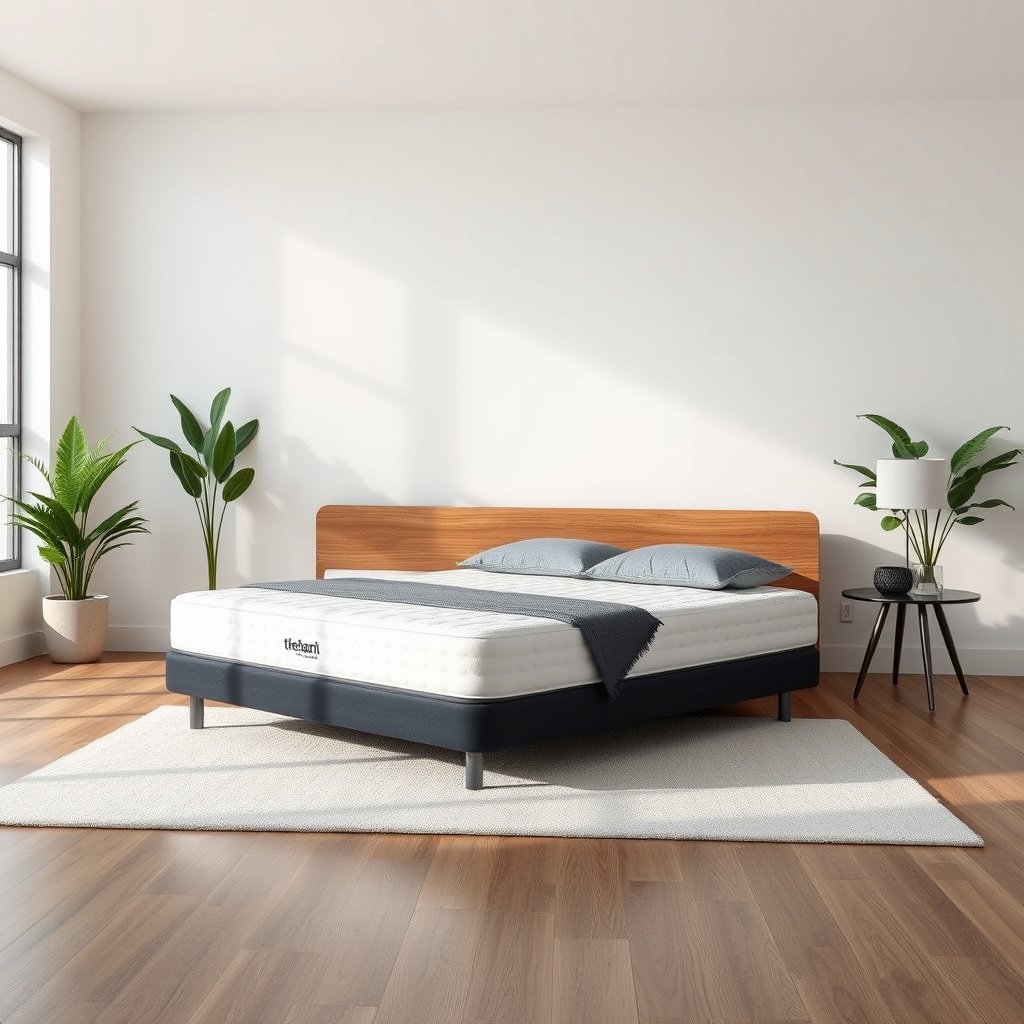
A neck-pain–friendly latex mattress does two things at once: it supports your lumbar curve enough to prevent hip drop, and it cushions your shoulders just enough to keep your cervical spine neutral. When either part is off, your neck often has to “work” harder to maintain comfort—creating morning tightness.
– Prioritize alignment: your neck should stay roughly in line with your spine, not angled up or pushed down.
– Look for supportive balance: a mattress that cushions the shoulder blades and supports the lumbar area so your hips don’t drop.
– Don’t ignore the pillow: even the right latex mattress can cause neck strain if the pillow is too tall/flat for the mattress’s feel.
For back sleepers, “neutral” cervical alignment generally means your head is neither lifted toward the ceiling nor allowed to tip forward.
According to ASTM’s indentation-load testing approach, ILD is measured by compressing a material to a set percentage of its thickness (commonly 25% and 65%), which helps distinguish how quickly a comfort layer yields under shoulder weight.
GOLS (Global Organic Latex Standard) is an industry certification that sets requirements for certified organic latex content, used by manufacturers to define how “organic latex” claims are substantiated.
The alignment chain: hips → lumbar support → shoulder pressure → neck position
A back-sleeper’s neck pain is often less about the neck itself and more about the chain reaction from the hips and shoulders. With a latex mattress, you’re aiming for a “balanced cradle”: the surface gives you pressure relief under the shoulder blades, while the support layers resist excessive sinking at the hips. That combination helps your thoracic and cervical spine stay stacked instead of compensating upward or forward.
In practice, that means your shoulders should feel gently cushioned—not “pulled down” relative to your hips. When your hips sink too much, your lower back arches more, and your neck may tilt to find a comfortable head position. When your shoulder area is too firm (or too thinly cushioned), your upper body can resist settling, which can also force the head into an unnatural angle.
Why latex is often a good match for this problem
Latex foam tends to be more “responsive” than slow-memory foams, so it can maintain support while still providing localized give. For a latex mattress aimed at neck comfort, the goal is not maximum softness—it’s stable pressure relief with predictable support behavior throughout the night.
Choose the right firmness (without guessing)
For most back sleepers with neck pain, the most effective starting point is a medium-firm latex feel. The reason is simple: too-soft latex usually allows hip drop and increased lumbar strain, while too-firm support can create shoulder pressure that nudges your head out of neutral alignment.
– For most back sleepers with neck pain, start with a medium-firm target (too soft often lets hips sink; too firm can push your shoulders and create tension).
– Check “pressure + support” together: you want enough give to relieve pressure under the shoulders, but enough resistance to keep the lower back from sagging.
– If a mattress comes with comfort “zones,” confirm the zone behavior on your body weight—zoning that feels great for one sleeper can feel misaligned for another.
“Medium-firm” is not a universal label; what matters is how the latex layers respond under your shoulders and under your hips.
Because ILD testing compresses foam to set percentages of thickness (including 25% and 65%), a comfort layer’s “give” can be engineered and compared across products when manufacturers publish ILD specs.
Pressure relief and lumbar support are coupled, not separate
When people shop for a latex mattress for neck pain, they often focus on firmness alone. But back-sleeper neck comfort depends on the interaction between pressure relief (mostly shoulders/upper back) and support (mostly hips/lower back). If one side of that balance fails, your head position will shift to compensate.
A useful rule of thumb: on your side, your shoulders need cushioning; on your back, your shoulders still need cushioning, but your hips need restraint. That’s why a medium-firm target is common advice—it’s the sweet spot where latex usually provides enough shoulder comfort while preventing excessive hip sink.
How “zoning” can help—or hurt
Some latex mattresses use comfort zones (different densities or thicknesses in different areas). Zoning can work well when it matches your body proportions and weight distribution. But zoning can also backfire: if the zone transitions don’t align with where your shoulders or hips actually land, your neck neutrality can degrade.
In my experience helping people narrow options, the most common “zoning failure mode” is overconfidence: someone loves the zoned feel on their first few minutes of testing but doesn’t validate alignment in their full back-sleep posture at home.
Decision-friendly firmness framework
If you’re currently waking with neck tightness on a latex mattress, your next choice should be deliberate:
– If your hips feel like they sink: you likely need slightly firmer support layers (or a less sink-prone comfort layer).
– If your shoulders feel “stuck” high: you likely need more shoulder cushioning (or a comfort layer that yields more smoothly under shoulder pressure).
– If you feel neck strain but your hips feel fine: revisit pillow height/shape first (because the mattress may already be doing its job).
Compare latex types and how the layers work
A Dunlop vs. Talalay comparison is less about which is “best” and more about how each feels on your body. Both can support neutral alignment, but the layer design (thickness, firmness/ILD, and how the comfort layer transitions into support) often matters more than the label.
– Decide between Dunlop vs. Talalay latex (both can work): pick based on how the surface feels to you and how much spring-back you prefer.
– Focus on construction, not just “latex thickness”: the latex comfort layer’s thickness and feel often matter more than the total mattress height for neck comfort.
– Avoid mismatches like a very plush cover/comfort layer on top of firm support if it causes your shoulders to sink and your neck to tilt.
Choosing latex for neck pain is usually about the comfort-layer behavior under the shoulders and the support-layer behavior under the hips—not only about the total mattress thickness.
When manufacturers publish ILD/firmness specifications for each latex layer, comparing those values can be more reliable than comparing marketing terms like “plush,” “balanced,” or “medium.”
Dunlop vs. Talalay: what to expect in feel (and what not to assume)
Dunlop and Talalay are two processing methods that can change latex foam’s feel characteristics. In general terms, Talalay is often described as having a more uniform, buoyant feel, while Dunlop is often described as having more gradual firmness behavior through the material. However, the same mattress brand can create different outcomes depending on how it blends latex layers and how thick each layer is.
So, rather than treating “Talalay = better for neck pain,” treat it as: “Which latex-processing feel helps my shoulders settle without my hips dropping?” Your body weight, shoulder breadth, and preferred sleeping posture determine the answer.
Construction: the comfort layer-to-support layer transition is the real “neck comfort”
Neck pain for back sleepers is commonly triggered at the shoulder-to-lumbar transition. If the comfort layer is too thick or too soft, the shoulders can sink and rotate your head. If the support layer is too firm relative to the comfort layer, your shoulder blades may not get enough pressure relief, creating tension that travels upward into the neck.Important: a quilted cover, plush pillow-top, or a thick topper can effectively change the firmness profile—even if the core is latex. If you add a topper, assume the neck-relevant pressure/support balance has changed, and plan to verify your alignment again.
Pros/cons comparison: latex layer decisions (for back sleepers with neck pain)
Below is a parseable way to compare tradeoffs when you’re evaluating latex mattresses:
| Option | Potential upside | Potential downside |
|---|---|---|
| More shoulder-cushion (softer comfort layer) | Better pressure relief under shoulder blades | May increase shoulder sink → neck tilts upward or forward |
| More hip resistance (firmer support layer) | Helps prevent hip drop and lumbar over-arch | If too firm vs. comfort layer, can create shoulder “pushback” |
| Zoned layout | Can improve alignment if zones match your body | If zones don’t match, you may feel “on-axis” but neck neutrality can still fail |
Do a real at-home alignment check (quick, practical)
A home check beats showroom guessing because neck comfort shows up as posture changes that develop over a few minutes to hours. Plan a short, structured alignment test so you can identify whether the issue is mattress support or pillow height.
– Use your normal pillow first, then adjust: spend a few nights with small pillow changes rather than switching everything at once.
– Test in the back-sleep position: lie still and assess whether your head feels supported “straight,” and whether your lower back feels supported instead of dropped.
– If the mattress is new, give it time to conform and check again after your body adapts—latex can feel more “responsive” than memory foam, so the first night isn’t always representative.
A practical posture check for back sleepers is to verify that the head feels “straight” relative to the torso and that the lower back feels supported rather than pulled downward.
Latex is often described as more responsive than slower memory foams, so early nights can feel different as your body settles into the mattress profile (manufacturer guidance varies).
Step-by-step alignment protocol (designed for back-sleepers with neck pain)
1. Start with your existing pillow on the latex mattress and use your usual back-sleep posture (arms by your sides or in a comfortable position).
2. Lie still for 3–5 minutes, then notice two things:
– Does your head feel supported without being pushed up?
– Does your lower back feel supported (not sagging), especially around the beltline area?
3. Make only one change at a time for 2–3 nights:
– If your chin feels tipped up: try a slightly lower pillow or different pillow shape.
– If your chin feels pulled forward: try a higher or more supportive pillow profile.
If the latex mattress is doing the job, pillow changes should become a “fine-tuning” exercise rather than a full posture reset.
Give latex time—but don’t ignore persistent misalignment
Latex mattresses often feel “quick” when you first lie down. That doesn’t automatically mean they’re wrong, but it can hide the real issue until your muscles realize they need to hold position differently all night.
A good practice: check your alignment in the evening and again the next morning. If morning neck pain is consistent for multiple nights even after small pillow tweaks, the mattress support balance (or layer thickness/transition) may not be right for your body.
What can go wrong (common mistakes for neck-pain setups)
A mattress can be “good” in general and still fail your neck-specific alignment needs. The most common problems come from mismatching comfort level, pillow height, and cover/topper effects.
– Choosing softness to “cure” pain: if hips sink, your lumbar curve may increase, forcing your neck to compensate.
– Selecting a pillow that doesn’t match the mattress feel: a too-high pillow can push the chin up; a too-low pillow can let the head fall forward.
– Ignoring cover feel and toppers: quilted covers, plush pillow-top designs, or toppers can change the pressure/support balance even if the core mattress is latex.
– Using a mattress return window improperly: if you only test for a few minutes in-store or only on one night at home, you may miss how your muscles respond over time.
If your hips sink on a back-sleeper setup, the increased lumbar arch can contribute to compensatory neck posture and morning tightness.
A pillow’s height and shape interact with mattress support; even a properly supportive latex mattress can cause cervical strain if the pillow profile is too tall or too flat for your neutral alignment.
The “softness trap” for back sleepers
People often interpret neck pain as a sign they need a softer surface. But on a back-sleeper latex mattress, excessive softness can increase hip sink. That changes spinal stacking and can make your neck work overtime to keep your head comfortable.
If you suspect this scenario, the right next move is usually: increase support (medium-firm target) and then confirm shoulder cushioning—rather than adding softness everywhere.
Toppers and plush covers: the invisible variable
Even if you choose a latex mattress, a thick topper or pillow-top can change the effective comfort layer thickness. That can shift shoulder pressure points and alter how your head aligns over time. If you want to use a topper, verify pillow height again even if the core latex mattress hasn’t changed.
Trial periods: test for response, not vibes
A single night is sometimes not enough—especially if your body has been sleeping in a different alignment pattern for years. Use your return/trial window for a structured alignment process (mattress + pillow fine-tuning), not for quick “does it feel good?” evaluations.
Verdict + scan-friendly checklist
If you want a straightforward starting point, choose a latex mattress with a medium-firm support target, a comfort layer that cushions shoulders without excessive sink, and commit to dialing in your pillow for neutral cervical alignment. The limitation is important: neck pain is often multi-cause (daytime muscle tension, posture habits, pillow usage while reading, and sometimes medical conditions), so a mattress alone may not fully resolve it.
Typical Latex Layer Firmness Targets for Back Sleepers (Neck Pain Focus)
| # | Latex build (comfort → support) | Estimated feel* | Shoulder pressure relief | Pillow tuning difficulty |
|---|---|---|---|---|
| 1 | Comfort 14–18 ILD → Support 24–28 ILD | Medium | ★★★★★ | Low (8.7/10) |
| 2 | Comfort 16–20 ILD → Support 26–30 ILD | Medium-firm | ★★★★☆ | Low (8.2/10) |
| 3 | Comfort 18–22 ILD → Support 24–30 ILD | Medium | ★★★★☆ | Moderate (7.6/10) |
| 4 | Comfort 20–24 ILD → Support 28–32 ILD | Medium-firm | ★★★☆☆ | Moderate (7.2/10) |
| 5 | Comfort 10–13 ILD → Support 24–28 ILD | Soft | ★★★☆☆ | Higher (5.9/10) |
| 6 | Comfort 22–26 ILD → Support 30–34 ILD | Firm-ish | ★★★☆☆ | Higher (6.6/10) |
| 7 | Comfort 26–30 ILD → Support 34–40 ILD | Very firm | ★☆☆☆☆ | Highest (4.8/10) |
ILD (Indentation Load Deflection) ranges in this table are representative of how latex layers are often specified; always confirm the manufacturer’s published ILD for the exact model.
The main downside is that neck pain is often multi-cause—posture, pillow choice, and even daytime muscle tension—so a mattress alone may not solve it. Skip this approach (or take extra care with returns) if your neck pain is severe, worsening, or linked to a medical condition—talk to a clinician first.
Quick checklist (save this):
| What to check | What “good” looks like for back sleepers with neck pain |
|---|---|
| Firmness feel | Medium-firm target; not overly soft under hips/low back |
| Shoulder comfort | Cushions pressure without making shoulders sink and tilt head/neck |
| Lumbar support | Low back feels supported, not pulled downward |
| Neck neutrality | Head feels “straight,” not pushed up or allowed to fall |
| Pillow match | Pillow height/shape keeps neck aligned on your specific mattress |
| Return/trial | A real home trial you can use to adjust pillow setup |
Sources (for verifying specs, materials, and certifications):
A well-chosen latex mattress for back sleepers with neck pain is ultimately about maintaining spinal stacking: lumbar support prevents hip drop, shoulder cushioning avoids forced head angles, and a properly matched pillow keeps the neck neutral. Use a home alignment check with small, controlled pillow changes, and treat the mattress as one part of a bigger posture-and-recovery system.
Frequently Asked Questions
What thickness of latex mattress is best for back sleepers with neck pain?
Back sleepers with neck pain usually benefit from a latex mattress that provides gentle spinal alignment rather than excessive sinking. In general, a medium-firm feel is a good starting point because it helps keep your head, neck, and shoulders at a stable height. If you’re between sizes or prefer a slightly plusher feel, consider a thicker comfort layer (often around 2–4 inches) so your shoulders don’t pull the spine out of alignment.
How do I choose the right firmness level in a latex mattress for neck support?
Look for medium to medium-firm latex mattresses, since they tend to balance pressure relief with proper back-sleeping alignment. If your hips sink too far, your lower back can arch and your neck can compensate, worsening pain; if the mattress feels too firm, your shoulders may not settle enough and you may get tension through the neck. A quick test is to lie on your back and check that your lower back doesn’t feel overly lifted or overly sagging—your spine should look relatively straight.
Which latex mattress material (Dunlop vs Talalay) is better for neck pain?
Talalay latex is often described as having a more buoyant, slightly more responsive feel, while Dunlop latex can feel denser and may offer more support. For many back sleepers with neck pain, either can work well, but the “best” choice is the one that maintains correct alignment at the shoulder and hip areas. If you tend to feel pressure around the shoulders or base of the neck, Talalay’s plush-yet-supportive feel may help; if you need firmer pushback to prevent sinking, Dunlop may be a better fit.
Why does latex mattress support matter for neck pain when sleeping on your back?
Neck pain in back sleepers is often linked to overall spinal alignment, not just the neck or pillow. Latex mattresses provide point-elastic support and pressure relief, which can help keep the head and neck level relative to the spine. If the mattress is too soft, your body may sink at the hips and shoulders, causing your neck to angle or your upper spine to twist, which can aggravate discomfort.
Best practices—how should I pair a latex mattress with the right pillow to reduce neck pain?
Even the best latex mattress may not fully relieve neck pain if your pillow height is off. For back sleepers, use a pillow that keeps the neck in a neutral position—typically one that fills the space under your neck without pushing your chin upward or letting it drop. If your latex mattress has a more responsive, buoyant feel, you may prefer a pillow with a bit more loft; if it feels more contouring, choose a slightly lower loft to maintain alignment from neck to mid-back.
📅 Last Updated: October 27, 2026 | Topic: How to Choose a Latex Mattress for Back Sleepers with Neck Pain | Content verified for accuracy and freshness.
References
- Latex foam
- Sleep position
- https://pubmed.ncbi.nlm.nih.gov/?term=latex+foam+mattress+pain
- mattress firmness low back pain randomized trial – Search Results – PubMed
- neck pain sleep position – Search Results – PubMed
- Neck pain – NHS
- Back pain – NHS
- https://scholar.google.com/scholar?q=latex+foam+mattress+low+back+pain Google Scholar
- https://scholar.google.com/scholar?q=mattress+firmness+back+pain+clinical+trial Google Scholar
- https://scholar.google.com/scholar?q=neck+pain+sleep+position+pillow+mattress Google Scholar





One Comment