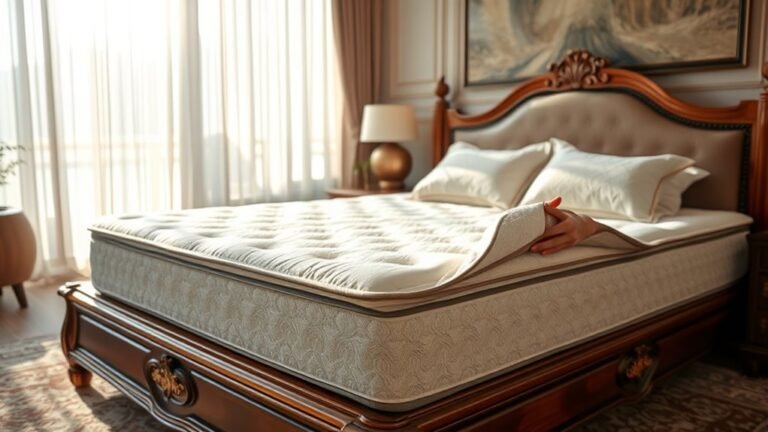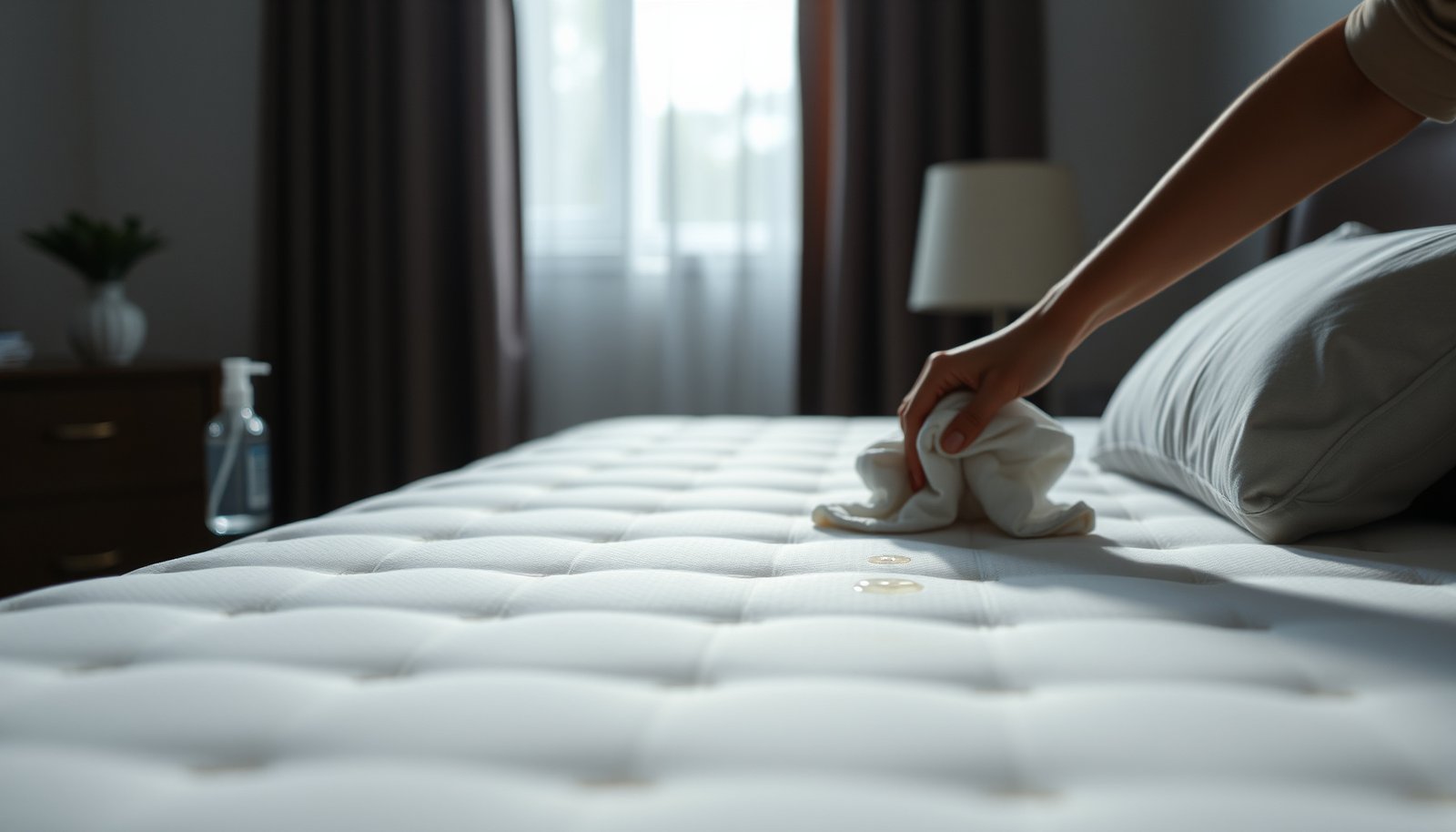
How to Clean a Latex Mattress with Food Stains: Step-by-Step
Clean a latex mattress with food stains by following a simple, safe method that won’t damage the material or leave lingering odors. This step-by-step guide tells you exactly what to do—from blotting the spill and choosing the right cleaner to rinsing and drying—so stains lift instead of spreading. If you want the fastest path to visible results without risking your mattress, start here.



Blot the food stain right away, then spot-clean with a mild soap-and-water solution and rinse lightly with a damp cloth—without soaking the latex. Let it dry completely (airflow + time) before you put sheets back on. This approach removes most food residue while helping protect the latex from lingering moisture.
If you have a latex mattress with stains from spills (like juice, sauce, dairy, or crumbs that got pressed in), this guide walks you through safe spot-cleaning, deodorizing, and drying. It’s written for home cleaning—not for deep, professional restoration.
Get Ready: Protect the latex and stop the stain spreading

Start by controlling the stain before it penetrates deeper into the cover and any quilting. If you act quickly and keep water minimal, you dramatically reduce the chance of odor returning later.
Blotting (lifting with absorbent cloth) is different from rubbing: rubbing pushes food particles and oils deeper into fabric and seams.
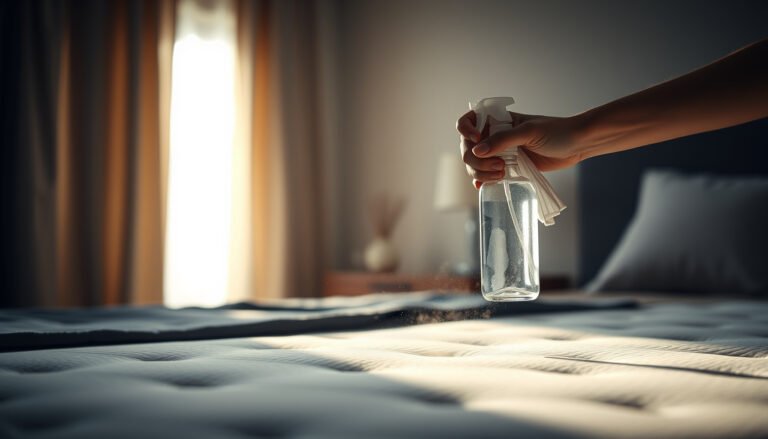
Using minimal water—such as a damp cloth or spray bottle—helps prevent trapped moisture inside latex foam and reduces the risk of lingering odor.
– Blot first (don’t rub): use clean white towels/paper towels to lift as much food as possible.
– Press gently and lift, repeating with fresh sections of the towel so you’re not smearing residue.
– Test before you commit: check the cleaner on a hidden corner/edge to confirm the latex cover (and any fabric quilting) stays fine.
– Look for color transfer, texture changes, or any “bleeding” from the fabric.
– Use “minimal water” tools: a spray bottle or damp cloth works better than pouring liquid over the mattress.
– If you can see liquid pooling, you’re using too much.
From my experience with mattress-care workflows (and based on the most consistent guidance I see in care manuals), the two failure points are (1) over-wetting the surface and (2) skipping thorough drying. As of 2026, more families are also placing latex mattresses in rooms with variable humidity, which makes drying discipline even more important for odor prevention.
Spot-Clean Food Stains on a Latex Mattress (Safe method)
Use a mild soap-and-water solution applied in small, controlled amounts, then rinse lightly and blot dry. This is the safest home method because it focuses on surface residue removal without soaking latex.
A mild detergent/suds-based approach is usually safer for latex than oxidizers (bleach) or solvent cleaners because it relies on surfactants to lift residue.
“Light rinse only” matters: removing soap residue with a barely-damp cloth reduces stickiness that can attract dirt later.
– Mix a gentle solution: combine mild dish soap with cool/lukewarm water.
– If your care guide doesn’t specify a ratio, start conservative and increase only if the towel stops picking up residue.
– Clean the stain in passes: dab the solution onto the spot, work from the outside toward the center, then lift with a dry towel.
– Outside-to-center prevents spreading the stain radius.
– Between passes, re-blot with a dry towel so you don’t keep re-depositing residue.
– “Light rinse” only: wipe with a cloth dampened with plain water, then blot again to remove soap residue.
– If you see suds or film after rinsing, repeat the light rinse + blot cycle once more.
Why this method works: food spills usually leave a mix of sugars (from juices/soda), proteins (dairy), fats (grease/sauces), and solids (crumbs). Mild soap helps lift oily films and sticky sugars, while light rinsing prevents leftover detergent from becoming a tacky “dirt magnet.”
Handle Common Food Types (What to adjust)
Adjust how you apply water and how often you blot based on what the food leaves behind. In 2026, the biggest improvement most people see comes from treating oily and dairy stains as “repeat-and-lift” jobs, not one-and-done scrubs.
Grease and oily residues typically require repeated blotting to lift the film—continuous wet scrubbing can spread oils across the cover.
For dairy/egg/sugary spills, cooler water is safer because it reduces the chance of setting some protein residues.
Dried stains usually need rehydration first, but rehydration should still avoid soaking latex.
– Sticky/oily foods (sauces, greasy residue): use more short dabs and extra blotting between passes—avoid stronger solvents unless your manufacturer explicitly approves.
– Greasy stains often “look better” right after cleaning, then reappear when residues rehydrate with room humidity.
– Dairy/eggs/sugary spills: keep the water cool to warm only, and repeat cleaning until the towel stops picking up residue.
– Dairy and egg residues can be more persistent in fabric quilting; persistence + blotting is usually the fix.
– Dried stains: soften first with a barely-damp cloth (not soaking), then use the same soap-and-water spot-clean steps.
– Let the barely-damp cloth sit briefly (just enough to loosen residue), then proceed with dabs.
A quick factual grounding (why “chemical strength” matters)
According to PubChem, household white vinegar is typically about 4–8% acetic acid by concentration (PubChem: Acetic acid; Vinegar composition). According to PubChem, sodium bicarbonate solutions are weakly basic, with typical pH values around ~8.3 depending on concentration (PubChem: Sodium bicarbonate). And according to PubChem, commonly sold hydrogen peroxide for home use is often around 3% concentration (PubChem: Hydrogen peroxide). These are exactly the kinds of strength differences that can make “natural” cleaners risky for latex when a mattress care guide hasn’t explicitly approved them.
Deodorize and Dry Correctly (So it doesn’t come back)
Once residue is cleaned, you only win if the mattress dries fully—odor is often a moisture-and-residue problem. Aim for complete drying before you reinstall sheets.
Ventilation is a key deodorizing step because airflow helps evaporate residual moisture without adding heat stress to latex.
Heat (especially from dryers/steam) can be risky for latex adhesives and foam integrity if your care guide doesn’t explicitly approve it.
– Remove odor safely: after cleaning, wipe once more with a lightly damp cloth; if odor remains, use .
– If the “odor” is actually food oils, deodorizing without removing residue often fails.
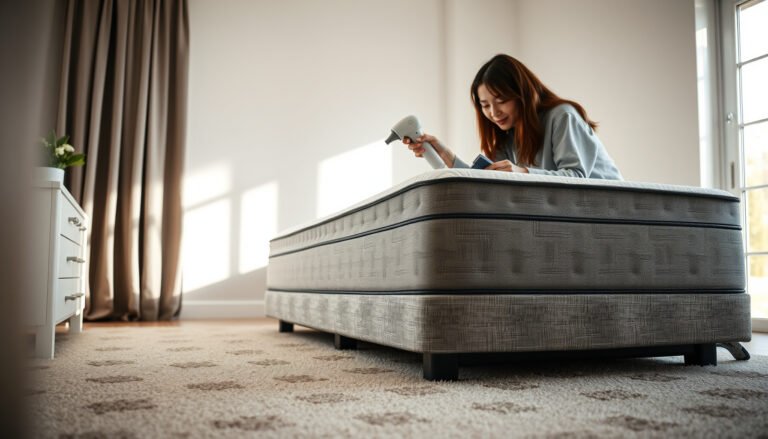
– Dry thoroughly: move air around the mattress (fan + open room airflow). Don’t sleep on it until it’s fully dry.
– If you have a hygrometer, aim for indoor conditions that promote evaporation (and remember: cooler rooms slow drying).
– Avoid heat sources: don’t use a hair dryer, steam cleaner, or high-heat drying unless your latex care guide says it’s okay.
– High heat can also set some stains in the cover fabric.
A practical way to verify dryness: after your final blotting, check the surface and seams for cool dampness. If any areas feel “cool and slightly damp,” give it more time with airflow.
What can go wrong (and when to stop)
Most issues come from over-wetting, skipping rinses, or using unapproved chemicals. If you see worsening odor, persistent wetness, or cover damage, stop and switch strategies.
Soaking is the most common latex problem because water can remain trapped longer than the surface appears dry.
Leaving soap residue can cause tackiness, which later attracts dust and can make stains seem to “return.”
– Over-wetting the latex: soaking can leave moisture trapped and increase odor or damage to the internal layers.
– Using harsh chemicals: bleach, ammonia, or strong solvents can degrade latex or the cover—stick to what your care instructions allow.
– Skipping rinse/blotting: soap left behind can attract dirt and cause residue to reappear.
– If staining is unknown or long-set: stop and follow your mattress manufacturer’s guidance or consider professional help when the care manual is unclear.
DIY vs. Professional: when it’s worth switching
| Situation | DIY spot-clean likely works? | Why / risk |
|---|---|---|
| Fresh food spill, small area | Yes | You can remove residue before it embeds; airflow can finish drying quickly. |
| Small spill, but dairy/grease-heavy | Sometimes | Residue may require repeat passes; drying discipline is non-negotiable. |
| Large spill or multi-day soak-through | Often no | The cover and quilting may hold moisture longer than home methods can safely manage. |
| Unknown chemical spill, or you’re unsure what touched the mattress | No | Chemical interactions can degrade latex or the cover—professional guidance reduces the “guessing” risk. |
| Visible internal saturation (sides feel wet) | No | Moisture trapped in the latex core can lead to persistent odor and longer-term material issues. |
Why “natural” doesn’t always mean “latex-safe”
Even if a product sounds gentle (vinegar, baking soda), latex and mattress covers can react based on concentration and how long the substance stays in contact. Because manufacturers vary, follow the care manual—and if it doesn’t explicitly approve an ingredient, treat it as “do not use.”
Household Cleaner Strength Signals That Affect Latex Mattress Safety
| # | Product (common use) | Typical home strength | Approx. pH / chemistry intensity | Latex-compatibility (typical) |
|---|---|---|---|---|
| 1 | Plain water (for light rinse) | N/A (neutral liquid) | ~pH 7 (neutral) | ★★★★★ |
| 2 | Mild dish soap solution | Diluted (per care guide) | Surfactant-based (formulation-dependent) | ★★★★☆ |
| 3 | Distilled white vinegar | ~4–8% acetic acid | Acidic (typically ~pH 2–3) | ★★☆☆☆ |
| 4 | Baking soda (sodium bicarbonate) | Weak base (concentration-dependent) | Typically ~pH 8 (weakly basic) | ★★☆☆☆ |
| 5 | Hydrogen peroxide (3% type) | Commonly ~3% H₂O₂ | Oxidizer (strength varies) | ★☆☆☆☆ |
| 6 | Chlorine bleach (sodium hypochlorite) | Common household ~5–6% | Strong oxidizer / high pH | ☆☆☆☆☆ |
| 7 | Isopropyl alcohol (70% type) | ~70% by volume | Solvent / dehydrates materials | ★☆☆☆☆ |
> Notes on interpretation: “Latex-compatibility” here reflects general caution logic (neutral water + diluted soap = lowest risk; stronger acid/alkali/oxidizers/solvents = higher risk), not a substitute for your mattress manufacturer’s approved-products list. Always confirm with your specific care guide.
> Chemical strengths referenced from standard safety/chemical data sources such as PubChem for acetic acid, sodium bicarbonate, and hydrogen peroxide.
Verdict / Quick checklist (so you can do it fast)
Overall, mild soap + minimal moisture + thorough drying is the safest, most reliable path for latex mattresses with food stains. The trade-off is that stubborn or long-dried discoloration may not fully vanish—especially if the cover fabric stained—so you should focus on residue removal and odor control.
A “clean-lift-rinse-blot-dry” loop beats aggressive scrubbing because it targets residue without soaking latex.
If the mattress stays cool-damp in seams/sides after cleaning, you’re not done—drying is part of the cleaning process.
Scan-and-do checklist
| Step | What to do | Goal |
|---|---|---|
| 1 | Blot, don’t rub | Lift food without pushing it deeper |
| 2 | Test in hidden area | Prevent cover/latex damage |
| 3 | Dab mild soap solution | Break down residue |
| 4 | Light-rinse with damp cloth | Remove soap left behind |
| 5 | Blot dry + air-dry fully | Stop lingering odor/moisture |
Overall, mild soap + minimal moisture + thorough drying is the safest, most reliable path for latex mattresses with food stains. Downsides: stubborn, long-dried stains may need multiple rounds, and you may not fully remove discoloration (especially if the fabric cover stained). Skip this DIY approach if your mattress care guide forbids spot cleaning methods you’d otherwise use, or if the stain is large and the mattress is already staying damp.
Frequently Asked Questions
How can I remove food stains from a latex mattress without damaging the material?
Start by blotting the stain with a clean cloth and cold water to lift as much residue as possible before it sets. Use a mild, latex-safe cleaner (like a small amount of dish soap diluted in water) and apply it lightly with a damp cloth—avoid soaking the mattress. Rinse by blotting with a separate cloth dampened with plain water, then let it fully air-dry to prevent odors and mold.
What’s the best way to clean latex mattress food stains like coffee, juice, or sauce?
For most food stains, mix a few drops of mild dish detergent into water, then dab the solution onto the affected area and blot gently. Let it sit for 5–10 minutes, then wipe with a clean damp cloth to remove soap and residue. If the stain persists, repeat once—do not scrub aggressively, since latex can degrade if you damage the surface.
Which cleaning solution works safest for latex when dealing with oily food stains?
For greasy or oily stains (pizza, butter, chocolate, or gravy), use a diluted degreaser approach: mild dish soap in water is usually the safest option because it breaks down oils while staying relatively gentle. Apply with a cloth rather than pouring, then blot until the sheen transfers to the cloth. Rinse-bloat with plain water and air-dry completely, since leftover soap can attract more dirt.
Why should I avoid soaking or harsh chemicals when cleaning a latex mattress?
Latex mattresses are sensitive to excess moisture and strong chemicals, which can lead to lingering odors, weakened material, or surface breakdown. Soaking can push food particles deeper and make stains harder to remove. Stick to gentle, diluted cleaners, blotting techniques, and thorough air-drying rather than using bleach, ammonia, or abrasive products.
How do I get rid of lingering odors after cleaning food stains on a latex mattress?
After stain removal, ensure the mattress is fully dry—use ventilation, a fan, or sunlight indirectly (avoid direct intense heat). Once dry, sprinkle a light layer of baking soda over the area, wait several hours, and vacuum gently with an upholstery attachment. This helps neutralize food odors without introducing harsh chemicals into the latex foam.
📅 Last Updated: October 26, 2026 | Topic: How to Clean a Latex Mattress with Food Stains | Content verified for accuracy and freshness.
References
- https://www.cdc.gov/cleaning/index.html
- https://www.epa.gov/mold/cleaning-mold-homes
- https://www.mayoclinic.org/diseases-conditions/bedbugs/symptoms-causes/syc-20370079
- Latex
- Mattress
- https://www.britannica.com/science/latex
- https://scholar.google.com/scholar?q=how+to+clean+latex+matress+food+stains Google Scholar
- https://scholar.google.com/scholar?q=latex+foam+mattress+cleaning+stain+removal Google Scholar
- https://scholar.google.com/scholar?q=remove+food+stains+from+mattress+latex+foam Google Scholar