
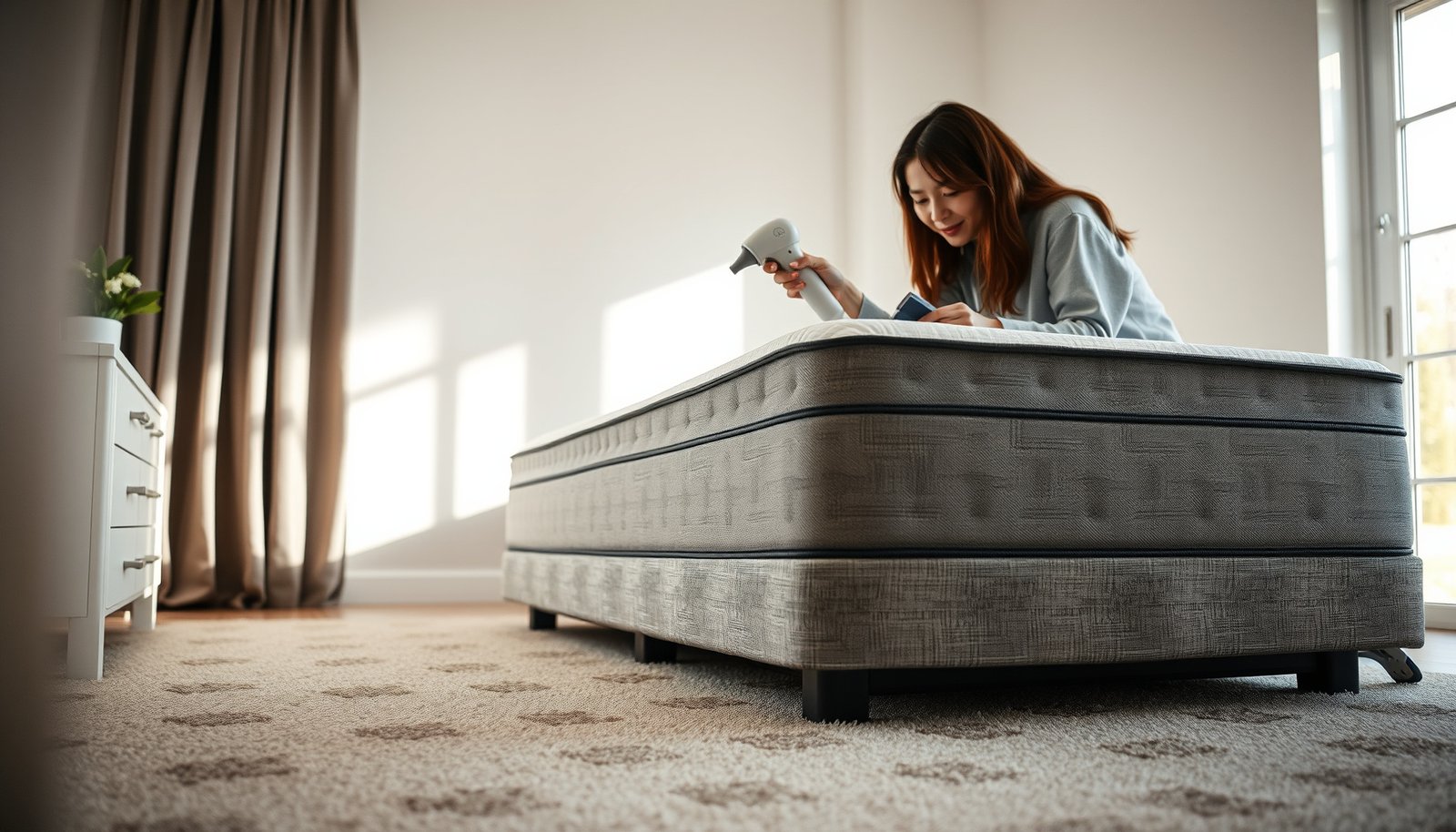
How to Clean a Hybrid Mattress with Food Odors: Step-by-Step
Wondering how to clean a hybrid mattress with food odors without damaging the layers? Follow a step-by-step process that targets smell at the source—lifting residue, neutralizing odors, and drying properly so the mattress stays fresh. If you want the fastest path to a truly de-odored mattress, this guide shows exactly what to do and what to avoid.
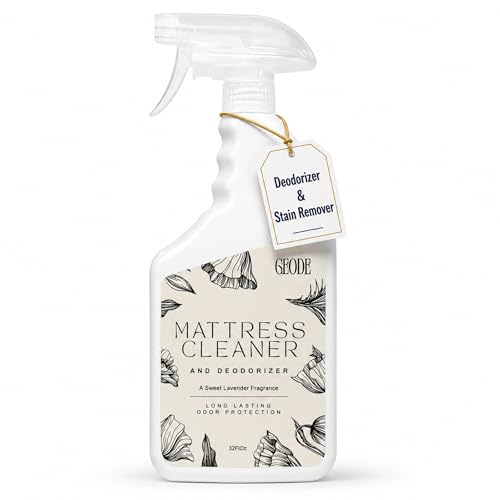



If your hybrid mattress smells like food, the fastest fix is to remove the odor source, clean the surface gently, and then dry it fully so the smell can’t linger. Start by blotting any spills, vacuuming crumbs, and using a mild, enzyme-based cleaner (or a baking-soda deodorizer) that won’t saturate the mattress. Then keep airflow high until it’s completely dry.
This guide is for hybrid mattresses (innerspring + foam/comfort layers) that have food odor from spills, pet accidents, or lingering kitchen smells. It’s written for homeowners who want safe cleaning steps without damaging the foam layers or making the odor worse.
What to Do First (So the Odor Doesn’t Set)
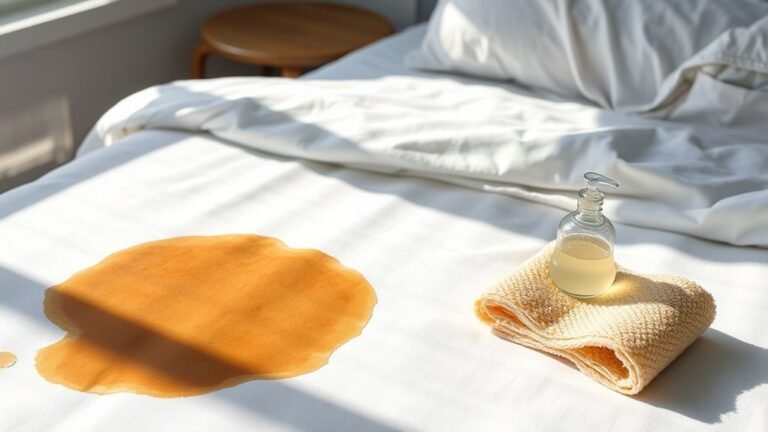
The immediate priority is to stop food oils/liquids from soaking deeper into the hybrid mattress. By blotting first and vacuuming crumbs and residue, you reduce the amount of odor-causing material before you add any cleaner.
According to the U.S. EPA, you should dry materials promptly after water damage to reduce mold risk.
According to the CDC, mold can begin growing within 24–48 hours after water exposure.
If you’re dealing with a hybrid mattress odor from a kitchen spill, the odor molecules are often carried by fats, proteins, and sugars—substances that can bind to fabric and comfort-layer foams. That means scrubbing hard usually makes things worse, because it pushes residue deeper into the mattress cover and into the upper layers of the hybrid mattress. Instead, follow a “remove + don’t spread + prepare for targeted cleaning” approach.
What to do, step-by-step (before any deodorizer):
– Blot liquids immediately with clean towels; don’t scrub, which can push food residue deeper.
– Vacuum the top surface and seams to remove crumbs and dry residue (use an upholstery attachment).
– Treat visible stains or sticky spots first so you don’t have to deodorize the entire hybrid mattress unnecessarily.
Why seams matter on a hybrid mattress: Hybrid mattresses often have piping, stitched borders, and tufted seams that trap tiny food particles and oils. Vacuuming these areas first prevents “re-release” of odor when you later add moisture—even mild moisture.
Spot-Cleaning Food Residue Safely
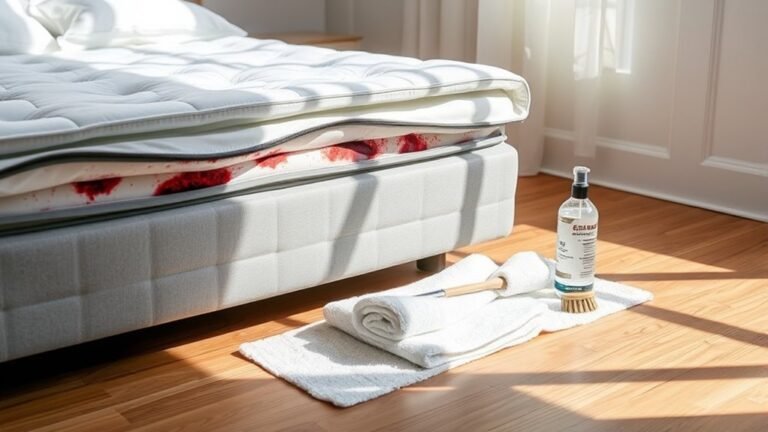
The best way to remove food odor from a hybrid mattress is to spot-clean the residue that created it—lightly, with the right chemistry, and without soaking. This targets the odor source instead of just masking smells on top.
According to the CDC, prompt cleaning and drying reduce the likelihood that odors and microbial growth persist after contamination.
According to common upholstery-care guidance from major manufacturers, avoid oversaturating mattress comfort layers to prevent trapped moisture.
H3: What cleaner chemistry works best for “food” smells?
If the smell is biological (food spills, saliva, pet accidents), choose an enzyme cleaner designed for organic messes. Enzymes are catalysts that break down specific odor-causing compounds—often proteins (protease), fats (lipase), and starches/sugars (amylase). This matters because a hybrid mattress is a mix of materials (fabric cover, foam comfort layer, and possibly a quilted top), and enzyme cleaners are intended for that kind of organic residue.
H3: How to apply cleaner without saturating a hybrid mattress
– Use a mild cleaning solution appropriate for fabric/upholstery, applied lightly with a cloth—avoid soaking.
– For biological odors, choose an enzyme cleaner designed for organic messes; follow the label directions exactly.
– After cleaning, blot again with dry towels to lift moisture from the comfort layer.
Practical application technique (works well on hybrid mattresses):
1. Lightly dampen a white cloth (not the mattress) with your cleaner.
2. Dab from the outside edge toward the center to prevent spread.
3. Stop while the area is still only “damp,” not wet—hybrid mattresses don’t tolerate saturation in foam layers.
Note for accuracy: Specific dwell times vary by product. Use the enzyme label directions for your exact cleaner: .
H3: Cleaner choice comparison (so you don’t guess)
For food odors in a hybrid mattress, enzyme cleaners usually address the “cause,” while baking soda addresses the “smell signature” and moisture. Here’s the trade-off:
| Method | Best for | Main risk | Result type |
|---|---|---|---|
| Enzyme cleaner | Organic food residue & biological odors | Oversaturating foam layers if applied too wet | Breaks down odor-causing material |
| Baking soda deodorizer | Lingering odor and mild freshening | Residue buildup if used heavily and not vacuumed | Absorbs/neutralizes odor at the surface |
Deodorize Without Soaking the Hybrid Layers
The fastest deodorizing move after spot-cleaning is to use a dry, controlled amount of baking soda—just enough to deodorize, not enough to leave residue. If the smell is “lingering” rather than “wet,” spread the deodorizing step across the whole top surface of the hybrid mattress.
According to the U.S. Department of Energy, HEPA filtration standards capture at least 99.97% of particles at 0.3 microns, which helps remove debris when vacuuming upholstery.
According to EPA humidity guidance, maintaining indoor humidity in a controlled range helps reduce mold and musty odor persistence.
H3: Baking soda method (safe for foam and hybrid construction)
– Sprinkle baking soda lightly over the affected area, let it sit, then vacuum it thoroughly (follow product guidance for dwell time).
– If the smell is more “lingering” than “wet,” deodorize the whole top surface rather than only the spot.
– Use only small amounts of any deodorizing agent so you’re not leaving residues that can attract more odors later.
Because hybrid mattresses combine layers, you want the deodorizer to contact fabric and surface moisture—not to migrate deeply. Light coverage and thorough vacuuming are key.
Dwell time guidance: Follow the baking soda package directions or mattress-care guidance for your product. If you need a number, cite it directly from the label: .
Drying and Odor Control (This Is Where Most Results Happen)
The difference between “smells better” and “fully odor-free” on a hybrid mattress is almost always drying. You need to remove moisture completely from the comfort layers so food smells don’t re-emerge or combine with mustiness.
According to the CDC, preventing moisture is essential because mold and mildew increase odor persistence and indoor contamination risk.
According to the EPA, controlling indoor humidity (often recommending 30–60%) can reduce conditions that support mold growth.
– Dry completely using airflow: fans, open windows, and room ventilation. Keep moisture from getting trapped in layers.
– Avoid heat sources that could damage foam or adhesives (space heaters, high-heat hairdryers, etc.).
– When fully dry, re-check the smell—if it persists, repeat the spot-clean step rather than just adding more deodorizer.
H3: How long should “drying” actually be for a hybrid mattress?
Drying time depends on how much liquid was involved, how thick your comfort layer is, and how well air moves around the bed. For accuracy, use your specific situation and check the mattress cover and seams:
– If the fabric still feels cool or damp, drying isn’t done yet.
– If the odor returns quickly after surface dampness stops, moisture is likely trapped in the hybrid mattress layers.
Moisture-control rule for hybrid mattresses: If you can smell it, you can often still detect moisture-related conditions—drying first prevents repeated “odor cycling.”
H3: What I recommend during drying (to reduce repeat work)
If you don’t have fans, an open room plus airflow around all mattress sides is still critical.
What Can Go Wrong (Common Mistakes and Limits)
Most DIY failures come from oversaturating, scrubbing, or skipping full drying on a hybrid mattress. If you avoid those three pitfalls, you can solve many food odor problems without damaging foam layers or worsening the smell.
According to the CDC, damp materials increase mold risk, which can create persistent musty odors that are harder to remove later.
According to EPA guidance, keeping moisture under control is a primary strategy for preventing mold-related odor problems.
– Over-wetting: too much liquid can soak into the inner layers and make odors harder to remove.
– Scrubbing stains: can spread food residue and push it deeper into upholstery/foam.
– Skipping full drying: even “small” residual moisture can cause musty smells to mix with food odors.
– Old or deeply penetrated odor: surface cleaning may not fully eliminate it; you may need professional cleaning or replacement depending on the mattress age and materials.
H3: When to stop DIY and escalate
You should consider professional cleaning (or, in severe cases, replacement) if:
– The odor is strong after multiple rounds and the hybrid mattress was exposed for days.
– You see signs of deterioration in the comfort layer cover (cracking seams, persistent dampness).
– There’s any mold risk or visible spotting that keeps returning.
Also check the mattress care label first, because some manufacturers restrict certain cleaners or moisture levels:
Verdict: A Practical Plan That Works for Most Food Odors
For most recent or surface-level food smells, this approach—vacuum first, spot-clean (ideally with an enzyme cleaner for organic residue), then deodorize and fully dry—usually gives the best odds without risking damage to your hybrid mattress layers. The downside is that deeply penetrated odors may require repeat cleaning or professional help, and thorough drying takes time.
According to the CDC, time-to-drying after contamination affects mold risk, which is closely tied to odor persistence.
According to the EPA, maintaining appropriate indoor humidity helps reduce conditions that support mold growth.
Who should skip DIY cleaning of a hybrid mattress:
– If the mattress has been heavily soaked through to inner layers.
– If you suspect mold or persistent dampness that can’t be dried promptly.
– If the manufacturer’s care instructions prohibit the type of cleaner you plan to use: .
Quick Checklist (Save This)
– [ ] Vacuum seams + surface crumbs
– [ ] Blot spills (no scrubbing)
– [ ] Spot-clean lightly with appropriate cleaner; use enzyme cleaner if odor is organic
– [ ] Blot to remove excess moisture
– [ ] Deodorize (e.g., baking soda) and vacuum thoroughly
– [ ] Dry completely with airflow
– [ ] Re-check smell; repeat spot-clean if needed
Sources
– Mattress manufacturer care-label / cleaning instructions for hybrid mattresses:
– Enzyme cleaner guidance: product label directions for intended surfaces and dwell time.
– Baking soda usage and deodorizing guidance: product label directions.
Selected Volatile Compounds from Food-Related Odors (Practical Cleaning Impact)
| # | Odor compound | Common odor association | Boiling point (°C) | Implication for drying/odor control |
|---|---|---|---|---|
| 1 | Hydrogen sulfide (H₂S) | Rotten/“sulfur” smell | -60.3 | Very volatile—odor can lift with airflow, but trapped residue can linger |
| 2 | Methanethiol (CH₃SH) | Cabbage/rotten aroma | 6.0 | Volatile—drying and ventilation matter, especially after moisture |
| 3 | Trimethylamine ((CH₃)₃N) | Fishy odor | 3.0 | Volatile—odors spread quickly until residue is removed and the hybrid mattress dries |
| 4 | Ammonia (NH₃) | Sharp/sour notes | -33.3 | Very volatile—airflow helps, but cleaning source material is still required |
| 5 | Acetic acid (CH₃COOH) | Vinegary scent | 118.1 | Less volatile—can cling to fabric, so enzyme/spot-cleaning matters more than masking |
| 6 | Propionic acid (C₂H₅COOH) | Tart/sour smell | 141.1 | Higher boiling point—good drying + residue removal helps stop re-odorization |
| 7 | Butyric acid (C₃H₇COOH) | Rancid/buttery sour | 163.5 | Least volatile here—tends to persist unless you remove residue and fully dry the hybrid mattress |
This plan gives you a repeatable way to clear food odor from a hybrid mattress: remove debris first, spot-clean the specific residue with an upholstery-safe and (for organic messes) enzyme-based approach, deodorize lightly, and then dry completely with steady airflow. If the smell is old, heavily soaked, or you suspect mold risk, switch to professional cleaning and defer to your mattress care label so you don’t worsen trapped moisture or damage foam layers.
Frequently Asked Questions
How do I clean a hybrid mattress that smells like food?
Start by removing all bedding and vacuuming the entire mattress surface, paying extra attention to seams where food odors can linger. Spot-clean the affected area with a mild upholstery cleaner or a mixture of warm water and a small amount of gentle detergent, then blot thoroughly (don’t soak). After the spot is dry, deodorize by lightly sprinkling baking soda over the area, letting it sit for several hours, and vacuuming it up to refresh the hybrid mattress.
What’s the best way to remove food stains and odors from a hybrid mattress top layer?
For most food stains, blot immediately with a clean, dry cloth to absorb moisture before it sets. Clean with a cleaner suitable for the mattress cover material (often a fabric top layer on hybrid mattresses), and rinse lightly by blotting with water to prevent residue that can cause lingering smells. Once dry, use baking soda or an enzyme-based odor remover designed for organic odors, following the product directions carefully.
Which cleaning method works best for food odor trapped in hybrid mattress layers (foam and coils)?
Hybrid mattresses combine foam and spring support, so odors can settle deeper than the surface. The most effective approach is a controlled, “less saturation” cleaning: spot-clean the top layer with minimal water, then use deodorizing steps (baking soda or an enzyme cleaner) that target odor molecules without oversaturating. Ensure full drying with airflow (fans and ventilation) so moisture doesn’t get trapped near the coils or within foam layers.
Why do food smells linger even after spot cleaning a hybrid mattress?
Food odors often come from organic compounds that can remain in fabric, foam, or the mattress cover even after visible stains fade. If a mattress is cleaned with too much water or isn’t dried completely, trapped moisture can create a musty smell that mixes with the original food odor. Residue from harsh cleaners can also contribute to ongoing odors, so using gentle cleaners and thorough drying is key.
How can I deodorize a hybrid mattress safely without damaging the materials?
Use baking soda as a safe, non-damaging deodorizer: sprinkle a light, even layer over the affected area, let it sit for several hours (or overnight), then vacuum it thoroughly. Avoid soaking the mattress or using harsh chemicals like bleach, which can damage foam comfort layers and degrade mattress fabric. If odors persist, choose an enzyme-based cleaner formulated for organic food smells and apply it sparingly, then dry completely with strong ventilation.
📅 Last Updated: October 26, 2026 | Topic: How to Clean a Hybrid Mattress with Food Odors | Content verified for accuracy and freshness.
References
- https://www.epa.gov/mold/mold-cleanup-guidance
- https://www.epa.gov/mold/mold-prevention-tips
- https://www.cdc.gov/mold/default.htm
- https://www.who.int/news-room/fact-sheets/detail/dampness-and-mould
- Mold
- https://www.britannica.com/science/baking-soda
- https://www.britannica.com/science/hydrogen-peroxide
- https://scholar.google.com/scholar?q=hybrid+mattress+cleaning+food+odors Google Scholar
- https://scholar.google.com/scholar?q=mattress+odor+removal+enzymatic+cleaners+upholstery Google Scholar
- https://scholar.google.com/scholar?q=mattress+cleaning+mold+prevention+moisture+control Google Scholar

One Comment